
How reef fish lateral lines work in Waikiki
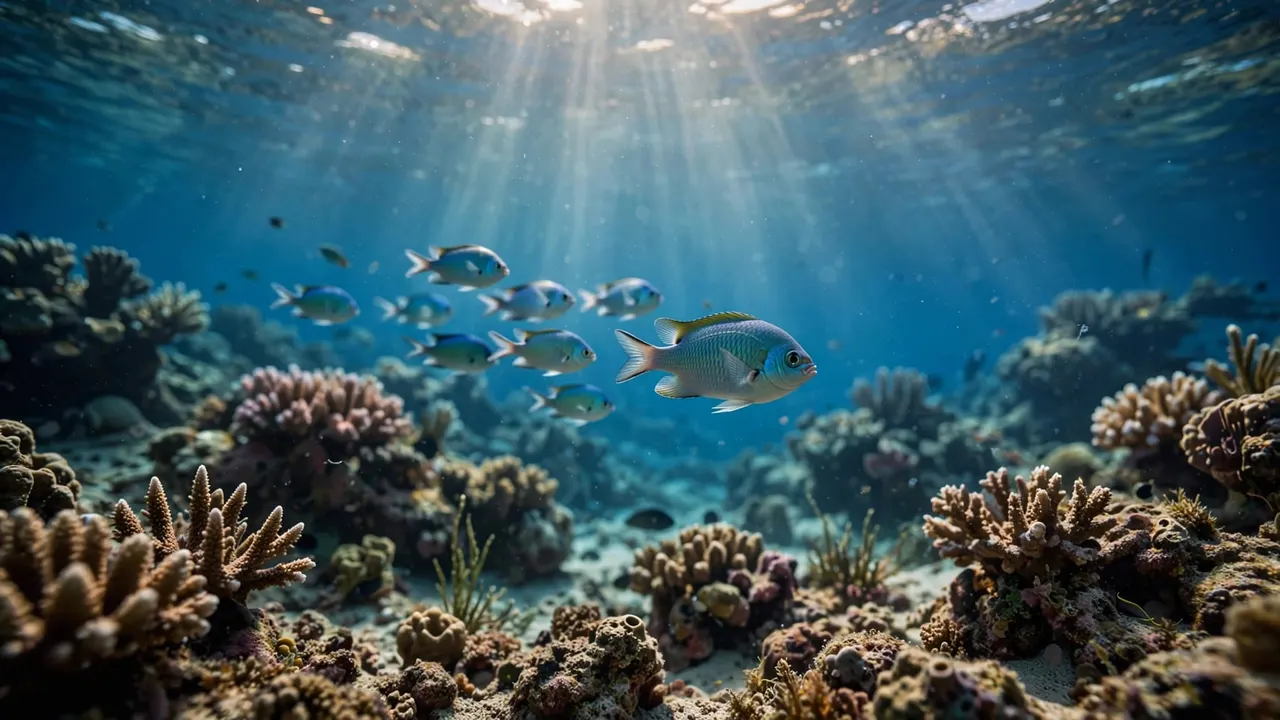
Reef fish use lateral lines to detect nearby water movement, which helps them locate food, sense danger, and respond to their surroundings. When you understand how reef fish use their lateral lines, the coordinated turns and careful movements you notice while snorkeling become more interesting.
With our professional snorkel guides at Living Ocean Tours, you can look beyond bright colors and pay attention to how fish use their habitat. You don’t need to identify every species to appreciate this flow-sensing system.
Start with what the lateral line detects, then watch how fish move through the reef around you.
How reef fish lateral lines detect water movement
Tiny sensors turn water movement into information
A lateral line is a sensory system, rather than simply a marking along a fish’s body. Its receptors, called neuromasts, contain sensitive hair cells. Water movement bends these cells through a gelatinous covering, and nerves carry that information to the brain.
You can picture the system as a network that registers how water moves relative to the fish. It responds to local disturbances, including those produced by other swimming animals.
A review of lateral-line biology describes neuromasts on the skin and within canals. Their arrangement varies among fishes, so the familiar line along the flank is only part of the story.
The visible line doesn’t show the whole system
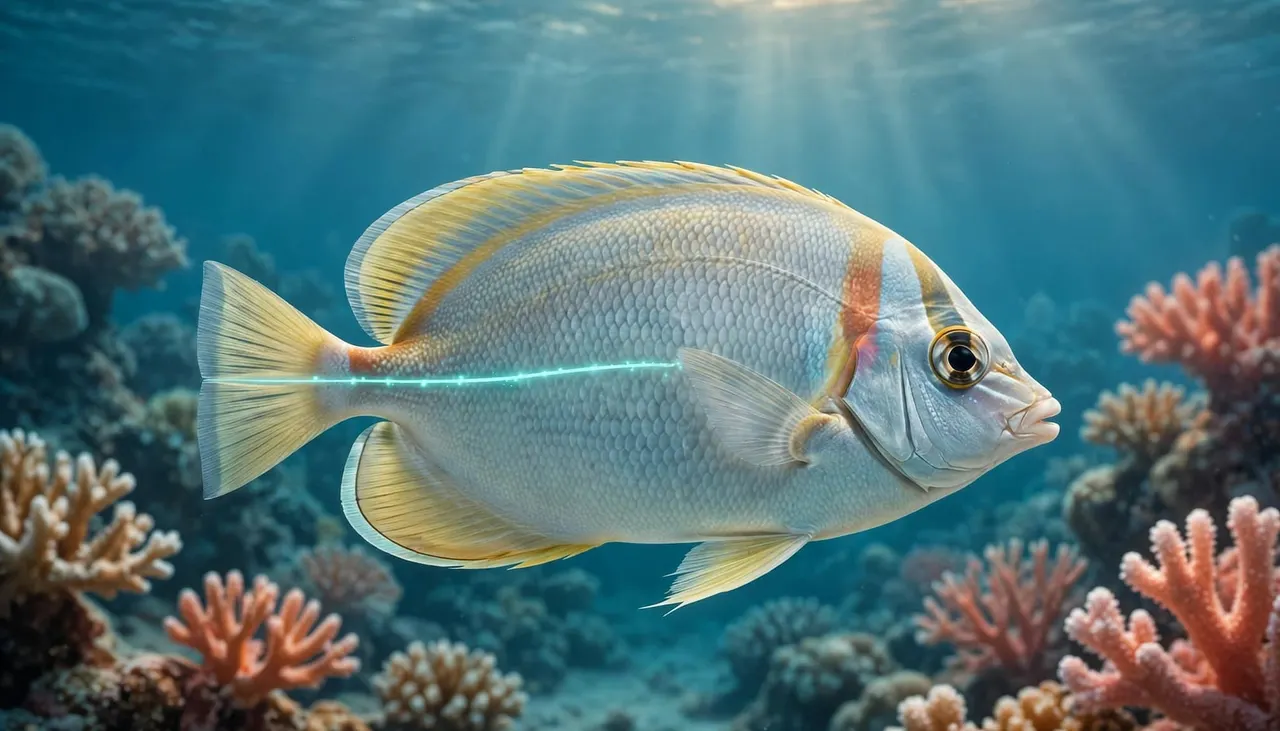
In many fishes, a canal runs beneath a row of scales along each side. Small pores connect that canal with the surrounding water. Additional sensory structures occur around the head.
However, you won’t necessarily see those details through a snorkeling mask. Reflections, body patterns, and viewing angles can hide them. A bright stripe also isn’t proof that you’ve found the lateral line.
The glow in the illustration highlights the system’s general position. A real lateral line doesn’t glow.
When you watch fish underwater, focus on their movements rather than trying to inspect individual pores. Understanding the structure gives you context without requiring a close approach.
Why flow sensing matters on a reef
Finding food and detecting nearby danger
The value of reef fish lateral lines becomes clearer when you consider how much information moving water carries. A swimming animal creates disturbances around its body. Nearby fish can detect aspects of that movement through their sensory receptors.
Virginia Tech’s chapter on fish sensory capabilities explains that lateral lines help fish detect prey, predators, currents, and objects.
For you, the useful distinction is between detecting movement and identifying its cause. A disturbance provides information, but a fish also relies on other senses and its surroundings.
That means a quick turn doesn’t reveal exactly what a fish detected. You can observe the action without assigning it a single explanation.
Responding to currents and reef structure
Reef surfaces interrupt flowing water. A rock face, opening, or projecting ledge changes the movement around it, while a fish’s own swimming also affects the flow it experiences.
The lateral line helps a fish gather information about those nearby conditions. Depending on the species and situation, that information can support orientation and position-holding.
You may notice a fish maintaining its place beside reef structure while another crosses open water. Those contrasting movements are worth watching, although they don’t prove which sensory system controls either action.
Keep the scale in mind: nearby water movement is the useful concept. A lateral line doesn’t provide a complete map of the ocean or identify everything beyond the fish’s view.
How lateral lines contribute to schooling
Neighbors create useful movement cues
When you see a school turn together, you’re watching many individuals adjust their movement around nearby fish. Each swimmer creates local water disturbances that can provide information about its position and motion.
Research published in NOAA’s Fishery Bulletin investigated the lateral line’s role in schooling. That connection helps explain why flow sensing belongs in any discussion of coordinated fish movement.
However, you shouldn’t treat reef fish lateral lines as a single control system for the entire school. Fish also use vision, and the balance between sensory inputs depends on the circumstances.
During your swim, notice the spacing between individuals as well as the group’s overall shape.
A synchronized turn doesn’t reveal every cause
A school can appear to move as one, yet each fish responds to information available around it. You can’t identify the exact trigger for a turn simply by watching from the surface.
For example, changing light, another animal’s movement, or a neighbor’s turn may accompany a shift in direction. The visible outcome doesn’t isolate the contribution of each sense.
A coordinated turn shows you what the fish did, but it doesn’t reveal which sensory cue started the movement.
That distinction makes your observations more accurate. Instead of deciding that a school “felt something coming,” describe what you saw: individuals tightened their spacing, changed direction, or spread apart.
Those details give you something concrete to discuss with your guide afterward.
What to watch during Waikiki snorkeling
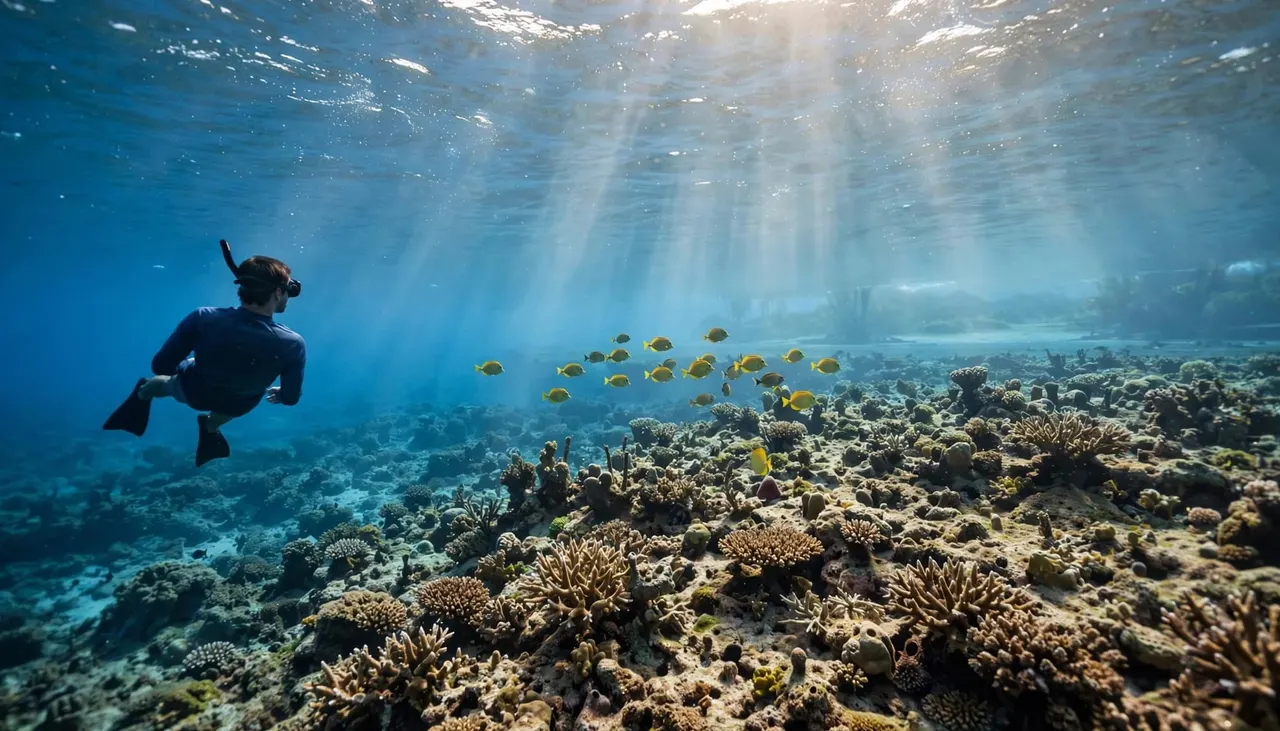
To appreciate reef fish lateral lines, watch movement within a small patch of habitat rather than trying to follow every colorful fish. Give yourself 20 to 30 seconds to notice patterns before shifting your attention.
Look at the relationship between the fish and its surroundings. Does it remain beside an opening, travel along an edge, or cross an exposed space? Then notice whether neighboring fish move independently or change direction together.
A repeated route can be more informative than a single darting movement. However, one brief sighting doesn’t establish a fish’s daily routine. Returning to a ledge also doesn’t prove that the animal sleeps there.
You can make this a shared activity with your partner or children. Compare observations afterward: one person may notice the group’s spacing, while another remembers where an individual paused.
Keep your descriptions separate from your conclusions. “Three fish turned beside the ledge” is a stronger observation than “they sensed a predator.”
You don’t need a complete explanation for every action. The reward is noticing details that would disappear if you watched only for the largest animal or brightest color.
Give fish room to continue their activity
Your understanding of fish senses should encourage patient observation. It shouldn’t become a reason to test an animal’s reactions.
Don’t wave a hand toward a fish, tap the water beside it, or pursue it to see whether it changes direction. Those actions interrupt the behavior you came to observe. They also wouldn’t establish that the lateral line caused the response.
Instead, let fish choose their paths. If an animal moves away, allow the encounter to end rather than following it into another opening.
The same approach applies to photography. Wait for a fish to pass through a well-lit area on its own. A wider image can show its relationship with the reef without requiring you to close the distance.
Also, leave sheltered animals undisturbed. Don’t reach into crevices or move rocks to reveal a fish. An animal that remains partly hidden still belongs in the scene, even when you can’t see enough to identify it.
By avoiding touching, feeding, or chasing, you preserve the natural activity that makes reef watching worthwhile.
Explore the reef with our in-water guides
At Living Ocean Tours, we’re the only tour company with professional snorkel guides in the water with you. That support gives you someone to ask when an unfamiliar movement catches your attention.
Our departures from Kewalo Basin Boat Harbor put your reef outing close to Waikiki. You can explore our guided Waikiki reef outings when planning your time on the water.
During your outing, share what you noticed rather than feeling pressure to name every animal. A fish’s body shape, position, and repeated movements provide useful starting points for a conversation.
You might ask why several fish stayed together or why an individual repeatedly returned to one area. Your guide can help you consider the possibilities without turning a brief observation into a definite explanation.
Bring your curiosity along, and give yourself time to enjoy the smaller movements between the bigger wildlife sightings.
Key takeaways for your reef visit
- Lateral lines detect local water movement through sensory structures called neuromasts.
- Fish use this information alongside other senses when responding to animals, currents, and nearby objects.
- A visible stripe isn’t necessarily a lateral line, and the sensory system extends beyond the flank.
- Watch spacing, direction, and repeated routes before deciding what a movement means.
- Let fish continue their activity without touching, feeding, chasing, or provoking a response.
The most useful habit is careful description. You can notice a great deal while remaining honest about what a brief encounter reveals.
Frequently asked questions
Do reef fish lateral lines work in darkness?
Yes. The system detects mechanical movement in water, so it doesn’t require light to function. That gives fish information that differs from what their eyes provide.
However, this doesn’t mean every fish behaves the same way after dark. A working sensory system tells you little about an individual’s feeding schedule, shelter use, or resting routine.
Is a lateral line the same as hearing?
No. Fish have inner ears as well as lateral-line receptors. Both involve sensitivity to mechanical movement, but they are different sensory systems.
For your reef observations, the useful distinction is that a lateral line detects local water movement around the fish. Calling it ordinary hearing can hide that role.
Can you see the lateral line working?
You can’t directly see a sensory receptor sending information to the brain during a snorkeling encounter. Even when you can distinguish the line along a fish’s side, its activity remains invisible.
What you can see is behavior: movement, spacing, pauses, and changes in direction. Those observations help you appreciate the system without claiming to measure it.
Look beyond color on your next reef swim
Understanding reef fish lateral lines gives you another way to appreciate the animals beneath your mask. Their movements reflect a world of sensory information you can’t directly experience.
Watch patiently, describe what you see, and leave room for uncertainty. When you give fish space to continue their activity, even a small turn beside the reef becomes worth noticing.


