
How reef fish courtship works while snorkeling Oahu
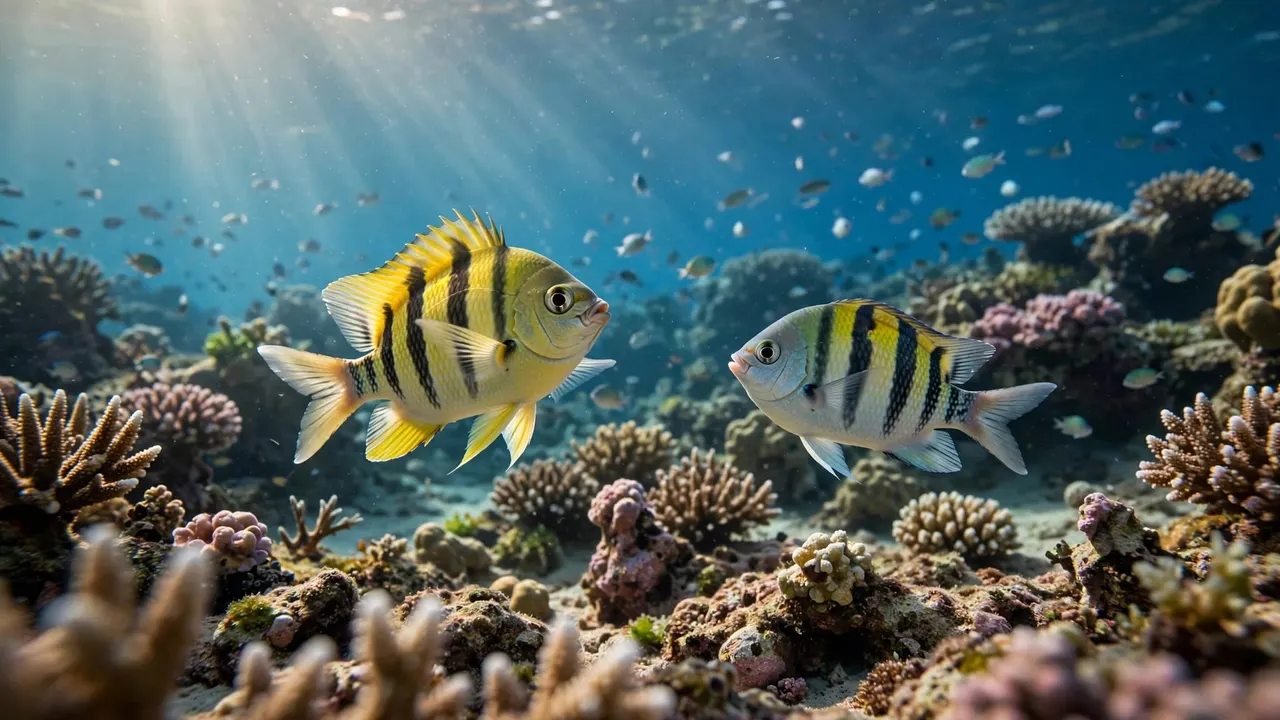
Reef fish courtship involves signals that help potential mates coordinate reproduction, including behavior and, in some species, sound. While snorkeling Oahu, you can notice interactions without assuming every close encounter means fish are about to spawn.
At Living Ocean Tours, we encourage you to give smaller reef residents some attention alongside the turtles. Your strongest clue is context, including where an interaction happens and what the fish do afterward. Start by understanding the difference between a reproductive signal and ordinary reef activity.
Key Takeaways for Your Reef Visit
You don’t need to identify every fish to enjoy watching its behavior. Keep these distinctions in mind:
- Reef fish courtship varies among species, so one movement isn’t a universal mating signal.
- Hawaiian research documents sounds associated with courtship, spawning, and nest defense, but that doesn’t make sound a reliable identification tool during your swim.
- Two fish swimming together may be maintaining a pair association rather than actively courting.
- Patient observation gives you more useful information than chasing an animal for a closer view.
How reef fish courtship helps fish reproduce
Signals coordinate an interaction
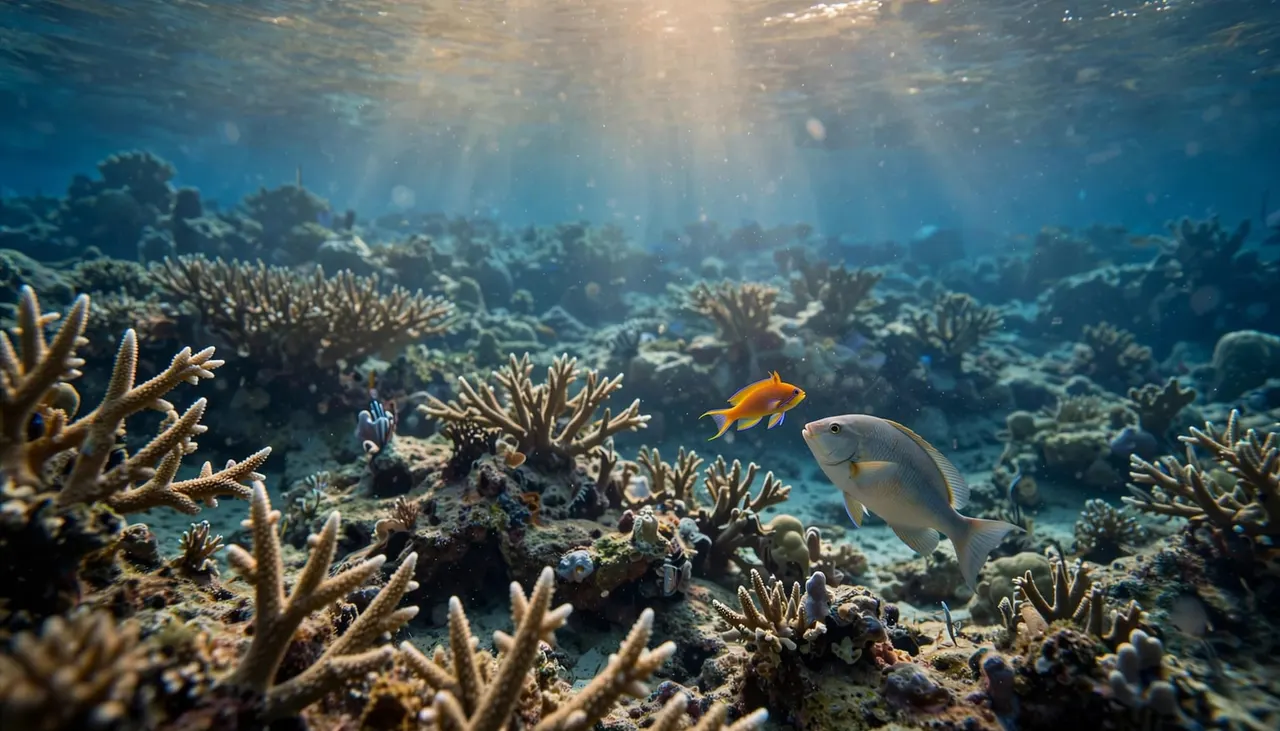
Courtship is reproductive communication. It helps potential mates respond to one another before spawning, rather than simply occupying the same patch of water.
For fish that release eggs and sperm into the water, coordination matters because fertilization depends on those reproductive cells meeting. However, courtship and spawning are separate parts of that process. Watching an interaction doesn’t establish that reproduction followed.
During your swim, pay attention to the sequence rather than a single instant. Notice whether an approach leads to continued interaction, separation, or a return to feeding. Those details give you a clearer description, even when the purpose remains uncertain.
Sound can accompany reproductive behavior
Some communication happens beyond the visual scene beneath your mask. A University of Hawaii paper on Hawaiian reef fish acoustic behavior documents sounds associated with courtship, spawning, or nest defense.
The paper includes damselfishes, goatfishes, butterflyfishes, and parrotfishes among the groups producing reproductive sounds. That gives you a broader picture of reef fish courtship than appearance alone.
Still, the research doesn’t establish that you’ll hear those signals while snorkeling. Use sound as biological context, not proof that a particular fish beneath you is courting.
What paired butterflyfish can tell you
A pair is a starting point, not a conclusion
Butterflyfish offer a useful example because swimming together and courting aren’t interchangeable observations. When you see two fish near each other, you can describe their spacing and shared direction without assigning a reproductive purpose.
Research on the multiband butterflyfish, Chaetodon multicinctus, describes courtship as a paired activity. That finding belongs to this species and its studied behavior.
It doesn’t mean every butterflyfish pair you encounter is preparing to spawn. Species identification and a longer behavioral sequence matter more than the simple presence of two fish.
Spawning is a separate event
Courtship can precede spawning, but the two terms describe different events. Spawning involves releasing reproductive cells; courtship involves the interaction leading toward reproduction.
The multiband butterflyfish study also describes other individuals intruding during spawning. Even a reproductive encounter can therefore involve more activity than an isolated pair.
For your own observations, keep the description concrete. Remember how many fish were present, whether they stayed together, and how the interaction ended. If you discuss reef fish courtship with your crew afterward, those details are more helpful than saying two fish looked romantic.
Separate courtship from feeding and defense
Follow the feeding activity
A fish repeatedly approaching a reef surface may be feeding rather than communicating with a mate. Parrotfishes provide a recognizable example: their beak-like mouths scrape material from reef surfaces.
Watch where the mouth meets the habitat and whether the fish resumes that activity after another fish passes. You can connect body shape with an observable action without guessing its reproductive state.
Butterflyfish and tangs offer other opportunities to study feeding movements. However, don’t assume different fish share the same courtship behavior simply because they occupy the same reef.
Notice what happens around a location
An approach between fish can also involve competition or defense. A fish returning to one patch gives you a location to study, but returning alone doesn’t reveal what it protects.
For example, the Hawaiian acoustic research includes nest defense alongside courtship and spawning. Those are different contexts, even though each can involve reproductive biology.
Record the interaction in plain language: one fish approached, another moved away, and the first remained nearby. That description preserves what you saw without turning an uncertain encounter into a firm conclusion.
If a fish changes its activity when you approach, you may be watching its response to you rather than its usual interaction with another fish.
Where and when to look while snorkeling Oahu
Choose your viewing position for safe, comfortable observation before considering fish behavior. A clear view of one reef patch is more useful than continuous swimming that leaves you with disconnected glimpses.
Look across habitat boundaries, including coral edges, sandy gaps, and openings between reef structures. These places let you notice which fish pass through and which remain nearby. However, keep enough clearance that your fins and equipment cannot contact the bottom.
There’s no single Oahu snorkeling timetable that guarantees reef fish courtship. Reproductive schedules vary among species, and an ordinary daytime outing shouldn’t carry a promise of witnessing spawning.
Instead, choose your outing around suitable ocean conditions and your group’s swimming comfort. When your breathing and position feel comfortable, you have more attention available for subtle interactions.
You can enjoy this approach entirely from the surface. Diving down isn’t necessary, and it can interrupt the behavior you hoped to observe. For couples with different swimming abilities, staying within shared comfort limits also keeps the experience enjoyable together.
Watch without changing the encounter
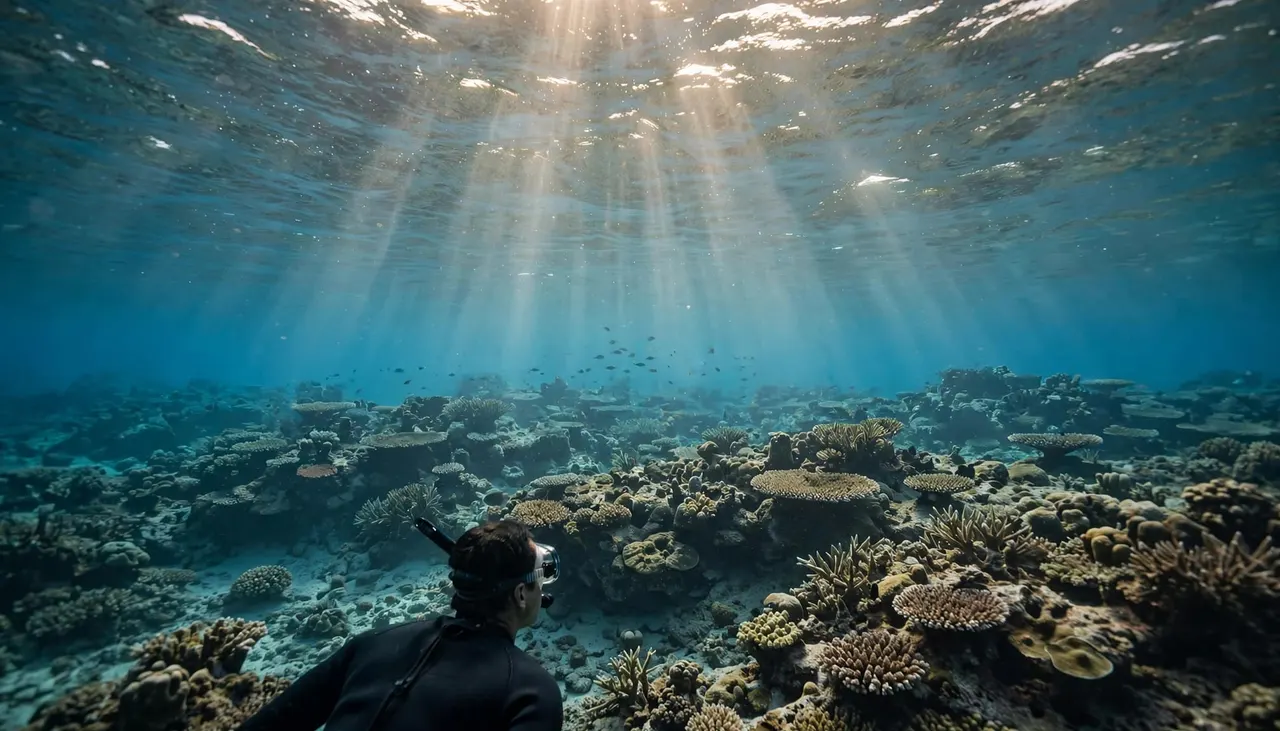
Once you’re comfortable, observe one small area for about 20 to 30 seconds while tracking your buddy and crew. Follow movement with your eyes instead of swimming after every fish.
Notice where animals pause, which routes they repeat, and how much space they maintain around one another. This short pause is an observation exercise, not a requirement to remain stationary against a current.
Keep your fins controlled and clear of coral. NOAA’s responsible diving guidance explains that even a minor brush with hands, fins, or equipment can damage delicate coral animals.
If your mask needs adjusting, use available flotation as instructed or signal your crew. Never grab the reef for support.
For families, agree before entering that pointing means showing a direction, not reaching toward wildlife. Avoid approaching a fish from opposite sides, and leave an open route around it.
Keep cameras within your swimming space, too. Don’t extend equipment into crevices, move rubble, or follow an animal into shelter. Likewise, never feed fish to draw them closer. If a fish moves away as you approach, give it more room and let the encounter end.
Bring your curiosity on a guided Waikiki outing
Our Oahu snorkeling and wildlife tours give you an opportunity to explore reef habitat with crew support. You can bring the same patient approach whether you’re interested in fish interactions or simply enjoying the underwater scenery.
We depart from Kewalo Basin Boat Harbor, near Waikiki. Before entering, listen to the crew’s instructions about equipment, boundaries, and returning to the boat. Tell them about nervousness or mask problems early so those concerns don’t distract you in the water.
You don’t need scientific names to share an interesting observation afterward. Describe a fish’s shape, location, and repeated movements while the details are fresh.
Choose your outing for reef exploration and swimming comfort. A reef fish courtship sighting remains an unscripted wildlife encounter.
When you’re ready to plan your time on the water, choose an available departure below.
Frequently Asked Questions About Fish Courtship
Can you identify a courting fish by color alone?
Color alone doesn’t establish that a fish is courting. You need species-specific information and behavioral context before assigning a reproductive meaning to its appearance.
During a snorkel, focus on what you can describe: which fish interacted, where they were, and what happened next. A colorful fish can still be feeding, traveling, or responding to another animal. You don’t lose anything by leaving the explanation open.
Does hearing an underwater noise mean fish are mating?
No. NOAA’s overview of fish and invertebrate acoustics describes courtship sounds that include knocks, grunts, and drumming. However, a sound by itself doesn’t identify its source or purpose.
You shouldn’t expect to recognize reproductive signals through a snorkel. Keep your attention on comfortable swimming and visible activity rather than trying to assign every noise to a fish below you.
Give the Reef Time to Reveal Its Behavior
Reef fish courtship adds another layer to an Oahu snorkel, but the most useful discoveries begin with patient observation. Watch an interaction long enough to notice its sequence, then keep your description separate from your interpretation.
Leave wildlife room to move and coral untouched. Even when you can’t explain a fish’s behavior, a clear view of its natural activity is worth remembering.


