
Reef Fish Breathing: A Honolulu Snorkeling Guide
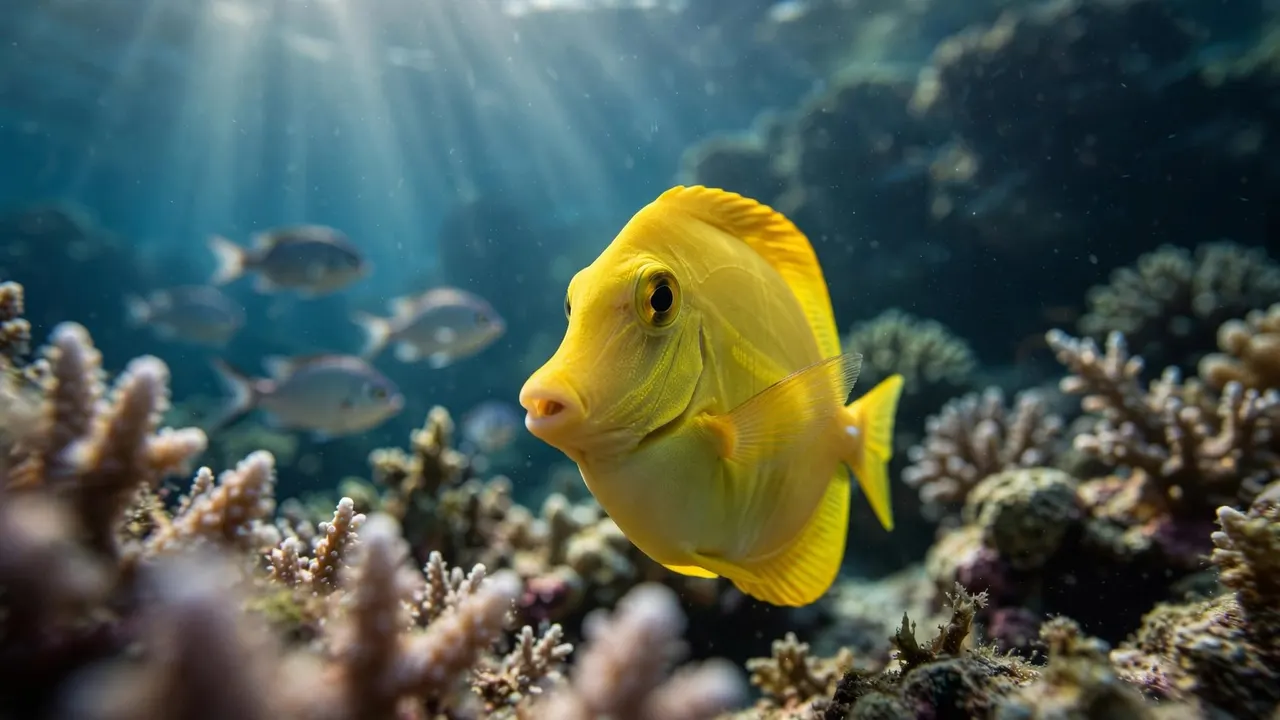
Reef fish breathe underwater by moving seawater across their gills, which absorb dissolved oxygen into their blood. At Living Ocean Tours, we help you explore Honolulu’s reefs with professional snorkel guides who support you in the water.
Understanding reef fish breathing gives you something fascinating to watch beyond colorful markings and busy schools. Once you recognize the small movements around a fish’s mouth and gill covers, even a quiet reef encounter becomes more interesting.
Start with what happens each time water passes through a fish’s gills.
How reef fish breathing works underwater
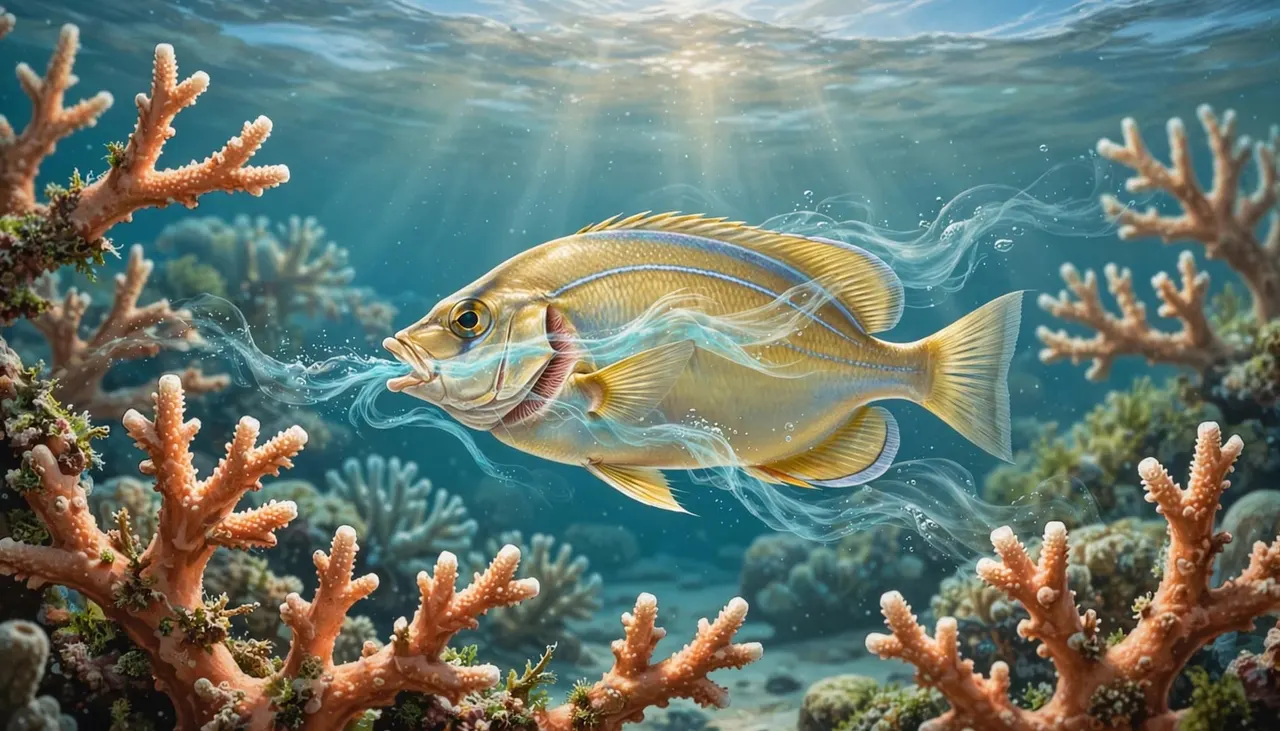
Gills absorb oxygen dissolved in seawater
Fish need oxygen for the same basic reason you do: their cells use it to release energy. However, their breathing organs work in water rather than air.
Inside the gills, thin filaments carry many tiny folds called lamellae. These folds provide a large surface where water and blood come close together. Oxygen crosses the thin barrier into the bloodstream, while carbon dioxide moves out.
Fish take in dissolved oxygen, not the oxygen chemically bound inside water molecules. They don’t split seawater into hydrogen and oxygen.
The arrangement of water flow and blood flow also helps. They move in opposite directions across the exchange surfaces, allowing oxygen to keep entering the blood along much of the pathway.
Mouth movements help water cross the gills
Many bony reef fish draw water through their mouths and move it across their gills. Water then leaves through openings behind the gill covers, also called opercula.
That pumping action explains why a fish’s mouth and gill covers may move while its body stays nearly still. You can often notice the rhythm without seeing the delicate exchange surfaces themselves.
NOAA’s explanation of how fish obtain oxygen describes the shared role of gills. Different fish move water across them differently, so steady forward swimming isn’t a requirement for every reef resident.
Where underwater oxygen comes from
The ocean contains oxygen you can’t see
You won’t usually see the oxygen a fish uses. It dissolves in seawater, much as gases dissolve in other liquids.
Some enters through contact with the atmosphere. Waves and surface mixing help move oxygen into the water. Photosynthesis by algae and other marine organisms also supplies oxygen when light is available.
Meanwhile, fish and other organisms consume it. That includes animals hidden inside reef crevices, as well as microorganisms breaking down organic material.
A reef therefore has both oxygen producers and oxygen consumers. Clear water alone doesn’t tell you how much oxygen it contains.
Temperature and activity affect breathing demands
Warmer water generally holds less dissolved oxygen than cooler water. A fish’s oxygen needs also change with its activity and surrounding conditions.
Because reef fish breathing depends on water crossing the gills, ventilation can change when oxygen demand changes. However, a snorkeler can’t diagnose the cause by watching one fish.
Rapid mouth movement might accompany activity, but feeding and other behaviors can complicate your view. Notice what happens without treating a short encounter as a health assessment.
What you can observe while snorkeling Honolulu reefs
Watch a fish that holds its position
You can spot signs of reef fish breathing most easily when an animal pauses rather than speeds past.
Choose a patch of reef and watch it for 20 to 30 seconds, while staying aware of your buddy and guide. Look for a fish hovering beside coral or sheltering near an opening.
Focus on the head. You may see the mouth open slightly, followed by movement near the rear edge of the gill cover. Small fins can keep the fish in position during this breathing rhythm.
Butterflyfish, wrasses, and other reef residents give you plenty to observe, although visibility and distance determine which movements you can distinguish.
Separate breathing from feeding behavior
A moving mouth doesn’t always give you a clear view of ventilation. Fish also use their mouths to bite, graze, and capture food.
For example, a parrotfish working along a reef surface may be feeding. Watch the whole animal before deciding what a particular movement means.
Notice whether it repeatedly bites the same surface, follows a route, or stays suspended above the bottom. Then describe those observations to your guide.
A useful fish sighting includes its location and behavior, not only its name. Describe the movements you saw before deciding what they meant.
If your buddy misses the fish, indicate its location from your current position. Swimming directly over it can interrupt the behavior.
Why sea turtles must surface while reef fish don’t
At Turtle Canyons, you may encounter Hawaiian green sea turtles alongside tropical fish. That creates an easy comparison between two ways of obtaining oxygen.
Fish use gills to extract oxygen from water. Sea turtles are reptiles with lungs, so they must reach the surface to breathe air.
A turtle resting underwater is holding its breath. Its ability to remain submerged doesn’t mean it has gills or obtains oxygen like the fish around it.
The contrast makes reef fish breathing easier to understand: the surrounding water supplies oxygen to a fish’s gills, while a turtle needs access to air.
Give turtles an unobstructed route to the surface. Hawaii’s marine species viewing guidance recommends staying at least 10 feet away on land and in the water.
That recommendation applies to turtles, not as a universal distance rule for every reef fish. For fish, leave enough space for normal movement and an easy escape.
Observe the reef without changing its behavior
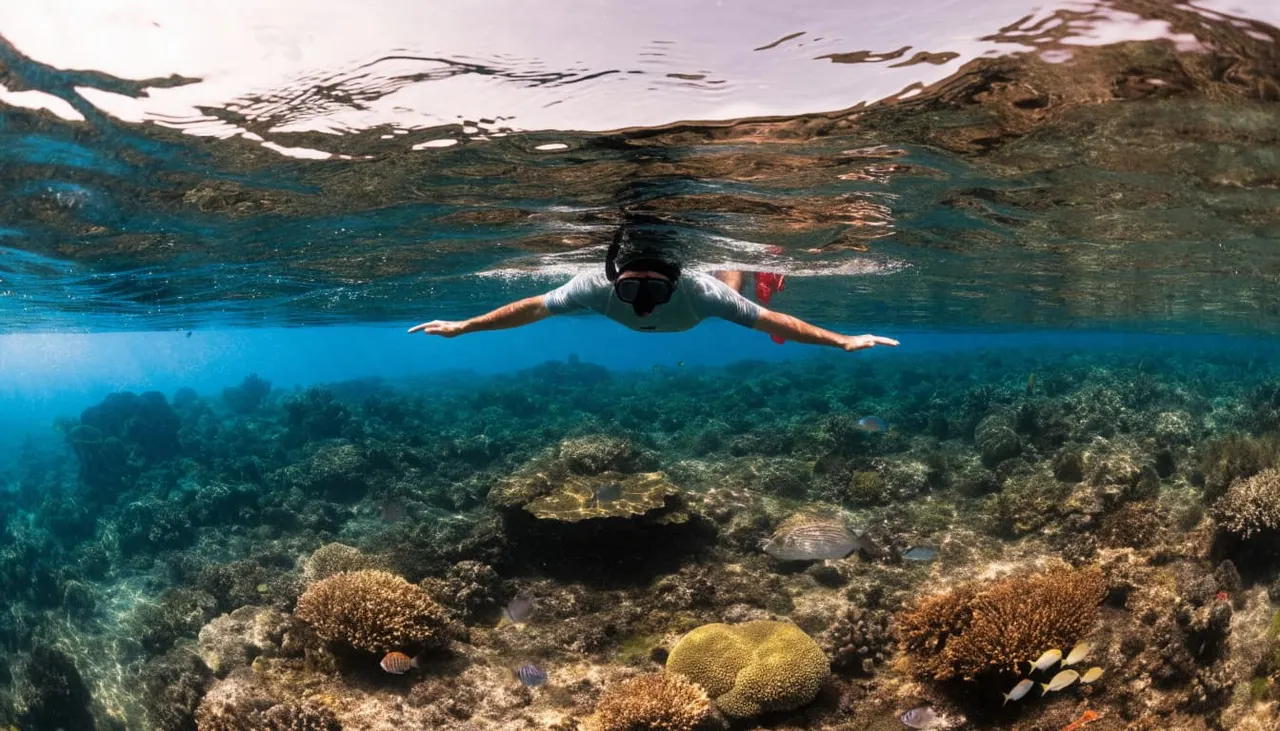
Keep your body and equipment above coral
Your position matters as much as your patience. Float comfortably above the reef and use small, controlled kicks.
Coral is living habitat, so never stand on it or use it as a handhold. Watch where your fins trail when turning, especially beside shallow coral heads.
If your mask needs adjustment, signal your guide, use available flotation support, or follow the approved route back to the boat. Don’t grab the reef to steady yourself.
NOAA’s wildlife photography guidance advises snorkelers to avoid touching, kicking, or standing on coral. It also warns against touching marine animals.
Let fish choose their distance
Chasing a fish replaces its normal behavior with a response to your approach. Instead, let it move through the reef without pursuit.
Don’t feed wildlife to bring it closer. Feeding changes the encounter and distracts you from the natural activity you came to observe.
Keep cameras within your own swimming space. Never push equipment into a crevice or move rubble to reveal a hidden animal.
For couples and families, avoid approaching a fish from opposite sides. Leave open water around it, and accept that it may swim out of sight.
Explore Honolulu reefs with our professional guides
You don’t need to identify every fish before enjoying the reef. Our Waikiki snorkeling and ocean tours give you equipment, instruction, and support so you can concentrate on observing marine life.
At Living Ocean Tours, we’re the only tour company with professional snorkel guides in the water. Our trips depart from Kewalo Basin Boat Harbor, near Waikiki.
If reef fish breathing catches your attention, describe the movement and location to your guide. That gives you a useful starting point for learning more about the animal without approaching it.
Meanwhile, tell our crew about your swimming comfort before entering. Use the flotation support provided, stay with your buddy, and follow the group’s swimming boundaries.
You should never feel pressured to keep watching wildlife when you’re tired or uncomfortable. Signal your guide and return to the boat when you need a break.
To plan a guided reef outing, use the availability button below.
Key takeaways for your reef day
- Fish absorb oxygen dissolved in seawater through their gills; they don’t obtain it by breaking apart water molecules.
- Mouth and gill-cover movements can reveal ventilation, but feeding behavior may make those movements harder to interpret.
- Sea turtles breathe air with lungs, so keep their route to the surface clear.
- Calm observation, controlled fins, and hands-off wildlife viewing protect the habitat while giving you more time to notice natural behavior.
Make your next reef encounter more rewarding
Understanding reef fish breathing adds another layer to your Honolulu snorkeling experience. You can appreciate the movement of water through a fish’s gills as well as its color and shape.
Give yourself time to watch, and give wildlife room to continue its day. Patient observation makes a small, ordinary movement worth noticing.
Frequently asked questions about fish breathing
Do reef fish breathe out bubbles?
Usually, you won’t see bubbles from normal gill breathing. Fish release carbon dioxide into the surrounding water rather than exhaling a pocket of air like a scuba diver.
A bubble near a fish doesn’t, by itself, reveal how the animal is breathing. Your own snorkel or nearby swimmers may also introduce bubbles.
Can a reef fish breathe while staying still?
Yes, many reef fish can pump water across their gills while holding position. Their mouths and gill covers may continue moving even when their bodies appear stationary.
That doesn’t mean every fish uses the same method. Breathing strategies vary, so avoid applying one animal’s behavior to all reef species.
Why can’t most reef fish breathe normally out of water?
Gills work well when water supports their delicate exchange surfaces. Out of water, those surfaces can collapse together and dry, reducing effective oxygen exchange.
Although some specialized fish tolerate air exposure, ordinary reef fish belong underwater. Never lift or handle one to examine its gills.


