
Snorkeling Oahu: How to Identify Reef Blennies
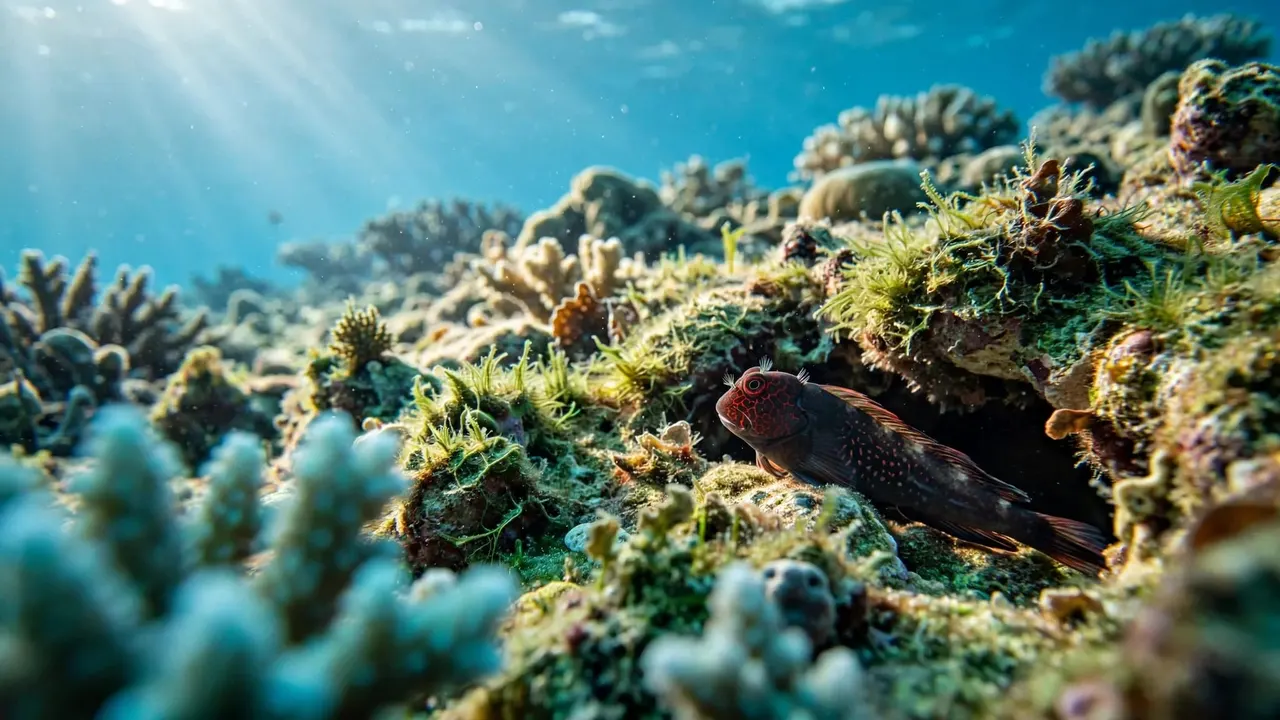
You can recognize reef blennies by combining body shape, hiding behavior, and visible markings. Look for small, elongated fish near reef holes, then watch how they perch, retreat, or hover before choosing a species name.
With Living Ocean Tours, you can bring that curiosity to a guided reef visit near Waikiki. Your most useful identification skill is patient observation, because a fish’s repeated movements often reveal more than one quick glimpse.
Start with the features you can comfortably see while floating above the reef.
Key Takeaways
- Look near crevices and algae-covered reef surfaces, rather than searching only open water. Many small fish disappear against those backgrounds.
- Learn Gosline’s fangblenny and the scarface blenny first. Their stripes and facial markings give you useful identification clues.
- Keep Hawaiian triplefins and gobies in mind as lookalikes. A perched posture alone doesn’t make a fish a blenny.
You don’t need a species name for every encounter. Remembering a fish’s head shape, markings, and movement gives you something useful to discuss afterward.
How to Spot Reef Blennies Without Chasing Them
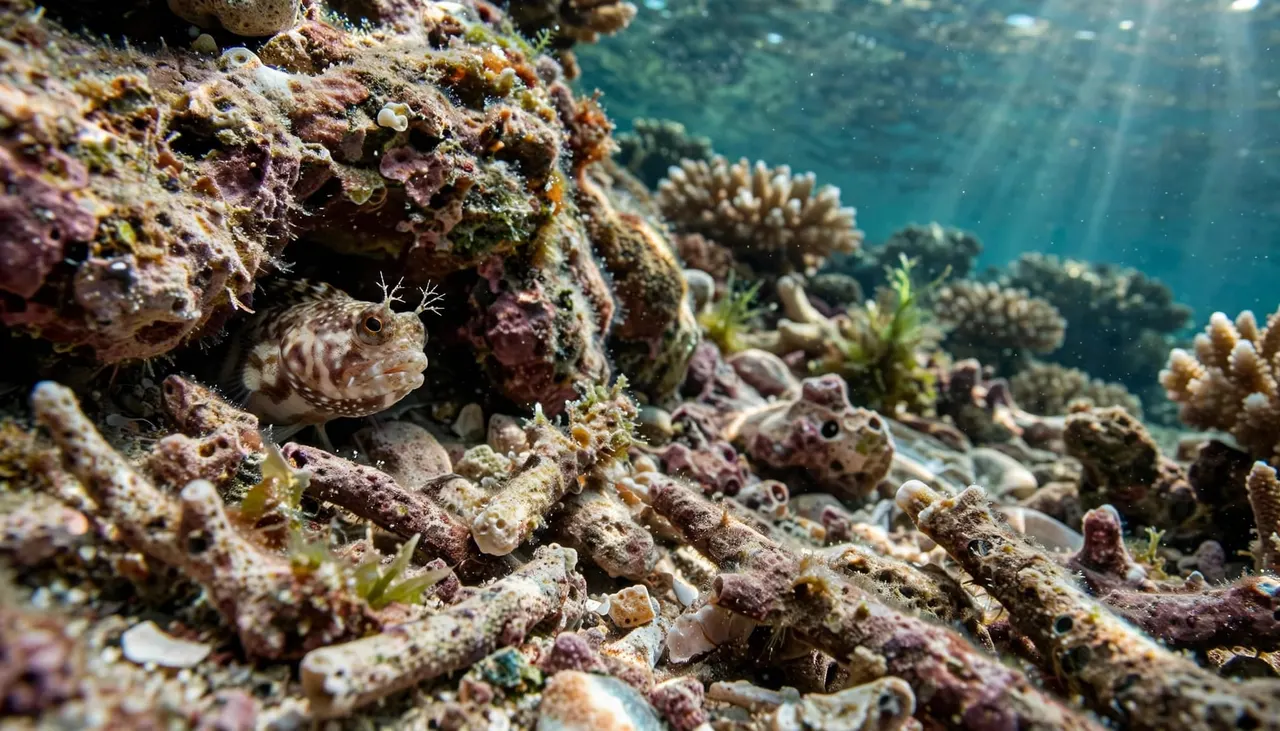
AI illustration of reef habitat, not a species-identification reference.
Search the edges of shelter
Begin with a small patch of reef that you can observe without approaching the bottom. Scan hole entrances, rocky ledges, and algae-covered surfaces.
A blenny may expose only its head, so look for eyes or a mouth breaking up the rock’s outline. However, not every face in a hole belongs to this family.
Spend about 20 to 30 seconds watching the same area. Once your eyes adjust to the background, a slight head movement can reveal a fish you initially missed.
Watch the return route
When a fish moves, keep watching its original shelter. A resident may return to the same opening or nearby perch.
That repeated route helps you relocate reef blennies without following them across the reef. Meanwhile, note whether the fish rests against the surface or spends more time hovering.
Some blennies have small fleshy appendages, called cirri, around the head. These can help identification, but they’re often too small to resolve from the surface.
Keep your fins still when conditions allow. If surge moves you toward coral, leave the patch instead of trying to hold position against it.
Two Hawaiian Blennies Worth Learning First
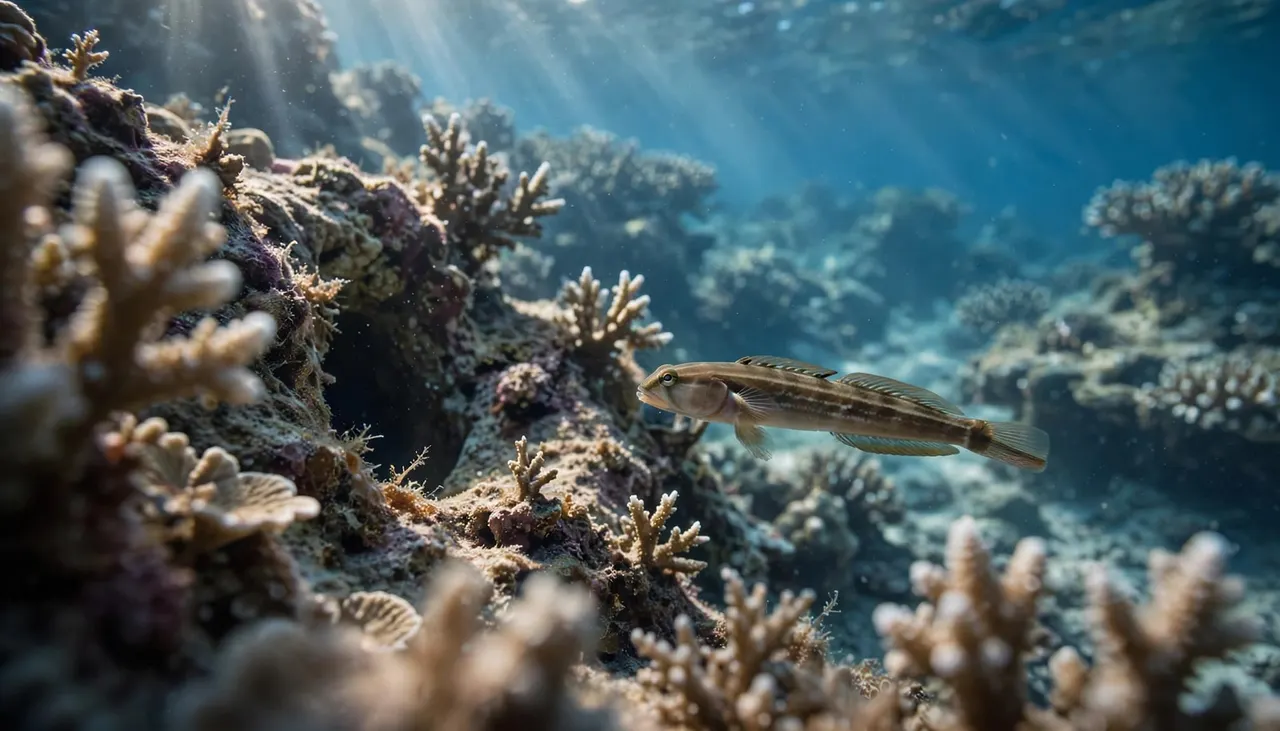
AI illustration of a slender reef fish, not a confirmed species photograph.
Gosline’s fangblenny: watch for blue stripes
Gosline’s fangblenny, Plagiotremus goslinei, is a Hawaiian-endemic species with bright blue longitudinal stripes. It reaches about 2.5 inches long, so you may notice its movement before its markings.
Look for a slender fish hovering near reef structure or retreating into an empty worm or snail tube. At snorkeling distance, those stripes and its narrow profile are more useful than its teeth.
Despite its resemblance to cleaner fishes, this fangblenny isn’t a true cleaner. It can approach other fish and take small bites of tissue.
You don’t need to witness that behavior to identify a possible sighting. Record the features you saw without assigning a purpose to every approach.
Scarface blenny: focus around the eye
The scarface blenny, Cirripectes vanderbilti, offers a different set of clues. Its variable dark-brown body can blend into shallow rocky reef habitat.
Look around the snout and eye for dark-red to orange slashes. Those facial marks are more informative than the overall brown color.
Its upper tail rays can appear yellowish, while the lower rays are dark brown. However, that contrast may be difficult to see through moving water.
This species has a direct Oahu connection: its original description used a specimen collected near Diamond Head in 1937. That history establishes a local record, not a guaranteed sighting on your swim.
Blenny, Goby, or Hawaiian Triplefin?
Recognize the Hawaiian triplefin lookalike
The Hawaiian triplefin, Enneapterygius atriceps, is a small endemic fish documented around Oahu. It reaches about one inch and occurs on seaweed-encrusted reefs.
Females can look green with pale blotches. Males are reddish-brown, while breeding males develop dark heads.
Its three separate dorsal fins distinguish a triplefin from a combtooth blenny. Yet those divisions can be hard to count unless you have a clear side view.
If you can’t see them, keep the identification broad. A tiny fish perched on reef growth deserves attention even when its family remains uncertain.
Compare fins before trusting posture
Gobies can also sit on reef surfaces or peer from shelter. Their behavior overlaps enough that perching alone won’t separate them from reef blennies.
Many gobies have two distinct dorsal fins. Many combtooth blennies have a long dorsal fin, sometimes with a noticeable notch.
Pelvic-fin structure offers another distinction, but it’s rarely easy to examine while snorkeling. Don’t descend or crowd a fish merely to inspect its underside.
Species names also matter when comparing references. Bishop Museum’s Hawaiian fish checklist provides a regional inventory, rather than assuming every familiar aquarium fish belongs on Oahu’s reefs.
Use several matching features before settling on a name. A shared body shape is a starting point, not a complete identification.
Build a Useful Identification From One Encounter
You can remember more by observing in a consistent order. First, notice the overall shape: slender or stocky, rounded-headed or pointed.
Next, follow the markings. Lengthwise stripes differ from vertical bars, while a colored slash near the eye differs from a body-wide pattern.
Finally, watch movement and shelter use. Note whether the fish rests on the reef, hovers above it, or repeatedly enters one hole.
Separate what you saw from what you inferred. A fish near another fish isn’t automatically cleaning, hunting, or defending territory.
Tube use also occurs across species. FishBase describes piano fangblennies sheltering in worm tubes when alarmed, so entering a tube doesn’t identify Gosline’s fangblenny by itself.
A fish disappearing into a hole tells you about its shelter. It doesn’t establish its species.
If you carry a camera, take a side-view photograph only when your position is comfortable and controlled. A wider image can preserve useful habitat context, even when the fish looks small.
Afterward, retain the original image. Strong color adjustments can change the very markings you’re trying to interpret. A short video can also preserve a return route or fin movement that a single photograph misses.
Explore Waikiki With Our Professional Snorkel Guides
At Living Ocean Tours, you depart from Kewalo Basin Boat Harbor, minutes from Waikiki. We’re Oahu’s only tour company with professional snorkel guides in the water with guests.
You receive equipment support and instruction before your swim. That gives you time to get comfortable before concentrating on reef blennies and other small residents.
Our guided Oahu snorkeling options pair offshore reef access with crew support. You can describe a fish’s stripes, head shape, or repeated route without arriving with its scientific name.
For couples with different experience levels, that support helps keep the outing enjoyable for both swimmers. Families can also focus on comfortable observation instead of turning identification into a race.
Back aboard, shaded seating, restrooms, and dry storage give you a place to regroup. Talk through what you noticed while the details remain fresh.
Choose your outing for guided reef exploration and comfort. A particular blenny sighting remains an unscripted wildlife encounter.
Give yourself time to enjoy the smaller reef residents on your next ocean outing.
Protect the Reef While You Watch
Small fish invite close inspection, but your viewing position should leave the habitat untouched. Float above the reef with enough clearance for your fins.
Never reach into a hole, lift a rock, or wave something toward an opening to make a fish emerge. Those actions disturb shelter and can expose your hand to animals you haven’t seen.
Hawaii prohibits taking, breaking, or damaging stony coral unless otherwise authorized by law. Keeping your body and equipment clear also protects the structure that these small fish use.
If a fish repeatedly retreats as you approach, increase your distance. Let it resume its movements instead of making another close pass.
The same restraint applies when a turtle enters your view. Hawaii’s Division of Aquatic Resources explains the protections surrounding Hawaiian sea turtles; give them space without touching, feeding, chasing, or blocking their route.
Meanwhile, keep part of your attention on your buddy, the boat, and changing water movement. A tiny fish shouldn’t draw you beyond your comfortable snorkeling area.
For children, make observation cooperative. One swimmer can notice the shelter while another remembers the markings, provided everyone stays together and follows crew directions.
You can leave with a memorable encounter even when the fish never fully emerges. Protecting that shelter matters more than completing an identification.
See More by Slowing Down
You can identify reef blennies more reliably when you combine markings, body shape, and repeated behavior. Blue stripes or orange facial slashes become useful when you also notice where the fish rests and how it moves.
Keep patient observation at the center of your swim. Stay clear of coral, accept an incomplete identification, and share the details you remember with your guide.
A small fish returning to its shelter can become one of your most memorable Oahu sightings.


