
Why red fades underwater When You Snorkel in Waikiki
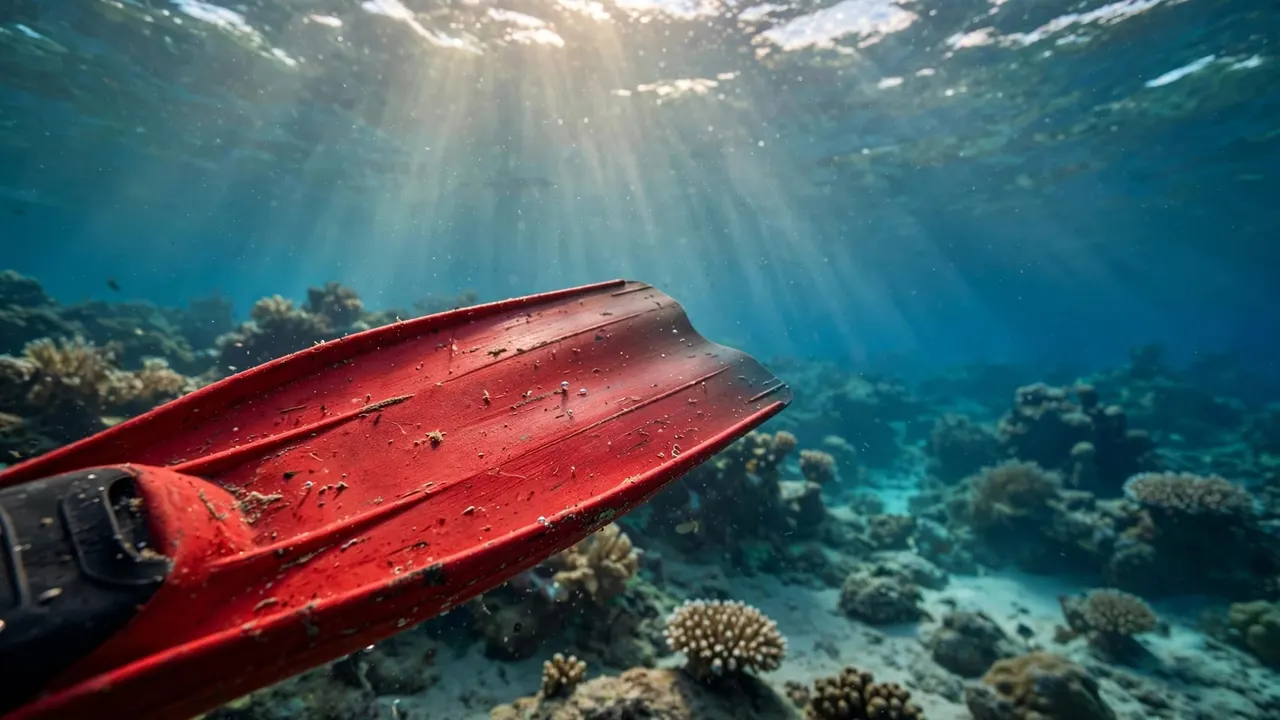
During Waikiki snorkeling, red fades underwater because water absorbs red light more readily than blue light. A red object can look darker or less colorful because less red light reaches it and returns to your eyes.
On your Waikiki outing with Living Ocean Tours, you might notice this change in a swimsuit, camera strap, or another familiar object. Understanding available light helps you make sense of that blue-green view without mistaking every muted color for poor visibility.
Key Takeaways
- Water absorbs red wavelengths quickly, while blue wavelengths travel farther through ocean water.
- Color loss depends on the full distance light travels, not only the depth beneath you.
- Clear water can still produce blue-looking scenes because clarity and color absorption are different things.
- You can enjoy more natural color by observing nearby subjects while keeping a respectful distance from wildlife and coral.
Why red fades underwater Before Blue
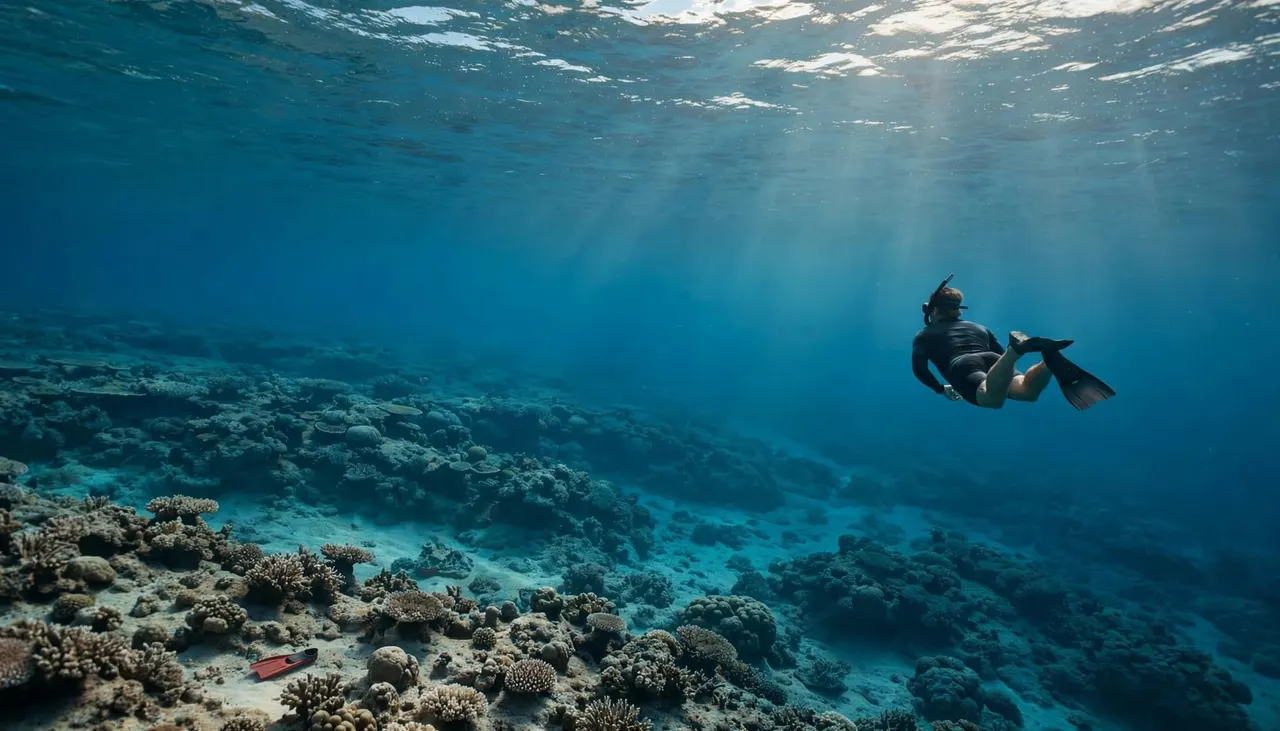
Water absorbs different wavelengths differently
Sunlight contains a range of visible wavelengths that you perceive as different colors. Red sits at the long-wavelength end of that range, while violet sits at the short-wavelength end.
However, water doesn’t transmit every wavelength equally. It absorbs red light more readily, so the light remaining underwater becomes less balanced than sunlight above the surface.
NOAA’s light and color factsheet explains the visible spectrum and how underwater light changes. The practical result is simple: warm colors lose strength as light travels through water.
Your eyes need reflected red light
You see a red object because its surface reflects red light toward your eyes. If the surrounding light contains less red, that object has less red light to reflect.
Its material hasn’t changed. Instead, the illumination has changed.
Depending on the object’s other reflective properties, it might appear brownish, gray, or nearly black. It doesn’t automatically become bright blue.
Meanwhile, blue wavelengths remain available farther through the water. The Library of Congress explanation of ocean color describes this contrast between rapid red absorption and deeper blue transmission.
Depth Isn’t the Whole Story
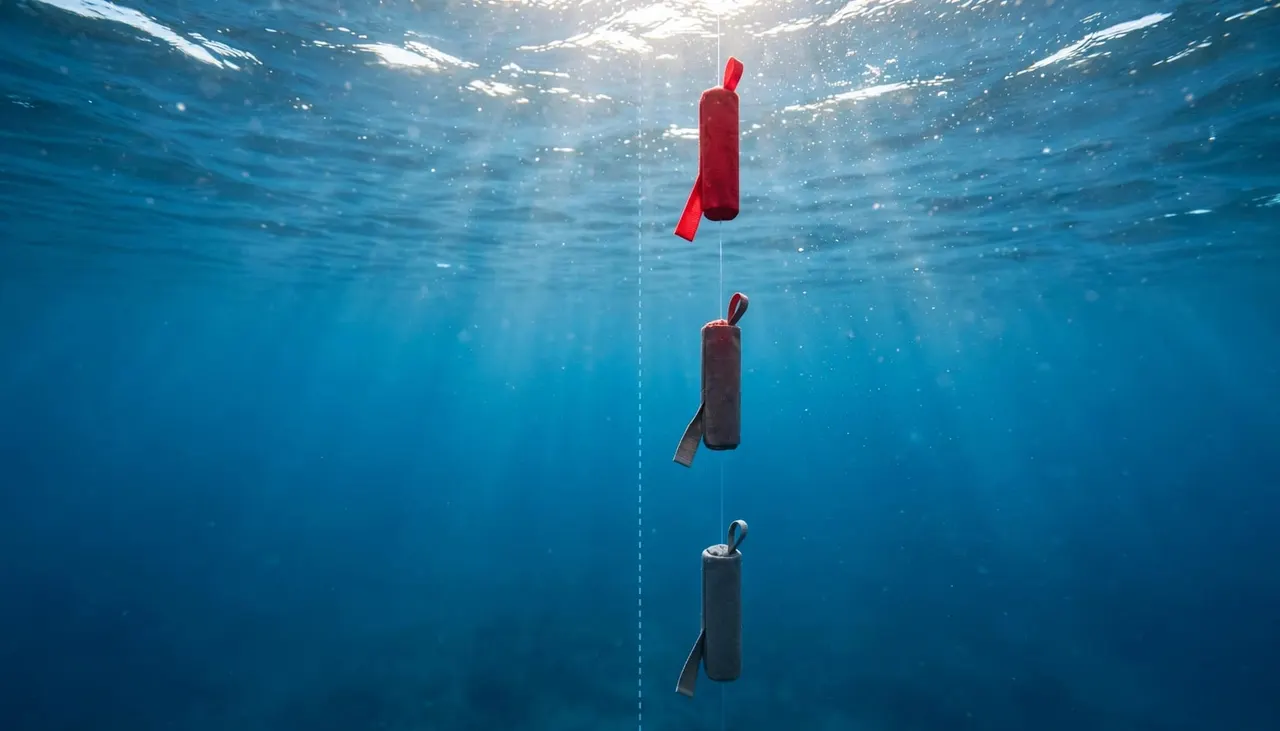
Light travels to the object, then to you
When you look at something underwater, sunlight first travels through water to illuminate it. Reflected light then travels through more water before reaching your mask.
Both parts of that journey affect color. As a result, something farther away can look less colorful than something nearby, even when both sit at similar depths.
This helps explain why red fades underwater while you’re floating at the surface. You don’t have to descend yourself. The object you’re viewing, and the water between you, can provide enough distance for a noticeable change.
There isn’t one universal disappearance depth
You may encounter charts that assign each color a single depth where it disappears. Those charts simplify a gradual process.
Red doesn’t switch off at a fixed line. Sun angle, suspended material, the object’s reflectivity, and viewing distance all influence what you see.
The University of Hawaii at Manoa’s ocean-light explanation describes how water absorbs wavelengths differently. It supports the general pattern, rather than a guaranteed color boundary for every snorkeling location.
A blue-looking scene doesn’t tell you its exact depth. It tells you that the light reaching your eyes has changed along its path.
What Waikiki’s Changing Light Does to Your View
Sunshine changes brightness and contrast
A sunlit sandy patch can look much brighter than nearby reef structure. When a cloud passes overhead, that contrast changes again.
These shifts affect how easily you distinguish shapes and colors. However, a passing shadow isn’t the same process as water selectively absorbing red wavelengths.
Surface glare adds another complication. Reflections can make it harder to see through the surface when you lift your head. Once your mask is underwater, you avoid much of that surface reflection, but you still see through water that absorbs light.
Clear water doesn’t preserve every color
Visibility describes how far you can make out objects. Color balance describes which wavelengths remain available to illuminate those objects.
You can therefore see a distant feature clearly while its warm colors look muted. Conversely, suspended particles can make a nearby scene hazy before distance causes an obvious color shift.
Around Waikiki, judge your view by more than its shade of blue. Notice whether outlines remain sharp, whether particles obscure details, and whether you can comfortably keep track of your buddy.
If the view makes you uneasy, stay close to your group and communicate rather than swimming farther away.
How to Enjoy More Color Without Going Deeper
Because red fades underwater as light travels, your most useful adjustment is often where you look. A nearby subject generally gives reflected light a shorter journey to your eyes.
You can notice this with your own swimwear or a camera strap. Compare its appearance above the surface with its appearance just below. Keep your position steady instead of descending to chase a stronger effect.
For reef viewing, let an interesting scene develop within your comfortable field of view. Pause, breathe normally, and watch nearby details rather than pursuing something at the edge of visibility.
You can also improve your experience with a clear, well-fitting mask. Fog and leaks obscure detail, although fixing them won’t replace absorbed red light.
Most importantly, better color never justifies crowding wildlife. Don’t move closer to an animal solely to brighten your view or photograph. Leave coral untouched, keep equipment clear of the reef, and maintain awareness of your route back.
Your comfort matters more than finding the most saturated scene. Stay at the surface when that’s your comfortable position, snorkel with a buddy, and stop if breathing feels difficult.
Why Your Underwater Photos Look Different
Your camera records the available light
An underwater camera faces the same basic limitation as your eyes. When red fades underwater, its sensor receives less red information from the scene.
Distance matters here, too. A wide photograph across open water often carries a stronger blue cast than a nearby subject photographed under similar lighting.
However, don’t shorten that distance by chasing wildlife or placing yourself against coral. Photograph what you can reach through safe positioning, and let a wider frame show the surrounding habitat.
Also, secure loose camera straps so they don’t drag over the bottom. A photograph isn’t worth damaging the setting you came to enjoy.
White balance helps, but has limits
Your camera’s underwater mode or white-balance adjustment can make an image look more natural. These settings change how the camera interprets the light it records.
They can’t recover detail that never reached the sensor. Heavy red correction can also introduce unnatural colors or make noise more visible.
A nearby white light can restore warm illumination to a close subject because it supplies wavelengths missing from ambient light. However, its effect weakens with distance.
For a casual snorkeling outing, you don’t need extra lighting equipment to enjoy photography. Favor steady framing, reasonable expectations, and modest editing. A blue-toned image can still show the scene clearly and honestly.
Make Color Awareness Part of Your Waikiki Outing
You don’t need to turn your swim into a science experiment. Notice how nearby colors compare with distant ones, then return your attention to the whole underwater scene.
At Living Ocean Tours, we welcome that curiosity. You can explore our Waikiki snorkeling options when choosing your next ocean outing.
Keep your experience focused on comfortable observation. Look up periodically to locate your group, avoid becoming absorbed in a camera screen, and give yourself time to appreciate changing light.
When you’re ready to plan your time on the water, you can view available departures below.
Frequently Asked Questions About Underwater Color
Does a red object lose its actual color?
No. Its surface still has the same reflective properties. What changes is the light available for that surface to reflect toward you.
Bring the object back into ordinary daylight, and its familiar appearance returns. This distinction helps you understand why underwater color changes don’t indicate damage to the material.
Will a red camera filter fix snorkeling photos?
A red filter reduces some blue and green light before it reaches the camera. Under suitable conditions, that can help balance the recorded colors.
However, it also reduces total light. In shallow water with plenty of red still available, it can make photographs look too warm. It doesn’t create missing red light, so it isn’t an automatic improvement for every snorkeling scene.
Does a more expensive mask restore missing colors?
A better-fitting mask can improve comfort, reduce leaks, and help you see details without distraction. A clean lens also avoids unnecessary haze.
However, an ordinary mask doesn’t replace wavelengths that water has already absorbed. Choose fit and clear vision rather than expecting a mask to reverse the ocean’s effect on color.
Is muted red a warning that the water is unsafe?
Color loss alone isn’t a safety test. It’s a normal result of light traveling through water.
You still need to pay attention to your breathing, waves, current, group position, and comfort. Never use the brightness of underwater colors as your reason to enter, continue, or swim farther.
Enjoy Waikiki’s Colors With Clear Expectations
Once you understand why red fades underwater, a blue-green view becomes easier to interpret. You’re seeing the effect of light traveling through water, not necessarily poor visibility or an uninteresting scene.
Focus on nearby details without crowding wildlife, keep your mask clear, and let comfort guide your position. Waikiki’s underwater view doesn’t need perfectly preserved reds to reward your attention.


