
Queen’s Beach snorkeling: A Calm Waikiki Reef Guide
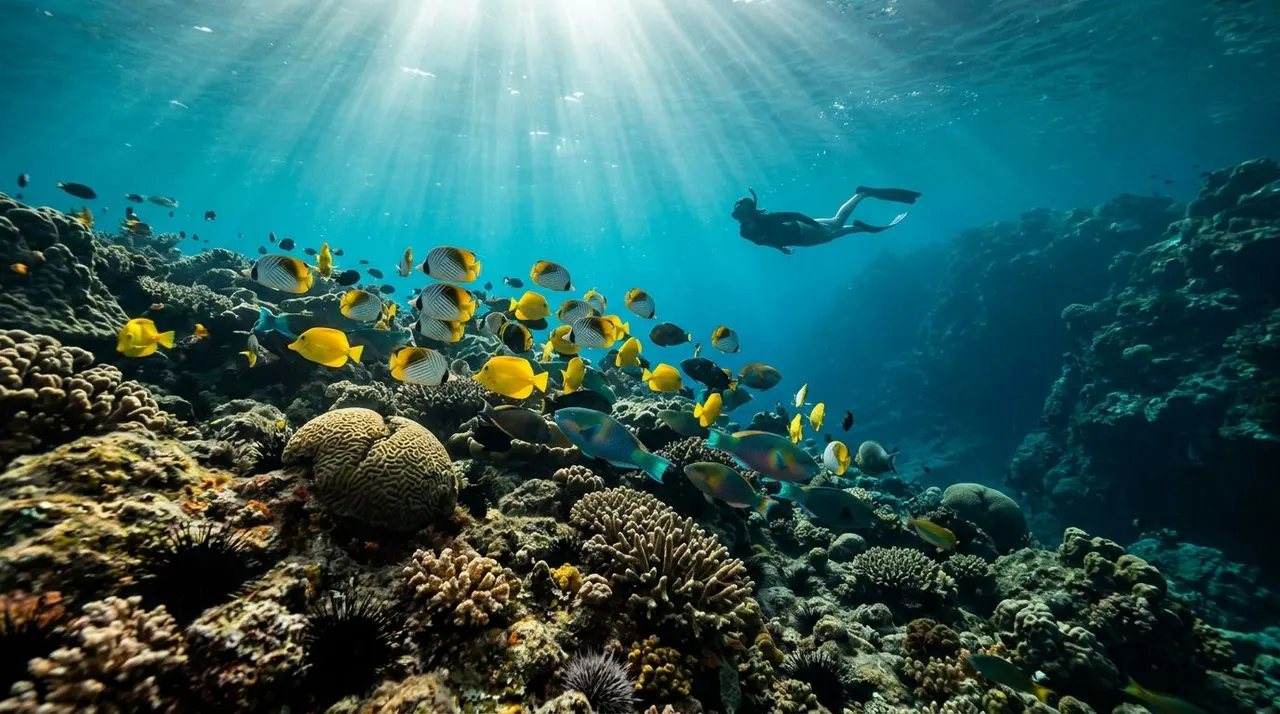
Queen’s Beach snorkeling gives you an easy way to see Oahu’s reef fish without leaving Waikiki. On calm mornings, the protected water near the aquarium and Natatorium can offer clear views of rocky reef walls, small coral growth, and colorful tropical fish.
You can reach the beach on foot, bring your own mask and fins, and spend an hour in the water before heading to Kapiolani Park or the Honolulu Zoo. The experience depends heavily on ocean conditions, so knowing where to enter and when to swim makes a major difference.
Key Takeaways
- Queen’s Beach is near the Waikiki Aquarium, Kapiolani Park, and Honolulu Zoo.
- Calm mornings usually offer the best visibility and safest swimming conditions.
- You may see tangs, butterflyfish, parrotfish, eels, octopus, urchins, and occasional sea turtles.
- The bottom is rocky reef and wall habitat, not a large coral garden.
- A guided boat tour gives you professional instruction, equipment, and access to deeper marine habitats.
Why Queen’s Beach snorkeling stands out
Queen’s Beach sits at the southern end of Waikiki, near 2605 Kalakaua Avenue. The beach is easy to reach from nearby hotels, and you can combine a snorkel session with a walk through Kapiolani Park. The Waikiki Aquarium and Honolulu Zoo are also close by, which makes this area practical for families with different interests.
The water near Queen’s Beach is part of the Waikiki Marine Life Conservation District area. Fishing and removing marine life are prohibited in the protected zone. Because the reef receives less fishing pressure, you can often find more fish around the rock walls and underwater structure.
You won’t find a huge field of living coral here. Instead, the underwater scenery includes rocky ledges, reef walls, sandy patches, and small coral formations. That structure attracts fish that use cracks and overhangs for shelter.
Common sightings include yellow tang, convict tang, surgeonfish, butterflyfish, parrotfish, goatfish, wrasse, triggerfish, and trumpetfish. You might also spot a moray eel, octopus, pufferfish, sea cucumber, or sea urchin. Hawaiian green sea turtles sometimes pass through the area, but no wildlife sighting is guaranteed.
For another family-friendly perspective on nearby Waikiki snorkeling, you can read this guide to Sans Souci Beach. The neighboring shoreline offers another option when you want a simple beach day with time in the water.
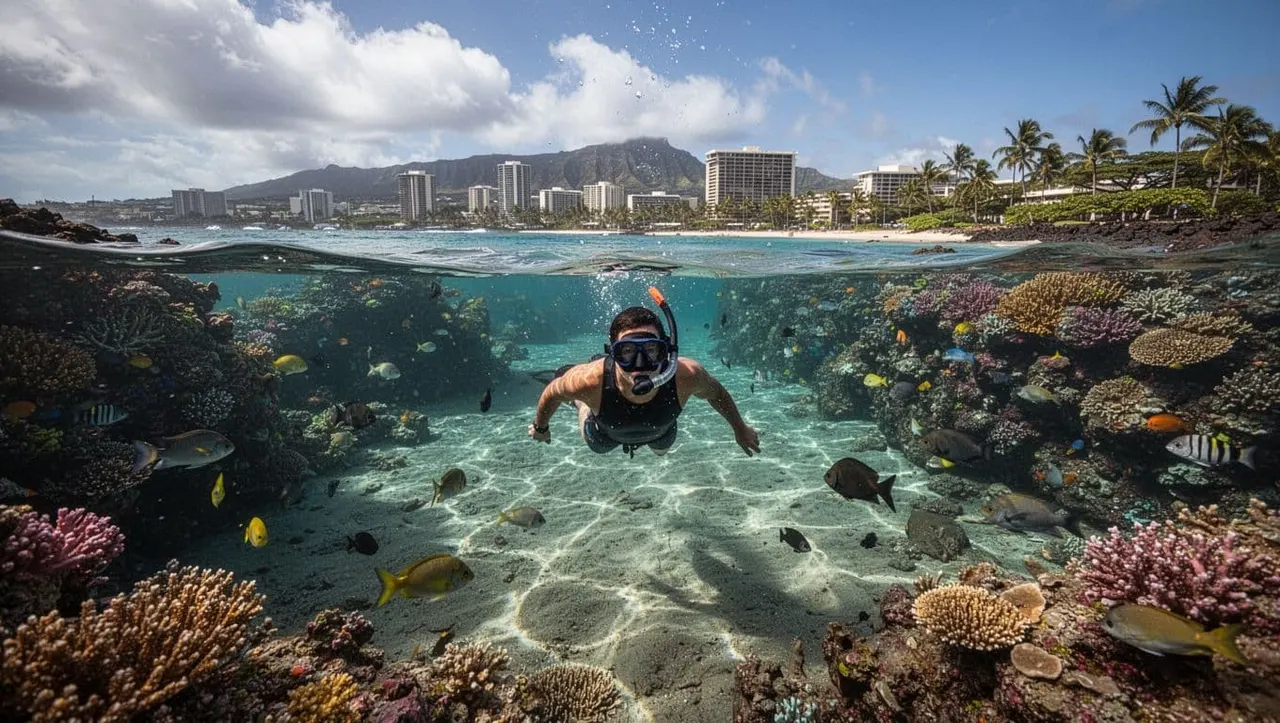
Where to enter and what you will see underwater
Many swimmers enter near the main beach area and follow the reef toward the aquarium and Natatorium wall. The best route can change with the surf, current, and visibility, so check the water before committing to a longer swim.
Near the rock jetty, the water may be only 1 to 4 feet deep. Beyond the shallow reef, depths can reach roughly 8 to 15 feet. The wall and reef sections around 8 feet deep often provide the most comfortable viewing for confident swimmers.
Stay aware of the bottom as you move. Rocks can be uneven, and waves can push you toward shallow areas quickly. Wear fins only when you have enough space to kick without striking the reef or another swimmer.
The underwater view often improves when you swim slowly. Fish may hide when you kick hard or chase them. Instead, keep your body relaxed, use small fin movements, and pause near reef edges. Look beneath ledges and along the sandy border, where small fish and eels often appear.
Queen’s Beach snorkeling is best for observing reef life at close range. You may see fish in only a few feet of water, especially around the protected rock formations. Still, the conditions can change within minutes if a south swell arrives.
A useful beginner guide to Waikiki snorkeling spots can help you compare Queen’s Beach with other shore locations around Oahu. For this beach, however, local conditions matter more than any fixed ranking.
Best times, water conditions, and safety tips
Calm mornings usually provide the clearest water. Early light can make fish easier to see, while lower wind often keeps the surface smoother. Some local conditions reports identify late morning as another workable window, but you should judge the water on the day you visit.
Small swells are important. Conditions under about 2 feet are generally more comfortable for this shoreline. Even a modest south swell can reduce visibility, create surge, and make the reef wall unsafe for inexperienced swimmers.
Before entering, check the surf forecast and speak with the lifeguards. If waves break across the entry area, water pushes strongly toward the reef, or you can’t see the bottom, choose another activity. Clear water isn’t worth taking a risk.
Use these simple habits for a safer swim:
- Stay with a visible buddy and keep your distance from the reef wall.
- Wear a bright rash guard or flotation vest so others can see you.
- Keep your mask sealed and test your fins in shallow water first.
- Never stand on coral, rocks covered with marine life, or sea urchin habitat.
- Leave turtles, fish, eels, and every other animal undisturbed.
- Avoid touching or feeding wildlife, even if an animal swims close.
- Exit the water before fatigue affects your breathing or judgment.
Use mineral sunscreen on exposed skin, and apply it before you arrive so it has time to settle. A long-sleeve rash guard offers better protection during a lengthy swim and reduces the amount of sunscreen that reaches the water.
The most important rule is simple: observe, don’t touch. A turtle resting on the bottom needs space, and reef animals can suffer damage from one careless hand or fin.
When a guided boat tour fits better
Shore snorkeling works well when you want a short, flexible outing. However, a guided trip is a better choice if you are new to snorkeling, traveling with children, or hoping to reach a reliable turtle habitat.
Living Ocean Tours operates from Kewalo Basin Boat Harbor, a short drive from Waikiki. The company focuses on marine excursions along the Waikiki coast and is the only tour company with professional snorkel guides. That matters when you need help with mask fit, breathing technique, water entry, or identifying marine life.
Its signature Turtle Canyon snorkeling excursion takes you to a natural underwater cleaning station where Hawaiian green sea turtles are frequently seen. Living Ocean Tours reports a 95% success rate for turtle sightings, although wildlife remains wild and sightings can never be guaranteed.
The Coast Guard-inspected Coral Kai and Lokahi are custom-built double-decker vessels with shaded seating, restrooms, dry storage, and sturdy ladders. The Lokahi also uses a SeaKeeper stabilization system, which helps reduce rolling for guests who are concerned about seasickness.
You can bring a beginner who feels nervous in the water, since the crew provides instruction and stays involved throughout the snorkel. Families also benefit from the easier boat entry and access to deeper water than you typically find near the Queen’s Beach shoreline.
When you want to check dates for the Turtle Canyon option, use the Turtle Canyon tour availability. You can also choose the shore option when the ocean is calm and you prefer to set your own pace.
Conclusion
Queen’s Beach snorkeling is a convenient Waikiki adventure when the sea is calm. You can expect rocky reef habitat, tropical fish, and a chance to spot larger animals without traveling far from your hotel.
Check the surf before you enter, swim with a buddy, and give every animal plenty of space. If you want professional guidance and a stronger chance of reaching a turtle habitat, a Living Ocean Tours trip adds comfort, instruction, and time on the open water.


