
Prescription Medication Boat Tour: What to Bring
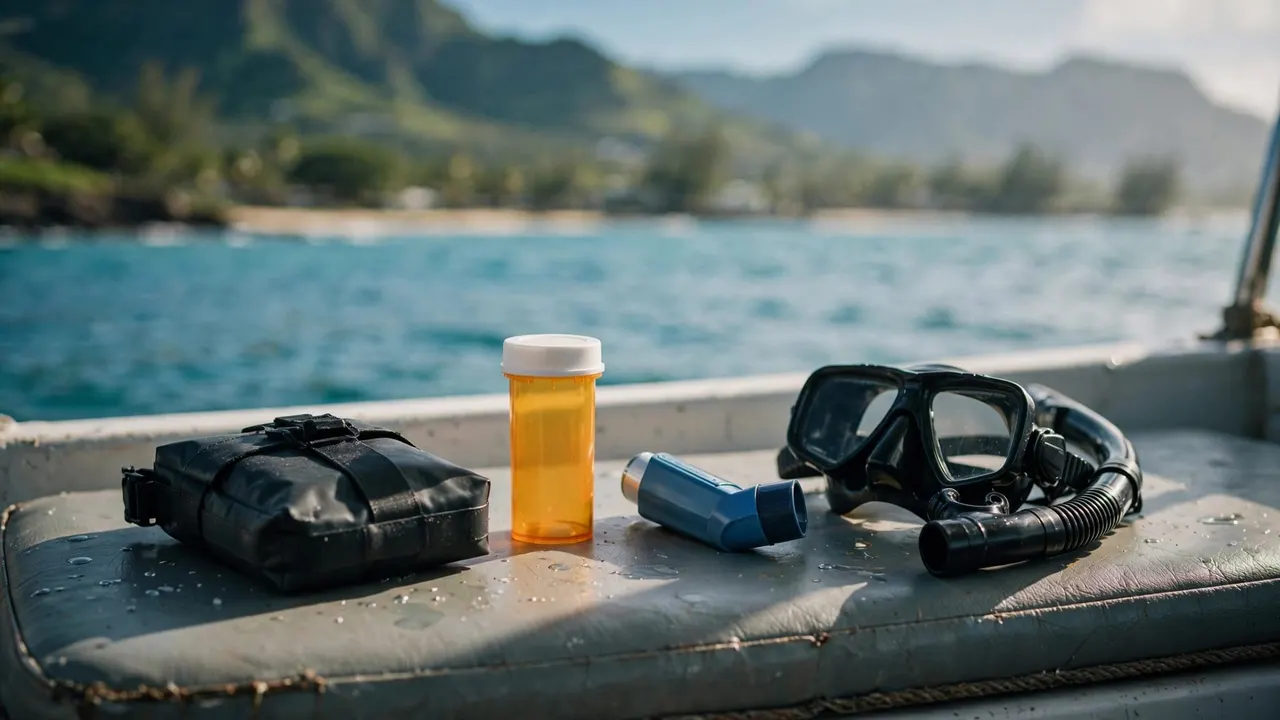
Yes, you can generally bring prescription medication on a boat tour for your own use. Keep necessary doses accessible, protected from spray, and stored according to their directions.
At Living Ocean Tours, we want you to enjoy the ocean without leaving essential health needs behind. For our Honolulu boat and snorkeling tours, a small medication kit belongs alongside your sun protection and other personal essentials. Start with what you need during the outing, then account for heat, motion, and swimming.
Key Takeaways
- Bring your prescribed medication, including rescue treatments you might need, rather than leaving everything at your hotel.
- Keep pharmacy labels and dosing information available, and protect medicines from water and unsuitable temperatures.
- Discuss seasickness treatments with a pharmacist or clinician because some cause drowsiness or interact with other prescriptions.
- Tell the crew promptly about symptoms or assistance you need, especially before entering the water.
Your prescription medication boat tour essentials
Daily prescriptions and rescue treatments
Bring medication you need during the excursion, plus enough to cover an unexpected delay returning to your accommodations. Keep taking prescriptions according to your treatment plan; don’t skip a dose simply because you’re spending time offshore.
An inhaler, prescribed epinephrine auto-injector, or other rescue medication deserves priority. Keep it somewhere reachable rather than beneath towels or at the bottom of a large beach bag.
For children, one responsible adult should manage the medicine and know when it’s needed. Keep medication secured against accidental use while maintaining quick access for the adult responsible.
Packaging that prevents confusion
Pharmacy-labeled packaging makes identification easier and keeps your name, medication name, and directions together. A photo of the label can provide a useful backup, but it doesn’t replace the medicine itself.
The CDC recommends original, labeled medicine containers for international travel. That guidance is especially useful when your Hawaii vacation includes an international flight.
Keep prescribed medicine for your own use. Don’t share it with another passenger, even if their symptoms sound familiar.
Pack prescriptions for quick access
Use a small, secure bag
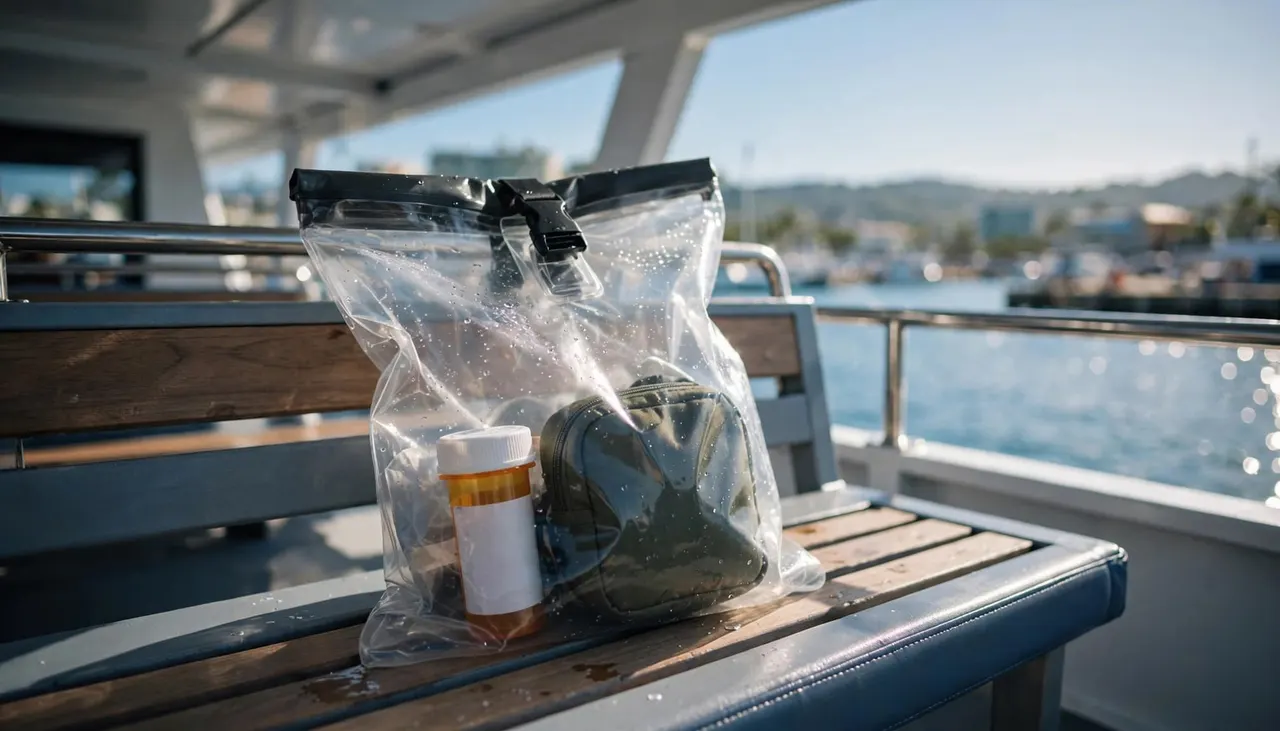
Keep your prescription medication boat tour kit in one compact pouch inside a securely closed, water-resistant bag. Keep liquid containers upright with their caps tightly closed.
A dry bag protects against spray, but it isn’t automatically insulated or suitable for underwater use. Keep it out of standing water and direct sunlight.
Secure the bag where the crew directs without blocking a walkway. Avoid balancing bottles on a seat or railing, where a wake could send them sliding.
If you use injectable medicine, bring an appropriate portable sharps container. Used needles shouldn’t go loose into a beach bag or ordinary trash.
Plan around your dose
Before departure, account for the outing and the journey back to your accommodations. If a prescription requires food, include that requirement in your meal planning.
Use your usual reminders, but don’t depend entirely on hearing a phone alarm over wind and engines. A companion can also know when you’ll need a dose.
If you’re traveling across time zones, a pharmacist can help you maintain an appropriate schedule. Don’t double a dose or move it substantially without professional guidance.
Protect medication from heat and spray
Follow each product’s storage directions
Your prescription medication boat tour preparation needs to account for temperature as well as water. Medicines have different storage requirements, so one cooling method won’t suit every prescription.
For example, EpiPen labeling specifies storage at 68°F to 77°F, with permitted temperature excursions between 59°F and 86°F. It also says to protect the injector from light and avoid refrigeration or freezing.
Insulin storage depends on the product and whether it’s unopened or already in use. Follow the instructions for your exact prescription rather than applying another traveler’s routine.
Don’t assume a tour boat has a medical refrigerator. Use a suitable personal storage solution when your prescription needs temperature control.
Keep cooling supplies separate
If your medicine requires cooling, avoid direct contact with frozen packs unless its directions permit that method. Freezing can damage medicines that need refrigeration.
Also, shade doesn’t guarantee that a bag stays within a medicine’s required temperature range. Keep temperature-sensitive supplies in an appropriate insulated carrier.
The FDA’s guidance on exposed medicines explains that heat and contaminated water can compromise medication. If tablets become wet or packaging is damaged, a pharmacist can advise whether replacement is necessary.
Prevent seasickness without risky combinations
Choose medication before departure
Motion-sickness medicine works best when you plan ahead. Common options include meclizine, dimenhydrinate, and prescription scopolamine, but the right choice depends on your health and other medications.
These treatments can cause drowsiness. Scopolamine also needs extra caution for people with certain glaucoma or urinary-retention concerns.
Discuss prevention with a pharmacist or clinician before your outing, especially if you plan to snorkel. Don’t borrow a passenger’s prescription or assume an adult product suits a child.
Follow the timing on your product or prescription. Waiting until nausea becomes severe can make treatment less effective.
Protect your balance and alertness
Avoid alcohol when your medication warns against it. Combining alcohol with sedating medicines can impair judgment and balance on a moving deck.
A light meal may be more comfortable than heavy food if you’re prone to travel nausea. Drink water, look toward the horizon, and put away your phone if scrolling makes symptoms worse.
Tell a crew member early if you feel nauseated, sweaty, dizzy, or unsteady. Don’t climb stairs alone while lightheaded.
A medicine that helps your nausea can still affect your swimming ability. Drowsiness or dizziness is a reason to stay out of the water.
Tell the crew what support you need
You don’t need to announce your medical history to everyone aboard. Instead, share practical information privately before departure, such as where your rescue medicine is and what assistance you might need.
Tell your companion where you’ve stored essential supplies, too. If you become unwell, that person can identify your bag without searching through other passengers’ belongings.
Keep responsibility for your treatment plan with you and your healthcare team. Bring your own prescribed supplies rather than relying on the boat to stock them.
If you develop chest pain, breathing trouble, unusual confusion, or severe symptoms, alert the crew immediately. Follow your prescribed emergency plan and let the crew coordinate the vessel’s response.
Meanwhile, keep passageways clear. If you’re helping another passenger, don’t give someone else’s medication or attempt treatment beyond your training.
Plan your Waikiki outing around your health needs
Your prescription medication boat tour planning should support the experience you want, including the choice to remain aboard. You can enjoy the coastline without entering the water if you’re tired, unwell, or affected by medication.
We depart from Kewalo Basin Boat Harbor near Waikiki. Our Coral Kai and Lokahi vessels have shaded seating, onboard restrooms, and dry storage, so you have practical comforts during your outing.
For snorkeling, we’re the only tour company with professional snorkel guides. Let your guide know if you feel unwell before entering the water; guidance doesn’t replace individual medical advice.
Lokahi’s SeaKeeper stabilization system reduces vessel roll, but no boat eliminates ocean motion or guarantees freedom from seasickness. Bring your usual prevention plan rather than relying on boat features alone.
Choose an outing that fits your comfort level, then give yourself time to board and listen to the briefing.
Frequently Asked Questions
Can you bring liquid prescriptions and injection supplies?
Yes, you can generally bring personal liquid prescriptions and the supplies needed to use them. Keep them securely packaged, follow storage instructions, and use a proper sharps container for needles. Airline screening is separate from a local boat excursion.
Can you snorkel while taking prescription medication?
That depends on your condition and the medicine’s effects. Sedation, dizziness, and reduced alertness can make swimming unsafe. A clinician familiar with your health can advise whether snorkeling is appropriate. Stay aboard if you feel impaired, even when everyone else enters.
Should rescue medication go into the water with you?
Don’t assume a pouch makes medical devices suitable for submersion. Many aren’t designed for underwater use. Your emergency plan should account for where the medication stays and how you’ll receive help. Discuss swimming-related medical risks with your clinician before the trip.
Are international medication rules different?
Yes. A local excursion and an international border crossing involve different considerations. The CDC’s travel packing guidance notes that some countries restrict certain medicines. Plan the international portion of your vacation separately from your time on a Honolulu boat.
Bring What You Need, Keep It Within Reach
A practical prescription medication boat tour checklist starts with your prescribed treatment, suitable storage, and easy access. Follow product directions and account for any side effects before deciding to swim.
Keep essential medication close, tell the crew early if you need help, and choose activities that match how you feel. Thoughtful preparation lets you spend more attention on the ocean and less on searching through your bag.


