
What to Do If You’re overheated on a boat

If you’re overheated on a boat, stop what you’re doing, tell the crew, move into shade, and begin cooling down. At Living Ocean Tours, we want you to speak up as soon as you feel unwell, even if your symptoms seem mild.
A boat ride can feel breezy while your body is still getting too hot. Knowing the early warning signs helps you act before discomfort becomes an emergency.
Recognize the signs of overheating

You don’t have to feel intensely hot to need a break. Sun exposure, physical activity, and time spent in warm conditions can all leave you feeling unwell.
Notice changes in how you feel
The CDC’s heat illness guidance lists headache, nausea, dizziness, weakness, thirst, and heavy sweating among the possible signs of heat exhaustion. You may also feel irritable or unusually tired.
Pay attention to a symptom that’s out of character for you, especially if it appears after swimming or sitting in direct sun. A headache deserves attention even if you’ve been drinking water.
Don’t wait for every symptom
You might have only one or two signs at first. You don’t need to decide whether you’re experiencing heat exhaustion before asking for help.
If you’re overheated on a boat and feel unsteady, stay seated and call a crew member over. That choice is safer than walking across a moving deck alone.
What to do when overheating starts
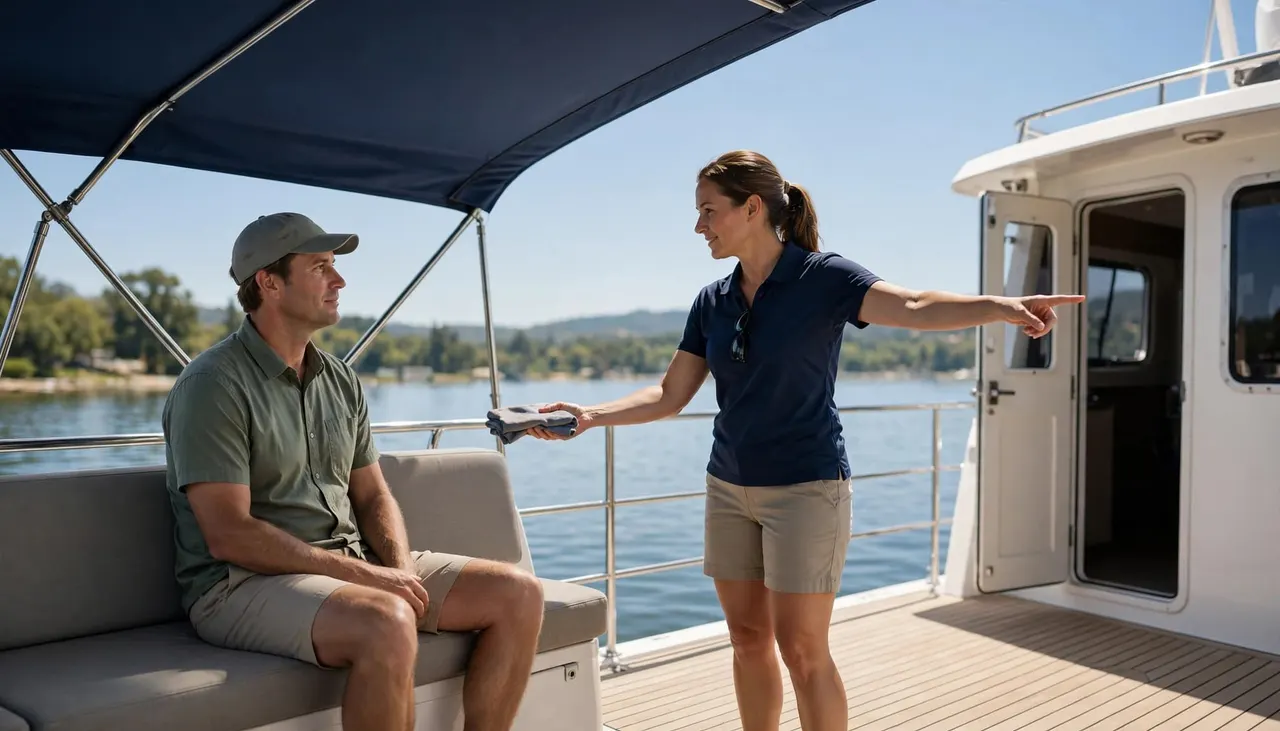
Your first priorities are to stop activity, get help, and cool down. Tell the crew how you feel and mention symptoms such as dizziness, nausea, or a headache.
Move somewhere cooler
Ask for help reaching a shaded area, then sit or lie down where you won’t block a walkway. If you’re dizzy, don’t climb stairs or change decks without assistance.
Loosen or remove extra layers, and use cool water or wet cloths on your skin. A towel on your neck or forehead can feel refreshing. Fanning damp skin can help your body lose heat as well.
Keep someone nearby while you rest. If you feel faint, let that person know before trying to stand.
Sip water if you’re fully alert
If you’re awake, alert, and able to swallow normally, take small sips of cool water. Avoid alcohol while you’re feeling unwell, and don’t force yourself to drink a large amount at once.
If you’re vomiting, your symptoms worsen, or you aren’t improving, tell the crew you need medical help. On a boat, the captain can coordinate your return to shore and access to care.
If a person is confused, has collapsed, or may have heat stroke, call 911 and begin cooling immediately. Don’t give them fluids.
Know when to treat heat as an emergency
Heat stroke is life-threatening. Confusion, altered awareness, seizures, collapse, or a loss of consciousness are warning signs that require emergency action. Skin may be hot and dry, but a person with heat stroke can also be sweating.
Ask the crew to call 911 and arrange the fastest safe access to medical care. Offshore, the crew can use its communications equipment to coordinate assistance. Don’t wait for the boat to reach the dock before calling.
While help is on the way, move the person to a cooler place if you can do so safely. Cool them immediately with cold water, wet towels, and airflow. Cold packs wrapped in cloth can also be applied to the neck, armpits, and groin.
Don’t give a person with suspected heat stroke anything to drink. Follow the emergency dispatcher’s instructions, including guidance on breathing and CPR if needed. The CDC’s heat illness reference distinguishes heat exhaustion symptoms from more serious warning signs.
If symptoms start while you’re snorkeling
A headache or dizziness in the water needs prompt attention, regardless of the cause. You may be dealing with heat, fatigue, an equipment issue, or another problem. You don’t need to diagnose it while floating offshore.
Stop swimming and signal your buddy or guide. Keep your face clear of the water, use your flotation equipment, and ask for help returning to the boat. Follow the crew’s directions rather than trying to make the return trip alone if you feel unsteady.
Once aboard, sit down with assistance and explain what happened. Remove your snorkel equipment when you’re safely supported, then move into shade and begin cooling.
Don’t get back into the water because you’re worried about missing the reef. Even a mild symptom can make it harder to judge distance, manage your equipment, or climb a ladder.
Heat and seasickness can feel similar
Nausea, sweating, and dizziness can happen with motion sickness as well as overheating. On a moving boat, you might also have both at once. Since the symptoms overlap, tell the crew what you’re experiencing instead of assuming you know the cause.
For motion discomfort, sitting where you can see the horizon may help. Put your phone away and ask the crew for a stable place to sit. At the same time, move out of direct sun and cool down if you feel hot.
If you’re prone to motion sickness, discuss prevention with a pharmacist or healthcare professional before your outing. Some medicines cause drowsiness, which matters if you plan to swim.
Prepare before you board
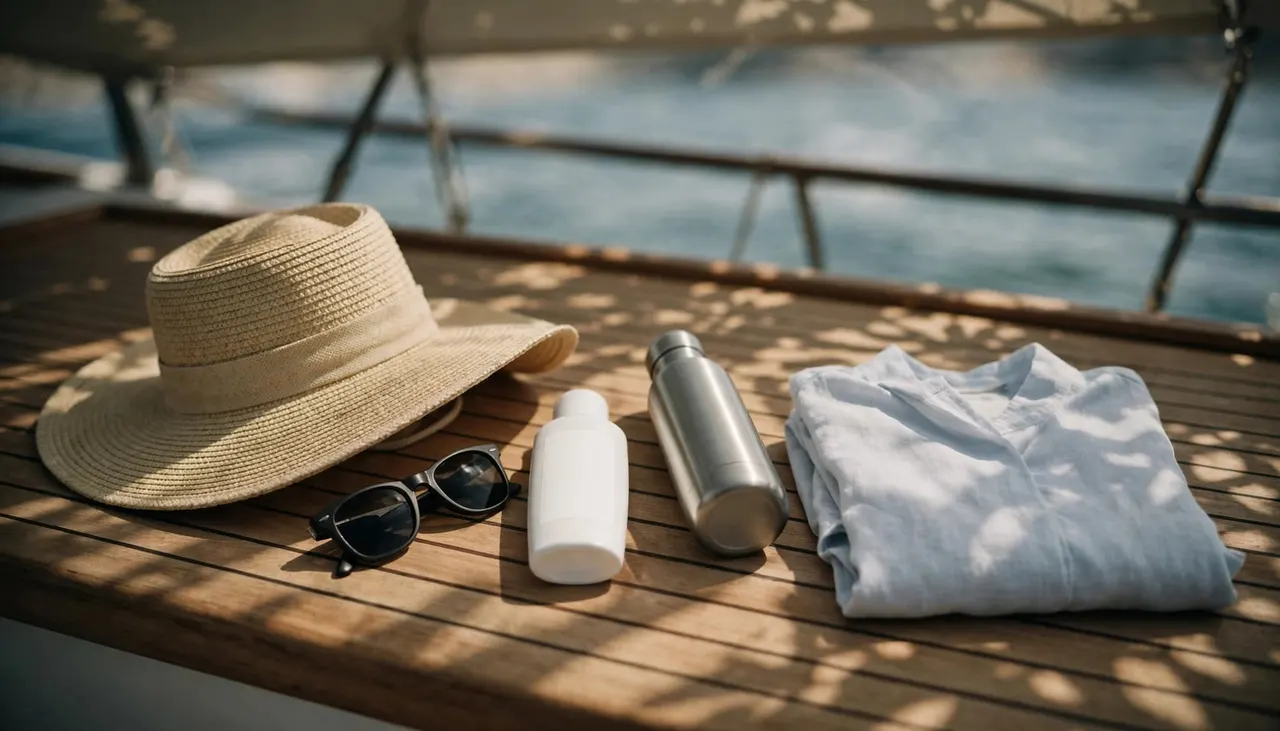
A little preparation makes it easier to stay comfortable, especially when your day includes swimming and sightseeing. You can pack light without leaving your essentials behind.
Bring water and sun protection
Start with a reusable water bottle, a secure hat, sunglasses, and a lightweight long-sleeve layer or rash guard. Bring sunscreen and follow its application instructions. A towel is useful after snorkeling and can also help you cool off when dampened.
Choose sunscreen without oxybenzone or octinoxate, and remember that no sunscreen replaces shade. Keep your bottle and sun protection accessible so you don’t have to search through a packed bag when you need them.
Eat a normal meal before your trip and drink water along with it. During the outing, drink at natural breaks rather than trying to meet an arbitrary quota. Water is generally enough for a relaxed outing; an electrolyte drink may be useful during prolonged exertion and heavy sweating.
Plan for the whole day
Your boat ride may be only one part of a sunny day. If you’ve already spent hours at the beach, take time to eat, drink, and cool down before boarding.
Leave some flexibility afterward, too. A tight schedule can make you feel pressured to ignore a headache or skip a rest. If you feel unwell before departure, seek medical advice rather than pushing ahead with your plans.
Give children and vulnerable guests extra attention
Children may be busy watching the water or enjoying the ride, so they won’t always tell you when they need a break. Offer water regularly, make room for shaded rest, and pay attention if a child becomes unusually tired, irritable, or dizzy.
Stay close during swimming and let the crew know if your child needs help getting back aboard. If a child seems confused or collapses, call 911 and begin cooling immediately.
Older adults and people with certain health conditions or medications may also be more sensitive to heat. If that applies to you, discuss your plans with your healthcare professional before your trip. The CDC’s heat and health guidance explains why some people face a greater risk.
Take recovery seriously
When you’re overheated on a boat, a few sips of water don’t automatically mean you’re ready to snorkel again. Give yourself time to cool down, and tell the crew if any symptoms remain.
Stay seated until you feel steady. If you needed help because of significant symptoms, seek medical advice before returning to strenuous activity. Persistent symptoms, worsening symptoms, or vomiting call for medical attention.
Once you’re back ashore, keep your plans flexible. A cool place to rest and a normal meal may be more useful than rushing to the next activity. If symptoms return or you feel worse, get medical help.
Find a comfortable place aboard
On our Waikiki ocean tours, you can bring a reusable bottle and refill it with the free ice water provided aboard. Our boats also have shaded seating, giving you a place to step out of direct sun.
Let our crew know early if you feel hot or uneasy. If you’re snorkeling, our professional guides can help you return to the boat and take a break. You’re always welcome to enjoy the ocean at your own pace.
Key takeaways for a comfortable boat day
When you’re overheated on a boat, stop activity and tell the crew early. Shade, active cooling, and small sips of water can help an alert person who can swallow normally.
Confusion, seizures, or collapse require emergency action. Call 911, cool the person immediately, and don’t give them fluids.
Frequently asked questions
Can you overheat while swimming in the ocean?
Yes. Swimming is physical activity, and your head, neck, and back may be exposed to the sun. If you develop a headache, dizziness, or unusual fatigue, signal your guide and return to the boat with help.
Should you jump into the ocean to cool off?
Don’t enter the water if you already feel dizzy, weak, or confused. You could have difficulty swimming or getting back aboard. Ask the crew for help cooling down in a safe place instead.
Is drinking water enough to treat overheating?
Water can help if you’re fully alert and able to swallow, but you also need to stop activity and cool your body. If symptoms worsen or don’t improve, seek medical attention. For suspected heat stroke, call 911 and don’t give the person fluids.
Put your comfort first
A boat tour is easier to enjoy when you listen to your body. If you’re overheated on a boat, taking a break and telling the crew gives you room to cool down safely.
Bring water and sun protection, and leave space in your day for rest. Your time on the ocean should feel good at your own pace.


