
Octopus Snorkeling Oahu: Can You Spot One?
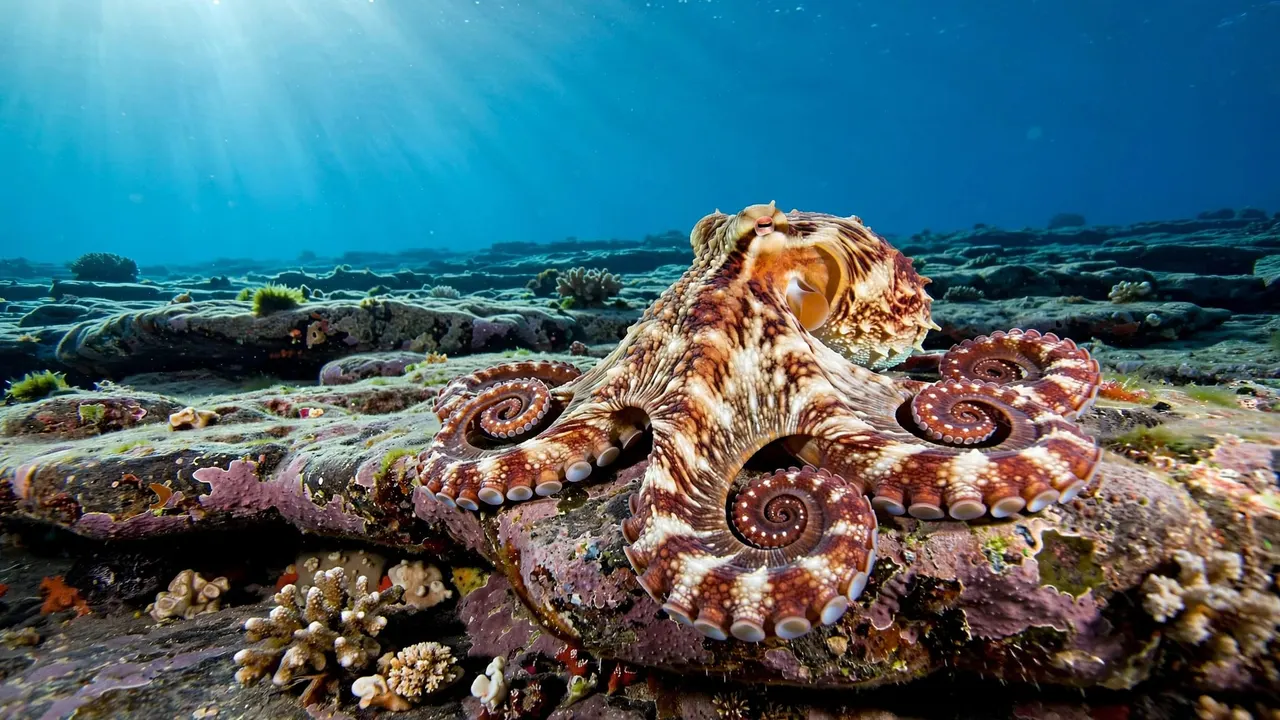
Yes, you can spot an octopus while snorkeling Oahu, but you should treat the encounter as a lucky bonus. These reef residents blend into rocks and coral so well that you can swim past one without noticing.
At Living Ocean Tours, we help you explore Waikiki’s underwater life with professional guidance and an observe-without-touching approach. Your octopus snorkeling Oahu adventure starts with understanding where to look, how to slow down, and when to leave an animal alone.
Key Takeaways
- You can encounter octopuses on Oahu’s reefs, but sightings aren’t guaranteed.
- The day octopus is active during daylight, so you don’t need a nighttime outing.
- Look for subtle movement around reef ledges without touching rocks or reaching into holes.
- Choose snorkeling conditions that match your swimming ability, and enjoy the fish and turtles along the way.
Meet the Octopus You Might See on Oahu
The day octopus is a daytime reef resident
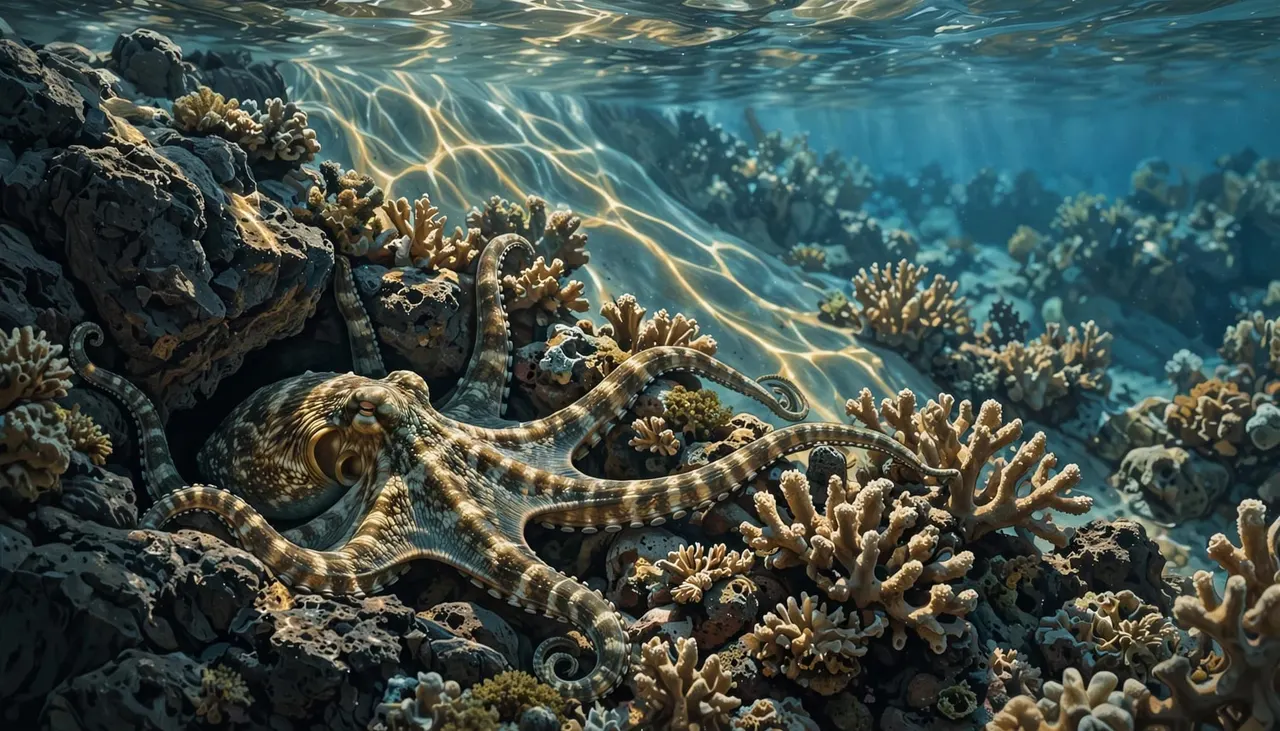
The day octopus, Octopus cyanea, lives in Hawaiian waters and other tropical Indo-Pacific environments. Unlike octopus species that spend most daylight hours hidden, this species can forage during the day.
That gives you a chance to see one while snorkeling, without arranging a night swim. However, daylight activity doesn’t mean an octopus will be exposed or easy to recognize.
Animal Diversity Web’s day octopus species account describes the skin pigments that help it hide while hunting and avoiding predators. Even an animal moving across the reef can blend into its surroundings.
Camouflage makes the search challenging
An octopus can change its appearance as it crosses different backgrounds. You might notice an outline against pale sand, then lose it against dark rock.
The Smithsonian’s explanation of color-changing cephalopods describes how specialized skin cells help these animals match their surroundings.
Instead of expecting a bright, obvious animal, watch for a rounded body, an eye, or an arm moving independently of the reef.
Where to Focus Your Octopus Snorkeling Oahu Search
Scan reef edges and sheltered spaces
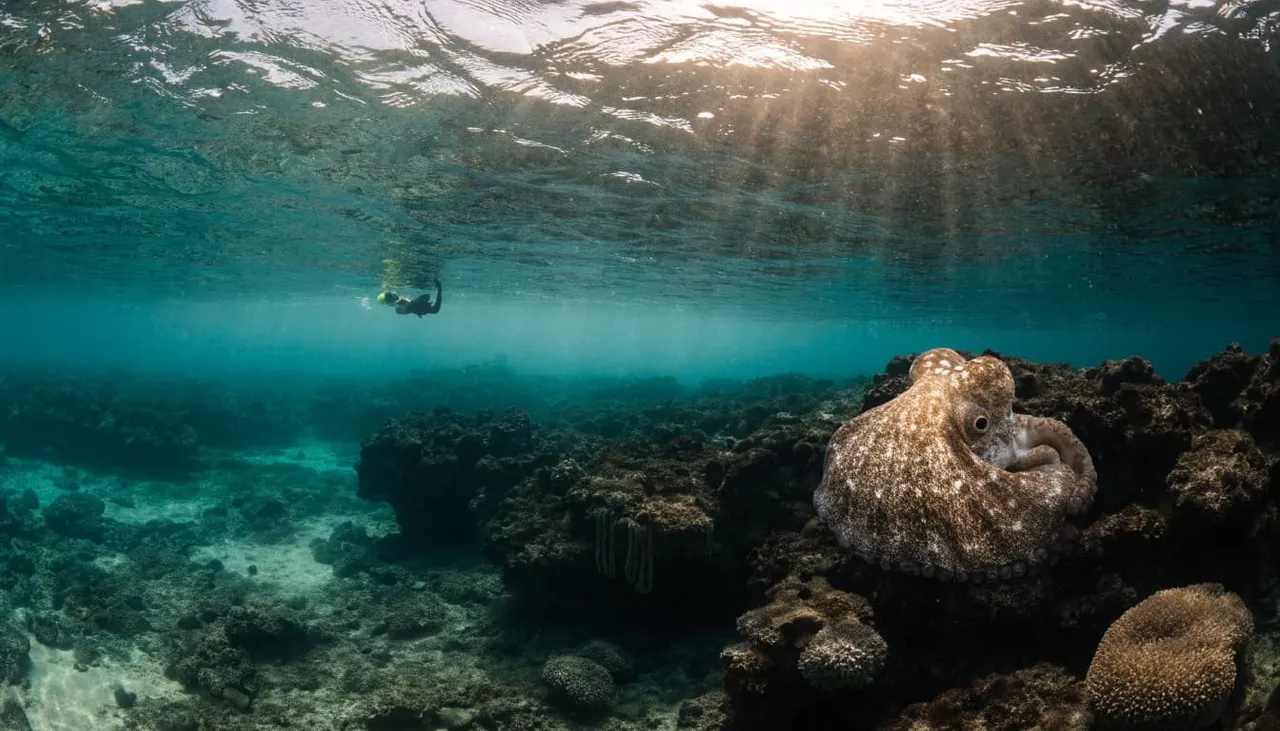
Look across rocky reef structure rather than concentrating only on open water. Crevices and ledges offer shelter, while nearby sand can make movement easier to notice.
Keep your attention on the boundary between rock and sand. An arm extending across that boundary may be more noticeable than the body tucked behind it.
You don’t need to approach a hole to investigate it. Remain above the reef and give yourself enough clearance to avoid accidental contact with your fins.
A promising-looking crevice can also shelter other animals, including eels. Keep your hands out of every opening, whether you see an occupant or not.
Choose a suitable site before choosing an animal
Waikiki’s offshore reefs offer boat-access snorkeling close to Honolulu. Turtle Canyons is especially associated with Hawaiian green sea turtles gathering at a natural cleaning station.
Elsewhere, Hanauma Bay has a sheltered reef setting on Oahu’s southeastern coast. Shark’s Cove on the North Shore has rocky underwater structure, but winter surf can make snorkeling dangerous.
These are different snorkeling environments, not guaranteed octopus locations. Your swimming ability, entry conditions, and visibility should decide where you snorkel.
How to Notice an Octopus Without Disturbing It
Slow down and watch one area
Keep your octopus snorkeling Oahu search slow enough to notice small movements. Constant swimming covers more ground, but it also makes subtle details harder to follow.
Float comfortably at the surface and scan a manageable patch of reef. First, take in the larger shapes. Then look for something that changes position while the surrounding rock stays still.
An octopus may reveal itself through movement before you recognize its outline. An arm curling around a rock or a body shifting against the background can draw your attention.
However, don’t become so absorbed that you lose track of your buddy or drift away from your group. Looking up regularly matters more than finishing a search.
Let your guide point out the animal
If a guide notices an octopus, approach calmly and follow their directions. Stay far enough back that everyone can observe without crowding the animal.
Watch with your eyes before raising a camera. Otherwise, you may spend the encounter adjusting settings while the octopus slips into shelter.
Once an octopus retreats into a crevice, let the encounter end. Pulling it out or blocking its escape turns observation into disturbance.
Conditions Matter More Than a Promised Sighting
Plan your octopus snorkeling Oahu outing around comfortable conditions rather than a particular animal. Good visibility helps you distinguish reef textures, while manageable water movement helps you stay clear of the bottom.
Morning outings can offer calmer water before winds build, but the clock doesn’t guarantee suitable conditions. Swell, wind, rain, and local currents still affect your experience.
Avoid entering cloudy water or rough surf simply because you’ve heard about wildlife at that location. Poor visibility makes both observation and keeping track of your surroundings harder.
For shore snorkeling, stay near a lifeguarded beach when possible and follow posted warnings. Always snorkel with a buddy, remain within your swimming ability, and turn back before you’re tired.
A boat trip provides organized reef access and crew support. However, open-ocean snorkeling still requires attention to the briefing and honest communication about your comfort in the water.
Give Octopuses and Their Reef Plenty of Space
An octopus encounter works best when the animal can continue its normal behavior. Don’t touch, feed, chase, or try to coax it into the open.
Keep your hands relaxed and your fins clear of the reef. If you need to adjust your mask, move into open water rather than standing on coral.
NOAA’s hands-off wildlife viewing guidance explains that touching coral can damage its protective surface and introduce harmful substances. Even a brief contact can have consequences beyond the spot you touched.
Keep cameras, straps, and other loose equipment close to your body, too. That reduces accidental contact as you float above shallow structure.
The same respect applies to other wildlife. Give turtles room to surface, avoid surrounding animals with your group, and never trade their escape route for a photograph.
If an octopus moves away, stay where you are. You may still enjoy watching it disappear into the reef without following it.
Explore Waikiki’s Reefs With Our Snorkel Guides
Build your octopus snorkeling Oahu plans around a reef experience you’ll enjoy either way. Our Waikiki ocean tours depart from Kewalo Basin Boat Harbor, a short distance from Waikiki.
We’re Oahu’s only tour company with professional snorkel guides. You get guidance on equipment, wildlife observation, and respectful reef behavior.
Turtle Canyons offers more to enjoy along the way
Our Turtle Canyon Snorkel Tour starts at $79 per person. You’ll explore a natural turtle cleaning station, where reef fish clean visiting Hawaiian green sea turtles.
An octopus would be an additional discovery, not the purpose or promise of the trip. Meanwhile, turtles and reef fish give you plenty to watch.
We provide snorkeling equipment and a safety briefing, so you can focus on getting comfortable before looking for smaller reef residents.
Choose guided support for a broader reef outing
If you’re comparing snorkeling tours in Waikiki, consider how much support you want in the water. A guide can help direct your attention without encouraging you to approach wildlife too closely.
For another guided reef outing, CHECK AVAILABILITY and choose a departure that fits your vacation plans.
You can also browse our available ocean experiences below.
Frequently Asked Questions About Oahu Octopus Sightings
Can you see an octopus without diving underwater?
Yes, you can sometimes see one while floating at the surface, provided the water is clear and the animal is visible. However, camouflage and reef structure can conceal it even in shallow water.
You don’t need to dive down for a closer look. Staying at the surface helps you maintain distance and avoid brushing the reef.
Is there a best season for seeing octopuses?
There’s no reliable seasonal sighting window to promise for an Oahu snorkeling outing. Choose your trip around suitable ocean conditions rather than an octopus calendar.
Season does matter for snorkeling safety at certain locations. North Shore winter surf, for example, can rule out places that attract snorkelers during calmer summer weather.
What if you don’t see an octopus?
You can still enjoy butterflyfish, parrotfish, and other reef life. At a site such as Turtle Canyons, watching turtles interact with cleaner fish offers a different kind of wildlife encounter.
Enjoy the Reef, With or Without an Octopus
Your octopus snorkeling Oahu experience begins with patience and realistic expectations. Move slowly, watch the reef carefully, and let any animal you find decide how long the encounter lasts.
Above all, make respectful observation your goal. A quiet glimpse of an octopus disappearing against the rocks is worth more than a close-up that disturbs it.
Choose a suitable reef outing, stay with your buddy or guide, and leave room for whatever the ocean reveals.


