
Why the ocean after sunset looks darker from a boat
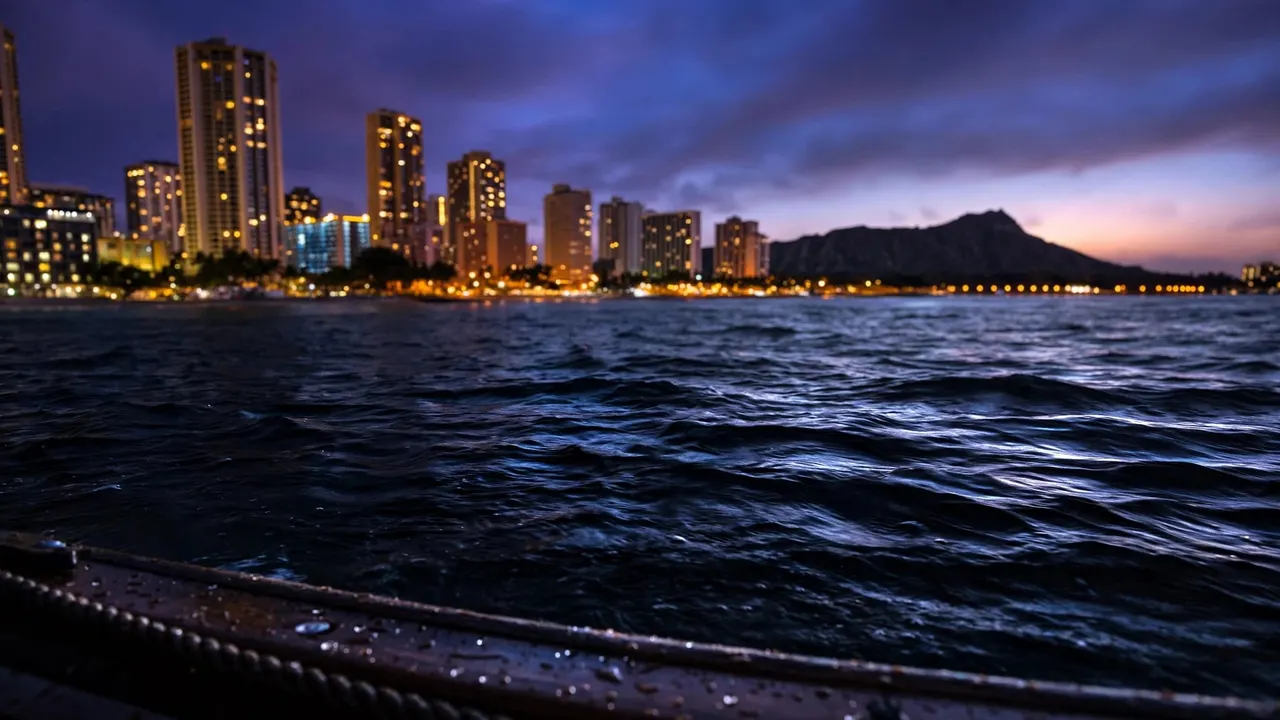
The ocean after sunset looks darker because less sunlight reaches the water, leaving less light to reflect toward your eyes. As the sky dims, the sea loses its bright daytime appearance and can look navy blue, gray, or almost black.
With our Living Ocean Tours crew, you can watch that change against Waikiki’s shoreline, where hotel lights brighten as the Pacific fades. The loss of light, rather than a sudden change in the water, explains most of what you’re seeing. Start with sunlight, then notice how reflections and your own vision change the view.
Key Takeaways
- The sea darkens after sunset because daylight fades, so less light reaches the surface and returns to your eyes.
- Reflections, clouds, waves, and viewing direction explain why nearby patches of water can look different.
- Dark-looking water doesn’t reveal its depth or safety, and an evening sightseeing cruise lets you enjoy the changing view without swimming.
Why the ocean after sunset loses its bright blue color
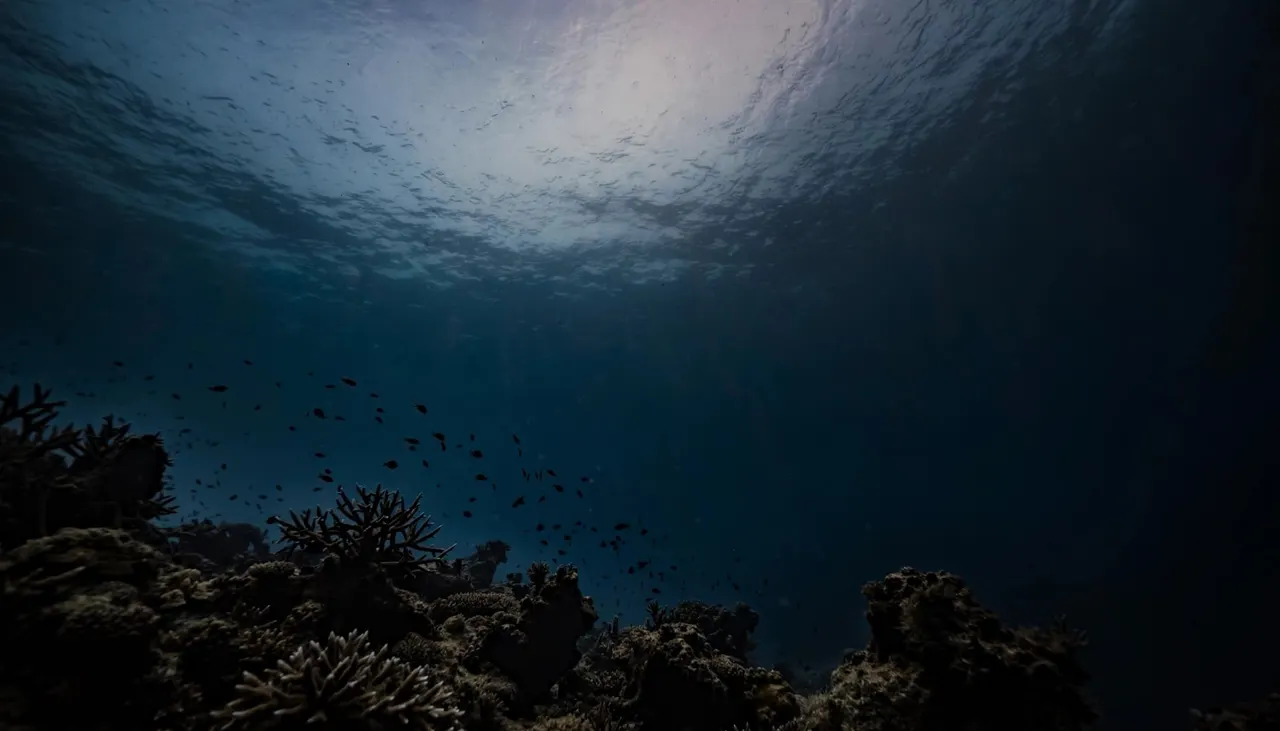
Less daylight reaches the water
During the day, sunlight illuminates the surface and enters the water. Some light returns toward you through reflection and scattering, so you can see color and underwater detail.
Once the sun slips below the horizon, direct sunlight no longer reaches the surface around you. The sky still provides illumination during twilight, but that light gradually weakens.
Because the water receives less light, it sends less light back toward your eyes. You notice fewer bright patches, weaker colors, and less detail beneath the surface. The change can seem fast when a cloud bank also blocks the remaining glow.
Water absorbs different colors unevenly
Water doesn’t treat every color of light equally. It absorbs red wavelengths more readily than blue wavelengths, which helps explain why clear ocean water often appears blue in daylight.
However, blue water still needs illumination for you to see it. As the available light decreases, that familiar tropical color becomes harder to distinguish.
The sandy bottom also matters in shallow water. During daylight, pale sand can return light through the water and contribute to a turquoise appearance. After sunset, that contribution fades, too. The same clear water can therefore look much darker without becoming cloudy or suddenly changing depth.
Why some patches stay bright while others turn black
The surface reflects different parts of the sky
The sea’s appearance combines light coming out of the water with light reflected from its surface. Your viewing angle changes how much of each you see.
Looking toward the sunset, you may notice a bright orange path across the waves. Turn toward a darker part of the sky, and the surface can appear almost black.
As Time and Date explains in its guide to red skies at sunset, sunlight travels through more atmosphere when the sun sits low. More blue light scatters away, leaving warmer colors that can also appear in the water’s reflections.
Waves continually rearrange those reflections
Each small wave presents a slightly different angle to the sky. Some wave faces reflect the remaining sunset glow, while others reflect darker sky or shoreline.
That’s why the ocean after sunset rarely looks like one flat sheet of color. You may see copper streaks, blue-gray troughs, and short flashes of reflected light within the same view.
Wind can break a reflection into scattered highlights. Meanwhile, smoother patches may show broader areas of sky color. These differences describe surface texture and illumination, not a dependable map of depth.
A nearly black patch can be shallow water reflecting a dark sky. Color alone can’t tell you how deep it is.
Twilight and your eyes change the view together
Sunset doesn’t mean immediate darkness
After the sun disappears, its light continues to reach the atmosphere above you. Scattering sends some of that light toward the ground and sea, creating twilight.
NOAA describes civil twilight after sunset as a period when natural illumination can still support many outdoor activities. Yet the ocean may already look substantially darker than the sky.
That’s because you’re looking at two different sources of brightness. The sky still contains scattered sunlight, while the water returns only part of the light reaching it. Clouds can brighten with sunset color above a sea that already looks dark blue.
Your night vision favors brightness over color
As illumination falls, your eyes rely more on rod cells, which work well in low light but don’t provide color vision. Cone cells, responsible for detailed color vision, become less effective as the scene darkens.
As a result, colors look less distinct and objects become harder to separate from their backgrounds. A blue wave and a gray wave may begin to look similar.
Your eyes also need time to adapt. Looking at a bright phone screen can temporarily make the surrounding water seem darker when you look up again. Put the screen away occasionally, and you’ll have a better chance of noticing subtle wave patterns and the fading horizon.
Watching the ocean after sunset off Waikiki
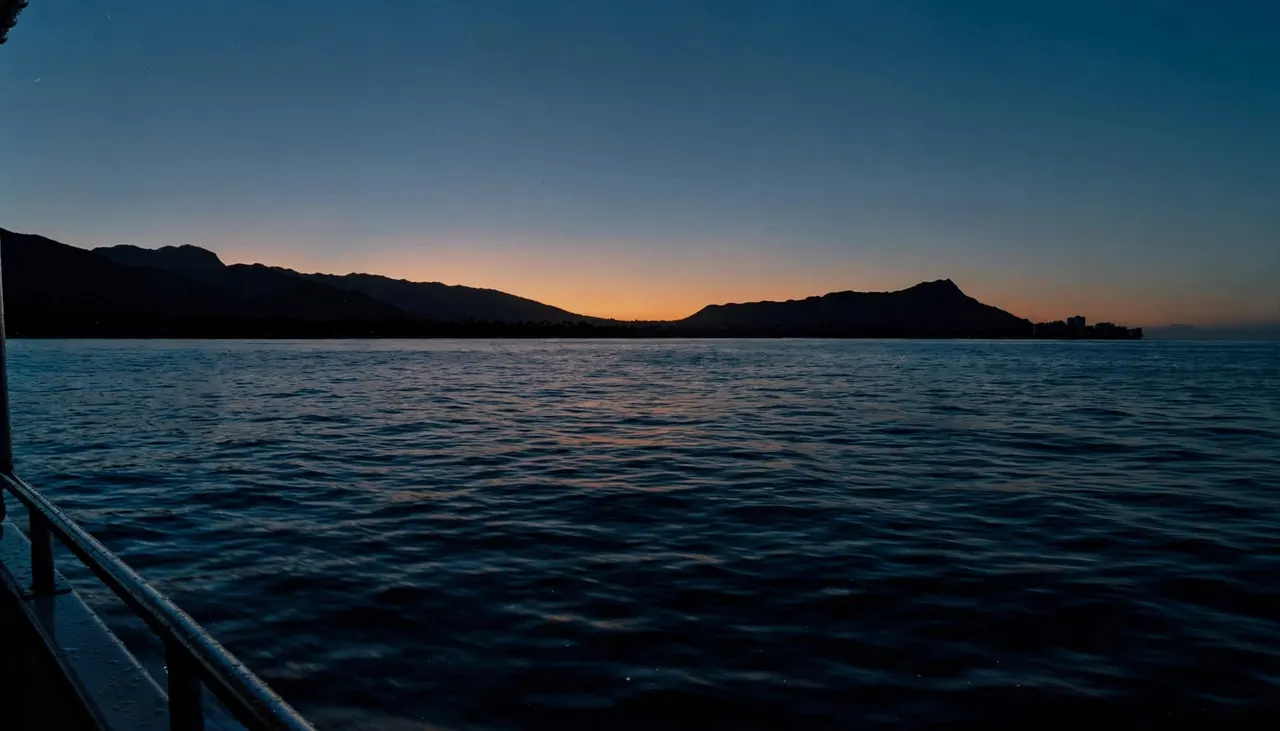
From the water, you can compare the open Pacific, the sky, and Honolulu’s shoreline within the same broad view. That makes the changing light easier to notice than when buildings or beach umbrellas block part of the scene.
First, look toward the remaining sunset glow. You may see warm reflections stretching across wave tops. Then turn toward Waikiki, where windows and shoreline lights begin to stand out against darker surroundings.
Diamond Head also changes character. Its daytime surface detail gives way to a recognizable outline, while the water below loses color and texture.
City lights don’t brighten the whole sea evenly. Instead, moving waves stretch and break their reflections into short, shifting streaks.
Moonlight can add a different reflection when the moon is visible above the horizon. However, its effect depends on lunar phase, cloud cover, and viewing direction. A moonlit evening can therefore look quite different from a cloudy evening, even along the same coastline.
Enjoy the evening view comfortably
Dress for the breeze and move carefully
You can enjoy a sunset sightseeing outing without masks, fins, or wet towels. A light windbreaker or wrap is useful once direct sunshine disappears, especially on an open deck.
Wear secure footwear and keep a hand available for railings when moving around the boat. Follow crew instructions rather than stepping into a darker corner for a photograph.
Dark water doesn’t automatically mean rough conditions. Wind, waves, currents, and weather determine conditions, while darkness reduces what you can see. Because visibility changes, stay aboard during a sightseeing cruise and leave decisions about boat operation to the captain.
Photograph the contrast, not just the sunset
For a stronger evening photograph, include something recognizable beside the water, such as Diamond Head’s silhouette or Waikiki’s illuminated skyline. Those features help show how the scene has changed.
Hold your phone steady and avoid digital zoom when possible. Longer night-mode exposures can blur on a moving boat, so a brighter twilight scene often produces a clearer result.
Also, avoid using flash to photograph a distant horizon. It won’t illuminate the coastline and may reflect off nearby railings. Take a few pictures, then give yourself time to watch without a screen.
See Waikiki’s changing light with us
Our Honolulu boat tours give you different ways to enjoy the coast. With Living Ocean Tours, you have shaded seating, onboard restrooms, and dry storage aboard our Coast Guard-inspected double-decker vessels.
We’re also the only tour company with professional snorkel guides. For an evening centered on scenery, you can stay dry and leave the swimming gear behind.
Our Waikiki Sunset Cruise is a 90-minute coastal sightseeing experience welcoming guests ages 3 and up. Different departures offer BYOB or cash-bar options.
You can enjoy the ocean after sunset as part of a relaxed evening with your partner, family, or friends. Our sunset cruise experience keeps the focus on coastal views and changing light. When that fits your plans, CHECK AVAILABILITY for your evening outing.
Frequently asked questions
Does dark water mean the ocean is deeper?
No. Deep water often appears darker in daylight, but nighttime color isn’t a reliable depth indicator. Shallow water can look almost black when illumination is weak. Reflections and viewing angle can also make neighboring patches look different.
Why does the sea sometimes look silver at night?
You may be seeing moonlight or artificial light reflected from wave surfaces. Moving waves repeatedly change the reflection angle, so the bright area seems to shimmer. Outside that reflected path, the surrounding water can remain much darker.
Does the ocean glow after sunset?
Occasionally, bioluminescent organisms produce visible light, sometimes when water movement disturbs them. However, ordinary sunset reflections aren’t bioluminescence, and a glowing sea isn’t a routine feature of a Waikiki cruise. Enjoy any natural sighting without expecting it on every outing.
Enjoy the darker water with a clearer understanding
The ocean after sunset looks darker because the light changes, while reflections and your eyes shape the details you notice. That dark surface doesn’t tell you the water’s depth or reveal its conditions.
From a boat, you can watch the full transition: fading sky color, a softer horizon, and Waikiki’s lights across the waves. Understanding the changing light gives you more to appreciate before the evening view settles into darkness.


