
Oahu Whale Watching: Read Clock-Face Calls
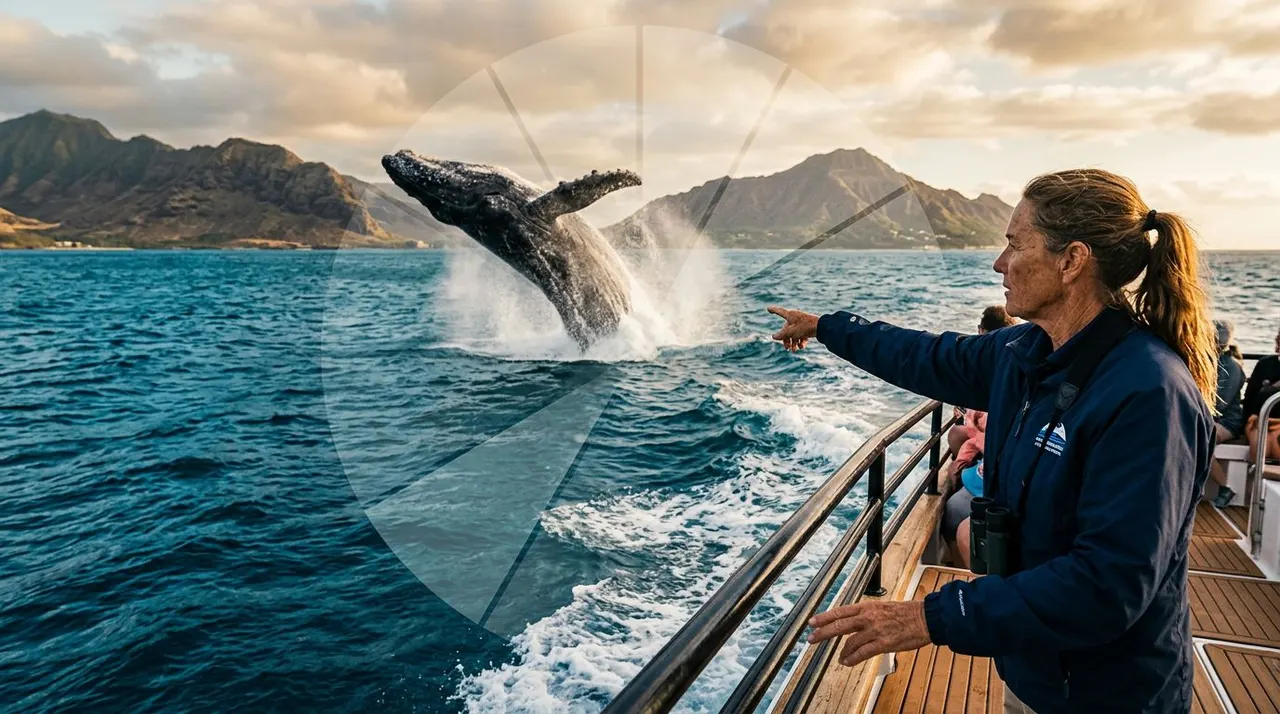
A whale can surface anywhere around your boat, but a clear clock-face call tells you exactly where to look. During Oahu whale watching, learning this simple system helps you find a humpback faster instead of scanning the entire ocean.
The method is easy once you understand that the boat’s bow is always 12 o’clock. Your captain and crew use that reference to direct your eyes, share sightings quickly, and keep everyone focused on observing whales respectfully. Start with the clock face, then learn how to scan each sector.
Why Clock-Face Calls Matter During Oahu Whale Watching
Humpback whales don’t follow a schedule. One may rise ahead of the boat, while another surfaces off the port side or disappears behind the stern. A whale can stay underwater for several minutes before appearing again, so every second matters after a sighting call.
On a busy whale watching boat, pointing toward a whale isn’t enough. Passengers may face different directions, and the animal may vanish before everyone sees it. A call such as “whale at 2 o’clock” gives the entire group the same reference point.
The clock-face system is based on your boat’s current heading:
- 12 o’clock is directly in front of the bow.
- 3 o’clock is directly to the starboard, or right, side.
- 6 o’clock is directly behind the stern.
- 9 o’clock is directly to the port, or left, side.
Positions between those points create the remaining sectors. For example, 1 o’clock is forward and slightly right, while 10 o’clock is forward and slightly left.
The Hawaiian Islands Humpback Whale National Marine Sanctuary protects important whale habitat around the islands. You can learn more about the sanctuary’s research and conservation work through NOAA’s Hawaiian Islands sanctuary.
A clock-face call describes direction from the boat, not direction from Waikiki, Diamond Head, or the shoreline.
How to Read a Whale Watching Clock Face
Before scanning, locate the bow. On most boats, the crew faces the same forward direction as the vessel. If you’re unsure, ask a crew member before the boat changes course.
Use this quick reference when you hear a sighting call:
| Call | Where to look | Useful visual cue |
|---|---|---|
| 12 o’clock | Straight ahead | Scan the water beyond the bow |
| 1 to 2 o’clock | Forward right | Look just off the starboard bow |
| 3 o’clock | Directly right | Turn toward the boat’s starboard side |
| 4 to 5 o’clock | Rear right | Scan beside and behind the boat |
| 6 o’clock | Straight behind | Look across the wake |
| 7 to 8 o’clock | Rear left | Search behind the port side |
| 9 o’clock | Directly left | Turn toward the port side |
| 10 to 11 o’clock | Forward left | Scan just off the port bow |
The number usually gives you direction, while the rest of the call adds distance or behavior. You may hear, “Whale at 11, close,” or “Two whales at 3, far.” Start with the clock position, then adjust your search based on the distance.
If the crew says “10 o’clock, near the horizon,” don’t stare at the water directly beside the boat. Look toward the forward-left horizon and watch for a dark back, a blow, or a flash of white pectoral fin.
A whale’s blow is often the easiest first sign. It may appear as a brief vertical plume above the surface. After spotting it, keep your eyes on the same patch of water. The whale may arch its back, lift its tail, or surface again nearby.
What to Do After the Crew Calls a Sighting
Your first instinct may be to turn quickly toward the number. Instead, move in stages so you don’t lose your balance or miss the next surface.
First, identify the boat’s centerline. If the call is “whale at 2,” begin at 12, then shift your gaze toward the right. Use the bow rail, a canopy post, or another fixed feature as a visual guide.
Next, scan the horizon in a slow arc. Don’t search only for a full whale. Look for small details, including:
- A fresh blow above the surface
- A dark curve breaking the water
- A tail fluke rising before a dive
- White spray from a pectoral fin
- Several seabirds suddenly moving over one area
Keep both eyes open and avoid staring through a phone camera. A smartphone’s narrow screen can make a distant whale difficult to track. Watch with your eyes first, then lift your camera when the animal surfaces again.
If you don’t see the whale immediately, stay in the assigned sector. Humpbacks surface for a short time, and the boat may be moving toward a better viewing position. Crew members may repeat the call with a new distance or clock position as the whale changes direction.
The boat can also turn after the original call. Once the captain changes course, the clock face changes with it. A whale first spotted at 2 o’clock may become 11 o’clock after the bow swings. Listen for the updated call instead of relying on the original direction.
NOAA sighting surveys record both whale locations and surface behavior. A NOAA whale sighting report shows how organized observations help researchers understand whale activity in Hawaiian waters.
Common Calls You May Hear on an Oahu Whale Watching Cruise
Clock positions are only one part of the communication system. Your crew may also describe the number of whales, their distance, and what they are doing.
“Single whale” means one animal has been confirmed. “Pair” or “two whales” tells you to keep scanning after finding the first one. A second whale may surface several boat lengths away, so don’t stop looking once you spot the first back.
“Blow” directs you toward a fresh exhalation. “Fluke” means the whale is lifting its tail before a deeper dive. “Breach” describes a powerful leap, but you shouldn’t expect every sighting to include one. Most whale encounters involve blows, backs, tail raises, or rolling movements.
The words “near,” “middle distance,” and “far” help you judge scale. These descriptions are practical rather than precise measurements. Ocean glare, haze, and wave height can make a distant whale appear closer than it is.
You may also hear “traveling,” “resting,” or “diving.” A traveling whale moves steadily in one direction. A resting whale may surface with less forward movement. A diving whale has disappeared below the surface, so your crew may ask everyone to watch a wider area for its next appearance.
Follow the crew’s instructions even when the sighting seems obvious. Staying seated or holding a rail while the boat moves protects you and the passengers around you. It also keeps the viewing area clear for children and guests who may be seeing a whale for the first time.
Choose an Oahu Whale Watching Tour With Clear Guidance
A good whale watching experience depends on more than finding whales. You also need a crew that communicates well, a boat with comfortable viewing areas, and enough space to watch without crowding the rails.
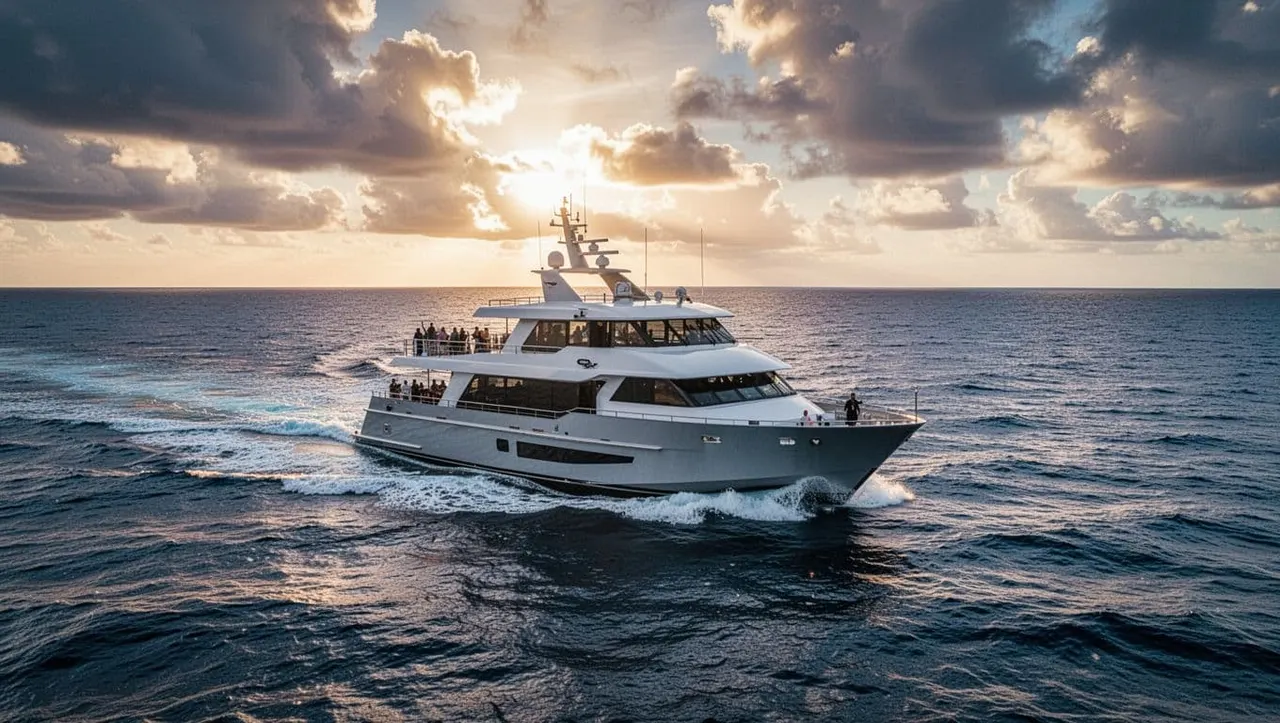
Living Ocean Tours departs from Kewalo Basin Boat Harbor, just minutes from Waikiki Beach. Its seasonal humpback whale watching tours operate from January through March, when these whales visit Hawaiian waters. The double-decker vessels, Coral Kai and Lokahi, include shaded seating, restrooms, dry storage, and open-deck viewing areas.
Lokahi also has a SeaKeeper stabilization system that reduces rolling motion. That added steadiness can help you keep your eyes on the horizon while listening for the next clock-face call, especially if you’re traveling with children or feel uneasy on moving water.
Living Ocean Tours is also the only tour company with professional snorkel guides. Those guides bring strong marine knowledge and guest-care experience to the company’s ocean excursions. For a whale-focused trip, that means you can expect clear directions, safety support, and respectful wildlife viewing.
The crew should never encourage you to touch, feed, chase, or crowd a whale. Keep your hands and personal items inside the boat’s safe viewing areas, and let the animals control the encounter. Observing without disturbing wildlife protects Hawaii’s marine environment and gives you a better chance to notice natural behavior.
You can review the available Living Ocean Tours ocean excursions before choosing a departure that suits your group. The company’s wildlife cruises also work well for couples who want open-water views and families who need a comfortable boat layout.
For a seasonal Waikiki whale watching trip, CHECK AVAILABILITY and look for a time that fits your Oahu itinerary.
Make Your Next Sighting Count
Clock-face calls turn a wide ocean view into a focused search. Remember that 12 o’clock is the bow, 3 is the right side, 6 is the stern, and 9 is the left side. Then add distance, scan for a blow, and keep watching after the first surface.
During Oahu whale watching, patience matters as much as direction. When you follow the crew’s call and give the whale room, you get a safer, calmer encounter that lets you appreciate the animal on its own terms.


