
Oahu Whale Watching Binoculars: First-Cruise Tips
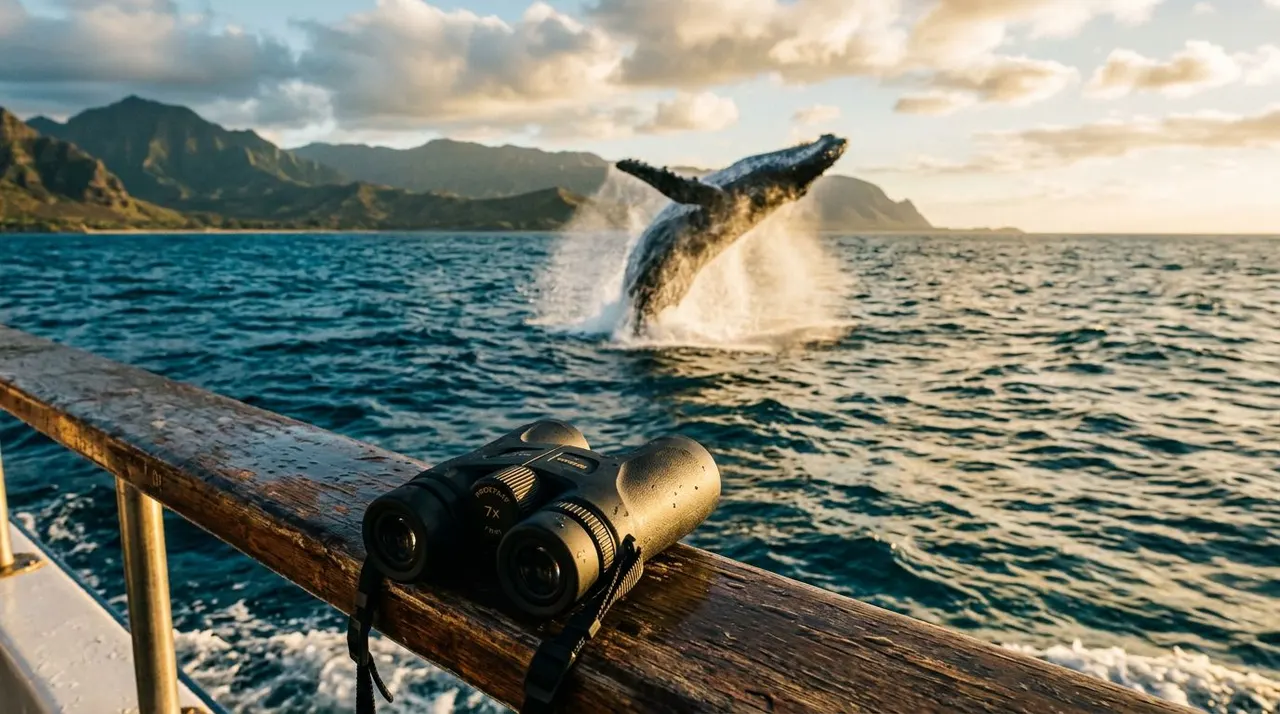
A whale can surface for only a few seconds, so the right binoculars help you catch details you might miss with the naked eye. However, heavy or overly powerful binoculars can make spotting harder on a moving boat.
If you’re joining your first whale watching cruise on Oahu, choose equipment that is light, bright, and easy to steady. Then learn how to scan the ocean before you raise the binoculars.
Key Takeaways
- Choose 7x or 8x binoculars with a wide field of view.
- Set the focus and diopter before your boat leaves the harbor.
- Scan with your eyes first, then use binoculars to study a sighting.
- Waterproof housing, a secure strap, and comfortable grips matter at sea.
- Follow your crew’s wildlife instructions and observe whales without touching or distracting them.
Choose Binoculars That Work on a Moving Boat
Your best Oahu whale watching binoculars aren’t necessarily the most powerful pair in the store. On a boat, steadiness and field of view matter more than extreme magnification.
A pair marked 7×35 magnifies an object seven times and uses 35-millimeter objective lenses. An 8×42 model magnifies eight times and gathers more light. Both options work well for whale watching, although they feel different in your hands.
Seven-power binoculars are easier to hold steady. They also show a wider section of the ocean, which helps when a whale appears somewhere near the horizon. Eight-power binoculars reveal more detail, but you may notice more hand movement. Ten-power binoculars can look impressive on land, yet they often feel shaky on a moving deck.
Most first-time cruise guests should look for these features:
- 7x or 8x magnification for a stable, wide view
- 32- to 42-millimeter objective lenses for a useful balance of brightness and weight
- Waterproof and fogproof construction for salt spray and changing temperatures
- Rubber armor for grip and protection
- A comfortable neck strap or binocular harness to reduce strain
Binoculars with image stabilization can produce a remarkably steady view, but they cost more and require batteries. You don’t need them for a successful whale watching trip. A good 7x or 8x pair with a secure grip is often the better first purchase.
The Audubon binocular guide also points to 7x and 8x models as popular choices because they provide bright images and a wide field of view. Those same qualities help you track a whale’s movement across open water.
Set Up Your Binoculars Before Departure
Many guests wait until a whale appears to adjust their binoculars. That costs valuable seconds. Instead, set them up at the dock or before you leave your hotel.
Start by adjusting the eyecups. If you wear glasses, twist them down so your eyes sit closer to the lenses. If you don’t wear glasses, leave the eyecups extended unless the view feels uncomfortable.
Next, adjust the width between the two barrels. Hold the binoculars to your eyes and move the barrels until you see one round image instead of two overlapping circles.
You also need to set the diopter. This small adjustment compensates for the natural difference between your eyes.
- Cover the right lens or close your right eye.
- Use the center focus wheel to sharpen a distant object with your left eye.
- Cover the left lens or close your left eye.
- Turn the diopter ring until the same object looks sharp through your right eye.
- Open both eyes and use the center wheel for small focus changes.
Choose the horizon, a distant boat, or a harbor structure for this process. Avoid focusing on something nearby because whale watching requires a long-distance setting.
Keep a soft lens cloth in your day bag. Salt spray can create a hazy view, and wiping the lenses with a shirt can leave scratches or smears. A small dry pouch also helps protect your binoculars when you’re not using them.
Your binoculars should be ready before the first sighting. Preparation gives you more time to watch and less time to adjust.
Learn to Scan for Whales
Binoculars narrow your field of view. If you raise them randomly, you may look in the wrong place while the whale surfaces elsewhere. Start with your unaided eyes.
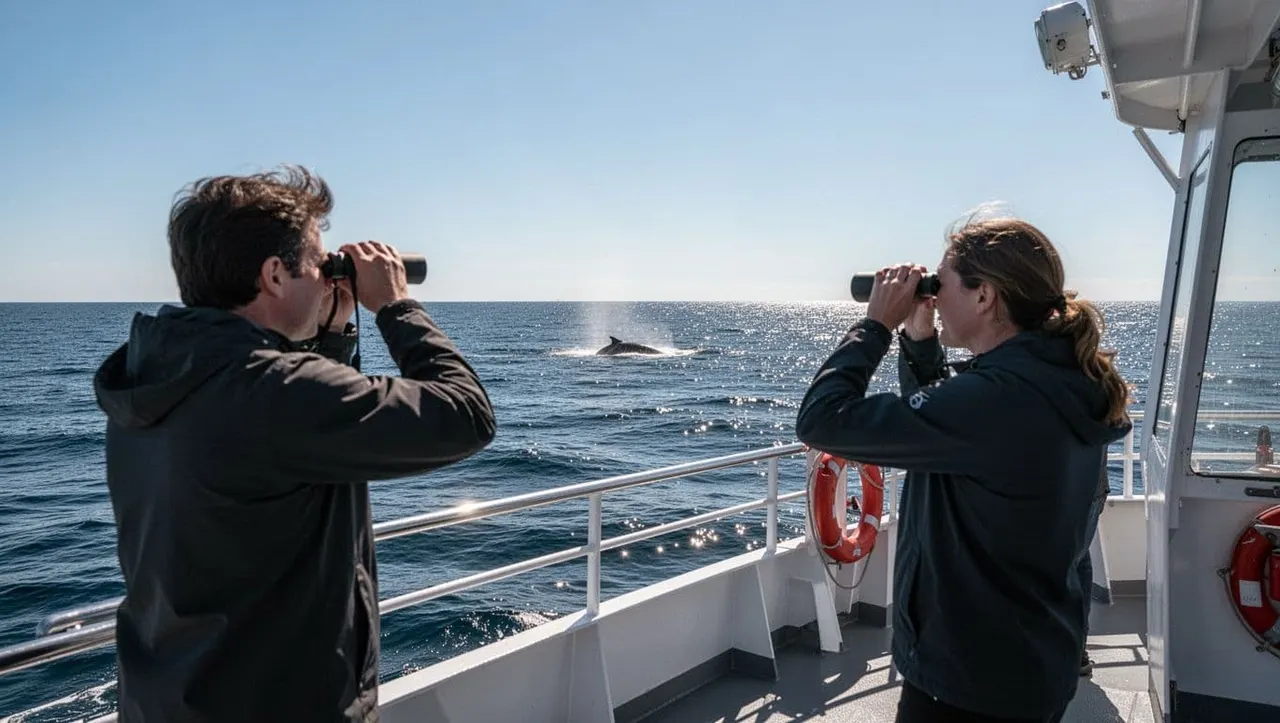
Watch the ocean in sections. Begin near the horizon and move your gaze slowly across the water. Look for a vertical blow, a dark back, a dorsal fin, or a patch of disturbed water. A whale’s blow often appears before the rest of its body.
Once you spot movement, keep your eyes on the area. Bring the binoculars to your face without losing your target. Use both hands, keep your elbows close to your body, and rest your forearms against your chest when possible.
Avoid sweeping the binoculars quickly across the sea. Fast movements make it harder to find the whale again. Instead, search a small area around the last sighting.
A simple rhythm works well:
- Scan with your eyes.
- Locate the blow or body movement.
- Raise the binoculars smoothly.
- Follow the whale without chasing every wave.
- Lower the binoculars when you lose the sighting, then scan again.
You don’t need to stare through the lenses for the entire cruise. Your eyes give you better peripheral awareness, and your crew may point out activity outside your current view. Listen for directions and share sightings with the people around you.
Keep the focus slightly beyond the whale’s last position. The animal may travel underwater before surfacing again. Patience helps more than constant movement.
Pack for Wind, Sun, and Salt Spray
Ocean conditions can change during one cruise. A calm harbor may give way to wind, spray, and strong sunlight once you reach open water.
Bring a hat with a secure fit, sunglasses, reef-safe sunscreen, and a light layer. A brim can help with glare, but it shouldn’t block the view of the guest behind you. Choose sunglasses with a retainer if the boat is windy.
A floating strap can keep binoculars near the surface if they fall overboard, but it isn’t a substitute for a secure grip. Keep the strap around your neck when you’re standing near the rail. Never lean far over the side to improve your view.
If you get motion sickness, stay where you can see the horizon. Fresh air often feels better than a sheltered interior area. Avoid reading on the ride, and ask a pharmacist or doctor about motion sickness medicine before your trip if you need it.
The boat itself also affects your viewing comfort. Living Ocean Tours operates out of Kewalo Basin Boat Harbor, minutes from Waikiki Beach, with Coast Guard-inspected double-decker vessels. The Lokahi includes a SeaKeeper stabilization system that helps reduce side-to-side rolling. Shaded seating, restrooms, dry storage, and sturdy ladders also make the trip easier for first-time guests.
Ask the crew where they recommend standing or sitting for the day’s wind and sea conditions. Their advice can help you find a clear view without crowding the rail.
Pick a Guided Oahu Whale Watching Tour
A guide adds value when you’re new to whale watching. You don’t have to identify every distant splash alone. Your crew can explain what you’re seeing, help you track a moving whale, and remind everyone to give wildlife space.
Living Ocean Tours offers seasonal humpback whale watching trips from January through March. Sightings are never guaranteed because whales move freely through the Pacific, but a knowledgeable crew can help you make the most of each opportunity.
The company also emphasizes respectful wildlife viewing. Keep your hands to yourself, avoid loud disruptions, and follow the crew’s instructions around marine animals. Observing, not touching, protects whales and the rest of Hawaii’s fragile ocean ecosystem.
Living Ocean Tours is the only tour company with professional snorkel guides, which is useful if you plan to add a reef experience to your Oahu vacation. You can compare the company’s Living Ocean Tours experiences before choosing the right day on the water.
When you book the whale watching tour, bring your binoculars, but don’t let the equipment control your experience. Put them down when a whale surfaces close enough to see clearly. Watch the full movement, listen to the blow, and notice how the animal disappears beneath the water.
If you’re ready to check dates for a Waikiki whale watching trip, use the CHECK AVAILABILITY link before your preferred day fills.
Make Your First Sighting Count
You don’t need expensive equipment to enjoy whale watching on Oahu. Choose binoculars that are light, wide-view, and easy to steady. Set the focus before departure, scan with your eyes first, and let your crew guide your attention across the water.
The right pair of Oahu whale watching binoculars can reveal a blow, a rolling back, or a tail disappearing beneath the waves. Still, the best memories often come when you lower the lenses and take in the entire Pacific around you.


