
Oahu Whale Watching: How Humpbacks Steer With Their Tail Flukes
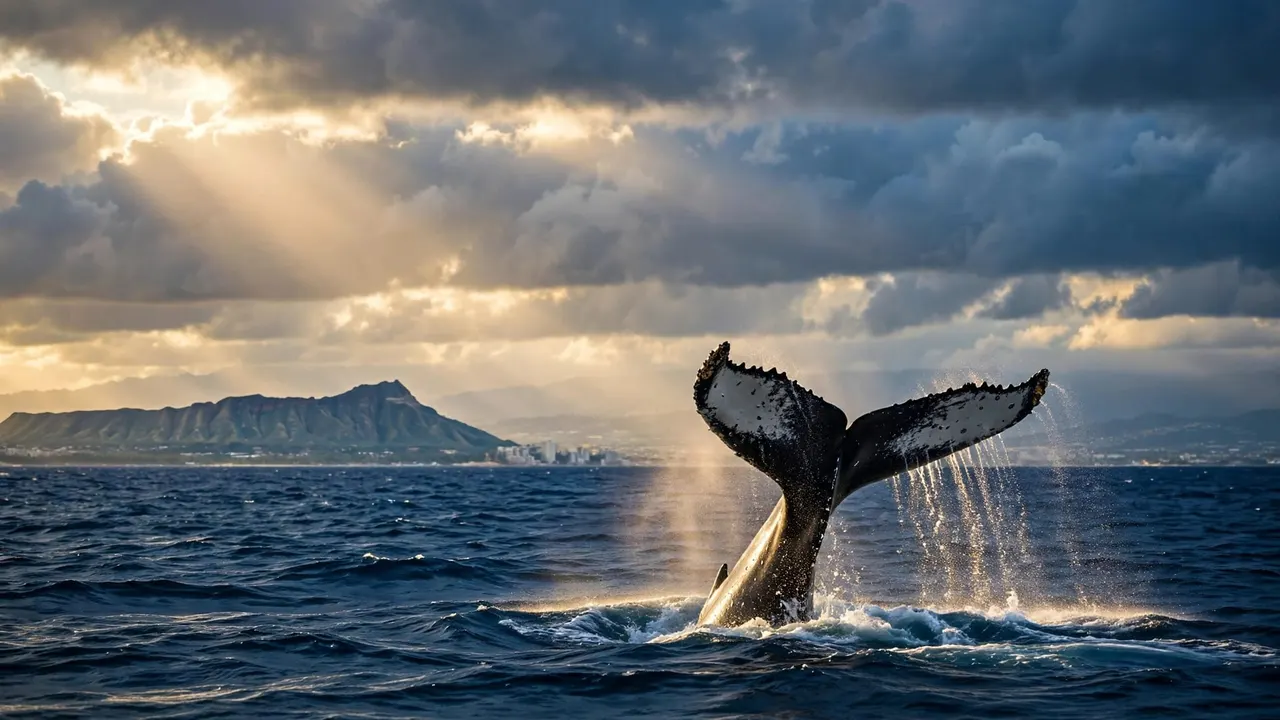
A humpback can vanish beneath a swell, then raise its tail above the Pacific in a motion that feels almost deliberate. During Oahu whale watching season, those few seconds give you a close look at one of the whale’s most useful tools for movement.
Living Ocean Tours runs seasonal wildlife cruises from Kewalo Basin Boat Harbor, minutes from Waikiki. You get open-water views of Diamond Head and the Honolulu coast while the crew watches respectfully for the signs that a humpback is nearby.
Oahu whale watching makes tail flukes visible
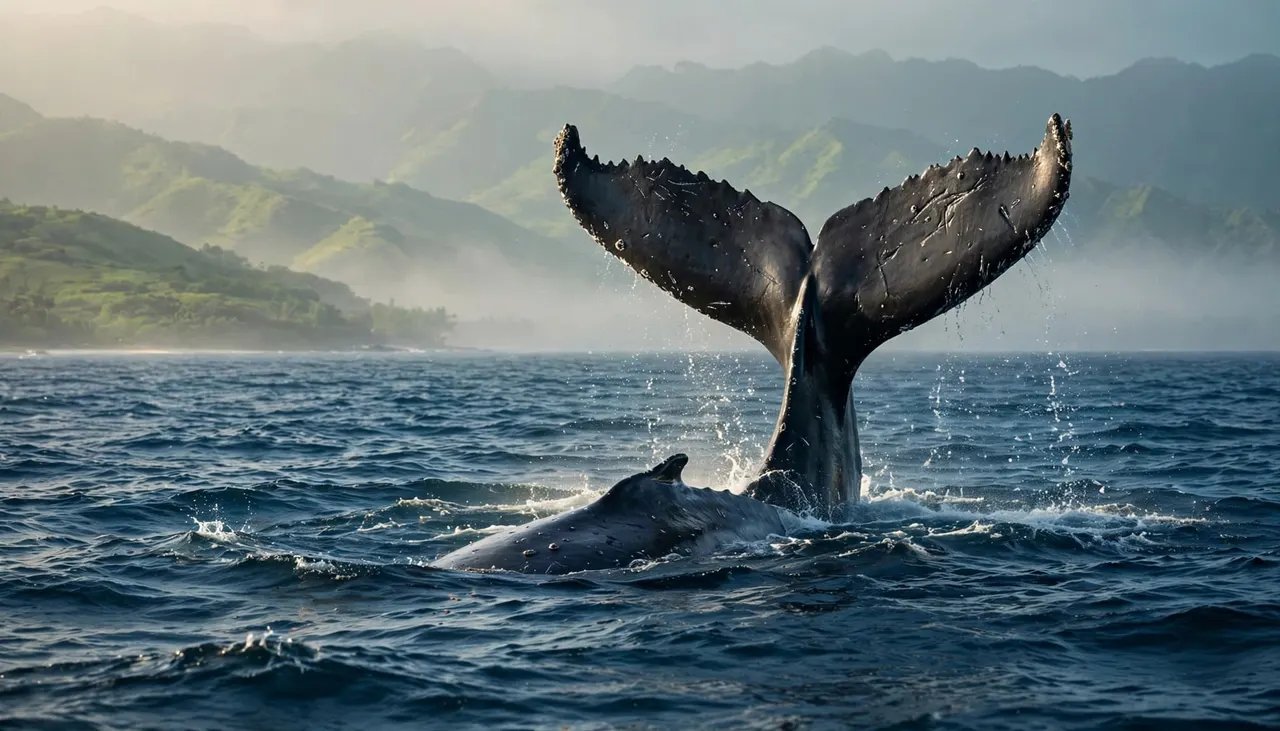
A humpback’s tail flukes are the broad, horizontal lobes at the end of its tail stock. When you see them lifted cleanly above the water, the whale is often preparing for a deeper dive. That brief display lets you see markings that stay hidden during ordinary surface swimming.
An adult humpback is an immense animal, usually measuring 46 to 56 feet long. Still, its movements can look graceful and controlled. A humpback whale species overview identifies the animal as Megaptera novaeangliae, a baleen whale that can weigh up to 40 metric tons.
The tail is built for powerful movement
The whale’s tail moves up and down rather than side to side. Each strong stroke pushes against water and propels the animal forward. That motion powers long migration routes, slow travel beside a calf, and sudden bursts of speed during a breach.
A raised fluke is also a useful visual marker. You may see the tail lift, pause, and disappear as the whale angles down. Keep your eyes on the surrounding water after the fluke goes under, because the whale may surface a short distance away.
Each fluke has a recognizable pattern
The underside of a humpback’s tail can show different areas of black and white, plus scars, notches, and uneven edges. Researchers use clear fluke photographs to help recognize individuals over time.
A tail-fluke pattern reference from the Hawaiian Islands Humpback Whale community notes that the underside patterns differ from whale to whale. If you bring a camera, prioritize a steady, respectful photo over zooming or moving quickly around the deck.
How humpbacks steer with their tail flukes
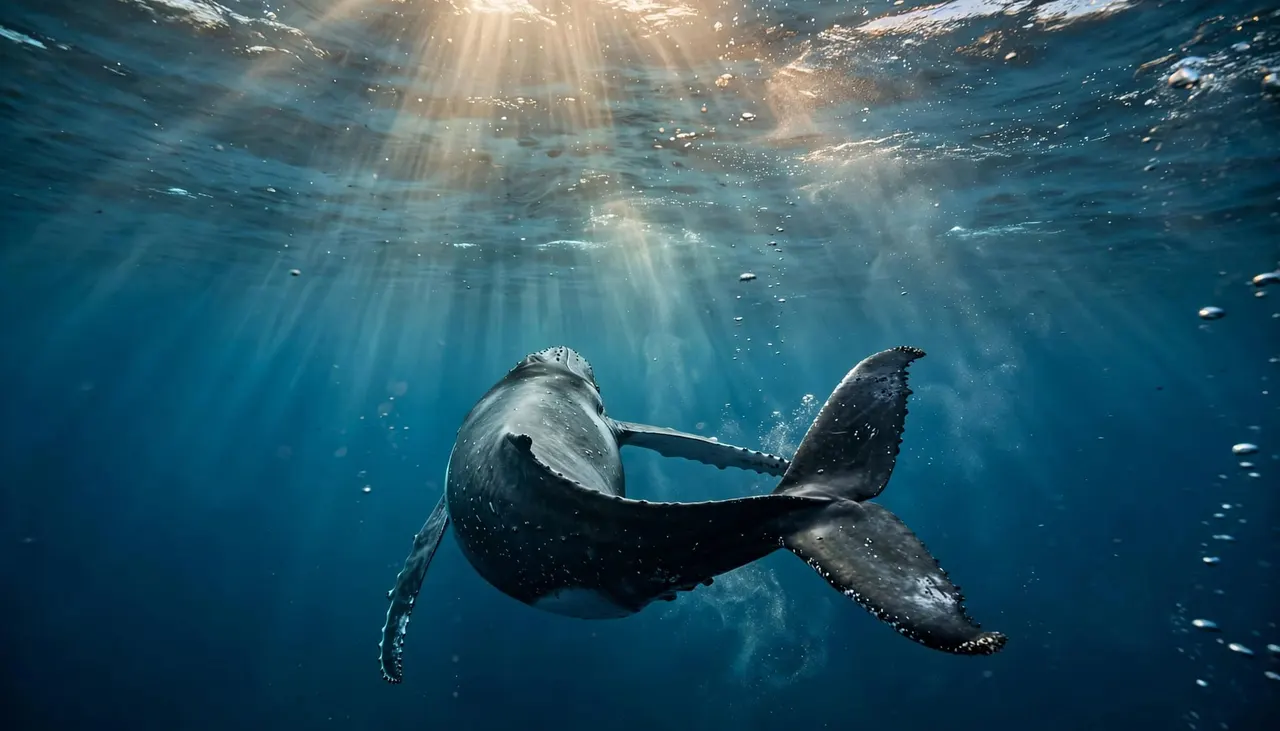
The flukes do far more than create forward thrust. By shifting the tail’s position through the water, a humpback can help control its speed, body angle, and direction. Its flexible body and long pectoral fins work with the tail during a turn.
You can’t determine every part of that movement from the deck of a boat. However, you can often see the result when a whale arcs its back, changes heading, or slips below the surface on a new line.
Direction changes involve the whole body
A humpback doesn’t travel like a motorboat with a fixed route. It bends through the torso, adjusts its pectoral fins, and uses tail strokes to move through changing water conditions. The flukes supply the force that keeps that motion going.
When a whale turns, you may notice a rolling back or a curved path at the surface. A tail movement alone doesn’t tell you exactly why it changed course. The whale may be traveling, socializing, resting, or staying close to a calf.
A tail lift can reveal a coming dive, but it doesn’t provide a complete explanation for what the whale will do next.
A high tail doesn’t always mean a deep dive
Humpbacks can slap their flukes on the water, hold them aloft, or show only part of the tail before sinking. These actions may look similar from a distance, yet they can happen in different situations.
Watch the sequence rather than one dramatic moment. A visible blow, rounded back, and raised fluke often lead to a longer underwater interval. A sharp tail slap followed by more splashing may point to an active whale that remains near the surface.
Read the water during Oahu whale watching
Your first sighting may not be a breach. More often, you will notice a pale puff of mist over the horizon, then a dark back rolling through the swell. That exhale is called a blow, and it can be easier to spot than the whale itself.
During Oahu whale watching, scan in wide sections instead of staring at one spot. Let your eyes move slowly across the horizon, then return to any location where you saw a blow, splash, or flash of whitewater.
Look for a pattern, not a promised show
A whale may surface several times in the same general area, then remain underwater longer than you expect. It may also change direction without warning. Wild humpbacks don’t follow a schedule for boats.
You can improve your view by staying patient and listening when the crew points out activity. A distant fluke can be just as memorable as a close-looking breach because it shows a real animal moving on its own terms.
Keep behavior in context
A mother and calf can travel at a measured pace, while adult whales may surface in a looser pattern. You might see an adult flipper wave, tail slap, or breach. Yet one behavior doesn’t reveal the whale’s full purpose.
Avoid assigning a human emotion to every splash. The most accurate approach is simple: notice what you can see, respect what you can’t know, and give the animal space to choose its course.
Why humpbacks visit Oahu in winter
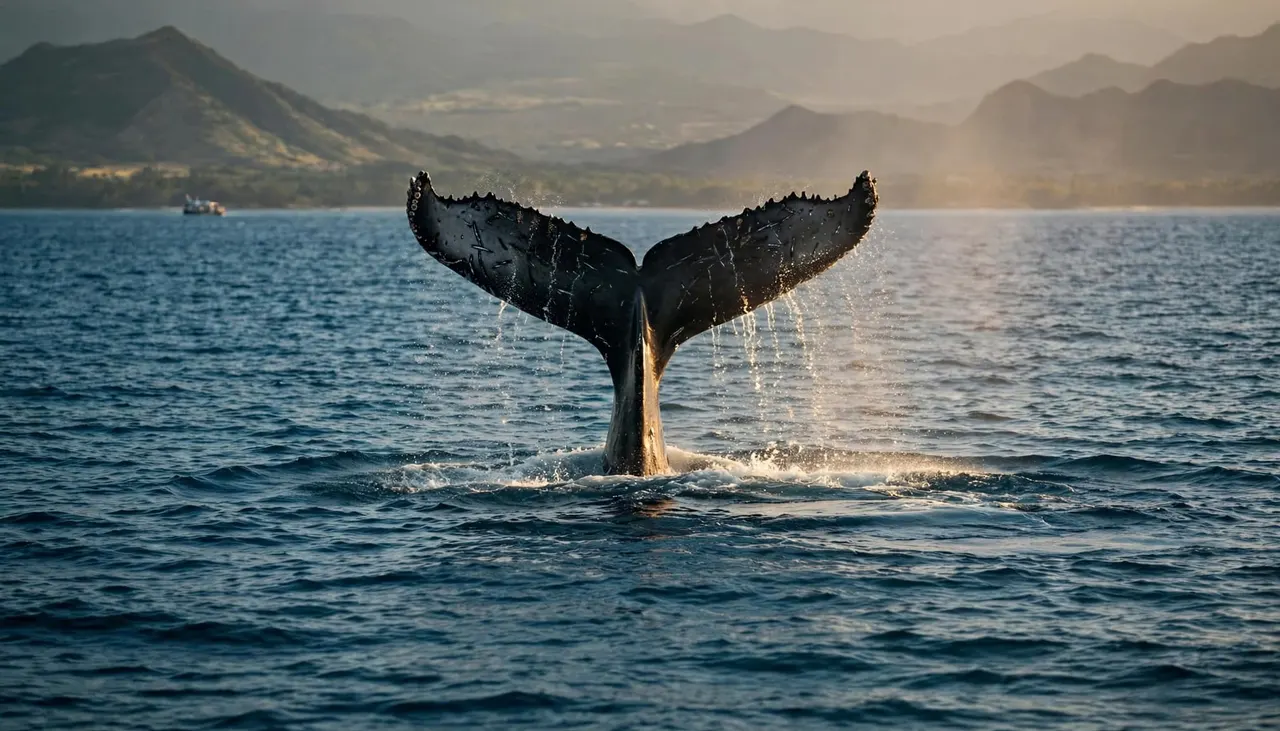
North Pacific humpbacks spend much of the warmer year feeding in colder northern waters. Each winter, thousands travel to Hawaii’s warm waters to mate, give birth, and care for calves. Hawaii is primarily a breeding and nursery destination, not a major feeding stop.
That larger migration gives each Oahu whale watching trip real perspective. A tail slipping below the water may belong to an animal moving through one short chapter of a much longer annual cycle.
January through March is the strongest planning window
Whales may appear around Hawaii across a broader winter season, but January through March is the most practical period for planning a wildlife cruise near Waikiki. Living Ocean Tours schedules seasonal humpback trips during those months.
If whale sightings are high on your vacation list, book earlier in your stay. Weather can shift plans, and an extra open day gives you more flexibility if you want another chance to head offshore.
Respectful viewing protects natural behavior
A whale may be traveling, nursing a calf, resting, or socializing. No ethical operator can promise a breach, a mother-and-calf pair, or even a sighting on a particular departure.
You should never swim toward, touch, feed, or chase a humpback. A responsible crew gives wildlife room and lets the whales set the pace. That distance also makes it easier to observe behavior that hasn’t been altered by a close approach.
Choose a comfortable Waikiki whale-watch cruise
Living Ocean Tours is the top-rated and most-reviewed whale watching tour company on Oahu. Its seasonal Waikiki whale watching cruises depart from Kewalo Basin Boat Harbor on Coast Guard-inspected, custom-built double-decker vessels.
The crew focuses on respectful wildlife viewing, while you enjoy shaded seating, onboard restrooms, dry storage, and broad deck views. Living Ocean Tours is also the only Honolulu tour company with professional snorkel guides, bringing marine knowledge and a safety-first approach to every ocean outing.
Comfort helps you stay focused on the horizon
The seasonal whale-watch cruise lasts about 1.5 hours and welcomes guests ages 3 and older. With space for up to 49 passengers, it works well for adventurous couples, families, and ocean lovers who want a comfortable way to search offshore.
The Lokahi includes a SeaKeeper stabilization system that reduces boat roll. Ocean conditions still vary, so eat a light meal before departure if motion affects you, bring sun protection, and tell the crew early if you start to feel unwell.
Book with flexible expectations
You may see a misty blow, a wide tail fluke, or a full breach near the horizon. Each outcome is part of an encounter with wild animals, not a scheduled performance.
Reserve your seasonal cruise through CHECK AVAILABILITY.
Key takeaways for seeing humpback flukes
- Oahu whale watching is strongest from January through March, although individual whale behavior always changes day to day.
- A tail fluke provides powerful propulsion and contributes to a whale’s ability to control movement through the water.
- Fluke markings, scars, and outer-edge shapes can help researchers recognize individual humpbacks.
- A raised tail often signals a dive, but it can’t predict where or when the whale will surface again.
- Your best encounter comes from patience, a clear view, and a crew that lets wildlife control the distance.
Frequently asked questions about humpback tails
Can you identify every humpback from its tail?
No. A clear view of the underside can provide helpful markings, but distance, glare, waves, and a partial tail view can limit what you see. Researchers compare quality images and multiple features before treating a match as reliable.
You can still take a photo for your own memory. Keep your camera secure, avoid blocking others, and never lean over railings to chase a shot.
Does a tail fluke always mean the whale is diving?
A raised fluke often appears before a deeper dive, but it isn’t an absolute rule. Humpbacks may also lift or slap their tails while remaining active near the surface.
Look for the full sequence. If you see a blow, a long back roll, and a tail raised high, the whale may stay down for a while. Keep scanning nearby water rather than waiting at the exact same spot.
Can a whale-watch tour guarantee a sighting?
No. Oahu whale watching puts you in the right winter habitat, but whales choose their own routes and surface times. Weather, visibility, swell, and daily movement all affect what you see.
A thoughtful crew can search carefully and share what they observe. Still, the whales decide whether the day brings a breach, a fluke, a distant blow, or a quiet horizon.
Can you swim with humpback whales in Hawaii?
No. You should not attempt to approach or interact with humpbacks in the water. This is especially important around mothers and calves, which need room to travel and rest without disturbance.
A responsibly operated boat trip lets you witness these animals while keeping the encounter safe for you and respectful of Hawaii’s marine life.
A tail lift is a moment worth waiting for
Oahu whale watching rewards you when you slow down and watch the water between the big splashes. A fluke rising above the Pacific is more than a photo opportunity. It is a glimpse of a humpback using strength, control, and instinct to move through its winter habitat.
When you give the whales space and let their behavior set the rhythm, even a brief tail lift can stay with you long after you return to shore.


