
Oahu whale watching: Competitive Humpback Groups Explained
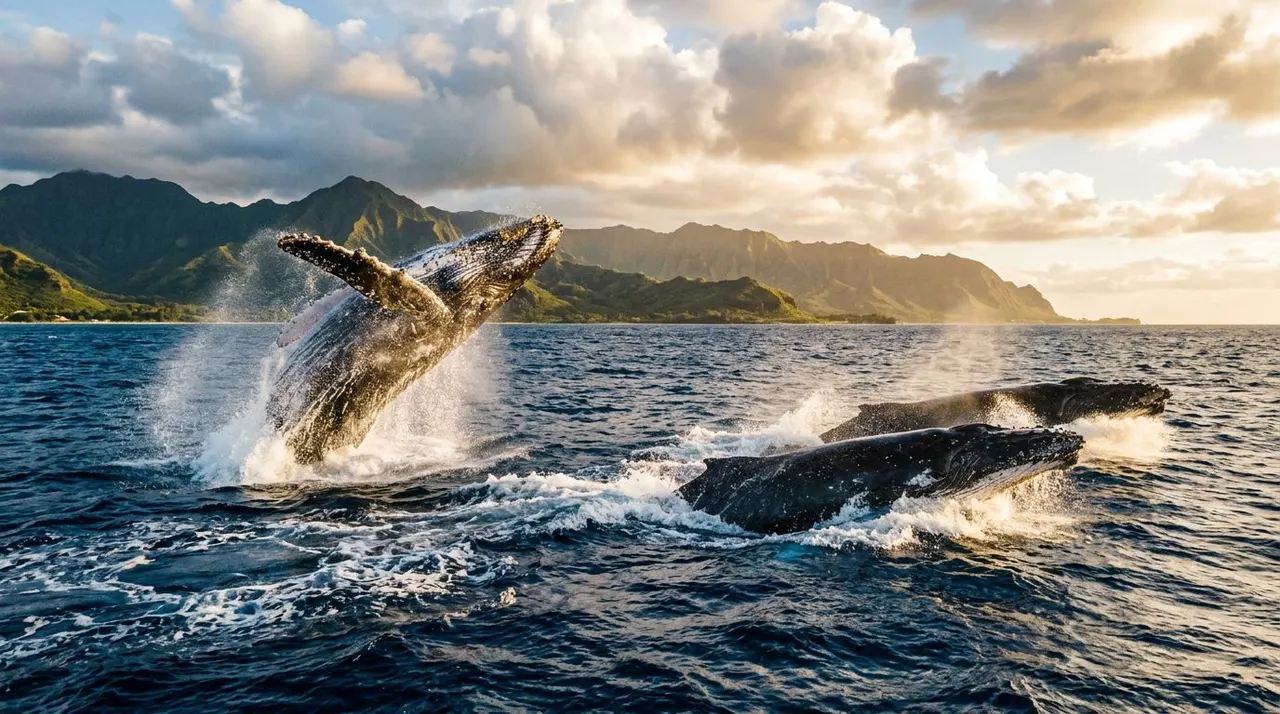
A calm ocean can change in seconds when a humpback whale slams its tail, breaches, or races across the surface. During Oahu whale watching, you may witness several whales moving together in a fast, unpredictable group.
These encounters are called competitive groups, and they reveal some of the most intense social behavior in the Hawaiian Islands. Living Ocean Tours takes you along the Waikiki coastline during its seasonal January through March whale watching trips, with a comfortable boat and a crew that knows how to read the water. Before you reserve your seat, it helps to understand what you may see and why it happens.
Oahu whale watching season and the best time to go
Humpback whales migrate to Hawaii during the winter breeding season. They come to warm tropical waters to mate, give birth, and care for their calves. Oahu’s south shore offers convenient viewing access because you can reach open ocean quickly from Honolulu’s Kewalo Basin Boat Harbor.
Living Ocean Tours runs seasonal whale watching tours from January through March. This period often brings active surface behavior, including breaches, pectoral fin slaps, tail throws, and groups of whales moving at speed.
Your viewing conditions depend on the animals, weather, and ocean visibility. Whales are wild, so no responsible operator can promise a breach at a precise time. However, a skilled captain can position the boat in productive areas while following wildlife protection rules.
You can improve your experience by:
- Booking a morning or afternoon that fits your schedule, since whales can be active throughout the day.
- Allowing extra time for the boat to reach open water and locate activity.
- Bringing sunscreen, sunglasses, a light layer, and a camera with a secure strap.
- Choosing a stable vessel if you are sensitive to motion or traveling with children.
Competitive groups may appear suddenly. A group that looks like two distant blows can become a fast-moving cluster before you have time to lower your camera.
How competitive humpback groups form
A competitive group usually includes several male humpback whales pursuing one female. Researchers often refer to the female as the “nuclear animal” because the males organize their movement around her.
The group doesn’t operate like a permanent team. Instead, it forms when males compete for access to the female. One male may move beside her while others approach from behind or below. New males can join, and others may fall away when the chase changes direction.
Speed is part of the competition. Humpbacks are large animals, yet they can accelerate quickly and cover a surprising distance across the surface. Their bodies may travel just below the water, leaving only blows, dorsal fins, or brief patches of whitewater visible.
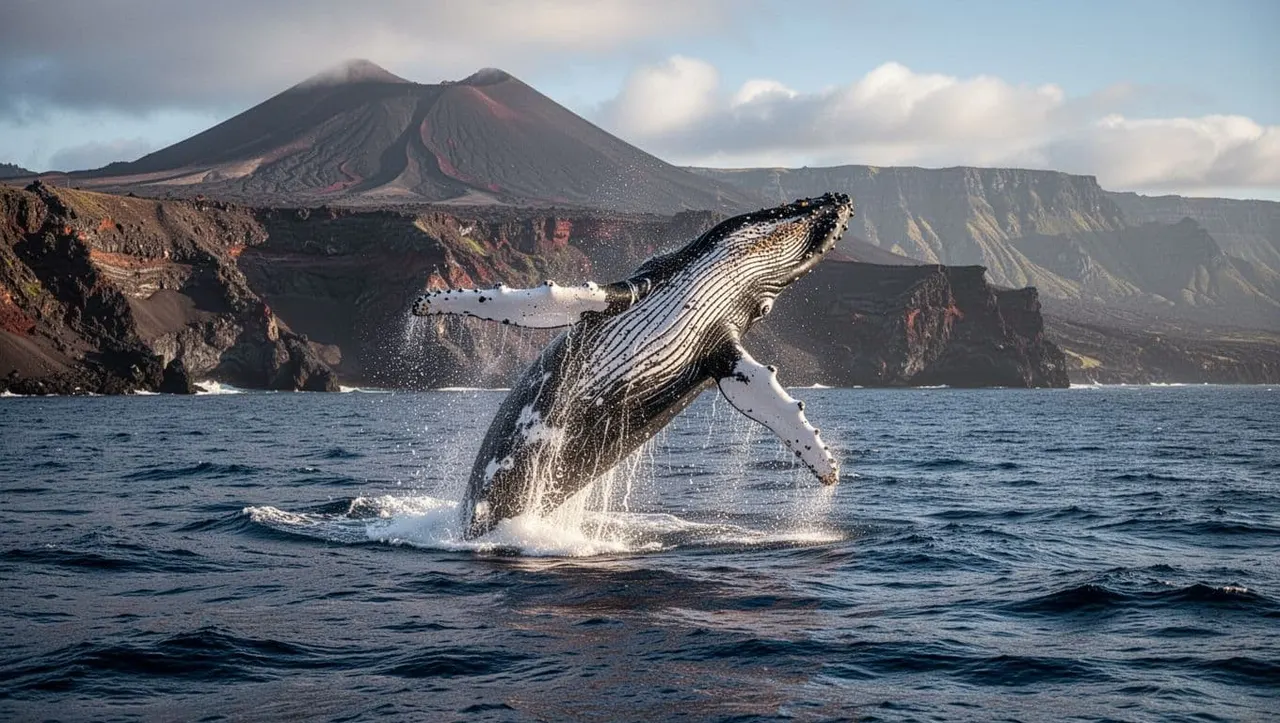
A Hawaii humpback behavior study connects peak reproductive timing with increased singing, male competition, and other active behavior. That helps explain why winter trips can produce such varied sightings.
What the whales are trying to do
The males are competing for proximity to the female. That competition can involve pushing, blocking, charging, and close parallel swimming. Scientists cannot assign a simple human emotion to every action, but the pattern is clear: the whales are competing for position.
The female may continue in a relatively steady direction while the males move around her. At other times, the entire group changes course quickly. You might see one whale surface on the left side of the boat, followed by another much farther away.
Researchers also study how humpbacks use sound during the breeding season. A study of humpback social signals examines vocal communication in Hawaiian breeding grounds. You won’t hear every underwater call from a boat, but the whales’ behavior is part of a larger social exchange that includes sound, movement, and body displays.
A competitive group can form and dissolve quickly, so a quiet surface may become active within minutes.
The behavior you may see from the boat
Whale watching becomes more rewarding when you know what different movements may indicate. You don’t need to identify every behavior perfectly. Watch the direction, spacing, and speed of the whales.
| What you see | What it may mean |
|---|---|
| Several whales moving quickly together | A possible competitive group |
| Repeated breaching or lunging | Surface display, competition, or active interaction |
| Pectoral fins striking the water | Communication or display |
| A sudden change in direction | The group is adjusting around the female |
| One whale surfacing far from the others | A male may have dropped behind or left the group |
| A long pause after intense movement | The whales may have changed depth or direction |
Breaching gets the most attention, but a fast-moving group can be just as fascinating when most of the action stays below the surface. Look for repeated blows appearing along the same path. Those breaths can show you where the animals are traveling before the bodies become visible.
A study of sub-surface humpback behavior found that whales in competitive groups often spent much of their time near the upper part of the water column. That shallow movement helps explain why a boat may see several surface events during one encounter, even when the whales spend more time underwater than above it.
Keep your eyes on the wider scene rather than staring at one point. A whale may surface behind your original view, and another may appear closer to the horizon.
Choosing an Oahu whale watching boat
The boat matters because comfort affects how long you can watch. Living Ocean Tours departs from Kewalo Basin Boat Harbor, only minutes from Waikiki Beach. Its Coast Guard-inspected double-decker vessels, the Coral Kai and Lokahi, provide open deck space, shaded seating, restrooms, dry storage, and sturdy ladders.
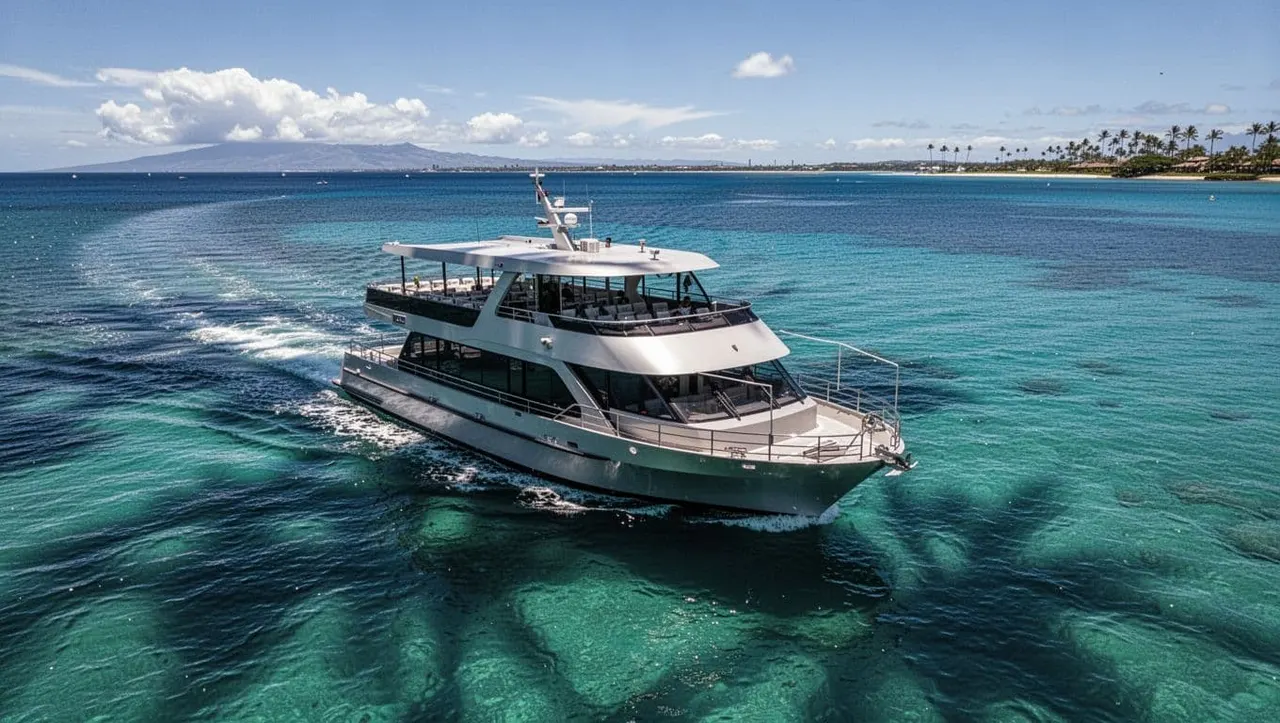
The Lokahi includes a SeaKeeper stabilization system that reduces side-to-side rolling. That feature can make a major difference if you are new to boat tours, traveling with children, or concerned about seasickness. The Coral Kai offers expansive open-deck space for taking in the coastline and scanning the water.
Living Ocean Tours is also the only tour company with professional snorkel guides. Those guides bring strong marine knowledge to the company’s wider lineup, including reef and wildlife experiences for guests who want to add snorkeling to their Oahu plans. You can view the full selection of Oahu snorkeling and whale watching excursions before choosing the trip that fits your group.
The crew can help beginners understand what to watch for and where to look. Still, every guest should follow the same basic rule: observe the whales without touching, feeding, or attempting to attract them.
For seasonal whale watching dates, review the Living Ocean Tours whale watching information and check the schedule that matches your vacation.
Living Ocean Tours also provides a CHECK AVAILABILITY option online, so you can review open dates before finalizing your plans.
Watch humpbacks with care and respect
Humpback whales are protected marine animals, and respectful viewing protects both the whales and your experience. Never ask a captain to chase a group or move aggressively toward a whale. A good operator gives the animals space and lets the encounter develop naturally.
Keep voices low when whales are nearby, avoid throwing anything into the water, and follow crew instructions about where to stand. If a whale approaches the vessel, remain calm and let the captain manage the situation.
You may also notice that the crew focuses attention on more than dramatic breaches. A mother and calf, a distant blow, or a disappearing dorsal fin can provide valuable information about whale movement. Wildlife watching rewards patience because the ocean rarely follows a script.
Your next Oahu whale watching experience
Competitive humpback groups give you a glimpse of the social pressure behind some of Hawaii’s most memorable whale sightings. The whales may race, circle, splash, and separate within minutes, yet every movement takes place on their terms.
When you choose Oahu whale watching with a stable boat, knowledgeable crew, and responsible viewing practices, you can enjoy the action without disturbing the animals. Watch the horizon, listen to your guides, and give each sighting time to unfold.


