
Oahu Snorkeling Turtles: Best Spots & Tour Tips
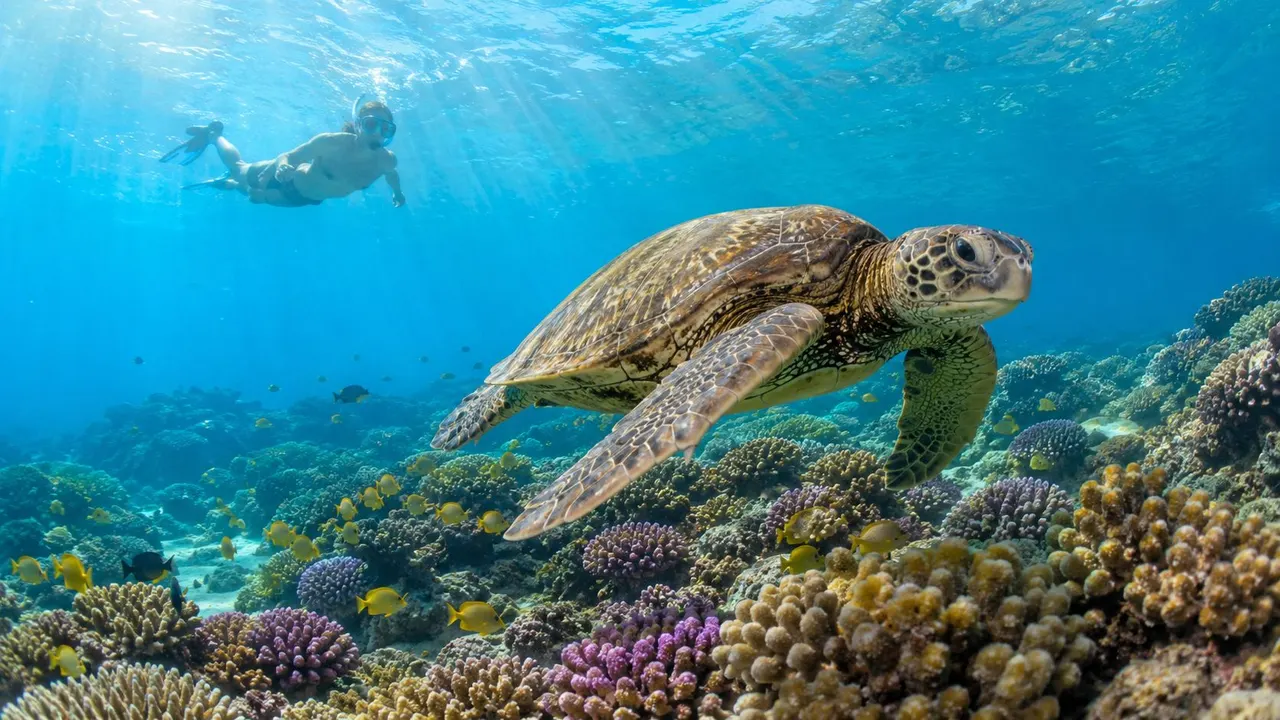
You're probably here because you've got the same vacation goal I hear all the time on the dock. You want that clean, unforgettable Oahu moment where you put your face in the water, settle your breathing, and a honu glides past like it owns the whole reef.
That moment happens on Oahu. It also gets missed every day by people who pick the wrong setup, the wrong expectations, or the wrong kind of spot. Some visitors drive to a famous beach and spend more time dealing with parking, shorebreak, and crowds than snorkeling. Others step off a boat over the right reef and get the experience they came for.
That's the key difference with Oahu snorkeling turtles. It isn't just about where turtles exist. It's about understanding why they show up in certain places, how to approach them respectfully, and which kind of outing gives your group the smoothest day in the water.
The Dream of Swimming with Sea Turtles in Oahu
The first good turtle encounter usually feels quiet. You're floating in warm blue water, the reef is moving beneath you, and then a Hawaiian green sea turtle comes through with that slow, steady glide that makes everybody stop kicking for a second.
That's why so many families and first-time visitors put turtle snorkeling at the top of their Oahu list. It doesn't feel like a manufactured attraction. It feels like you got invited into the turtles' world for a minute, and if you do it right, that memory stays with you long after the trip ends.
What most visitors are actually looking for
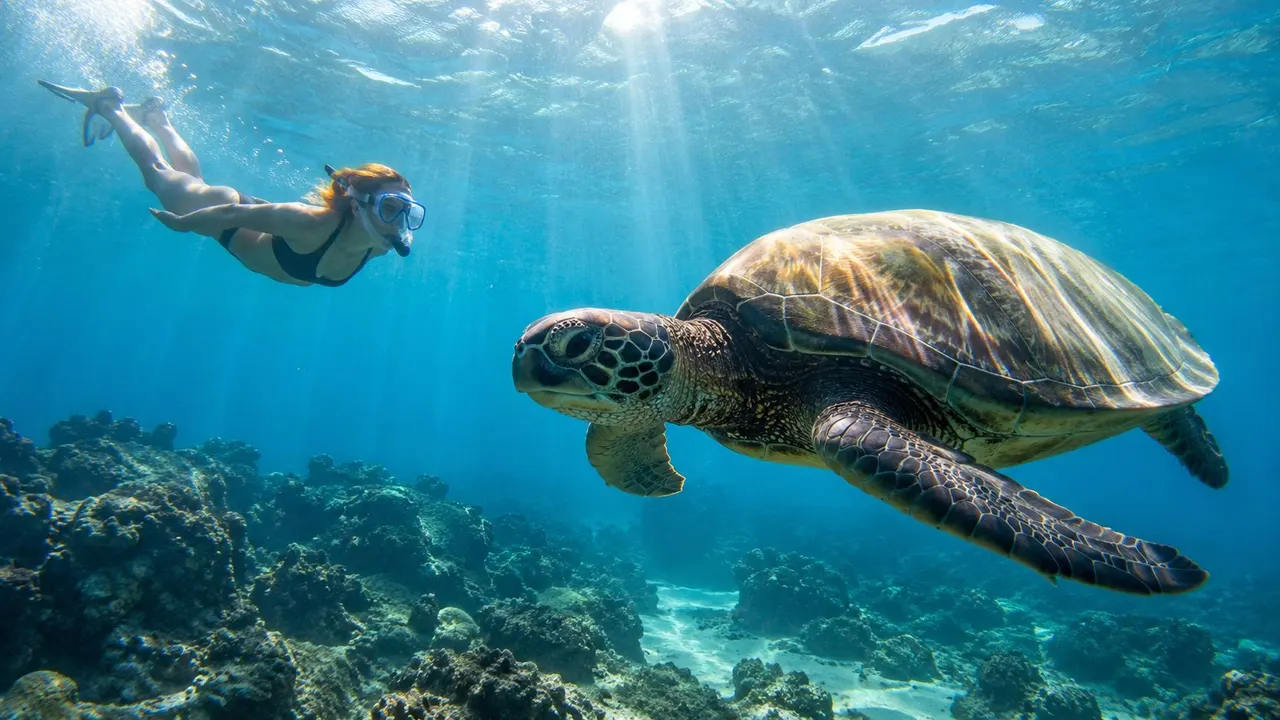
For many, the goal isn't a hardcore snorkel mission. They want a day that feels safe, simple, and meaningful. They want to see turtles in clear water, not spend half the morning guessing whether a beach entry looks manageable.
That's why a little local knowledge goes a long way. If you understand which locations naturally attract turtles, and which outings are built around those patterns, your odds of a smooth day improve fast. A helpful starting point is this guide to Hawaii turtle tours, especially if you're comparing different ways to get out on the water.
The best turtle days usually don't come from chasing the nearest beach. They come from matching the outing to the swimmer.
What makes Oahu such a strong place for turtle snorkeling
Oahu gives visitors a rare combination. You've got accessible boat departures near Waikiki, warm water, and reef systems that regularly hold marine life people hope to see. For travelers staying in Honolulu, that matters.
It also means Oahu snorkeling turtles can work for more than one kind of visitor. Families, grandparents, nervous swimmers, and confident snorkelers can all have a good day here. They just shouldn't all choose the same plan.
Understanding Oahu's Honu Hawaiian Green Sea Turtles
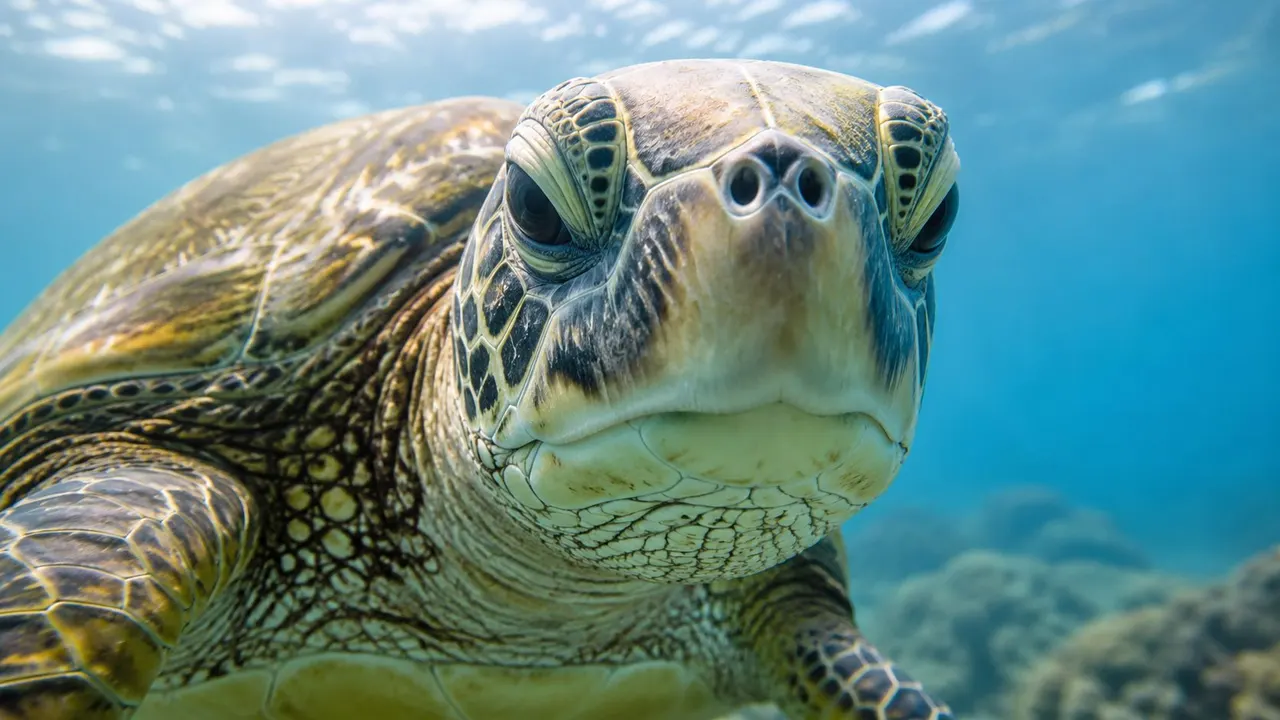
Before you worry about where to find turtles, it helps to understand what you're looking at. The honu, or Hawaiian green sea turtle, isn't just another reef animal on a snorkeling checklist. It's one of the most recognized marine animals in Hawaii, and people treat it with a level of respect that goes beyond simple wildlife watching.
They aren't there for you
This sounds obvious, but it changes how people behave in the water. Turtles aren't performing. They're traveling, feeding, surfacing for air, resting, or using parts of the reef that meet a need that day.
When guests understand that, they stop trying to force the encounter. They float better, move less, and end up getting cleaner views because the turtle keeps acting naturally.
A useful read if you want a little more context on feeding patterns is this page on the Turtle Canyon diet. Knowing what turtles are doing around a reef helps you spot them sooner and crowd them less.
Why understanding behavior improves the snorkel
A turtle that's calm will usually tell you a lot with its body language. You'll see its route. You'll notice when it's rising to breathe. You'll get a feel for whether it's settled on the reef or just passing through.
That makes the whole snorkel better because you stop reacting late.
Here's what experienced guides look for:
- Travel lines: Turtles often move with purpose. If one is heading across the reef or toward the surface, don't drift into its path.
- Resting posture: A turtle that's settled in is worth watching from a distance. Trying to close space usually ends the moment.
- Easy breathing cycles: If the turtle comes up cleanly and drops back down without changing direction because of swimmers, people are giving it enough room.
Why the encounter means more when you know the animal
A lot of visitors start the day wanting a photo and finish it with something better. They come away with a deeper appreciation for how calm and deliberate these animals are.
Practical rule: Treat every honu encounter like borrowed time in a wild animal's routine.
That mindset matters. It turns Oahu snorkeling turtles from a bucket-list activity into respectful wildlife viewing. That's also when kids tend to get it. Once they realize the turtle isn't a toy or a target, they usually become the best wildlife watchers in the group.
The Law of the Ocean Snorkeling Etiquette and Safety
This part isn't optional. If you snorkel with turtles on Oahu, you need to know the rules before you hit the water.
The legal standard
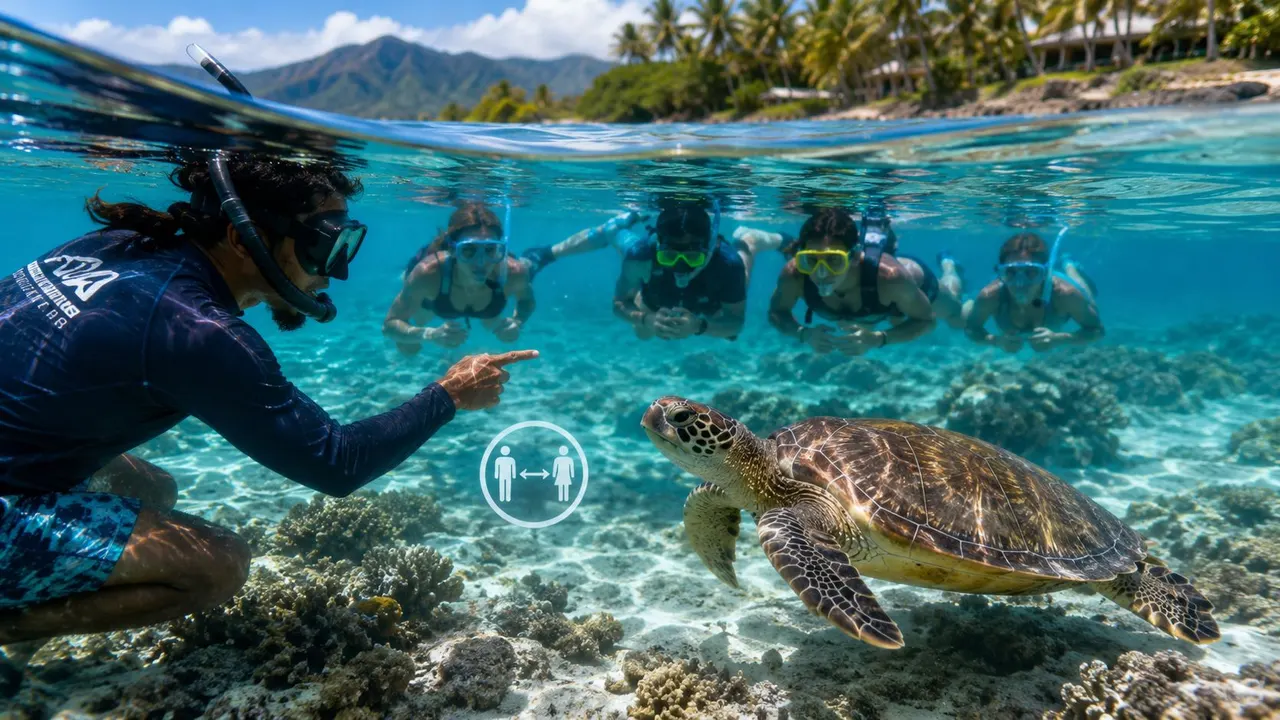
Swimming with or approaching Hawaiian green sea turtles is strictly regulated under federal law and Hawaii state law. Visitors must maintain a minimum distance of 10 feet, and NOAA guidance also prohibits touching, chasing, or riding turtles. Violations can lead to significant fines, as summarized in this guide to Oahu turtle snorkeling rules.
That 10-foot rule is the baseline. It isn't a suggestion, and it doesn't change because a turtle swims toward you or because someone wants a better photo.
If you want a plain-English overview focused on visitor behavior, this page on Hawaii turtle laws is worth reading before your trip.
What harassment looks like in real life
Often, when “don't touch the turtle” is heard, it's assumed to be the complete rule. It's not. In the water, harassment usually happens because swimmers crowd the animal without realizing what they're doing.
Common mistakes include:
- Cutting off the surface route: Turtles need to come up for air. If you position yourself above them or ahead of them, you force a change in behavior.
- Following from behind: Chasing almost always makes the turtle speed up or leave the area.
- Swimming directly overhead: Even without contact, this can pressure the turtle.
- Turning a photo into a pursuit: One excited swimmer can ruin the encounter for everyone around them.
Give the turtle the kind of space that lets it ignore you.
Safety for people matters too
Turtle etiquette and snorkel safety go together. Guests who are overexerted, anxious, or poorly positioned tend to kick harder, drift unpredictably, and focus on the wrong thing.
The basics that work are simple:
| Situation | What works | What usually fails |
|---|---|---|
| First time in open water | Use flotation, settle your breathing, stay with the guide or group | Jumping in fast and trying to keep up immediately |
| Seeing a turtle nearby | Float and observe from off to the side | Sprinting over for a close look |
| Unsure conditions | Choose support and supervision | Treating a rough entry like a challenge |
| Family snorkeling | Keep everyone on the same plan and pace | Letting stronger swimmers pull the group apart |
The aloha way in the water
Respect isn't separate from the fun. It is the fun. A turtle encounter is better when the animal stays relaxed and the group stays calm.
Use reef-safe habits, control your fins, and never stand on coral. Turtles depend on healthy reef habitat. If people damage the reef while trying to see the turtle, they're missing the whole point.
Best Oahu Spots for Turtle Encounters
If you ask where to see turtles on Oahu, you'll hear a lot of beach names. Some are famous. Some are genuinely worthwhile. But they don't all serve the same kind of visitor, and that's where people get tripped up.
Shore spots can work, but they're inconsistent
Places like Laniakea and Electric Beach come up often for a reason. People do see turtles there. But shore-based turtle plans come with trade-offs that don't show up in a pretty vacation photo.
You may deal with:
- Crowds and parking hassles
- A long or awkward swim from shore
- Variable visibility
- Conditions that look fine from land and feel different in the water
For strong swimmers with flexible schedules, that can be part of the adventure. For a family staying in Waikiki with one free morning, it often becomes a gamble.
Why Turtle Canyon stands apart
Turtle Canyon off Waikiki works differently from a random reef where a turtle might pass through. It is a boat-access-only site where green sea turtles gather around cleaning stations. Cleaner fish remove algae and small parasites from the turtles' shells, which is why the site reliably concentrates turtles, according to Turtle Canyon's site description.
That detail matters because it explains the “why.” Turtles aren't there by accident. They're using the reef for a specific purpose.
When you snorkel a cleaning station, you're not hoping a turtle wanders by. You're visiting a place turtles already use.
Comparing the two main approaches
Here's the practical difference between the common options:
| Option | Upside | Trade-off |
|---|---|---|
| Shore snorkeling | Flexible and self-directed | Unpredictable sightings, crowds, and entry conditions |
| Boat trip to Turtle Canyon | Purpose-built turtle habitat with direct access | Requires booking and a comfort level with being on a boat |
That's the heart of Oahu snorkeling turtles. If your goal is merely “get in the water somewhere and maybe see one,” shore snorkeling can work. If your goal is “give my group the cleanest path to a memorable turtle encounter,” the offshore cleaning-station model makes more sense.
Who should choose which
Shore snorkeling usually suits visitors who already know how they handle surf, entries, and current. They don't mind changing plans or calling it off if the ocean doesn't cooperate.
Boat-based turtle snorkeling fits a different traveler:
- Families with mixed swim confidence
- First-time snorkelers
- Visitors staying near Waikiki
- Groups that want support in the water
- Anyone who values predictability over improvisation
Neither format is wrong. They just solve different problems.
Why a Guided Tour Guarantees the Best Experience
A guided turtle snorkel isn't just transportation to a reef. The primary benefit is everything that gets handled before the average guest would even know there's a problem. Mask fit, entry timing, where the current is pushing, how to position around wildlife, and when somebody in the group needs flotation instead of encouragement.
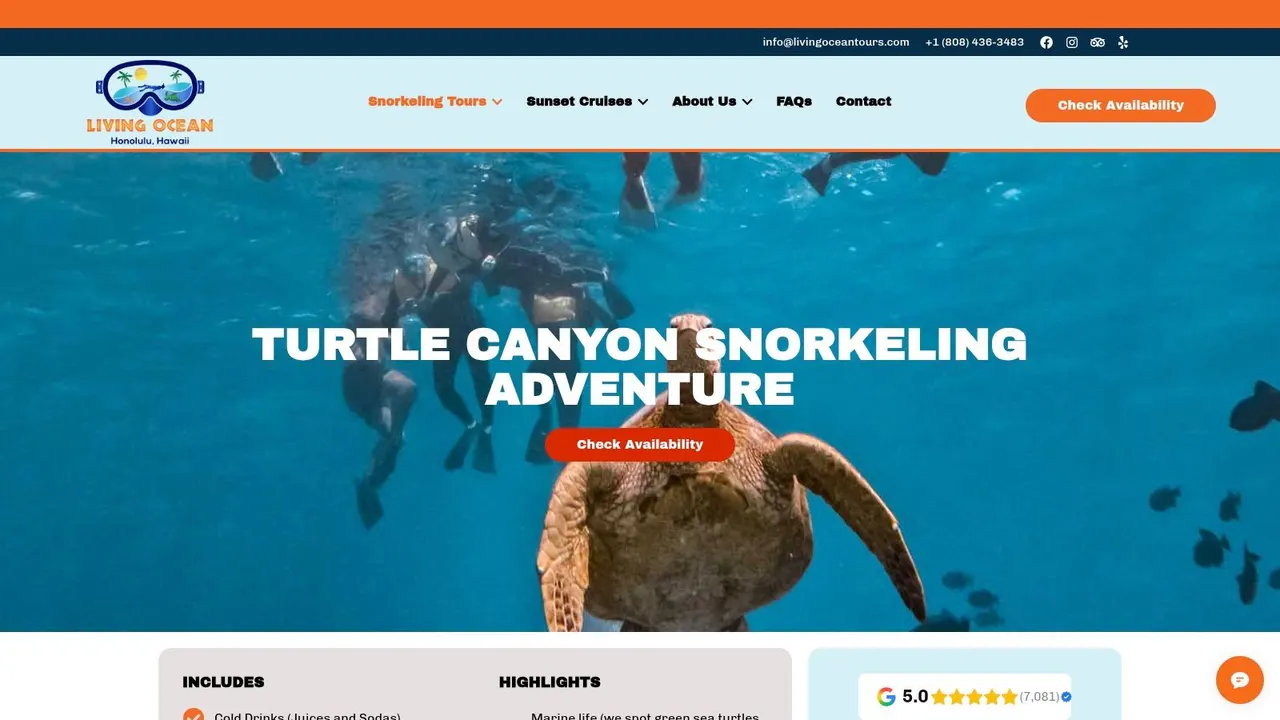
That support is a big reason guided boat tours to Turtle Canyon off Waikiki consistently report turtle sighting rates between 95% and 99%, and Living Ocean Tours cites a 99% success rate for turtle encounters on its two-hour Waikiki snorkel tours, which include in-water guides, flotation support, and snorkel gear, as noted in this Waikiki turtle snorkel overview.
What a guide changes in the water
The biggest difference isn't flashy. It's calm.
Guests do better when someone is there to:
- Fit gear properly before the swim starts
- Get nervous snorkelers breathing slowly instead of fighting the mask
- Point out turtles without sending the whole group into a chase
- Keep spacing respectful around wildlife
- Watch the group while people focus on the reef
That's what separates a relaxed wildlife encounter from a scattered swim.
A broader look at these formats is available in this guide to Oahu snorkeling tours and guides, especially if you're deciding between a dedicated turtle trip and a more general wildlife cruise.
Why the all-inclusive setup works for beginners
A quality guided outing removes a lot of friction. You're not renting gear in one place, guessing entry conditions in another, and hoping everybody in your group feels confident once they hit open water.
For turtle-focused trips, the convenience matters because it keeps the group fresher and more attentive once they're in the water. For many visitors, that's the difference between “I survived it” and “I'd do that again tomorrow.”
Living Ocean Tours offers a Turtle Canyons Snorkel Excursion for travelers who want a turtle-focused outing, and the Deluxe Waikiki Snorkeling and Wildlife Cruise for groups who want snorkeling with extra onboard activities.
The trade-off to be honest about
Boat trips aren't perfect for everyone. If you get seasick easily, you should plan for that. If someone in your group only wants ankle-deep water, a boat snorkel may not be their ideal morning.
But for visitors whose main goal is a reliable turtle experience off Waikiki, guided access to a known turtle habitat solves the problems that derail most do-it-yourself attempts.
Your Oahu Turtle Snorkeling Checklist
The smoothest snorkel mornings usually come down to preparation. You don't need a huge pile of gear. You need the right basics, packed with the actual conditions in mind.
High-quality guided outings in the Turtle Canyon and Waikiki corridor typically run in the 2- to 2.5-hour range, with in-water guides, flotation support, and all snorkel gear provided, which makes them more usable for first-timers in open-ocean conditions, according to this overview of Turtle Canyon snorkel trips.
Bring these yourself
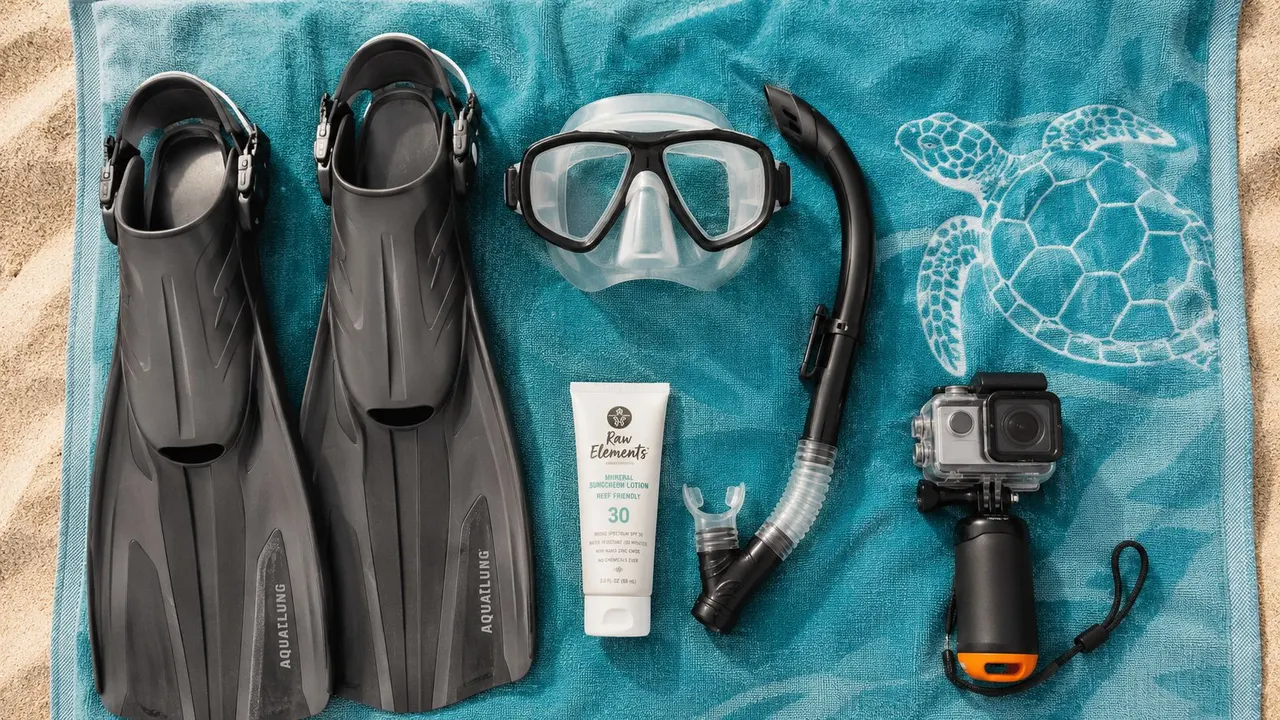
Here's the short list I'd pack for a turtle outing:
- Towel and dry clothes: You'll want both for the ride back and the rest of your day.
- Reef-safe sun protection: A rash guard helps a lot. It cuts sun exposure without adding as much product to the water.
- Sunglasses and hat: The ride out can be bright, especially for kids and grandparents.
- Waterproof camera: Nice to have, but only if it doesn't turn you into a wildlife chaser.
- A light snack for before or after: Showing up hungry usually doesn't help anyone's comfort on the water.
For a more trip-specific list, this Turtle Canyon packing guide is a practical reference.
Usually provided on a quality tour
Most visitors overpack because they assume they need to solve everything themselves. On a well-run guided snorkel, the key in-water items are generally handled for you.
Expect support like:
- Mask, snorkel, and fins
- Flotation gear
- Basic instruction
- Guide support in the water
That setup is especially helpful for first-timers. Good gear is important, but having somebody adjust it correctly is often what saves the day.
Tips for families
Family groups do best when adults frame the outing the right way. Don't sell it like a performance test. Sell it like a float-and-watch experience.
A few habits help:
| Family concern | Better approach |
|---|---|
| Nervous child | Let them know they can take it slow and use flotation |
| Excited strong swimmer | Remind them the goal is observation, not chasing |
| Grandparents or casual swimmers | Keep the day simple and conserve energy early |
| Everyone wants photos | Decide ahead of time that wildlife spacing comes first |
Kids usually do great once they realize they don't have to prove anything.
Frequently Asked Questions About Turtle Snorkeling
What is the best time of year to see turtles in Oahu
Turtle encounters around Oahu aren't limited to one narrow season. Offshore turtle spots near Waikiki are used regularly by turtles, which is why turtle snorkeling remains a year-round activity for visitors.
Can I see turtles from shore without a tour
Yes, you can. The trade-off is reliability. Shore snorkeling can be rewarding, but it's more hit-or-miss because you're dealing with beach access, crowds, and conditions that can change fast.
Is turtle snorkeling safe for beginners and children
It can be, especially when the outing includes flotation, clear instruction, and in-water supervision. Beginners usually do better when someone else handles the site selection and safety setup.
What if I'm not a strong swimmer
That doesn't automatically rule you out. Many visitors enjoy turtle snorkeling with support gear and a calm pace. The important thing is choosing an outing that matches your comfort level instead of forcing a more demanding plan.
Is Turtle Canyon easy to reach from the beach
No. Turtle Canyon is a boat-access-only site. That's part of why it stays different from the more crowded, more improvised shore-snorkel experience.
If you want a practical way to turn the idea of Oahu snorkeling turtles into a safe, respectful day on the water, take a look at Living Ocean Tours. Their Honolulu departures near Waikiki make it easy for families, beginners, and visitors with limited time to get out to the reef with guidance, gear, and a turtle-focused plan.


