
Best Oahu Snorkeling Turtles: Your 2026 Guide
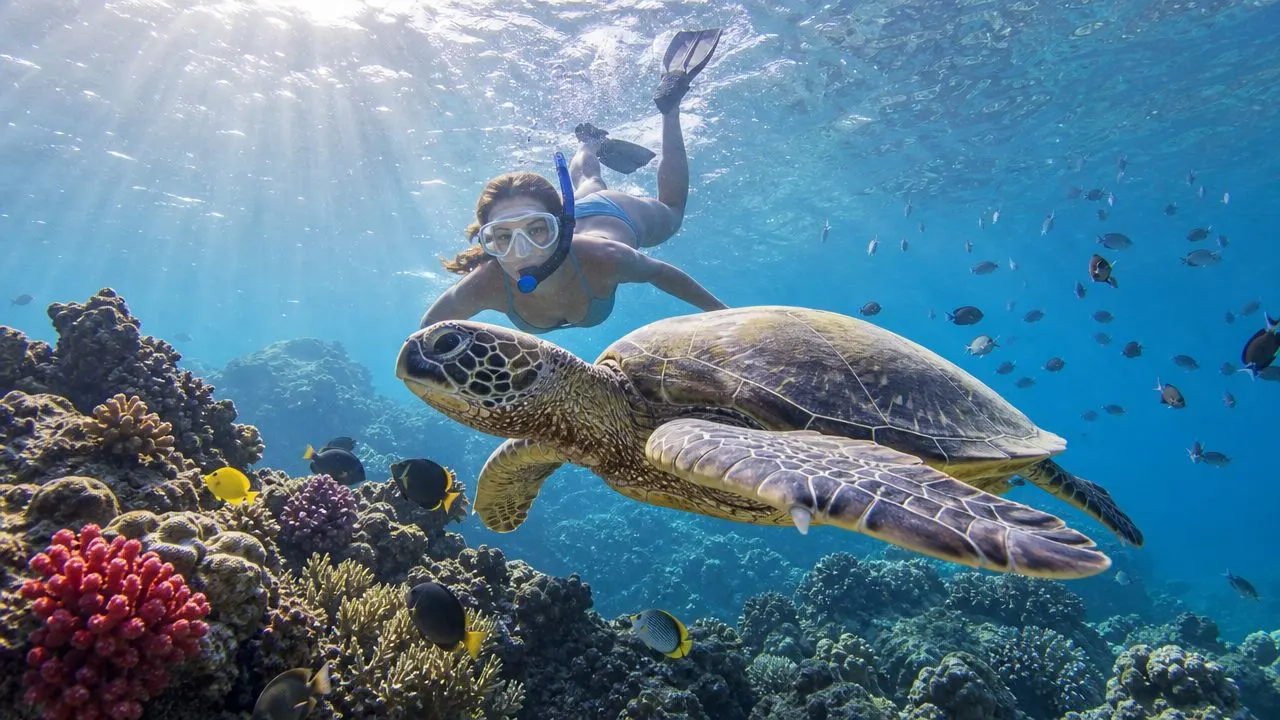
You're probably here because you want one thing: to get in the water on Oahu and see a sea turtle, not just hope for it.
That's a smart question to ask before you commit to any snorkel plan. A lot of visitors picture one peaceful moment with a honu gliding below them, then realize the actual challenge isn't wanting that experience. It's choosing the setup that gives you the best chance of having it safely, comfortably, and respectfully.
Oahu snorkeling turtles can be incredible, but it isn't just about picking a famous beach and jumping in. Ocean conditions change. Shore entries can be tiring. Some spots are better for looking from land than snorkeling. And even in places known for turtles, they're still wild animals.
The good news is that Oahu has a very reliable turtle-snorkeling option if you know where to go and what to expect. By the end of this guide, you'll know where turtle sightings are most dependable, when a guided trip makes more sense than shore snorkeling, and how to enjoy the encounter without stressing the turtles.
Your Magical Encounter with Oahu's Sea Turtles
One of the best moments in the water happens after the nerves wear off.
You've put your face in, found your breathing rhythm, and stopped thinking so hard about the mask. Then a Hawaiian green sea turtle glides across the reef below you, calm and unbothered, moving at its own pace. That quiet, unhurried pass is what many visitors remember most.
That's the draw of Oahu snorkeling turtles. The experience feels peaceful, and in Hawaii, honu carry deep cultural meaning that makes the encounter feel even more special.
What makes the experience memorable
Good turtle encounters usually come from calm conditions and calm people. Snorkelers who settle in, float comfortably, and let the reef come to them tend to notice more than those who rush around looking for wildlife.
The easier it is to relax in the water, the better the whole experience gets.
Planning plays a big role here. Turtle snorkeling is not just about picking a beach where turtles have been seen before. Water clarity, entry conditions, current, crowd level, and your group's comfort in the ocean all shape whether the morning feels easy or stressful.
If you want a clearer side-by-side look at shore access versus boat trips, this guide to Turtle Canyon vs. Waikiki snorkeling options breaks down the differences well.
Why expectations matter
People often get tripped up by the variability of shore snorkeling. Shore snorkeling can be great on the right day, but it comes with more uncertainty. You may find parking fast, get clean water, and see turtles. You may also arrive to rough entry conditions, low visibility, or a beach that looks fine from the sand but feels uncomfortable once you're in.
A guided tour changes that equation. You spend less time guessing and more time snorkeling in an area known for turtle activity, with crew support, flotation options, and a plan built around current conditions.
For beginners, families, and anyone who wants the most reliable shot at seeing turtles, that trade-off matters. The goal is not just spotting a honu for a second. The goal is having a safe, relaxed experience where your group can enjoy the water and come back smiling.
The Ultimate Turtle Experience The Turtle Canyons Snorkel Tour
You book one morning for turtle snorkeling, show up at the beach, and find wind, chop, and a long swim before you even reach decent reef. That happens more often than visitors expect. A Turtle Canyons boat tour is the more reliable choice because it puts you at an offshore site where turtles are seen regularly, with crew support from the moment you get in the water.
Turtle Canyons stands out because turtles return to this reef to be cleaned by reef fish. That repeat behavior is why guides use the site so often. It gives guests a realistic chance at a true turtle encounter, not a long search with fingers crossed.
The key advantage is consistency. Turtles are wild animals, so no honest operator should treat them like scheduled performers. But if your goal is to give your family or first-time snorkelers the strongest odds, Turtle Canyons is the kind of site that makes sense.
That difference matters on vacation.
A guided trip also solves practical problems that shore snorkelers often underestimate. You skip the beach entry, the guesswork about where to swim, and the fatigue that can set in before the snorkeling even gets good. If you want a better sense of logistics before booking, this guide on how far Turtle Canyon is from Waikiki and what the boat ride feels like helps set expectations.
Living Ocean Tours runs Turtle Canyons trips with the kind of support that helps people relax in the water. That includes a crew watching conditions, helping with gear, and keeping the group positioned where the snorkeling is productive without crowding the turtles. For beginners, that support often makes the difference between a stressful outing and a trip they talk about for the rest of the vacation.
The best part is that the experience feels straightforward. Get on the boat, listen to the safety briefing, follow the crew's lead, and spend your energy enjoying the reef instead of trying to figure it out as you go.
If seeing turtles is a high priority, this is the option I recommend most confidently. Shore snorkeling can work on the right day. A Turtle Canyons tour gives you a more dependable plan.
Honu Etiquette How to Snorkel with Turtles Respectfully
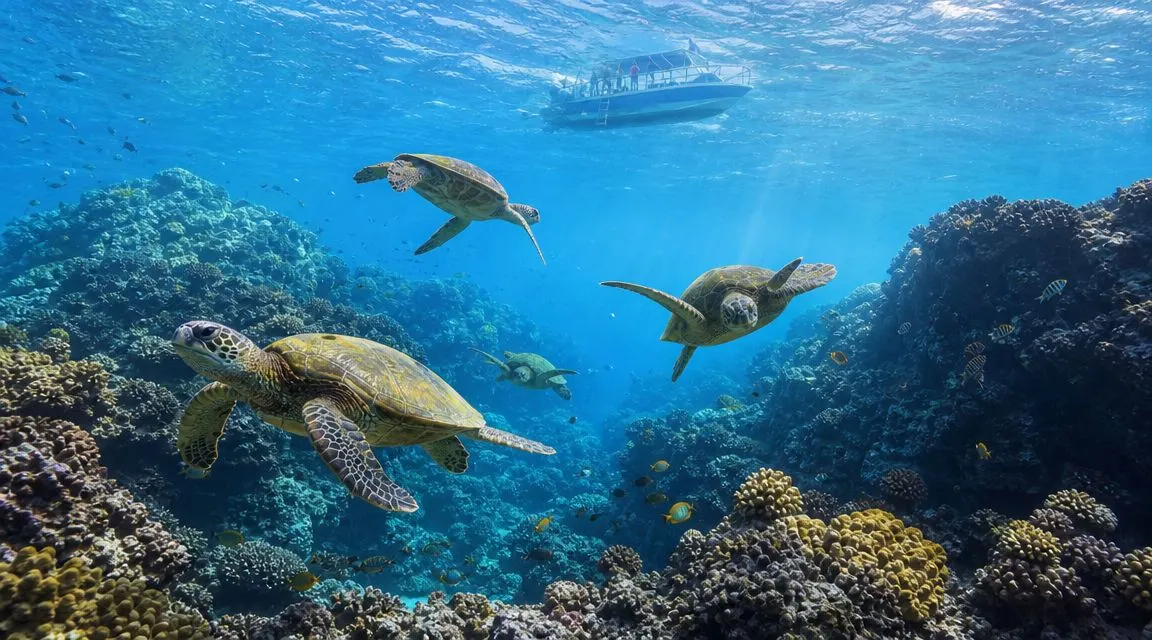
A lot of turtle encounters go wrong in the same predictable way. Someone gets excited, kicks a little too hard, drifts into the turtle's lane, and turns a calm sighting into a stressful one for the animal.
Good honu etiquette is simple. Give the turtle space, stay calm, and let the encounter come to you.
State and federal protections apply to Hawaiian green sea turtles, and NOAA guidance says people in the water should stay at least 10 feet away. Touching, chasing, crowding, or feeding turtles is not allowed because it can stress or injure them. If you want a clear summary before your trip, review these Turtle Canyons snorkeling etiquette guidelines.
Stay at least 10 feet away from every sea turtle. Don't touch it, don't chase it, and don't block its path to the surface.
What respectful snorkeling looks like
The best snorkelers around turtles are usually the quietest ones in the water.
Use small fin kicks. Keep your body horizontal. If a turtle changes direction, do not follow it. If it starts rising for air, leave the route open and watch from the side. Photos are better that way anyway, because a relaxed turtle keeps acting naturally.
A few habits make a big difference:
- Hold your position: Let the turtle travel through the area without swimming after it.
- Keep the surface lane clear: Turtles must come up to breathe, sometimes without much warning.
- Watch your fins and arms: Accidental contact often happens from careless movement, not bad intent.
- Give resting turtles extra room: A turtle lying on the reef should not be surrounded for pictures.
Beginners often ask what to do if a turtle swims closer than expected. Stay still and let it pass. You are still responsible for the distance you maintain, even when the turtle closes the gap.
This is one of the biggest differences between shore snorkeling on your own and going with a professional crew. On a guided tour, someone is actively watching spacing, reading the turtle's behavior, and correcting guests before a harmless mistake becomes a problem. That kind of supervision protects the wildlife and makes the experience more comfortable for first-timers who are already managing mask, fins, and breathing.
Respectful behavior also gives you the best chance at a good encounter. Calm groups usually see more natural turtle behavior, while noisy swimmers often watch the turtle leave. If seeing turtles is a priority, the most reliable plan is a guided trip with a crew that takes etiquette seriously from the first briefing to the last swimmer back on the boat.
Honu Etiquette How to Snorkel with Turtles Respectfully
Seeing a honu in the wild is a privilege. How you behave around that turtle matters as much as finding it.
State and federal law protect Hawaiian green sea turtles, and official guidance says snorkelers and swimmers must stay at least 10 feet away at all times. That same guidance prohibits touching, chasing, or feeding turtles to avoid stress and harm, as explained in this Hawaii turtle-viewing guidance.
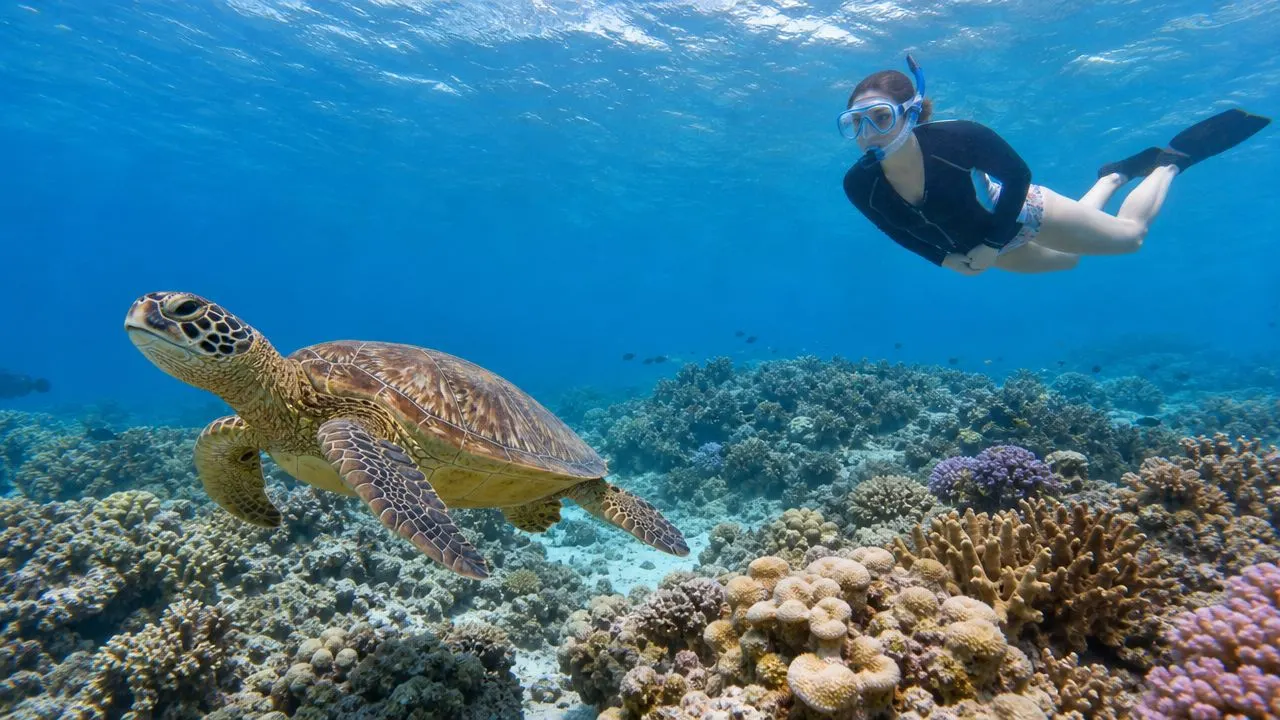
Stay at least 10 feet away from every sea turtle. Don't touch it, don't chase it, and don't block its path.
What respectful snorkeling looks like
The best approach is passive observation. Float, watch, and let the turtle decide where it goes.
Good habits in the water include:
- Hold your position: If a turtle is moving across the reef, don't swim after it.
- Keep the path clear: Turtles need to surface for air without people drifting in front of them.
- Use calm movements: Splashing and aggressive finning change the encounter fast.
- Take the wider angle: Photos are better when the turtle is relaxed anyway.
For a practical look at what guides want guests to do around the cleaning station, see this page on Turtle Canyon etiquette.
What not to do
People usually mean well, but excitement creates problems. The most common mistakes happen when someone wants one closer look or one better picture.
Avoid these completely:
- No touching: Not the shell, not the flipper, not even if the turtle seems calm.
- No feeding: Feeding changes wildlife behavior and puts the animal at risk.
- No crowding: If several swimmers close in, the turtle often leaves.
- No cutting off the ascent: A turtle heading upward needs space immediately.
A turtle that changes direction because of you is already telling you you're too close.
This is one part of Oahu snorkeling turtles that shouldn't feel negotiable. Responsible viewing protects the turtles and usually leads to a better experience for everyone in the water.
Snorkeling Tips for Families and First-Timers
Beginners usually don't need to be braver. They need to be more comfortable.
That's especially true for families. If someone in your group is nervous, the day goes much better when the goal is “float and look” instead of “swim hard and keep up.” Most first-time snorkelers relax quickly once the mask fits right and they realize they can breathe slowly at the surface.
Small fixes that make a big difference
A few basics solve most beginner problems:
- Start with the mask fit: If the mask leaks, everything feels harder than it is.
- Use the flotation vest: It saves energy and helps nervous swimmers settle in.
- Practice breathing before looking down: Get comfortable with the snorkel first, then start exploring.
- If water gets in the snorkel, stay calm: Lift your head, clear it, and reset. No rush.
Kids usually do best when adults stay relaxed too. If parents act like it's a test, children tense up. If adults treat it like floating in a big blue window, kids often adapt fast.
Choosing the right trip for your group
Some families want a turtle-focused outing. Others want snorkeling plus extra fun in the water so every age group has something to enjoy.
For that second group, the Deluxe Waikiki Snorkeling and Wildlife Cruise is a strong alternative because it combines snorkeling with family-friendly water features. If you want a broader overview before choosing, this page on Oahu turtle snorkeling options is a good starting point.
A better mindset for first-timers
The most successful beginner snorkelers don't try to do a lot. They keep their movements small, listen to the crew, and let the water support them.
That's the difference between enduring a snorkel and enjoying one. Calm wins.
What to Pack for Your Oahu Snorkeling Adventure
Packing well makes the morning easier. You don't need much, but the right few things help a lot.
Simple checklist
- Swimsuit: Wear it before check-in if you can.
- Towel: Boat rides back feel better when you can dry off quickly.
- Reusable water bottle: Sun, salt, and wind dry people out fast.
- Reef-safe sunscreen: Good sun protection matters, and many visitors prefer options that are friendlier to coral areas.
- Rash guard or cover-up: Extra sun protection helps before and after the snorkel.
- Sunglasses and a hat: The ride out can be bright, even on mild days.
- Waterproof phone pouch or camera: Useful if you want photos without worrying about spray.
- Change of clothes: Especially nice if you're heading to lunch or back to your hotel after.
What you can skip
You usually don't need to bring bulky snorkel gear on a guided trip when gear is already provided. Unless you have a favorite personal mask that fits you perfectly, it's easier to travel light.
Leave valuables behind when possible. Saltwater and crowded vacation schedules aren't a good mix for anything you'd hate to lose.
One final packing tip
Eat light, hydrate, and avoid showing up rushed. A calm start on land usually leads to a calmer start in the water.
Frequently Asked Questions About Oahu Turtle Snorkeling
What is the best time of year to see turtles on Oahu
Hawaiian green sea turtles are present around Oahu year-round, so this isn't a strictly seasonal activity. That's one reason turtle snorkeling stays popular for Waikiki visitors in every season.
Is seeing a turtle guaranteed on a tour
No. Wild animal encounters are never guaranteed everywhere.
That said, Turtle Canyons is known for very high guided-tour sighting rates, and that reliability is exactly why so many visitors choose a boat trip there instead of trying their luck from shore.
Is turtle snorkeling okay for people who don't swim well
It often is, especially when the trip includes flotation and in-water support. People who aren't strong swimmers usually do better on a guided outing where they can float at the surface and focus on looking down rather than navigating the whole situation alone.
Is shore snorkeling ever the better choice
Yes, for confident swimmers who are comfortable reading conditions and staying flexible. But if your main goal is maximizing your chance of a turtle encounter with less uncertainty, guided access usually makes more sense.
What should I remember most
Respect the turtle, choose the right setup for your comfort level, and don't confuse a famous beach with a reliable snorkel plan.
If you want a straightforward way to turn this from a vacation idea into an actual morning on the water, take a look at Living Ocean Tours. They run guided Waikiki snorkel trips from Kewalo Basin with gear, instruction, and support that help families, beginners, and turtle-focused visitors spend less time guessing and more time enjoying the reef.


