
Oahu Snorkeling Tours: Your Wildlife Briefing
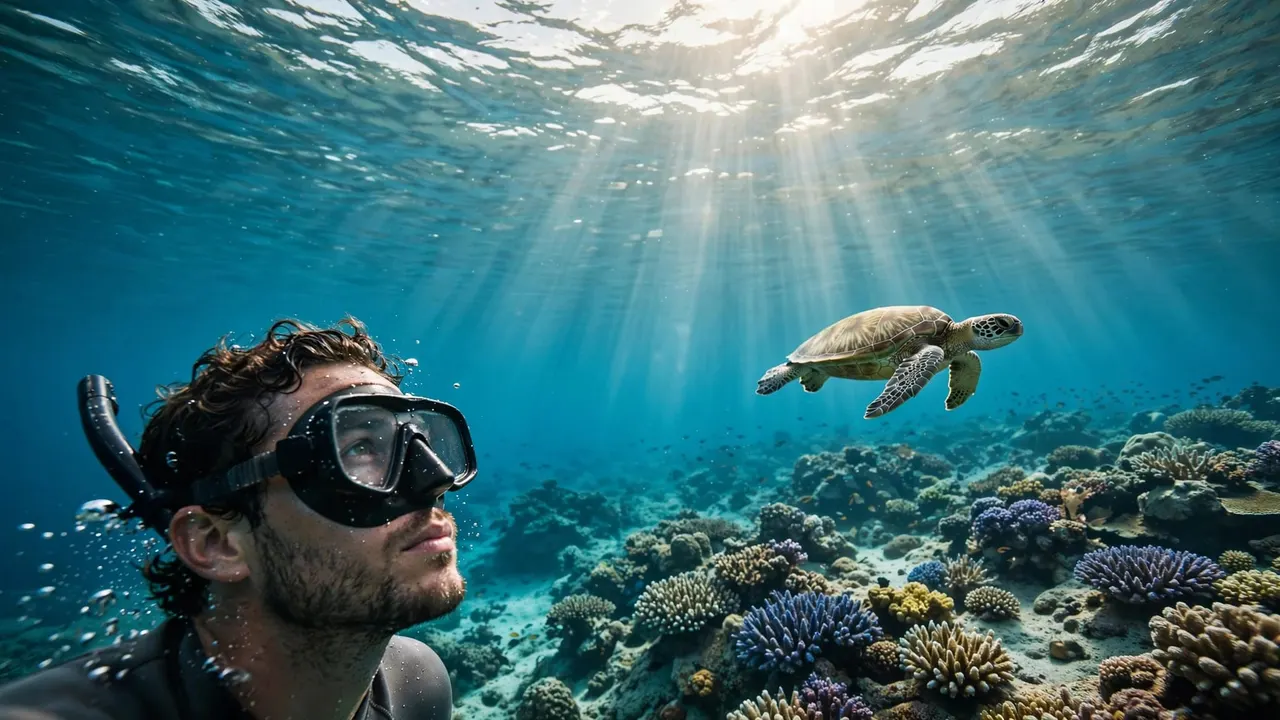
A wildlife briefing on Oahu snorkeling tours prepares you to enjoy the reef without disturbing the animals that live there. Before you enter the water, you’ll learn how much space to give sea turtles and why observing without touching matters.
At Living Ocean Tours, we want you to feel comfortable asking questions, whether you’re snorkeling for the first time or bringing your family along. A little preparation makes it easier to relax and enjoy what you see.
Key takeaways for your snorkel trip
Give Hawaiian green sea turtles at least 10 feet of space, and never touch, chase, or feed marine life. Keep your hands and fins clear of coral, too.
Listen to your crew’s instructions before entering the water. If you’re unsure about your gear or swimming ability, tell your guide so you can get help.
What happens during a wildlife briefing?
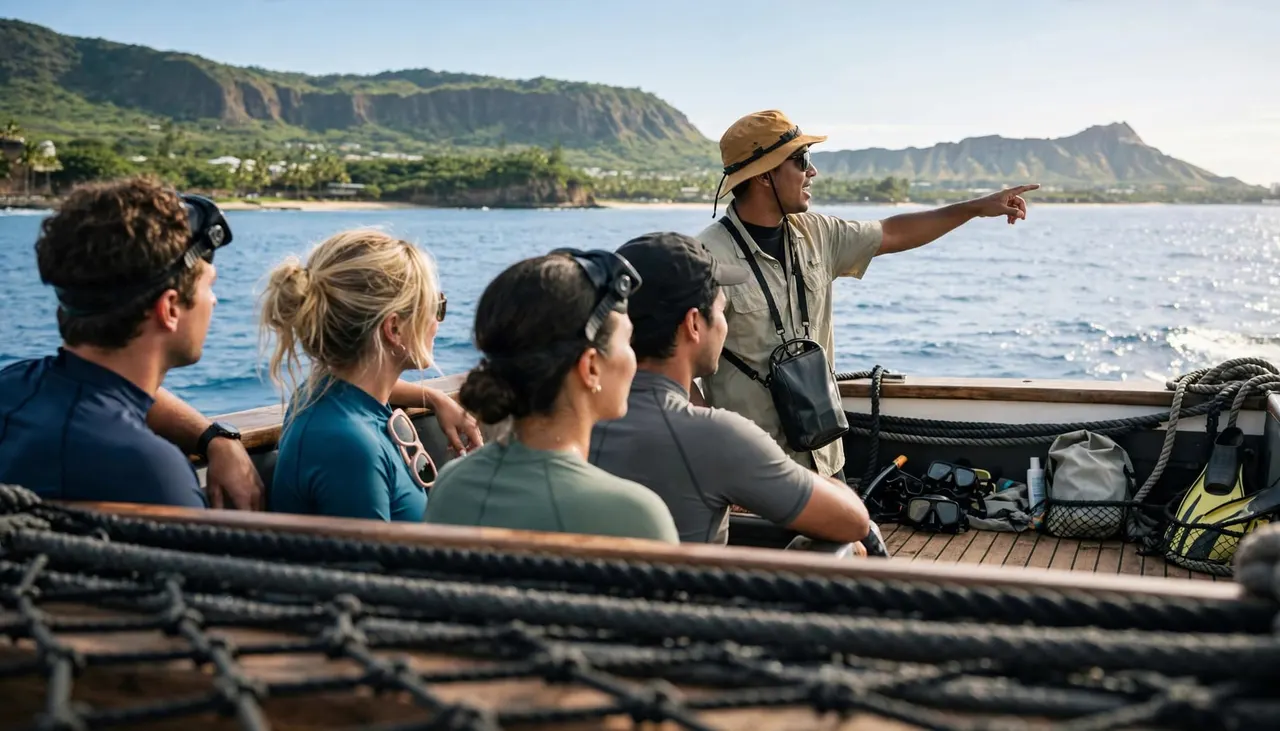
A wildlife briefing gives you practical guidance for sharing the water with animals. You’ll hear what respectful viewing looks like, how to avoid damaging the reef, and what to do if wildlife moves close to you.
The exact format varies among Oahu snorkeling tours. On our trips, our professional snorkel guides are there to help you understand the environment and feel more confident in the water.
Listen for the wildlife guidance
Your guide will explain why animals need room to swim, feed, and rest. You’ll also hear the central rule of a respectful encounter: watch wildlife without touching it or trying to change its behavior.
That advice applies even when an animal looks calm. A turtle resting near the reef or a fish moving around a coral head needs space to carry on without a swimmer in its path.
Ask questions before you swim
If you’re unsure how to judge distance or what to do if a turtle swims toward you, ask. A guide can explain how to give the animal room and help you understand what you’re seeing.
Children benefit from hearing the guidance in simple terms before they get in. Talk through the rules together on the boat so everyone knows what to expect when the excitement of a sighting begins.
How to observe sea turtles responsibly
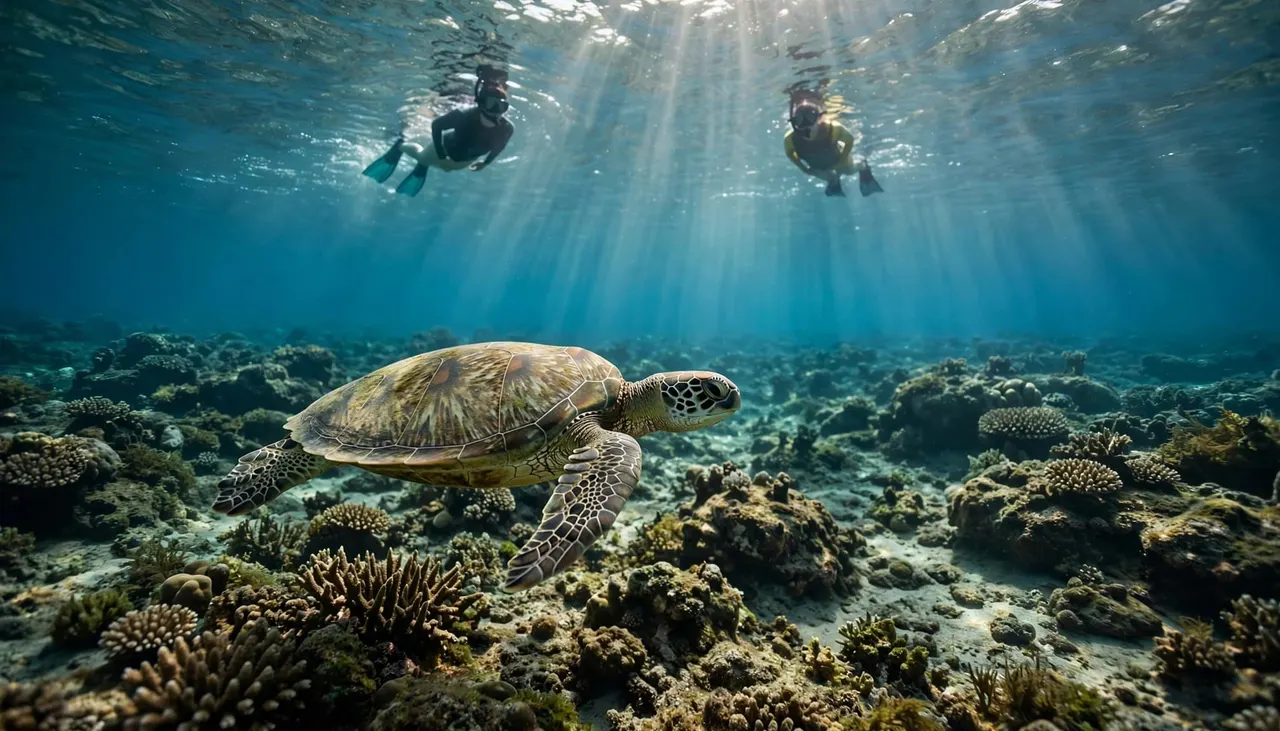
Hawaiian green sea turtles, known as honu, are a highlight of many Oahu snorkeling tours. They are wild, protected animals, so your role is to give them space and let them choose where to go.
Keep at least 10 feet away
NOAA recommends a minimum viewing distance for sea turtles of 10 feet, or about 3 meters, in Hawaii. That recommendation applies in the water and on land.
Give a turtle a clear route to the surface and an open path through the water. Don’t surround it with other swimmers or follow it as it moves away. A longer look from a distance is more rewarding than a close encounter that interrupts its natural behavior.
Give an approaching turtle room
A turtle may swim in your direction even when you’re keeping your distance. Stay calm, avoid touching it, and move slowly out of its path when you can.
If you’re with children, help them understand that they should keep their hands to themselves, even when an animal comes close. You can enjoy the moment without reaching out or trying to pose beside it.
Protect the reef beneath you
Coral can look like a sturdy rock, but coral reefs are built by living animals. A misplaced fin kick or a hand placed on the reef can damage that habitat.
Watch your fins and your position
Float at the surface and leave enough clearance between your body and the reef. Look behind you before kicking or changing direction, especially in shallow water or when other swimmers are nearby.
If you need a rest, tell your guide and use the flotation support available to you. Hawaii’s Division of Aquatic Resources advises visitors to stand on sand instead of coral. On a boat tour, follow your crew’s directions about where to rest rather than putting your feet down on the reef.
Leave wildlife and habitat as you found them
Don’t pick up coral, reach into crevices, or feed fish. Food can change the way marine animals behave, while hands near the reef can damage fragile habitat.
For sun protection, consider a long-sleeved swim shirt or rash guard. The Division of Aquatic Resources also recommends avoiding sunscreen products containing oxybenzone or octinoxate. Keep any wrappers and other belongings secure on the boat so they don’t end up in the water.
Before you enter the water
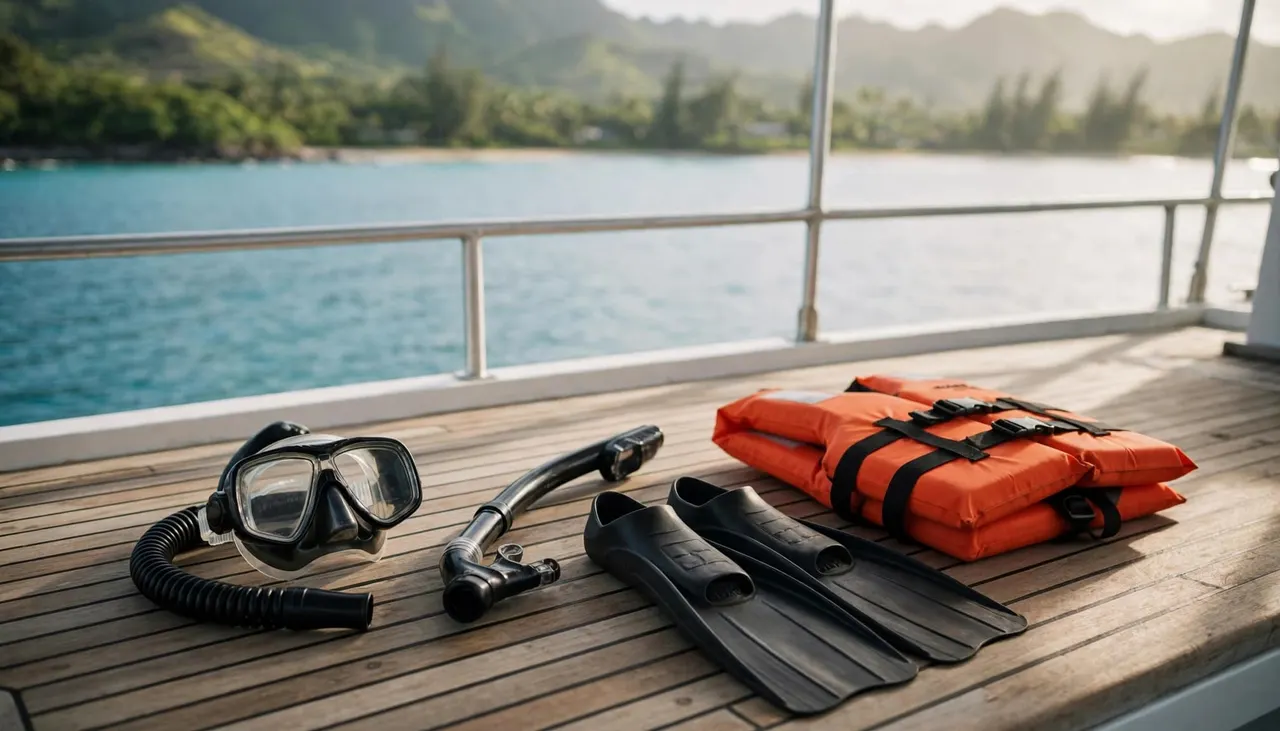
Wildlife guidance goes hand in hand with knowing how to use your equipment. When you’re comfortable at the surface, you can pay more attention to your surroundings and avoid unwanted contact with the reef.
Get comfortable with your gear
Tell your guide if you’re new to snorkeling or if your mask doesn’t feel right. You should understand how to breathe through your snorkel and what to do if water gets into it before leaving the boat.
Our Turtle Canyon snorkeling adventure includes gear, a snorkel school, and flotation vests. Take time to get familiar with the equipment rather than rushing into the water. If you need help with a mask or flotation vest, ask a member of the crew.
Know how to return to the boat
Listen for your crew’s directions about entering the water, staying with the group, and returning to the boat. Stay with a buddy, and let your guide know if you feel tired, uncomfortable, or uncertain.
You don’t have to stay in the water for the entire swim. Returning to the boat for a break is a sensible choice, and you can decide with your guide whether you’re comfortable getting back in.
What you might see at Turtle Canyon
Turtle Canyon is an offshore reef area near Waikiki where Hawaiian green sea turtles visit a natural cleaning station. Reef fish can remove algae and other material from the turtles’ shells, giving you a chance to watch an interaction between species.
Give the animals room to continue that behavior. If you see fish near a turtle, take time to watch without assuming every fish is part of the cleaning. Your guide can help you understand what you’re observing.
Sightings aren’t guaranteed. Wildlife moves freely, and water conditions affect what you can see. Keep an eye on the reef fish and the habitat around you, too. A quieter swim can still offer plenty to notice.
A turtle cleaning station is part of a living reef. Keep your distance so the turtles and fish can continue using it undisturbed.
Choose a guided Turtle Canyon experience
Our Turtle Canyon Snorkeling Adventure gives you time to put the briefing into practice with our guides nearby. The trip starts at $79 and lasts about two hours, including approximately one hour of snorkeling.
We depart from Kewalo Basin Boat Harbor near Waikiki. The tour welcomes snorkelers of different experience levels, and our crew can help you get comfortable with the included equipment.
If a guided turtle-focused outing sounds right for your group, you can CHECK AVAILABILITY for the Turtle Canyon tour.
You can also browse our other ocean experiences if you’re planning more time on the water.
Questions about wildlife briefings
Do beginners need to know how to identify marine life?
No. You don’t need to recognize fish or turtles before joining a tour. Your guide can help you understand what you see and explain how to observe it respectfully.
Focus first on feeling comfortable with your equipment and following the crew’s instructions. As you settle in, you’ll have more attention to give the reef and its residents.
Can you touch a turtle if it swims close to you?
No. Keep your hands to yourself, move calmly out of its path, and give it room to continue swimming. NOAA’s Hawaii wildlife viewing guidance advises against touching, chasing, or feeding marine animals.
A close pass can be exciting, especially for children. Remind your group beforehand that the best response is to watch and give the animal space.
What if you’re nervous about snorkeling?
Tell your guide before entering the water. You can ask for help with your mask and snorkel, use the available flotation support, and take your time getting comfortable.
Our Turtle Canyon tour includes a snorkel school and flotation vests for guests who want help building confidence. You can also return to the boat if you need a break.
Can you take underwater photos?
Yes, as long as you continue to give wildlife space and avoid disturbing the reef. Stay aware of your fins and the swimmers around you while looking through a camera.
Don’t chase a turtle for a closer shot or block its path. A photograph is most enjoyable when the animal can carry on with its day.
Enjoy the reef as a respectful guest
A wildlife briefing gives you a simple plan for your time in the water: listen to your guide, give animals space, and keep clear of coral. Those habits help you enjoy Oahu snorkeling tours while respecting the reef.
You can bring your curiosity and questions along. With a little preparation, you’ll be ready to appreciate whatever the ocean chooses to show you.


