
Oahu snorkeling: How to Recognize a Reef Fish Nursery
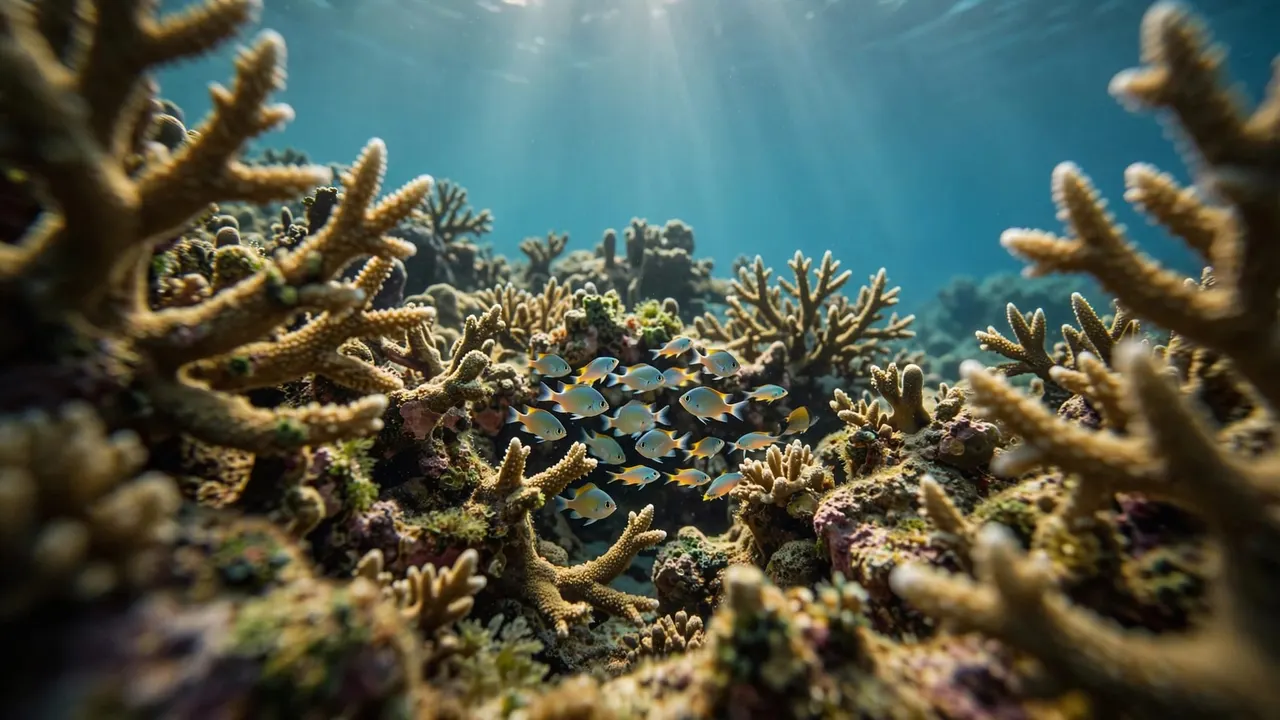
You can spot a possible reef fish nursery during Oahu snorkeling, but you can’t confirm one from a single swim. Concentrations of young-looking fish offer clues, especially when you notice how they use the same reef patch.
The distinction matters because small fish aren’t always young fish, and a busy gathering doesn’t automatically identify a nursery. With us at Living Ocean Tours, you can bring that curiosity to a guided reef outing.
Start by separating what you can observe through your mask from what a nursery designation actually means.
Key Takeaways
- A reef fish nursery helps young fish grow and contributes fish to the adult population.
- Small size, repeated use of a patch, and nearby shelter can suggest juvenile habitat, but none confirms a nursery.
- Some reef fish remain small as adults, so size alone can’t establish age.
- Patient observation helps you distinguish everyday reef activity without forcing a species identification.
- Your most useful takeaway may be a clear description rather than a definite label.
What a Nursery Means During Oahu snorkeling
A nursery has a role beyond holding small fish
In ecology, a nursery is a habitat that contributes young fish to adult populations. That role involves more than the number of fish visible at one moment.
You might see many small fish gathered around a reef feature. However, that snapshot doesn’t tell you how long they remain there, how many survive, or whether they later join an adult population.
Those connections separate a nursery’s ecological function from a promising-looking patch. Researchers assess nursery value through observations and measurements over time, rather than one underwater encounter.
For your reef visit, “possible juvenile habitat” is often the more accurate description.
Your view captures only part of the story
A snorkel gives you access to visible activity near the reef. It doesn’t reveal every fish inside the structure or show what happens after your visit.
Also, different fish can use the same area for different reasons. Young fish may share a patch with small adults, while passing fish briefly increase the apparent crowd.
Treat your observation as a window into that community. You can notice patterns without turning them into a claim about the entire habitat.
That approach leaves room for an interesting encounter even when the nursery question remains open.
Look for a Pattern, Not a Single Tiny Fish

Consider size alongside body shape
A tiny fish deserves attention, but its size provides only a starting point. Many reef fish are small throughout adulthood.
Instead, notice the whole animal. Body outline, proportions, markings, and position in the water can help you describe what you’re seeing. If larger, similar-looking fish are nearby, compare their shapes without assuming they’re the same species.
Juvenile coloration can also differ from adult coloration. As a result, a familiar adult fish on an identification card may look unlike its younger form.
During Oahu snorkeling, keep “small” and “juvenile” as separate observations until you have enough information to connect them.
Notice whether several observations fit together
A group of similarly sized fish using one patch is more informative than a single fish passing through. Even then, a gathering can have several explanations.
Look at whether the fish remain associated with the area or simply travel across it. Notice whether they spread out, regroup, or disappear into the reef structure.
You aren’t trying to collect proof. You’re building a fuller description of the encounter.
For example, “small fish repeatedly gathered beside the same ledge” preserves what you saw. Calling that ledge a confirmed nursery adds a conclusion your visit can’t support.
Watch One Patch Before Following a School

Repeated movements reveal how fish use space
Following the largest school can pull your attention away from smaller residents. A patch that first appears empty may become interesting once you notice movement within it.
Watch where fish return after moving away. A repeated route may indicate a feeding area, a defended patch, or regular use of a sheltered space.
However, repeated use doesn’t establish age. An adult resident can revisit the same location throughout your observation.
The useful discovery is the relationship between the fish and its surroundings. That relationship gives your Oahu snorkeling experience depth, even when it doesn’t answer the nursery question.
Describe behavior before interpreting it
Separate the action you witnessed from the explanation you attach to it.
“Several fish disappeared beneath a ledge” is an observation. “They were babies escaping a predator” adds assumptions about both age and cause.
Likewise, a fish approaching another fish could be defending space, feeding, or participating in another interaction. A short encounter rarely reveals the complete sequence.
Repeated use of a reef patch shows that the place matters to those fish. It doesn’t, by itself, reveal their age or establish a nursery.
When you discuss a sighting with your guide, describe the movement first. You don’t need a species name to ask a useful question.
Distinguish a Nursery From Other Busy Reef Areas
Several kinds of reef activity can attract your attention. These differences help you keep the possibilities separate.
| What you notice | A possible explanation | What it doesn’t establish |
|---|---|---|
| Small fish gathered together | A school or local aggregation | That every fish is a juvenile |
| Fish repeatedly picking at a surface | Feeding activity | That the area supports young fish through growth |
| Small fish interacting with larger animals | A possible cleaning interaction | That the smaller fish are babies |
| An adult attending eggs | Nesting or parental care | That the surrounding habitat is a nursery |
The important distinction is between an activity and a habitat’s longer-term role.
A cleaning station, for example, involves fish obtaining food by removing material such as parasites from other animals. The presence of small cleaners doesn’t make that location a nursery.
Similarly, an egg site concerns reproduction at an earlier stage. A nursery concerns habitat use by young fish and their contribution to later populations.
For your Oahu snorkeling observations, keep those labels separate. A reef can support several activities close together without every gathering having the same purpose.
Make Reef Watching Interesting for Your Whole Group
You don’t need everyone in your family to identify the same fish. Different observations can help build a fuller picture.
One person might remember the body shape. Another may notice that the fish returned to the same opening. Together, those details are more useful than a shared guess based only on color.
For children, focus on visible actions: swimming together, picking at a surface, or returning to a particular place. You can discuss possible explanations afterward without turning the outing into a quiz.
Couples can take the same approach. Comparing what each person noticed often reveals how much activity was easy to overlook.
If you have a photograph, use it to revisit visible details. A picture may help with identification, but it still won’t establish the habitat’s nursery function.
Above all, leave space for uncertainty. A remembered behavior can make the encounter worthwhile even when the fish remains unnamed.
Explore With Our Professional Snorkel Guides
At Living Ocean Tours, we’re Oahu’s only tour company with professional snorkel guides. You have in-water support while learning to observe reef life.
Our family-friendly ocean tours include opportunities to explore Hawaiian reef habitat. We depart from Kewalo Basin Boat Harbor, near Waikiki, and provide equipment and instruction for your time in the water.
You can tell your guide that you’re interested in smaller fish. Describe what you notice, including any features you couldn’t see clearly. The goal is a better understanding of the encounter, without promising a nursery sighting or a particular species.
Our approach to Oahu snorkeling emphasizes observing wildlife without touching, chasing, or feeding it. That respect also connects reef visits with broader coastal care, addressed in Hawaii DLNR’s coastal resource stewardship guidebook.
Explore our Waikiki snorkeling tours to find an outing for your group. For a Waikiki reef cruise, CHECK AVAILABILITY and bring your curiosity about the wider fish community.
Frequently Asked Questions About Reef Fish Nurseries
Can you identify a nursery during one snorkel?
You can recognize a place that appears to support young fish, but one visit can’t establish its nursery value. That requires evidence about how the habitat contributes fish to adult populations.
Your observations still matter. Remembering where fish gathered, their approximate appearance, and how they used the patch gives you a clearer account than calling every small-fish gathering a nursery.
During Oahu snorkeling, use “possible nursery habitat” when that distinction fits. It communicates your interest without claiming more than you observed.
Does a school of tiny fish mean they’re all babies?
No. Some fish remain small as adults, and schooling doesn’t establish age. Even similar-looking fish can be difficult to distinguish through a mask.
You can improve your description by noticing shape and markings as well as size. However, those details won’t always produce a certain identification.
A mixed or unidentified group is still worth watching. Its coordinated movements and relationship with the reef can be interesting without an age label. You don’t need to resolve every uncertainty to appreciate the encounter.
Recognize the Clues and Respect the Limits
A possible nursery becomes more interesting when you watch how fish use the reef, rather than relying on size alone. Careful observation gives you a stronger understanding without turning a brief sighting into scientific proof.
On your next Oahu snorkeling outing, give smaller fish some of your attention. You may leave without a confirmed nursery, yet remember a repeated route or gathering that you would otherwise have missed.


