
Oahu snorkeling: How Eagle Rays Use Reef and Sand
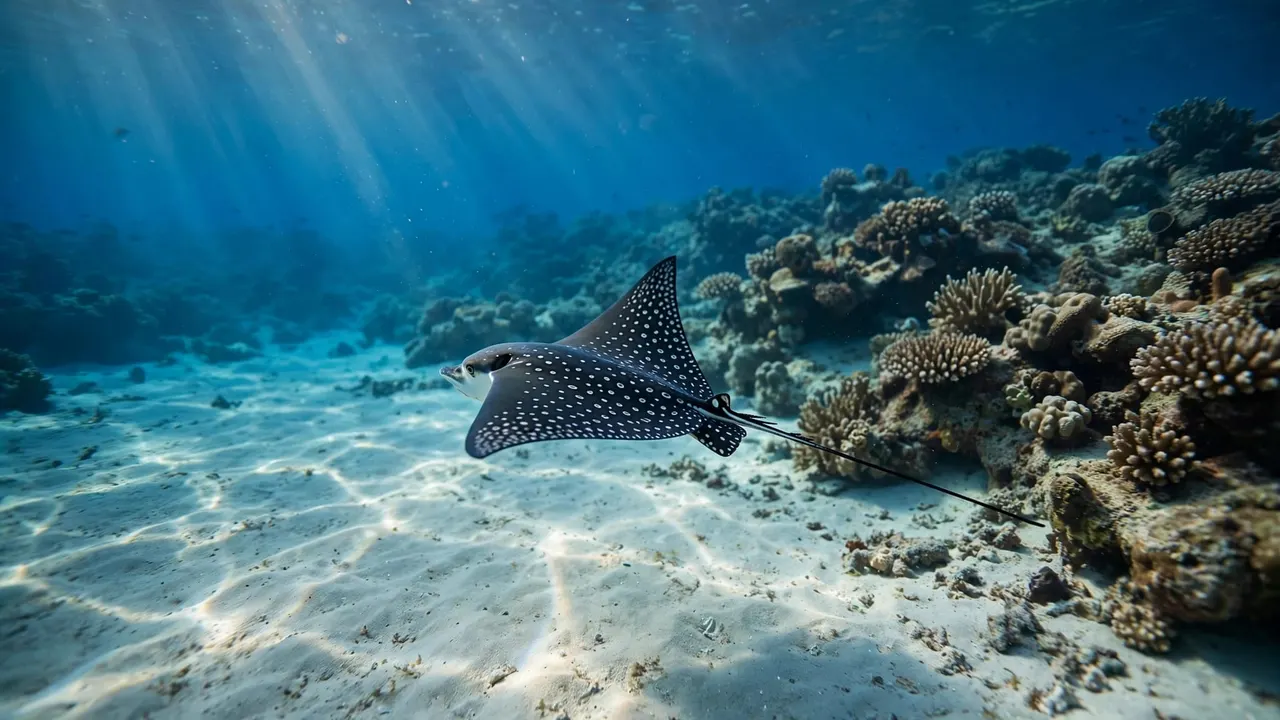
Eagle rays search sandy bottoms for food and swim through reef-associated coastal waters, so both habitats matter. During Oahu snorkeling, understanding that relationship helps you appreciate more than the animal’s graceful movement.
At Living Ocean Tours, our snorkeling tours introduce you to the ocean with professional guidance and respect for wildlife. Eagle rays are a possible surprise, never a promised encounter.
Start by learning what their shape, movement, and surroundings can tell you, while keeping observation without disturbance at the center of your swim.
Key Takeaways
- Eagle rays use sandy areas to search for bottom-dwelling food, including hard-shelled prey.
- Reef structure and nearby open water provide different surroundings for movement and feeding.
- During Oahu snorkeling, watch without chasing, touching, feeding, or blocking an animal’s path.
- Choose your snorkeling experience around suitable conditions and your group’s comfort, rather than a promised eagle ray sighting.
Recognize an Eagle Ray Without Swimming Closer
Watch the outline and swimming motion
You may hear an eagle ray called hihimanu in Hawaii. Its broad, winglike pectoral fins create the sweeping movement that makes these animals so memorable underwater.
A spotted eagle ray has pale markings across a darker upper surface, a projecting snout, and a long, slender tail. However, distance, glare, and water clarity can hide those details.
Start with the overall silhouette instead of trying to inspect individual spots. From the surface, you may recognize the broad wings and steady swimming before you notice the pattern.
Keep your position while you look. Moving closer for identification can turn an otherwise undisturbed encounter into an interruption.
Let behavior add context
An eagle ray traveling through open water may maintain a steady heading. Near the bottom, a change in pace or attention toward the sand can suggest food-searching behavior.
These movements offer clues, rather than certainty. A single turn doesn’t tell you that a ray has found prey, and a passing animal may simply continue beyond view.
Also, don’t assume every large ray is an eagle ray. Manta rays have different head structures and feed by filtering plankton. You don’t need a perfect identification to enjoy the sighting responsibly.
Why Reef Structure Matters Alongside Open Sand
Look beyond the coral itself
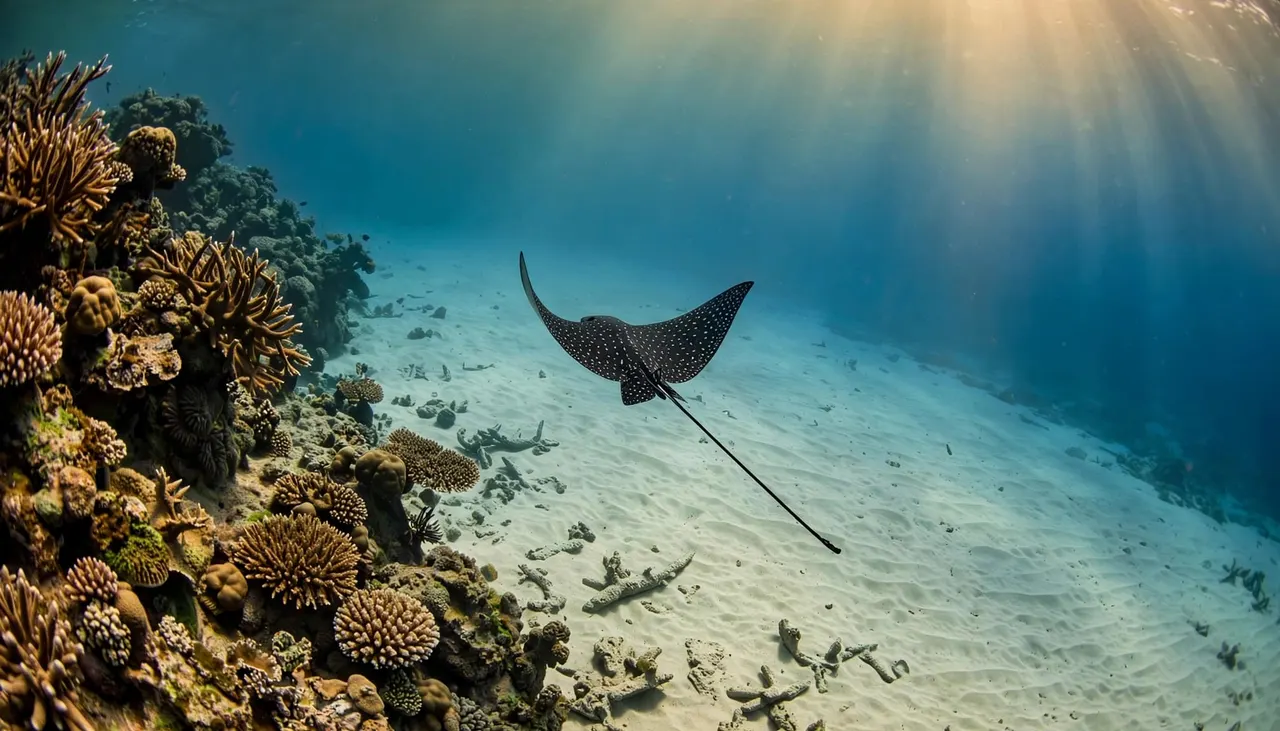
Across tropical coastal environments, a reef is part of a larger habitat mosaic. Coral heads, rocky ledges, sandy pockets, and open water can sit close together.
That variety matters because animals use different parts of their surroundings for different activities. Reef-associated waters give swimming rays room to move beside a seabed with changing contours.
For your Oahu snorkeling experience, the useful lesson is to notice the entire underwater setting. Look at the space between formations as well as the formations themselves.
You don’t need to search inside crevices or swim low over coral. A broad surface view often reveals more about movement through the habitat.
Notice boundaries without treating them as hotspots
The meeting point between reef structure and sand gives you a clear visual contrast. You can distinguish a swimming silhouette more easily against pale sand than against a busy reef background.
However, an easy viewing background doesn’t make a location a reliable eagle ray gathering place. Habitat appearance alone can’t promise an encounter.
Instead, use those boundaries to understand what you’re seeing if a ray passes through. Pay attention to its direction and distance above the bottom.
Meanwhile, keep track of your buddy and the boat or shore. Watching wildlife should never pull your attention away from your own position.
Sand Is a Feeding Habitat, Not Empty Space
Buried food makes the bottom important
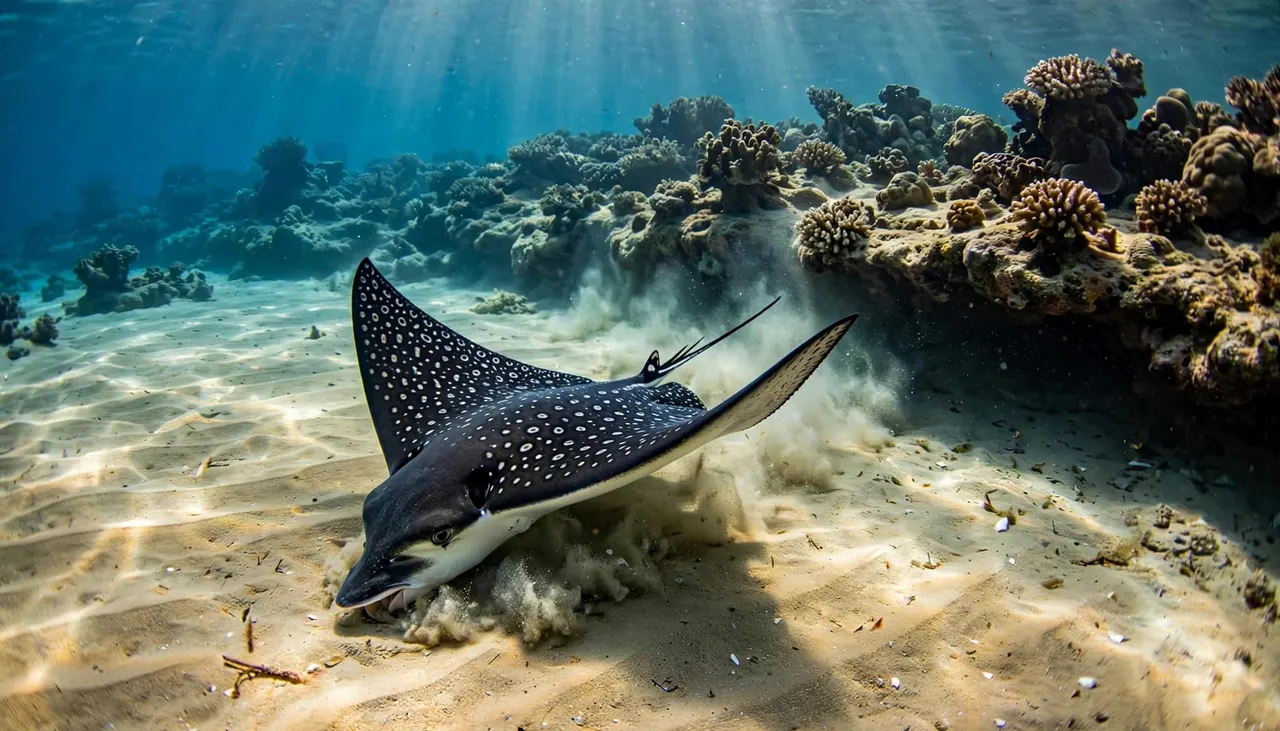
A sandy patch may look less colorful than coral, yet it can hold food beneath its surface. Eagle rays feed on bottom-dwelling animals, including clams and snails.
Their strong dental plates help crush hard shells. That feeding equipment explains why looking toward the seabed can be more relevant than watching schools of small fish.
When you understand this connection, sand becomes part of the living environment rather than a blank area between reefs. Much of its activity remains hidden from a snorkeler’s view.
Hawaii’s Department of Land and Natural Resources recognizes the ecological role of sharks and rays. Their feeding is one part of their relationship with other marine life.
Observe feeding clues without intervening
A ray directing its snout toward the bottom may be searching for buried prey. Disturbed sediment can accompany bottom-foraging activity, although a small cloud of sand alone doesn’t identify its cause.
During Oahu snorkeling, you can appreciate these clues from above. There’s no need to dive toward the animal or investigate the spot it leaves behind.
Avoid stirring the bottom yourself. Sand clouds reduce visibility for your group and can settle onto nearby coral.
A sandy feeding area deserves the same hands-off respect as a coral head, even when you can’t see the animals beneath it.
Let the ray decide how long it stays.
Watch Eagle Rays Without Changing Their Behavior
Your best response to an unexpected ray is to slow down. Keep your kicks controlled, stay with your buddy, and leave open water ahead of the animal.
Never chase, touch, feed, or surround a ray. If its direction changes toward you, give it room rather than trying to hold your position for a photograph. A clear route lets the animal continue without negotiating a group of swimmers.
Keep your camera close to your body instead of extending it toward wildlife. Use the view you already have, and accept that some encounters end before you capture a picture.
For families, agree on this approach before entering the water. Children benefit from a simple instruction: stay beside your adult and watch quietly. Adults should follow the same rule instead of swimming after an animal.
Reef protection also requires attention to your own buoyancy. Float above coral, and never stand on it to adjust your mask. Signal your guide if you need help.
NOAA’s coral reef conservation program supports reef conservation and restoration. Your part during Oahu snorkeling begins with avoiding physical contact with living coral.
A long-sleeve rash guard also reduces how much sunscreen you need. For exposed skin, choose mineral-based sunscreen without oxybenzone or octinoxate. Sun protection, controlled swimming, and respectful viewing belong together.
Plan Your Oahu snorkeling Trip Around Good Guidance
You don’t need an eagle ray sighting for a rewarding reef experience. Choose an outing that matches your swimming comfort and offers support throughout your time in the water.
At Living Ocean Tours, we’re Oahu’s only tour company with professional snorkel guides. Our approach emphasizes observing wildlife without touching it, with guidance that helps beginners feel more comfortable.
You can explore our Waikiki snorkeling and wildlife tours for an outing departing from Kewalo Basin Boat Harbor, near Waikiki.
Our Deluxe Waikiki Snorkeling and Wildlife Cruise starts at $79 per person. It combines reef snorkeling with a boat-mounted waterslide, water trampoline, and floating lily pad, giving water-loving families and couples several ways to enjoy the outing.
You also have shaded seating, onboard restrooms, and dry storage. Those comforts help you balance time in the water with a break aboard.
Eagle rays remain an unplanned wildlife possibility. Book for the reef experience, crew support, and time together, rather than one particular animal. When that combination suits your group, CHECK AVAILABILITY for the deluxe cruise.
Frequently Asked Questions About Eagle Rays
Are eagle ray sightings guaranteed on a snorkel trip?
No. Eagle rays move freely, and a snorkeling itinerary doesn’t control their presence. You should never interpret an offshore reef, sandy bottom, or wildlife-focused tour description as a sighting guarantee.
Instead, choose an experience you’ll enjoy for its overall setting and support. Reef fish, underwater structure, and time on the ocean offer plenty to appreciate without building the day around a single species.
Are eagle rays dangerous to snorkelers?
Eagle rays have defensive tail spines, so you should never touch, corner, or attempt to handle one. Respectful viewing means leaving space around the whole animal, including its trailing tail.
If you encounter a ray while snorkeling, remain calm and let it pass. Don’t position yourself between the animal and its direction of travel. Follow your guide’s instructions rather than moving closer for a photograph.
Do you need to dive down to watch an eagle ray?
No. Surface observation is the appropriate choice for a guided snorkeling outing. You can watch a passing ray without descending toward it or leaving your group.
Stay within the designated snorkeling area, even if the animal moves away. Never extend your swim into deeper or rougher water to keep following it. Your own comfort and awareness remain more important than prolonging the encounter.
Enjoy the Reef as a Respectful Guest
Understanding reef and sand habitats gives your Oahu snorkeling experience more depth. You can recognize why a ray might travel through open water or direct its attention toward the bottom.
The strongest wildlife encounter is one you leave undisturbed. Stay aware of your surroundings, protect the coral beneath you, and allow every animal to choose its own path.
Whether an eagle ray appears or not, that approach helps you enjoy Hawaii’s ocean with care.


