
Where to See Oahu North Shore Turtles Safely
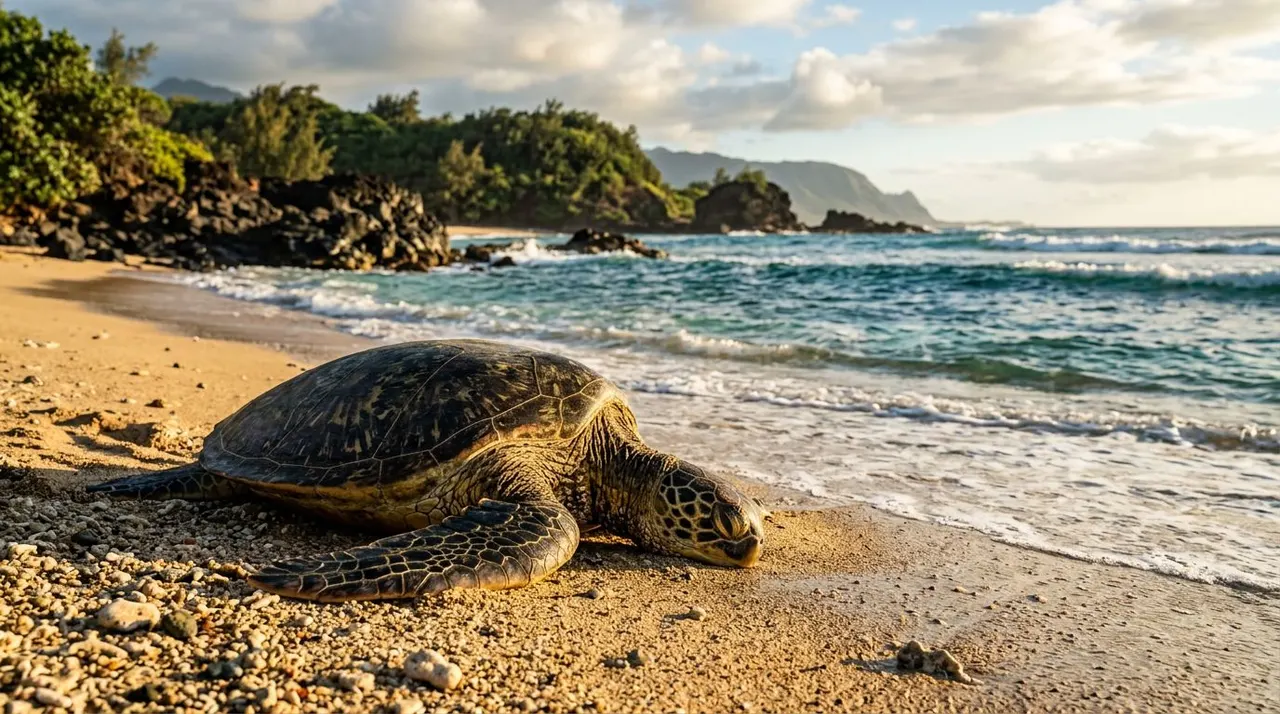
A Hawaiian green sea turtle can turn a short beach stop into the highlight of your Oahu vacation. You might spot one resting on the sand, feeding near rocks, or gliding through clear shallow water.
If you’re searching for Oahu North Shore turtles, Laniakea Beach is the famous starting point, but it isn’t your only option. If you’re staying in Waikiki, Living Ocean Tours also offers a guided Turtle Canyons snorkel at a different location, giving you a second way to see honu in Hawaii.
Your best plan depends on the season, surf, time of day, and your distance from the animals. Start with the North Shore locations most likely to offer a respectful viewing opportunity.
Best places to see Oahu North Shore turtles
Laniakea Beach, also called Turtle Beach
Laniakea Beach is the most well-known place to see sea turtles on Oahu’s North Shore. It sits along Kamehameha Highway between Haleiwa and Pupukea, with a rocky shoreline and sandy areas where turtles often rest.
You may see honu from shore without entering the water. Some turtles come close to the beach to bask, while others feed around the rocks offshore. Bring patience rather than expecting an instant sighting. These are wild animals, so they choose when and where they appear.
Laniakea can become crowded, especially during the middle of the day. Parking is limited, and you should never stop on the highway shoulder. Follow posted signs, use marked crossings, and stay behind any ropes or viewing boundaries.
For a quick refresher before you visit, review Laniakea’s turtle safety rules. The right viewing distance protects the turtle and gives everyone a better experience.
Haleiwa Ali’i Beach Park
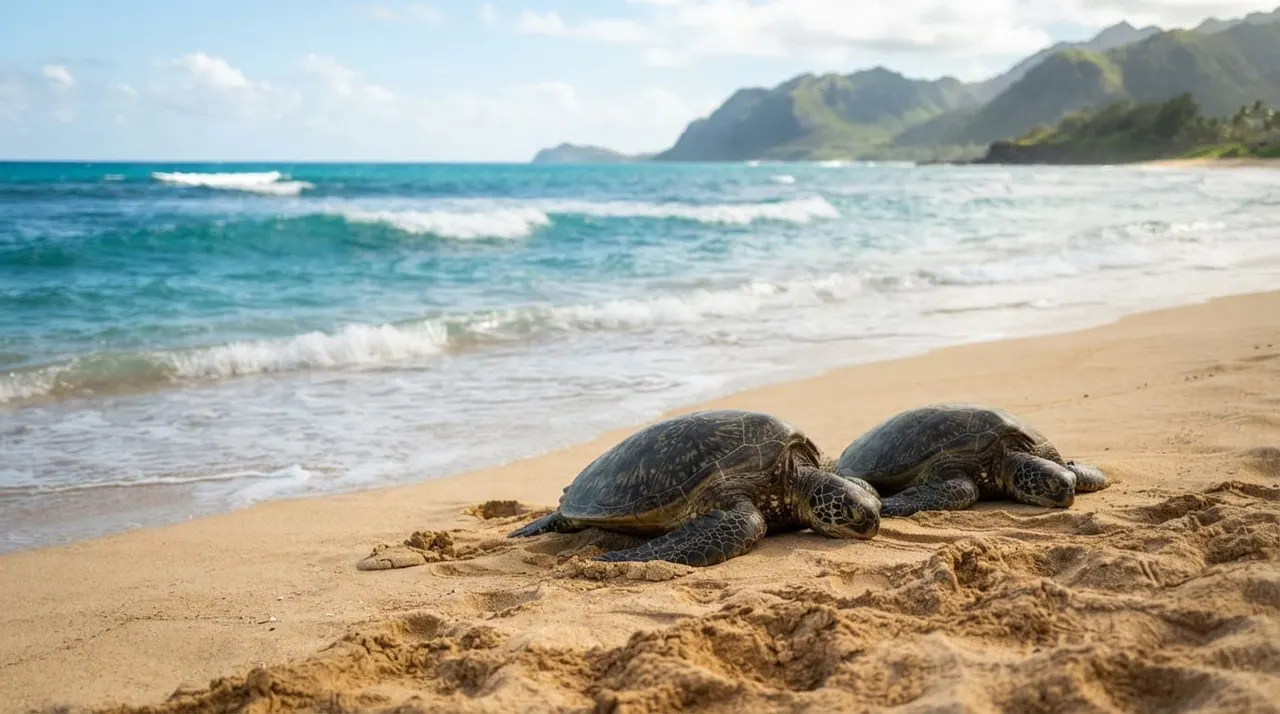
Haleiwa Ali’i Beach Park is a useful stop if you’re exploring the western end of the North Shore. The park offers open shoreline, nearby facilities, and calmer stretches of water during suitable conditions.
Turtles sometimes feed near the rocky edges or pass through the shallow water. You may have a better chance of seeing them from a quiet shoreline position than by swimming toward them. Keep your eyes on the water and avoid walking across reef areas.
This beach also works well for families who want space to relax after visiting Haleiwa town. However, conditions change quickly. If the water looks rough, stay on land and enjoy turtle watching from the beach.
Kawela Bay and the Turtle Bay area
Kawela Bay sits farther east, near the Turtle Bay area. Its shoreline has rocky sections, calmer coves, and coastal vegetation. You can sometimes spot turtles resting near the rocks or moving through the bay.
Access varies, so use marked public routes and respect private property signs. Don’t assume every trail or resort path leads to a public beach. Check conditions before entering the water because rocks, currents, and surge can make the shoreline difficult to navigate.
Kawela Bay is a good choice when you want a quieter setting. Still, sightings are never guaranteed. Oahu North Shore turtles may spend the day offshore, especially when waves reduce visibility near the beach.
When is the best time to see North Shore turtles?
Hawaiian green sea turtles live around Oahu throughout the year. Your chances of seeing one often improve in the morning, when beaches are less crowded and the wind may be lighter.
Summer usually brings calmer North Shore water, which makes shoreline viewing and snorkeling easier. Winter often brings larger surf to famous beaches such as Waimea Bay, Sunset Beach, and Banzai Pipeline. Those beaches can be spectacular for watching waves, but they may be unsafe for swimming or snorkeling.
Check the ocean before you leave your hotel. A beach that looked calm the previous afternoon may have stronger currents the next morning. If you see red flags, rough shorebreak, or large waves washing across the reef, stay out of the water.
Tide and sunlight can also affect what you see. Clear morning light makes turtles easier to spot near the surface. On a cloudy or windy day, look for a rounded shell or a slow flipper movement rather than expecting a perfect underwater view.
Crowds matter, too. Arriving early helps you find parking and gives you more room to observe quietly. If Laniakea is packed, move to another beach rather than crowding around one turtle.
Turtle sightings are never guaranteed. A responsible visit treats the beach as wildlife habitat, not an attraction with scheduled appearances.
How to watch turtles without disturbing them
Hawaiian green sea turtles are protected animals. You should never touch, feed, chase, surround, or block a turtle on the beach or in the water.
Stay at least 10 feet away, which is about three meters. This distance applies even when a turtle appears relaxed. A turtle resting on the sand still needs a clear path to the ocean, and a turtle in the water needs room to surface and change direction.
Keep your voice low and avoid sudden movements. Don’t place your phone or camera directly in front of the turtle. A close-up photo isn’t worth causing the animal to retreat.
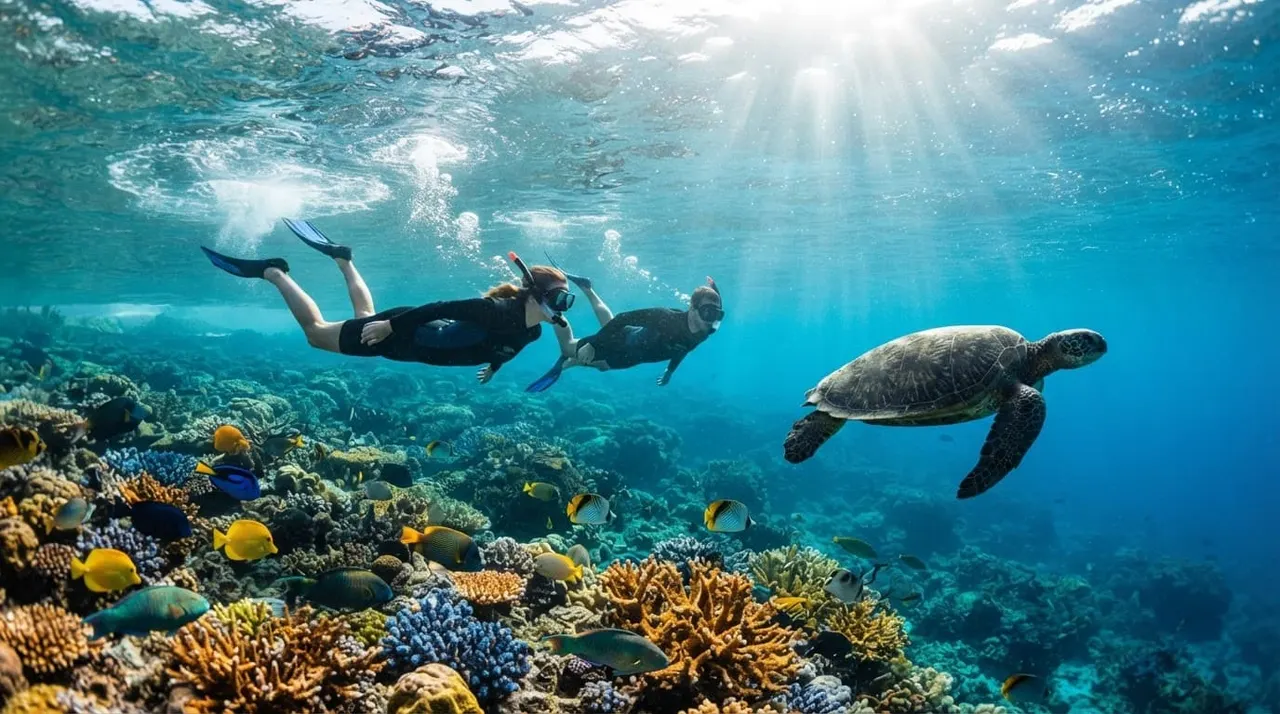
If you’re snorkeling, let the turtle decide how close to come. Float calmly, keep your fins away from the reef, and never swim behind it to force a better angle. You should also avoid standing on coral or rocks because they provide habitat for fish and other marine life.
Watch for volunteers or official signs at busy beaches. If a marked viewing area is in place, follow it. The boundaries help reduce crowding and protect the turtle’s resting space.
NOAA’s guide to keeping Hawaii honu safe also explains what to do if you encounter an injured or dead sea turtle. The statewide NOAA Marine Wildlife Hotline is listed as 888-256-9840.
You can also learn about NOAA’s Honu Count project if you want to report a sighting and support sea turtle tracking efforts.
Should you snorkel or watch from shore?
Shore viewing is the easiest option if you have young children, limited swimming confidence, or rough ocean conditions. You don’t need special equipment, and you can leave as soon as the beach becomes crowded or visibility drops.
Snorkeling offers a closer look at reef habitat, but it requires better conditions and stronger water awareness. Shark’s Cove and Pupukea are popular summer snorkeling areas, yet rocky entries, surge, and currents can create problems for inexperienced swimmers. A turtle sighting is possible, but never certain.
If you’d rather have professional guidance, Living Ocean Tours departs from Kewalo Basin Boat Harbor near Waikiki. The company operates custom-built, Coast Guard-inspected double-decker vessels with shaded seating, restrooms, dry storage, and sturdy ladders for water entry.
Living Ocean Tours is the only tour company with professional snorkel guides, which gives first-time snorkelers and families extra support in the water. Its Turtle Canyons Snorkel Excursion takes place off Waikiki, not on the North Shore, so you shouldn’t book it expecting a North Shore beach visit. However, the company reports a 95% success rate for spotting Hawaiian green sea turtles at a natural underwater cleaning station.
The Turtle Canyons Snorkel Excursion can be a practical choice when you’re staying in Honolulu and want a guided turtle experience without driving across the island. The crew provides instruction, helps you use the equipment, and reinforces the simple rule that you observe wildlife without touching it.
You can compare departure dates with CHECK AVAILABILITY.
Guest feedback can help you decide whether a guided ocean trip fits your group.
If you prefer a guided Waikiki departure instead of a North Shore drive, you can also browse Living Ocean Tours experiences.
How to plan your North Shore turtle day
Start early if you’re driving from Waikiki. Traffic along Kamehameha Highway can build quickly, and early arrival gives you a better chance of finding legal parking near Laniakea.
Plan Laniakea as one stop rather than your entire day. Afterward, continue toward Haleiwa for food and a walk through town, then consider Haleiwa Ali’i Beach Park if ocean conditions remain comfortable. You can add Kawela Bay when you want a quieter shoreline and have confirmed public access.
Pack water, sun protection, reef-safe mineral sunscreen, and a towel. Bring snorkeling equipment only if conditions are calm and you’re comfortable entering the water. Families should keep children within arm’s reach near rocky shorelines and never rely on a turtle sighting as a reason to enter unsafe surf.
Most importantly, leave enough time to watch without rushing. A turtle may appear for one quiet moment, then disappear beneath the surface. That brief encounter is part of seeing wild honu on their terms.
The best way to see Oahu North Shore turtles
Laniakea Beach is the classic choice, while Haleiwa Ali’i Beach Park and Kawela Bay give you additional places to check. Morning visits, calm summer conditions, and patient observation can improve your experience, but no beach can promise a sighting.
Whether you watch from shore or choose a guided Waikiki snorkel, keep your distance and let the turtle control the encounter. When you protect the animal’s space, seeing Oahu North Shore turtles becomes a memorable part of your trip without harming the place that makes the experience possible.


