
Oahu Booze Cruise Group Cost Splitting Guide
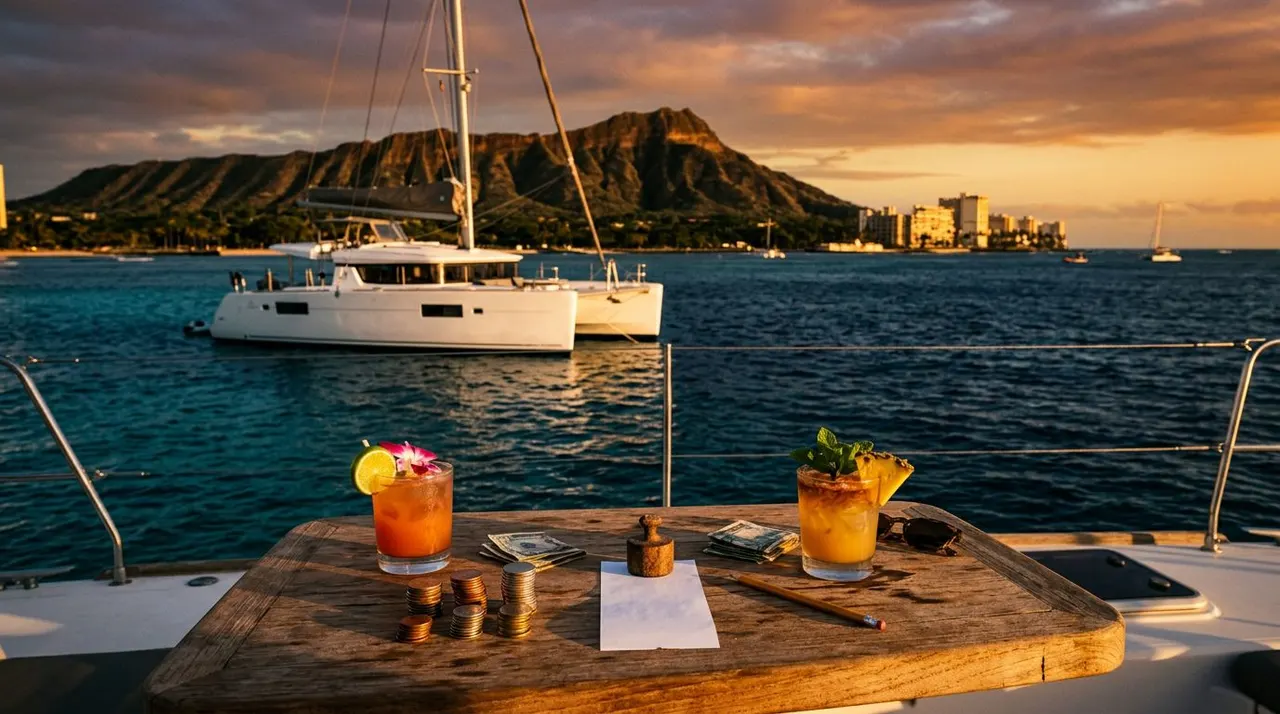
Splitting an Oahu booze cruise bill can turn a fun group plan into an awkward spreadsheet if you wait until the end. You need to know whether you’re paying per person or per boat, which fees are included, and how you’ll handle drinks before anyone sends a deposit.
A shared cruise may cost about $55 to $100 per guest, while a private Waikiki charter can run from roughly $695 to several thousand dollars. Once you know your group size and preferred cruise style, the math becomes much easier. Start by choosing the pricing model that fits your group.
What does an Oahu booze cruise cost?
Your total depends on whether you book individual seats on a shared boat or reserve an entire vessel. Public cruises usually advertise a price per passenger. Private charters typically charge one group rate, sometimes with extra fees after a certain number of guests.
Published Oahu listings show public alcohol-friendly cruises starting around $55 for a 1.5-hour experience. These entry prices may apply to adults ages 21 and older, and drink packages or other add-ons can increase the final bill.
Shared cruise pricing
A shared cruise is usually the easiest option for smaller groups. You pay for each passenger, then add any upgrades listed during checkout.
For example, six adults paying $75 each would create a base total of $450. If three guests purchase an additional drink package, only those three people need to include that upgrade in the split unless your group agrees to share it.
Shared cruises also reduce the risk of paying for empty seats. If two people cancel, you usually lose two individual fares rather than carrying the full cost of a private boat.
The tradeoff is less control. You’ll share the vessel with other guests, follow the operator’s schedule, and have limited say over music, food, boarding time, or the route.
Private charter pricing
Private boat pricing makes more sense when your group has enough guests to spread the cost. Current published market examples place many small private charters between about $695 and $1,600 for up to six guests. Charters for seven to twelve people often range from approximately $1,495 to $3,950, depending on the boat, duration, and amenities.
For a broader comparison of current group charter listings, review these private Oahu charter examples. Treat online figures as planning ranges because availability, season, vessel type, and included services affect the final quote.
| Group size | Common planning range | Approximate cost per person |
|---|---|---|
| 4 to 6 guests | $695 to $1,600 | $116 to $400 |
| 7 to 12 guests | $1,495 to $3,950 | $125 to $564 |
| 13 to 30 guests | $1,500 to $4,000+ | $50 to $308+ |
| 30 or more guests | $3,000 to $8,000+ | Depends on capacity |
The lowest per-person price often comes when you fill a boat close to its intended capacity. A private charter can cost more than shared tickets for six guests, yet become competitive when ten or twelve people split the same quote.
Turn the charter quote into your real group total
The advertised rate is only one part of your budget. Before you divide anything, ask the operator for the complete amount due at booking and the expected balance.
Use this simple formula:
Total group cost = charter or ticket price + required fees + food and drinks + optional upgrades + gratuity
Then divide the result by the number of people who agreed to share that cost.
| Cost item | What you should confirm |
|---|---|
| Base cruise fare | Is it per person or per boat? |
| Taxes and fees | Are they included in the displayed price? |
| Drinks | Is there an open bar, cash bar, BYOB policy, or package? |
| Food | Are snacks included, required, or optional? |
| Gratuity | Is a service charge already added? |
| Booking deposit | Is it refundable, transferable, or part of the final total? |
| Extra guests | Does the rate change after six, twelve, or another limit? |
Don’t assume that “private” means drinks and food are included. Some boats offer a cash bar. Others allow BYOB under specific rules. A sunset trip may include snacks, while a basic charter may include only the vessel and crew.
You should also ask whether the quoted price includes fuel, cleaning, harbor charges, captain fees, and sales tax. A low headline number can look very different after checkout if those charges appear separately.
Choose a cost-splitting method before you book
The fairest split depends on what everyone uses. You don’t need a complicated system, but you do need an agreement before one person places the deposit.
Equal splitting works for shared experiences
An equal split is usually best when everyone enjoys the same boat, seating, route, snacks, and included drinks. Each guest pays the same amount, even if one person spends more time taking photos and another stays on the upper deck.
Suppose your group receives a $1,600 private quote for eight adults. The base share is $200 per person. If the group adds $240 in shared snacks, taxes, or service charges, the final share becomes $230 each.
This method works well for birthday groups, wedding parties, and family celebrations because the payment request stays simple. It also prevents one person from having to track every small purchase during the cruise.
A hybrid split handles different drinking habits
A hybrid split is better when some guests drink alcohol and others don’t. First, divide the boat cost and shared nonalcoholic items equally. Then charge optional alcohol purchases to the guests who order them.
For example, eight guests share a $1,600 charter and $160 in common fees. The shared portion is $1,760, or $220 per guest. If four people buy a $30 drink package, those four guests pay an additional $30.
This arrangement keeps the boat cost fair without asking non-drinkers to subsidize extra cocktails. It also works when some guests are under 21, pregnant, driving later, or choosing not to drink.
Couples and families need a clear rule
Some groups prefer to collect money by household. That can work, but decide how you’ll count children and non-drinking guests. A child may not consume alcohol, yet still take a seat and count toward the boat’s passenger capacity.
If the charter has a fixed price for up to twelve people, every occupied place can affect your ability to invite another guest. For that reason, many groups divide the boat portion by passenger rather than by drinking adult.
Write the rule in your group chat before collecting money. A short message such as, “The boat and shared fees are split by passenger, while optional drinks are paid by the person ordering them,” prevents confusion later.
The smoothest group split separates the fixed boat cost from personal spending before anyone boards.
Shared cruise or private charter: which costs less?
An Oahu booze cruise doesn’t automatically become cheaper when you book a private boat. Your group size determines the value.
A public cruise may be the better choice for four or five people. At $75 per passenger, six guests pay $450 before upgrades. A private charter priced at $695 would cost about $116 per person for the same six guests, before any additional fees.
Private pricing becomes more attractive as your group grows. A $1,500 charter split among twelve guests costs $125 each. That amount may compare favorably with twelve public tickets, especially if the private booking includes more time, exclusive use of the boat, or space for your own playlist and decorations.
| Choose a shared cruise when… | Choose a private charter when… |
|---|---|
| Your group has fewer than six guests. | You can fill most of the boat’s capacity. |
| You want the lowest upfront commitment. | You want the vessel to yourself. |
| Guests may cancel separately. | You need a set time or private route. |
| You prefer a fixed per-person fare. | You want to coordinate food, music, or decorations. |
| You don’t need exclusive seating. | Your group is celebrating a milestone. |
A private booking also gives you one reservation, one deposit, and one cancellation policy. That simplicity has real value when you’re coordinating a birthday, reunion, bachelor or bachelorette event, or family vacation.
However, private charters require stronger commitment. If three guests drop out, the boat price usually doesn’t shrink. Before paying, collect deposits from confirmed guests and set a deadline for cancellations.
How Living Ocean Tours fits a Waikiki group plan
Living Ocean Tours operates from Kewalo Basin Boat Harbor, a short distance from Waikiki Beach in Honolulu. That location helps you avoid a long transfer before your cruise and gives your group a convenient starting point near many Waikiki hotels.
The company operates Coast Guard-inspected, custom-built double-decker vessels named the Coral Kai and Lokahi. Both boats offer shaded seating, restrooms, dry storage, and sturdy ladders for easier water access.
The Lokahi also features a SeaKeeper stabilization system, a cash bar, and a waterslide on the upper deck. The system helps keep the boat steady, which can be useful for guests who worry about motion sickness.
You can review the full range of Living Ocean Tours excursions before deciding whether your group wants a sunset-focused evening, a fireworks cruise, or a daytime ocean outing. Living Ocean Tours is also the only tour company with professional snorkel guides, giving you a guided option if your group wants time in the water instead of an alcohol-focused trip.
The company emphasizes respectful wildlife viewing and safe ocean habits. If you combine a cruise with snorkeling on another day, remember that drinking and swimming should remain separate activities.
Before you collect money, check the current date, passenger limit, departure time, and drink policy. You can also CHECK AVAILABILITY while comparing the total with your group’s budget.
Sunset cruises work well for mixed groups
A Waikiki sunset cruise fits groups with different energy levels. Guests can enjoy the view, talk on deck, and order drinks without needing to plan a full night around a club or restaurant reservation.
Living Ocean Tours offers sunset cruise options with BYOB and cash-bar formats. Confirm the current policy when you book, then decide whether drinks belong in the equal split or in each guest’s personal total.
For a simple arrangement, divide the boat fare, shared fees, and common snacks equally. Let each person pay for additional drinks. That approach works well for couples who want a relaxed evening and families who may include non-drinkers.
You can view the Waikiki Sunset Cruise details and compare available dates. If the timing suits your group, use CHECK AVAILABILITY before collecting the final deposits.
Friday fireworks cruises need earlier coordination
A Friday night fireworks cruise gives your group a fixed event to plan around. Because the fireworks schedule and popular travel dates can fill quickly, confirm the departure time before arranging dinner, rideshares, or hotel transportation.
A fireworks cruise can suit a group that wants a celebratory atmosphere without booking a full private charter. Ask whether the fare includes drinks, whether a cash bar is available, and whether every passenger needs an adult ticket.
Read the Friday Night Waikiki Fireworks Cruise information before setting your collection deadline. You can also CHECK AVAILABILITY for the date your group wants.
Charges and rules that can change your split
Small details can change the amount each guest owes. Ask these questions before you advertise a per-person price.
Confirm the drink policy
BYOB doesn’t always mean unlimited alcohol with no restrictions. The boat may limit glass containers, require coolers, restrict certain beverages, or provide storage rules. A cash bar may accept only certain payment methods.
Ask whether the cruise includes a welcome drink, drink tickets, a full bar, or no alcohol at all. If your group plans to bring alcohol, confirm the policy in writing.
You should also check age requirements. Some public cruises are 21 and older, while private bookings may have different rules. Never assume that a private boat permits underage guests to drink.
Check taxes, service charges, and gratuity
Ask whether the displayed price includes tax and whether gratuity is optional or automatically added. If a service charge appears at checkout, don’t collect a second tip without checking what the charge covers.
A good group organizer keeps a small buffer for final fees. You can collect the confirmed amount after checkout rather than guessing from the starting price.
Count every passenger
Passenger limits often include children and infants. Ask how the operator counts each guest before inviting extra people. A boat that holds twelve passengers may not allow twelve adults plus children.
No-shows are another concern. A private charter generally keeps the same price even when someone cancels. Shared tickets may have separate transfer or cancellation rules.
Plan around weather and cancellation terms
Ocean conditions can affect departure times, routes, or cancellations. Review the operator’s weather policy and tell your group how refunds or rescheduling will work.
Don’t promise your friends that bad weather automatically means a full refund. Use the written policy from the operator and keep everyone informed if the schedule changes.
A payment plan your group can follow
You can avoid most payment problems with a short process:
- Get the full quote first. Include taxes, fees, shared snacks, and any required deposits.
- Confirm the passenger list. Count every adult, child, and infant according to the operator’s rules.
- Choose the split method. Use an equal split for shared costs and a personal charge for optional drinks.
- Collect deposits before booking. Don’t carry the full balance on your own unless you’re comfortable with the risk.
- Set a cancellation deadline. Explain what happens if someone drops out after the reservation becomes nonrefundable.
- Send one final payment summary. Show the total, each person’s share, the due date, and what the price includes.
A shared note or spreadsheet can track payments without making the process feel formal. List the confirmed guests, amount paid, remaining balance, and personal add-ons. Keep receipts and the booking confirmation in the same message thread.
For example, if ten guests share a $2,000 charter, each person starts at $200. Add only confirmed shared expenses, then collect individual drink purchases separately. If one guest cancels after the final deadline, the remaining group must decide whether that person’s deposit covers the unpaid share.
Conclusion
The right Oahu booze cruise budget depends on your guest count, booking style, and drink policy. Shared cruises usually offer the lowest commitment, while private charters can deliver better per-person value when you fill the boat.
Before anyone pays, separate fixed boat costs from optional spending, confirm every fee, and set a clear cancellation rule. With those details settled, your group can focus on the Waikiki coastline, the sunset, and the celebration instead of arguing over the final bill.


