
Moray Eels Oahu: A Snorkeler’s Reef Field Guide
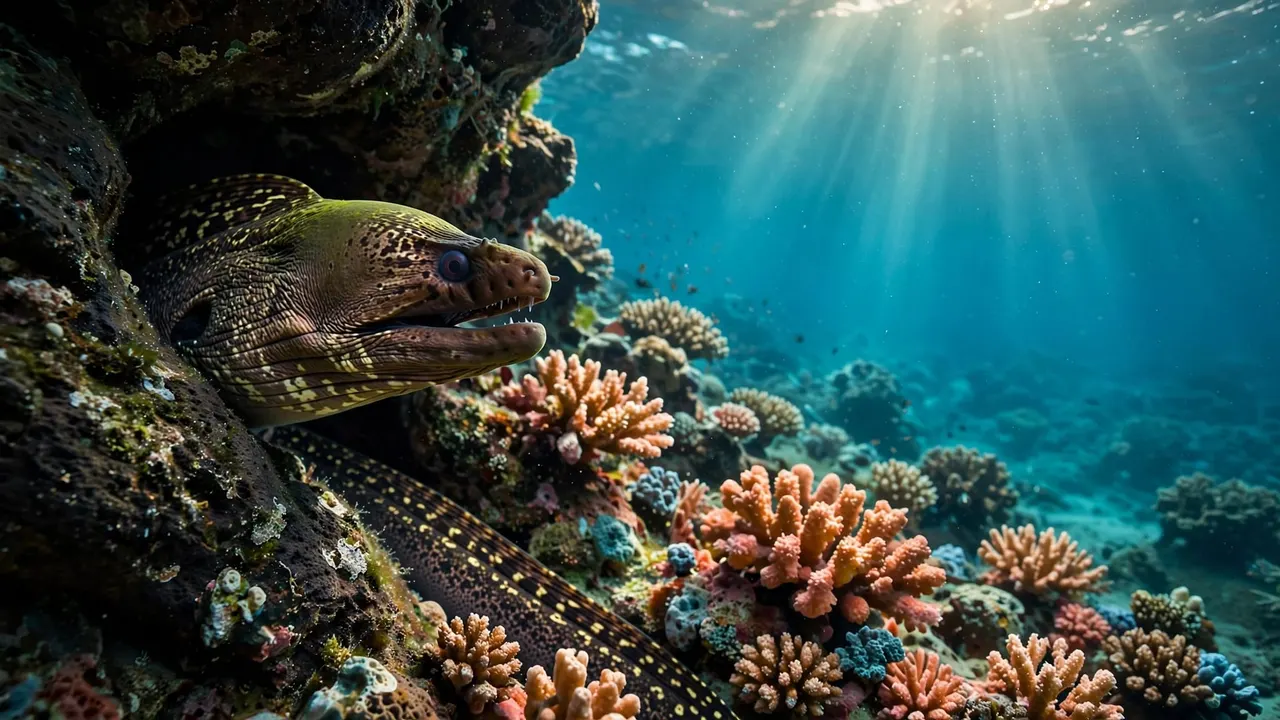
The moray eels sheltering in Oahu’s reefs can be easy to miss, even when you’re floating right above one. A dark opening in the reef may hold nothing visible but an eel’s face, watching the water pass.
Living Ocean Tours takes guests snorkeling along the Waikiki coast, where patient wildlife viewing matters more than chasing a sighting. If you’re hoping to see a moray, slow down and give the reef space. Knowing where to look, and when to keep moving, makes the encounter safer for you and the eel.
Key takeaways for your reef day
- Look along rocky ledges and reef crevices, but never put your hands into a hole to investigate.
- An eel opening and closing its mouth may be moving water over its gills. Give it room regardless of what you think its behavior means.
- Stay horizontal, keep your fins above coral, and watch from the surface rather than diving toward an eel.
- Choose your snorkel site based on conditions and your swimming ability. No beach or boat trip can promise a moray sighting.
Recognizing the moray eels Oahu reefs shelter
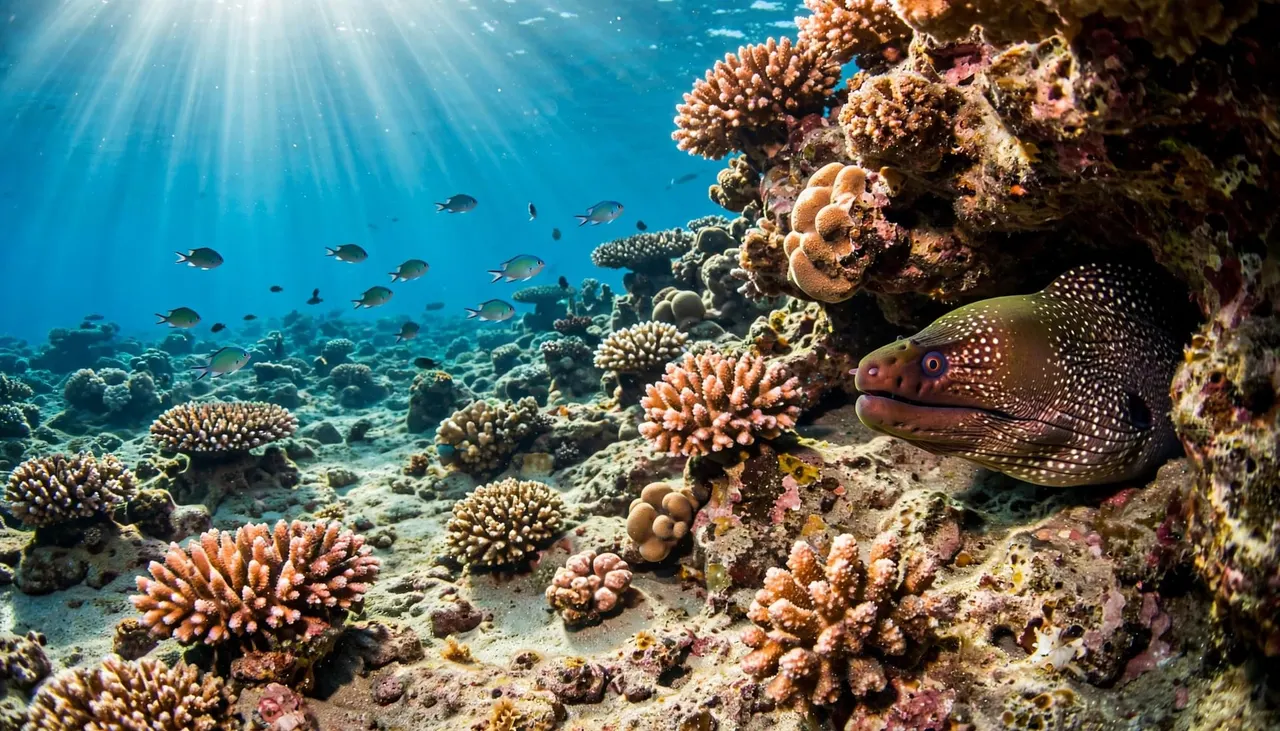
A moray’s long body may be hidden almost entirely inside the reef. Instead of searching for a whole eel swimming across open sand, scan shaded gaps for a head protruding from rock or coral.
Look for shape before color
Morays vary in color and pattern, so a single photo isn’t a dependable identification guide. Notice the elongated head, visible mouth, and body disappearing into a crevice. A patch of mottled skin can blend into the rock until the eel moves.
Keep your identification modest. From the surface, shadows and moving water can obscure markings. You can enjoy the sighting without deciding exactly which species you’ve found.
Read the space around the opening
A crevice is the eel’s shelter, not an invitation to swim closer. Pause where you can float comfortably above the reef and see without bracing yourself on coral. If the opening lies under a shallow overhang, leave it alone rather than angling your body underneath.
You may notice fish passing nearby or an eel shifting farther into its hole. Those small movements are enough to watch. If your presence appears to make the animal retreat, give it more space.
What an eel’s behavior can tell you
The moray eels Oahu snorkelers encounter are wild predators with their own routines. You don’t need to interpret every movement, but a few common sights are easier to understand when you know what you’re looking at.
An open mouth isn’t a reason to approach
A moray may repeatedly open and close its mouth to move water across its gills. That motion can look threatening, especially when you can see teeth. It doesn’t give you a way to judge how close is safe, so keep your distance.
Hawaiʻi’s Department of Land and Natural Resources says morays can cause serious injury when provoked and advises against feeding them. Watching a breathing eel from above is far better than testing its reaction to your camera or hand.
Let an eel set its own route
If a moray leaves its shelter, stay where you are and allow it to swim past. Don’t follow it through tight reef channels. You’ll have less room to control your fins, and the animal may have fewer places to retreat.
Morays are reef predators that eat other marine animals. Their place in that food web is one reason a quiet sighting can be interesting without a close-up photo. Watch what happens naturally, then move on.
Where to look without turning the snorkel into a search
To find the moray eels Oahu visitors hope to see, focus on suitable habitat rather than a promised hotspot. Rocky structure, coral ledges, and shaded gaps offer places to shelter. Whether you see an eel depends on the animals, visibility, and where your swim takes you.
Shore reefs require a conditions check
Hanauma Bay and the Pūpūkea area on the North Shore are well-known places to see Oahu reef habitat. Neither is a guaranteed eel-viewing site. Access rules and ocean conditions also differ, so check current guidance before leaving and assess the water when you arrive.
A reef can sit close beneath your fins, even in clear water. If waves, current, or shallow coral make it hard to float without contact, choose another route or stay out. Never reach beneath a ledge because you think you’ve spotted a tail.
Boat access changes the logistics, not the wildlife
A guided boat outing lets you reach reef habitat without choosing a shore entry on your own. You still need to listen to the crew’s conditions briefing and stay within the planned swim area.
At Waikiki’s Turtle Canyons, for example, you might spend your time watching reef fish and Hawaiian green sea turtles. An eel would be an unplanned bonus, not the purpose or promise of the trip. Looking carefully at the whole reef gives you more to enjoy than concentrating on a single animal.
Keep yourself and the reef safe around morays
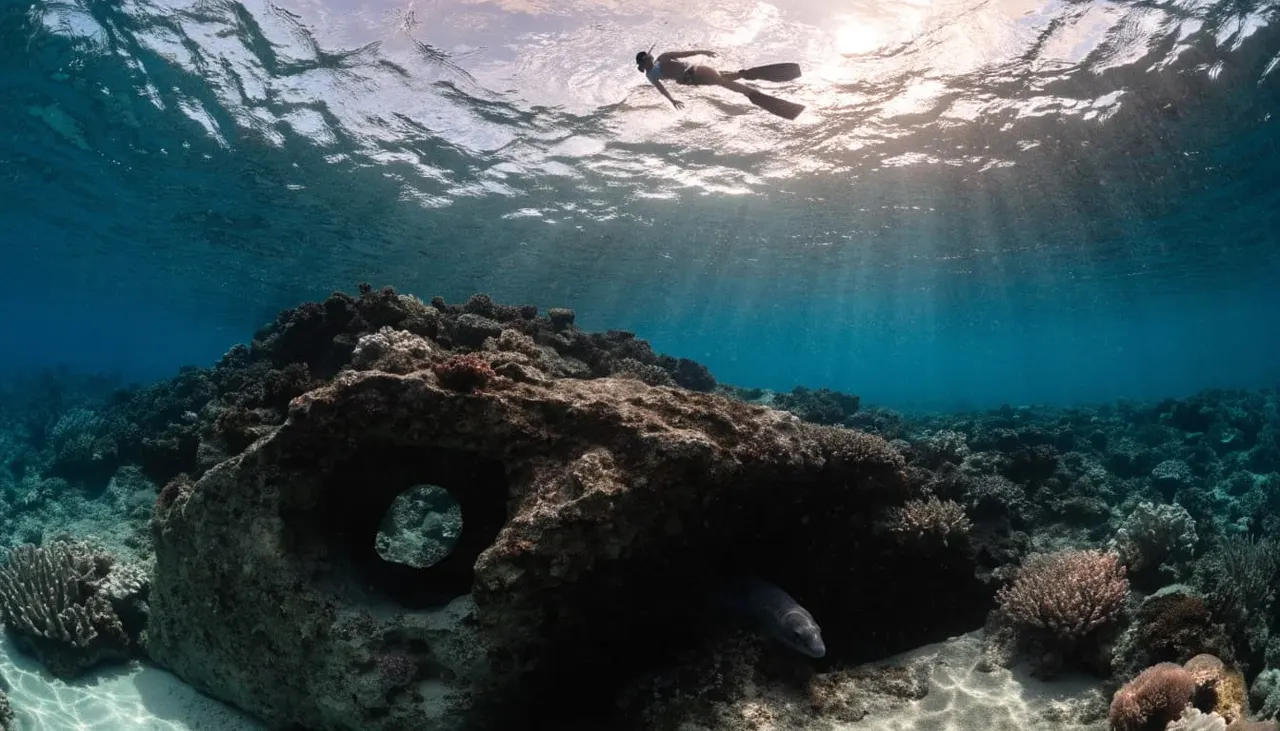
The moray eels Oahu snorkelers see are easiest to observe when nobody tries to coax them out. Good snorkeling habits also protect the coral that provides their shelter.
Keep hands, cameras, and food away
Hawaiʻi’s Division of Aquatic Resources advises you to avoid putting hands into holes or feeding eels. Morays can bite when provoked. That warning applies even if an opening appears empty: you can’t see everything inside a reef crevice.
Don’t offer fish scraps or point a camera into an eel’s face. If you’re bitten, leave the water and tell your guide or companion. Clean the wound with soap and seek medical advice, particularly if the injury is deep or bleeding persists.
Control your fins before taking a photo
Float horizontally and use short, controlled kicks when coral is below you. Stop taking pictures if you can’t keep track of your position. A photo isn’t worth striking the reef or drifting into another swimmer.
If you need to adjust a mask, use flotation support or return to an appropriate resting place. Don’t stand on coral, grab a rock beside an eel, or stir up sand while trying to hold position. When a turtle passes through the area, leave its path open too.
If you have to touch the reef to see into a crevice, the eel is too close to view safely.
Plan a guided Waikiki snorkel with realistic expectations
You can spend an enjoyable hour looking for reef life without seeing a moray. The goal is a comfortable swim in suitable conditions, with enough attention left to notice what’s around you.
Ask for help before entering the water
Living Ocean Tours departs from Kewalo Basin Boat Harbor near Waikiki. Its Oahu snorkeling and ocean tours offer boat-based access, gear, and crew guidance. The company says it’s the only Oahu tour company with professional snorkel guides in the water with guests.
If you’re new to snorkeling, tell the crew before you enter. Ask about flotation, mask fit, the swim boundary, and how to signal that you want to return. Onboard shade, restrooms, dry storage, and sturdy ladders can make the time before and after your swim more comfortable. Wildlife sightings remain unpredictable, even with an experienced guide.
Leave room in your plans for the ocean
Check conditions before committing to a shore snorkel, and don’t pressure a hesitant family member to enter the water. On a guided outing, listen if the crew changes the route or limits water time.
Bring what you’ll need afterward, including a towel, dry clothes, and sun protection. Once you’re in the water, let the guide help you identify what you see. If someone spots a moray, wait your turn to view it from a distance instead of gathering over its shelter.
Questions snorkelers ask about moray eels on Oahu
Are moray eels dangerous to snorkelers?
A moray can inflict a painful bite if provoked. Your practical precautions are simple: don’t feed it, put a hand in its shelter, or crowd it for a photograph. Stay at a distance where you can swim freely without touching the reef.
Will I see one during a daytime snorkel?
You might, especially if you notice a head resting in a shaded crevice. You also might swim past without spotting one. No responsible guide can guarantee an encounter, and you shouldn’t enter an opening or disturb the reef to improve your chances.
Should I dive down for a better look?
You don’t need to. Observing from the surface gives you more room to manage your fins and your distance. If the eel is too far inside its shelter to see clearly, leave it there and look for other reef life.
Can I identify a moray from its color?
Color can help you describe what you saw, but it may not settle the species. Light, depth, and partial views can change the appearance of markings. A clear photo taken from a respectful distance can help you revisit the sighting later.
Let the reef set the pace
The moray eels Oahu reefs shelter reward patient eyes, not closer approaches. Watch the openings, keep clear of coral, and let each animal decide whether to remain visible.
You may leave without an eel photo. You’ll still have seen the reef on its own terms, and left its shelter undisturbed for the next snorkeler.


