
Waikiki Boat Tour After a Koko Head Sunrise
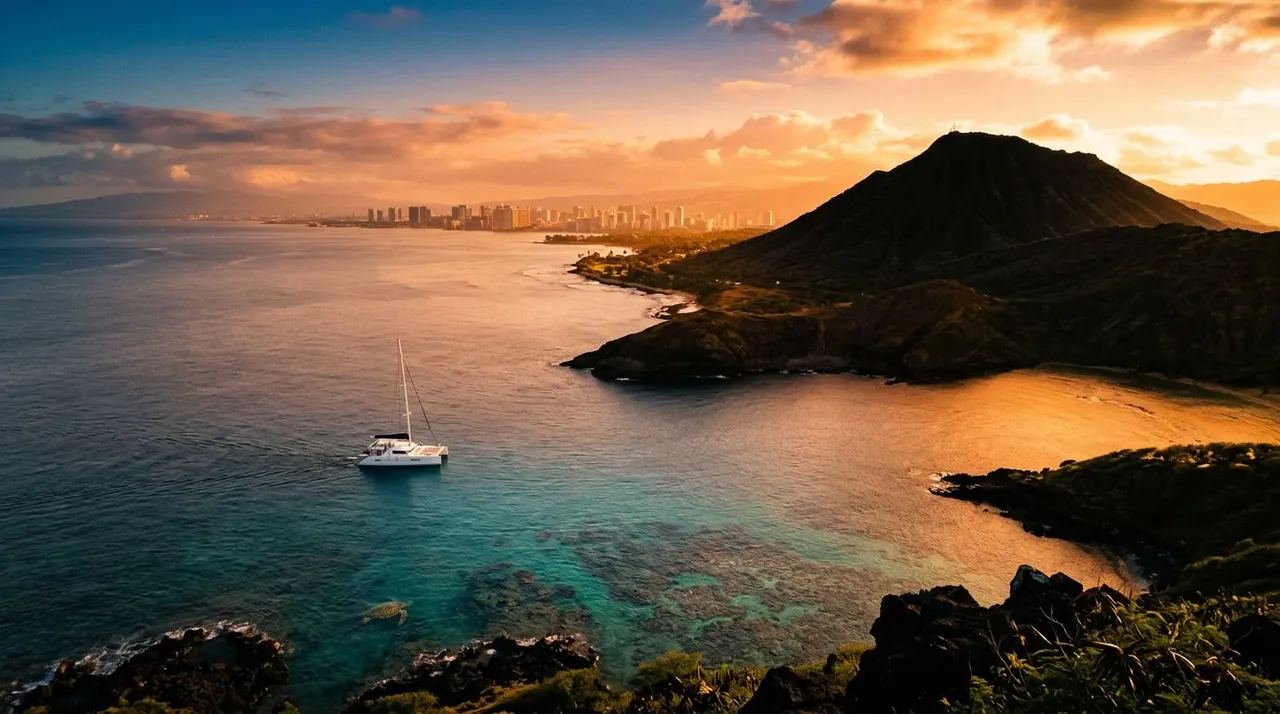
A Koko Head sunrise followed by a Waikiki boat tour gives you two very different views of Oahu in one morning. You begin above the coast, watching light spread across Hanauma Bay and the eastern shoreline. Later, you trade the trail for open water, coral reefs, sea turtles, and the Waikiki skyline.
The plan works best when you treat the hike and boat trip as separate reservations. You need time to recover, eat, travel from the Koko Head area to Kewalo Basin, and board without rushing. With the right schedule, your morning feels full without becoming exhausting.
Why pair a Koko Head sunrise with a boat tour?
Koko Head and Waikiki show you opposite sides of Oahu. The Koko Head Railway Trail takes you up an old railroad-tie path with broad views across the southeastern coast. At sea level, a boat tour lets you see the same shoreline from a completely different angle.
The contrast is part of the appeal. Above the crater, you notice the shape of the coastline, the ridges, and the changing colors of the Pacific. On the water, you see reef habitat, seabirds, Waikiki Beach, Diamond Head, and the movement of marine life below the surface.
You also get a natural break between active and relaxing parts of the day. The sunrise hike raises your heart rate and works your legs. A boat trip lets you sit in the shade, enjoy the breeze, and choose how active you want to be once you reach the reef.
The timing requires some planning, however. Koko Head is not next door to the Waikiki departure area. Living Ocean Tours leaves from Kewalo Basin Boat Harbor, which is only minutes from Waikiki but still requires a drive from the trailhead. Traffic, breakfast, parking, and cleanup all take time.
A good plan includes these priorities:
- Finish the hike early enough to leave the area without rushing.
- Reserve a morning boat tour with a realistic boarding time.
- Leave room for water, food, changing clothes, and transportation.
- Pick a snorkel trip that matches your energy after the climb.
You don’t need to complete both activities at a frantic pace. The goal is to enjoy the sunrise, then arrive at the harbor ready for the ocean.
Prepare for the Koko Head sunrise hike
The Koko Head Railway Trail is steep, exposed, and uneven. Its surface consists of old railroad ties, so your footing changes throughout the climb. Even if you exercise regularly, the trail can feel demanding before breakfast.
Start with shoes that have reliable traction. Open sandals and smooth-soled sneakers make the descent less comfortable, especially when the ties are dusty or damp. A small backpack keeps your hands free for balance, but avoid carrying more than you need.
Bring water before you begin. The trail has limited shade, and the rising sun can make the upper section feel hot quickly. A hat, sunscreen, and lightweight clothing are practical choices, even during a cooler season.
Sunrise also changes the experience. You may begin in low light, so a small flashlight or headlamp helps you see the steps and uneven gaps. Keep your pace steady rather than trying to race other hikers. You still need energy for the walk down.
The descent deserves as much attention as the climb. Tired legs can make the railroad ties harder to manage, and rushing increases your chance of slipping. Once you reach the bottom, drink water and give yourself time to cool down.
Koko Head is a public natural area, so follow posted guidance and stay on the established route. Pack out anything you bring. The dry landscape is fragile, and small actions help keep the trail enjoyable for the next group.
Before booking your boat, check the sunrise time for your travel date. Sunrise shifts across the year, and your hiking pace may differ from another visitor’s. Plan around the actual date rather than relying on a generic itinerary.
Leave enough time between the trail and the harbor
The distance between Koko Head and Kewalo Basin is manageable, but the two activities don’t connect automatically. You usually arrange transportation yourself unless your booking confirmation states otherwise.
After the hike, you may need to:
- Return to your vehicle or pickup point.
- Drive toward Honolulu and Kewalo Basin Boat Harbor.
- Find parking or meet your transportation provider.
- Eat a light meal and replace fluids.
- Change out of damp hiking clothes before boarding.
Traffic can affect the drive, especially later in the morning. Give yourself more time than the map’s shortest estimate. A stressful arrival can take the enjoyment out of an otherwise excellent day.
A practical schedule leaves about 90 minutes between finishing the hike and your required boat check-in. Add more time if you want a full breakfast, need to return to your hotel, or are traveling with young children.
Your boat operator’s check-in time matters more than the published departure time. Boats often need to load guests, review safety information, fit equipment, and leave the harbor on schedule. Arriving at the dock at the last minute can create problems, even if you reach the area before departure.
Kewalo Basin is convenient for Waikiki visitors, but don’t assume every harbor entrance looks the same. Read your confirmation carefully and save the operator’s contact information. If you use a rideshare, set the destination to the exact meeting location provided by the company.
Wear swimwear under comfortable clothes if you plan to snorkel. You can change at the harbor or use onboard facilities, depending on the boat and tour instructions. Keep your phone, wallet, and dry clothing in a waterproof bag.
The best morning feels unhurried. You should have time to enjoy the sunrise, recover from the climb, and board with a clear head.
Choose the right Waikiki boat tour after Koko Head
Your energy level should guide the choice. A post-hike boat trip doesn’t need to feel like another workout. Look for professional guidance, easy water access, shade, restrooms, and a boat layout that lets you participate at your own pace.
Living Ocean Tours operates out of Kewalo Basin Boat Harbor, just minutes from Waikiki Beach. The company focuses on guided marine experiences along the Waikiki coastline, with Coast Guard-inspected, custom-built double-decker vessels called the Coral Kai and the Lokahi.
Both boats offer shaded seating, onboard restrooms, dry storage, and sturdy ladders for entering and leaving the water. The Lokahi also has a SeaKeeper stabilization system, which helps reduce side-to-side rolling. It can’t eliminate every effect of ocean conditions, but a steadier ride can feel helpful after an early hike.
Living Ocean Tours is the only tour company with professional snorkel guides. That matters when you’re tired, new to snorkeling, or traveling with children. You receive direction in the water instead of having to figure out reef conditions and wildlife etiquette alone.
Turtle Canyon for a focused snorkel experience
The Turtle Canyon Snorkel Excursion is a strong choice when your priority is seeing Hawaiian green sea turtles and spending time in the water. The trip visits a natural underwater cleaning station where turtles often gather. Living Ocean Tours reports a 95% success rate for turtle sightings, although wildlife encounters can never be guaranteed.
The crew provides snorkeling equipment and guidance for beginners. You can ask questions before entering the water, learn how to use the gear, and follow instructions about safe distance and responsible wildlife viewing.
After climbing Koko Head, take a slower approach in the water. You don’t need to swim hard to enjoy Turtle Canyon. Float calmly, conserve your energy, and allow your guide to direct you toward the best viewing area.
Read the details for the Turtle Canyon Snorkel Excursion before choosing your date. When the time works with your sunrise plan, you can CHECK AVAILABILITY for the morning trip.
Deluxe snorkeling for families and active swimmers
The Deluxe Waikiki Snorkeling and Wildlife Cruise gives you more ways to enjoy the boat. In addition to guided snorkeling at a less-crowded reef, the experience includes a boat-mounted water slide, water trampoline, and floating lily pad.
This option suits families and groups with different energy levels. Strong swimmers can use the water activities, while other guests can remain on the boat, relax in shaded seating, or enter the water with help from the crew.
The tour works well after sunrise because you can decide how much activity you want once you arrive. If your legs still feel tired, skip the slide and enjoy the reef at a comfortable pace. If you feel refreshed, the extra water features add a playful finish to the morning.
The Deluxe Waikiki Snorkeling and Wildlife Cruise is designed for guests ages 3 and older. Review the safety and participation details before booking, especially when traveling with young children.
You can CHECK AVAILABILITY for a date that leaves enough time after your Koko Head hike.
What makes Living Ocean Tours a comfortable choice?
A sunrise hike can leave you warm, thirsty, and ready for a seat. Living Ocean Tours’ double-decker vessels give you room to settle in before and after the snorkeling portion.
The Coral Kai has open-deck space for enjoying the coastline and sun. The Lokahi includes the SeaKeeper stabilization system, a cash bar, and a water slide. Both boats have shaded areas, which are useful when you want a break from direct sun.
You also have practical amenities that matter during a long morning. Onboard restrooms mean you don’t have to return to shore during the trip. Dry storage helps protect personal items, while heavy-duty ladders provide a controlled way to enter the water.
Beginners receive instruction and support from professional snorkel guides. You don’t need years of swimming experience to participate, but you should be comfortable in the ocean and follow the crew’s directions. Tell the staff if you feel nervous, tired, or unsure about your equipment.
The crew’s role also includes protecting the reef. Keep your hands off coral and marine animals. Hawaiian green sea turtles need space, and touching or chasing them can cause stress or harm. Watch quietly, keep a respectful distance, and let the animals choose where they swim.
Living Ocean Tours combines active snorkeling with a relaxed boat setting, so your group doesn’t have to follow one pace. A swimmer can explore the reef while another guest rests in the shade. That flexibility is valuable after an early start.
Plan the rest of your day around your energy
A sunrise hike and morning snorkel can fill the first half of your day. Schedule lunch and downtime afterward instead of stacking another demanding activity immediately.
If you want to continue exploring Honolulu, choose something that doesn’t require constant walking. Waikiki Beach, Ala Moana, and nearby cafes give you room to slow down. Keep drinking water, especially if you spend the afternoon in the sun.
Some travelers prefer to spread the ocean experiences across one day. You can hike at sunrise, snorkel in the morning, rest during the afternoon, and return to the harbor later for a sunset cruise. This creates a longer day, so it works best when your group handles early starts well.
Living Ocean Tours offers a Waikiki Sunset Cruise with BYOB and cash-bar options. The evening trip is a different experience from a morning snorkel. You stay dry, watch the coastline change color, and enjoy a slower pace on the water.
If you choose the evening cruise, leave enough time for a meal and a break between bookings. You can CHECK AVAILABILITY before building the full itinerary.
Don’t force every activity into one day if you’re traveling with small children or anyone who gets seasick. A shorter itinerary often leaves you with better memories than a packed schedule.
Pack for both land and ocean
The morning involves heat, uneven terrain, saltwater, and changing temperatures. Pack for each setting instead of relying on one outfit.
Bring a small day bag with:
- Refillable water bottles and a light snack
- Traction-friendly shoes for Koko Head
- Swimsuit, towel, sunscreen, and a hat
- Dry clothes for after snorkeling
- Waterproof protection for your phone and wallet
- A small flashlight or headlamp for the pre-sunrise trail
Avoid bringing bulky luggage on the boat. Keep valuables to a minimum and follow the crew’s instructions for storing personal items.
Eat something light before the hike if your body needs fuel. Afterward, choose a simple breakfast or snack that won’t leave you uncomfortable in the water. Greasy or heavy food right before boarding can make motion sickness feel worse.
If you often feel seasick, consider an over-the-counter remedy only as directed by your healthcare provider or the product label. Arrive rested, stay hydrated, and spend time in fresh air on deck. The Lokahi’s stabilization system may help create a steadier ride, but ocean movement varies by day.
Tell the crew about concerns before the boat leaves. Early communication gives them a chance to help you find a comfortable place to sit and explain what to expect.
Most importantly, don’t enter the water if you’re too fatigued to swim safely. A professional crew can guide you, but you still need to judge your own condition. Resting onboard is a valid way to enjoy the trip.
Protect the reef while you enjoy it
Your behavior in the water affects the animals and habitat you came to see. Coral reefs grow slowly, and even a careless kick can damage living coral.
Keep your fins away from the bottom. Use the ladder when entering and leaving the water, and avoid standing on coral or rocks. Never touch a turtle, fish, coral, or other marine life.
The best turtle encounter is calm and observational. Let your guide set the viewing distance, and don’t swim after an animal that changes direction. Turtles need space to surface, feed, and rest.
Use reef-conscious sunscreen choices when possible, but remember that no product replaces physical shade. A long-sleeve rash guard, hat, and shaded seating reduce the amount of sunscreen you need.
Follow every instruction about food, gear, and wildlife. Local waters can change with wind, waves, currents, and visibility. Your crew knows the day’s conditions and may adjust the route or water activity for safety.
A respectful guest leaves the ocean looking much as it did before the visit. You get memorable photographs and wildlife sightings without turning the reef into a backdrop for careless behavior.
A sample schedule for your Koko Head and boat morning
Your exact times depend on the season, sunrise, traffic, and tour availability. Use this structure as a planning model rather than a fixed timetable.
| Part of the day | What to plan |
|---|---|
| Before sunrise | Arrive near Koko Head with water, proper shoes, and a light |
| Sunrise | Reach a safe viewing point and enjoy the coastline |
| After sunrise | Descend carefully, cool down, and eat a light snack |
| Late morning | Travel to Kewalo Basin and arrive before check-in |
| Boat trip | Snorkel, view marine life, and use the boat amenities |
| Afterward | Change, eat lunch, and leave room for recovery |
The most important gap is between the trail and the harbor. If the boat check-in time feels too close, choose a later departure or move the hike to another day.
You should also confirm the tour’s age requirements, cancellation terms, meeting location, and included equipment before paying. Those details can affect your transportation and packing decisions.
A flexible plan protects the experience. If weather, traffic, or your energy level changes, you can enjoy the boat without feeling pressured to complete every original idea.
Conclusion
A Koko Head sunrise and a Waikiki boat tour create a memorable Oahu morning when you give each activity enough space. The hike gives you wide coastal views, while the boat brings you close to reefs, sea turtles, and the Pacific at water level.
Book the boat from Kewalo Basin with a realistic buffer after the trail. Choose a guided snorkel experience that matches your energy, follow the crew’s safety instructions, and observe marine life without touching it. That balance lets you enjoy the best of the morning without rushing through either experience.


