
Kewalo Basin No-Wake Zone: What Boat Tour Guests Should Know

The Kewalo Basin no-wake zone requires boats to move slowly through the channel inside the harbor mouth, making as little wake as possible. On a Living Ocean Tours outing, you’ll notice that careful pace as your captain guides the boat away from the dock and toward the coast.
For passengers, the slow start is a chance to settle in while the crew handles navigation. Here’s what the rule means and what you can expect on the water.
What the Kewalo Basin no-wake zone means
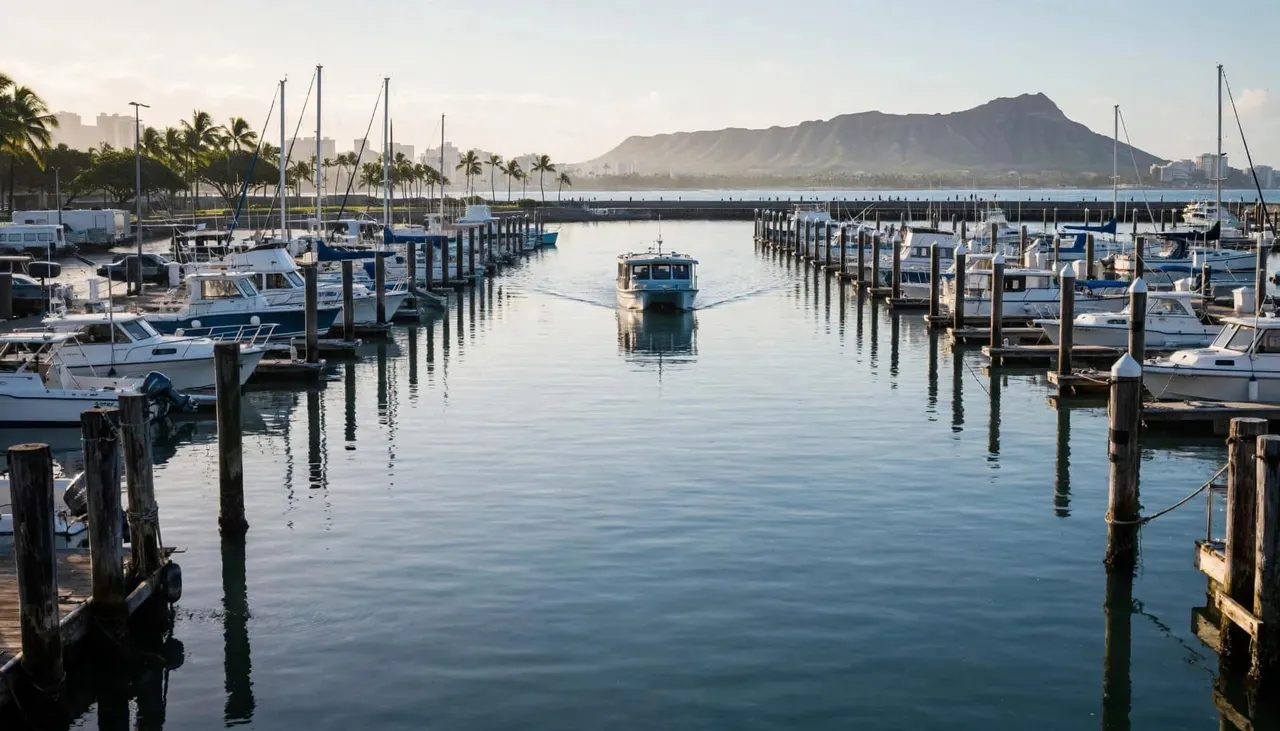
A no-wake zone limits the waves a moving boat creates. At Kewalo Basin, the channel inside the harbor mouth is designated as a no-wake zone, so your captain keeps the boat at a controlled pace while passing through it.
Slow enough to limit the wake
A wake is the pattern of waves a vessel leaves behind. Even when the boat itself has passed, those waves keep moving across the water. Inside a harbor, they can reach docks, smaller boats, and people boarding nearby.
Slow-no-wake means moving as slowly as possible while keeping enough speed to steer, with the least possible wake. Your captain considers how the boat responds, not just the number on a speed display.
The boat still needs to steer
A vessel needs some forward movement to respond to its steering. Wind, current, and the boat’s design also affect how it handles at low speed. For that reason, the right throttle setting can change with conditions.
As a guest, you don’t need to judge the setting. Stay aware of announcements and let the crew manage the departure.
Where the Kewalo Basin rule applies
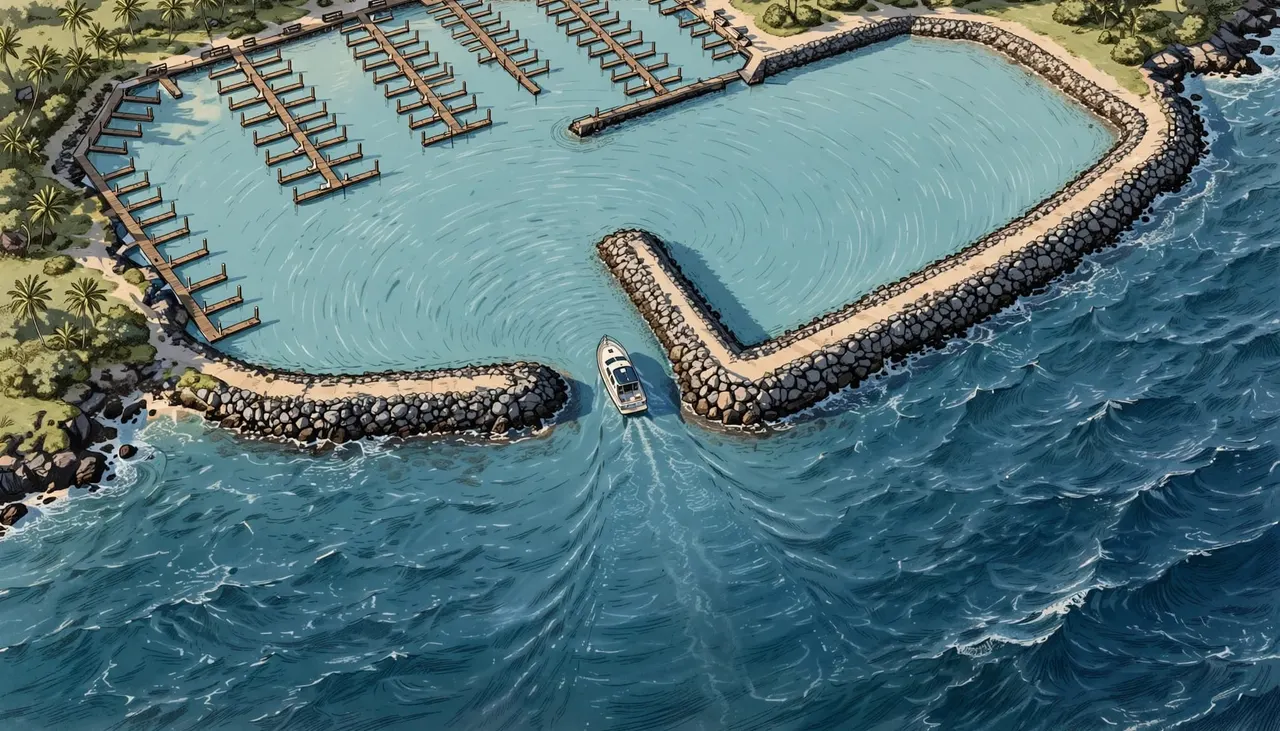
Kewalo Basin Boat Harbor is near Waikiki, on Honolulu’s south shore. Its harbor entrance connects a working marina with the coastal waters used by tour boats and other ocean users.
Inside the harbor mouth
The Kewalo Basin no-wake zone covers the channel inside the mouth. You can expect the captain to take that stretch at a careful pace when leaving and when returning.
The harbor’s rules also contain a separate maximum-speed provision. The channel’s no-wake requirement still applies, so a captain can’t treat the maximum speed as permission to create a significant wake there.
Near swimmers, docks, and other boats
Hawaii also has a statewide slow-no-wake rule that applies near certain people and objects, including swimmers, docks, launch ramps, diver flags, and anchored, moored, or drifting vessels. The distance in that rule is 200 feet.
That means careful speed control can matter outside the harbor channel, too. You can read the full provisions in Hawaii’s boating speed restrictions.
Once you’re beyond the harbor mouth, your captain still adjusts to traffic, visibility, and the conditions around the boat. Open water doesn’t mean every vessel can travel at the same speed in every situation.
What departure feels like on your boat tour
Your trip begins at Kewalo Basin Boat Harbor, where excursion boats share space with other vessels and working crews. After boarding, you’ll hear safety information and have time to settle into your seat before the boat leaves its slip.
The first part of the ride can feel gentler than the open ocean because the harbor is sheltered. Still, the boat can shift as it turns, and waves from another vessel may reach you even after that boat has passed.
During the Kewalo Basin no-wake zone transit, your captain may pause or adjust course for traffic. You might also hear a horn used to communicate with another vessel. A change in pace or a horn signal doesn’t, by itself, mean your trip is in trouble.
Keep your belongings secure and listen when the crew speaks. If you’re unsure where to sit or need help moving around, ask a crew member before the boat gets underway.
Why a small wake makes a difference
A boat’s wake affects more than the passengers aboard. In close quarters, the waves travel toward people and vessels that may have little room to move.
Protecting people at the dock
Someone stepping between a dock and a boat needs a stable moment to move. A passing wake can make the vessel shift against its lines, changing the height or width of the gap.
You can help by waiting for the crew’s signal before boarding. Keep children close, leave dock lines alone, and avoid jumping across a gap if the boat moves. Give the person ahead of you time to finish boarding before you step forward.
Sharing space with smaller vessels
A wave that feels minor aboard a larger boat can be more noticeable to someone in a small craft. Wakes can also rock moored vessels and reflect off harbor structures.
Your captain accounts for those shared spaces while maintaining control of the boat. If you spot a swimmer, paddler, or object that appears easy to miss, tell a crew member calmly and let the crew assess it.
How to prepare for a comfortable departure
Our meeting point is Kewalo Basin Boat Harbor at 1125 Ala Moana Boulevard, Slip B-01, in Honolulu. Plan to be ready for check-in 30 minutes before departure, with additional time if you’re parking.
A small bag that closes securely makes the trip easier. Bring sun protection, secure your hat, and choose footwear with grip for the dock. Once aboard, follow the crew’s footwear instructions and keep walkways clear.
Before the boat moves, put away anything that could roll or blow across the deck. Keep a hand free for a railing, particularly near stairs and boarding areas. If the crew asks you to remain seated, wait for permission before getting up.
If you’re prone to seasickness, tell a crew member early. Looking toward the horizon and finding a comfortable seat can help you manage movement. Harbor water may feel calm, but conditions can change once you reach the coast.
What changes after you leave the harbor
The transition into coastal water is part of the adventure. You may notice more wind, a wider view of the Waikiki shoreline, and movement that feels different from the sheltered basin.
Your captain chooses a safe pace for the conditions. That can include slowing for other vessels, responding to swell, or adjusting the route. A sunny view from shore doesn’t always reveal what the water feels like farther out.
Wake awareness continues after departure. A wave created by a passing boat can arrive later, so hold a railing when moving around and keep the deck clear. If you feel unsteady, ask the crew for help rather than trying to reach a seat on your own.
On the return, expect another careful passage through the Kewalo Basin no-wake zone. Stay seated if directed and wait for the crew to secure the boat before approaching the exit.
Wake awareness at a snorkel stop
A snorkel stop brings a different kind of boat movement. Even when your boat is stationary, a passing wake can shift the swim platform and ladder.
Wait for the crew’s signal before entering the water. When you return, give the person ahead of you space and follow instructions for approaching the ladder. If you’re tired or unsure about the movement, let a guide know.
Our professional snorkel guides can help you get comfortable with your gear and understand the swimming area. Stay with your buddy and follow the boundaries your crew gives you. Those directions help keep the group away from boat traffic and make it easier to offer assistance.
Wildlife deserves space, too. Observe Hawaiian green sea turtles without touching, chasing, or crowding them. Keep your fins clear of coral and let animals choose their own path through the water.
Choose a tour that starts at Kewalo Basin
You can begin your coastal outing with us at Kewalo Basin, minutes from Waikiki. Our Honolulu ocean tours include options for enjoying the water with family or spending time taking in the coastline.
Our Turtle Canyon Snorkel Tour takes you to a well-known area for Hawaiian green sea turtles. The tour starts at $79, and our crew provides guidance for your time in the water. Wildlife sightings depend on the animals and conditions.
To plan your snorkel outing, you can CHECK AVAILABILITY.
You can also browse availability across our ocean tours.
Key takeaways for your harbor trip
The Kewalo Basin no-wake zone applies to the channel inside the harbor mouth. Your captain moves slowly enough to limit the boat’s wake while maintaining steering control.
As a passenger, your part is straightforward: listen to the crew, secure loose items, and use care around docks and ladders. Remember that a passing boat’s waves can reach you after the vessel has moved away. Beyond the harbor, your captain continues to adjust speed for people, traffic, and water conditions.
Frequently asked questions
Does no-wake mean the boat can’t move?
No. Your boat needs enough movement to steer. The goal is to travel as slowly as possible while maintaining control and creating the least possible wake.
Will the boat speed up after leaving Kewalo Basin?
It may, when the captain determines that conditions and applicable rules allow it. Traffic, swimmers, wind, and swell can all affect the pace. Your captain may also slow down again during the trip.
Can you swim in the harbor channel?
The channel is a route for vessel traffic, so it isn’t an appropriate place to swim. On a snorkel tour, wait until the crew identifies the swimming area and gives you permission to enter the water.
Does a slow harbor departure mean the ocean will be calm?
No. Protected harbor water can feel different from the open coast. Waves and wind can change the ride after you pass the harbor mouth, so follow crew directions even if departure felt smooth.
Enjoy the coast while your crew handles the route
A slow passage through the Kewalo Basin no-wake zone gives your captain room to manage the boat and reduces the waves reaching others nearby. It’s a normal part of leaving and returning to the harbor.
Settle in, keep a hand free, and enjoy the view. Your crew will handle the navigation while you get ready for your time on Oahu’s water.


