
How humpback whale thermoregulation works in Hawaii
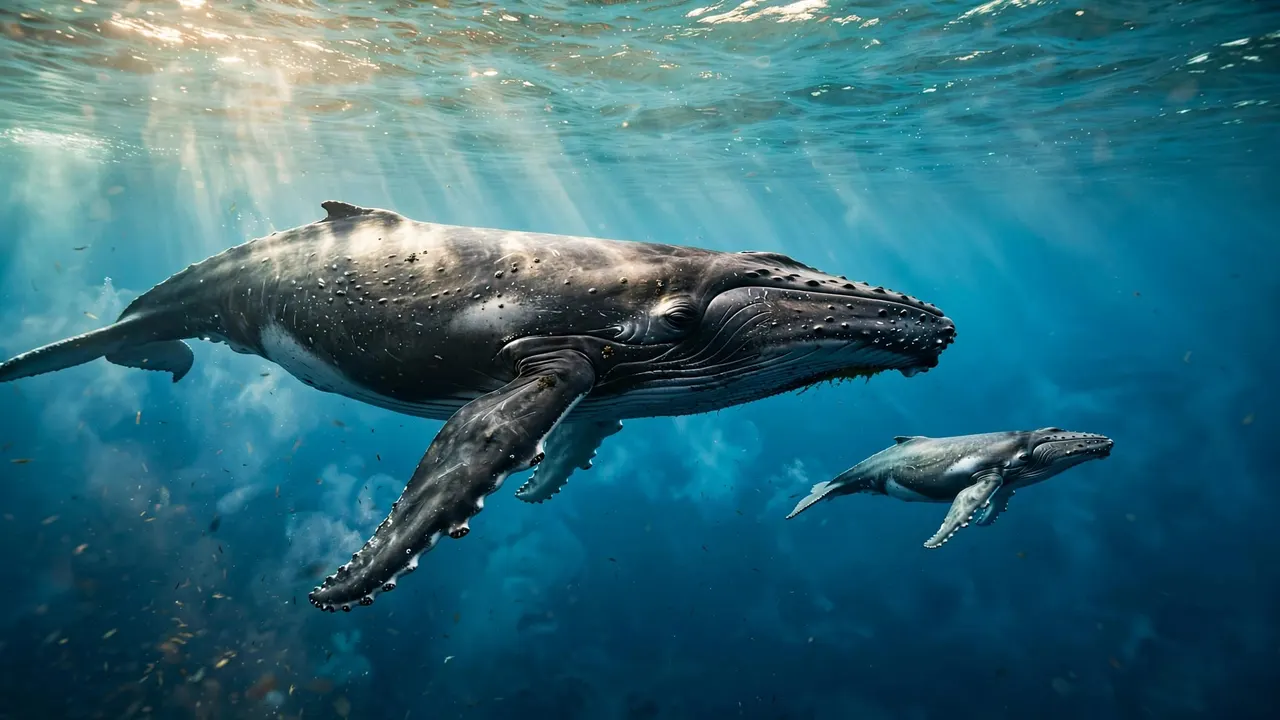
Humpbacks regulate body temperature through insulation and controlled heat exchange with the surrounding ocean. Even in Hawaii’s warm waters, they can release body heat while retaining enough warmth to support normal body functions.
When you watch a whale off Waikiki, you’re seeing an animal whose heat balance changes with its size, activity, and environment. Humpback whale thermoregulation helps explain how the same animal can use cold northern feeding grounds and tropical breeding habitat. Start with the two competing needs: conserving warmth and releasing excess heat.
Key takeaways
- Blubber slows heat loss and stores energy, while blood circulation helps whales adjust heat exchange.
- Countercurrent heat exchange conserves warmth. Releasing excess heat requires blood to transfer warmth toward surfaces exposed to water.
- Hawaii’s breeding habitat brings adults and calves together, but their thermal needs differ.
- You can’t diagnose a whale’s temperature or identify a cooling behavior from a breach, tail slap, or raised flipper.
How humpback whale thermoregulation balances heat
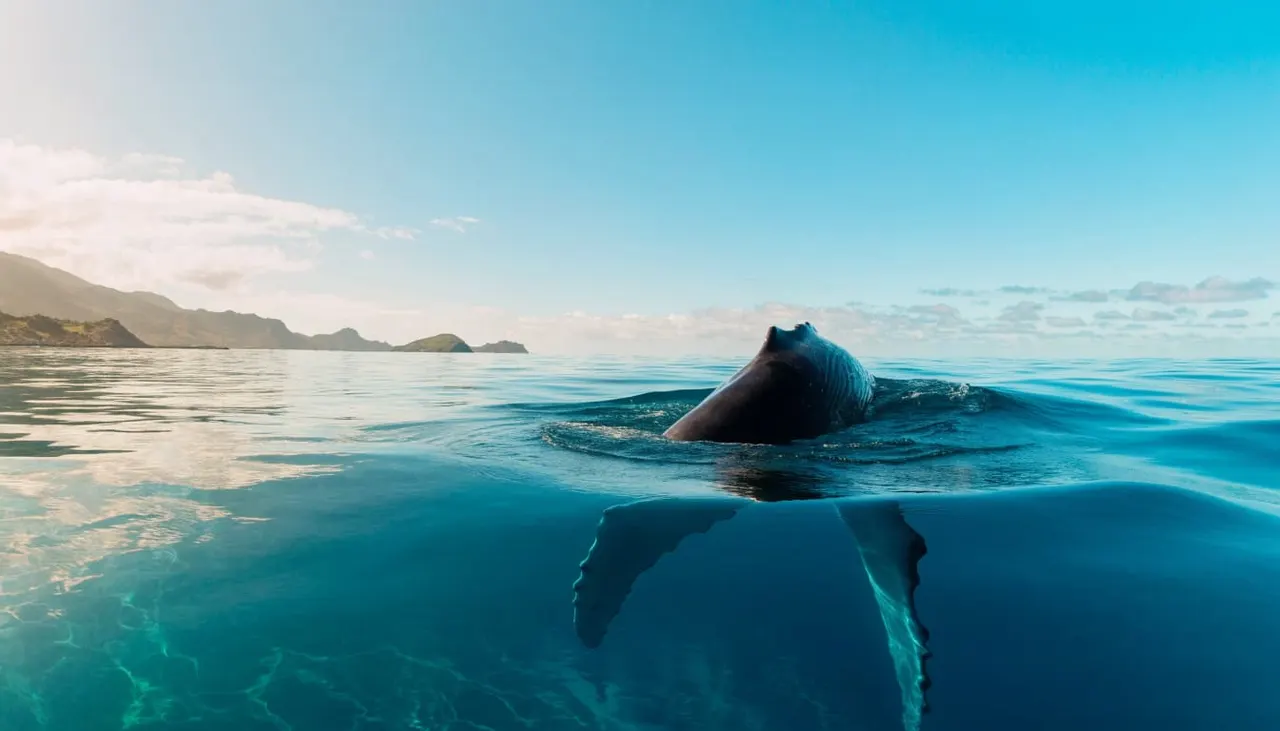
Blubber slows heat loss
A humpback’s blubber is living tissue beneath the skin, rather than a removable winter coat. It reduces heat transfer between the whale’s warm interior and the ocean.
That insulation helps during long periods in cold feeding grounds. However, retaining heat becomes a different challenge when the whale enters warmer water or swims energetically.
Blubber also stores energy. When you see an adult in Hawaii, those reserves support much of its breeding-season activity. Insulation and fuel storage therefore share the same tissue, although they perform different jobs.
Warm water still receives body heat
Water doesn’t have to feel cold to you to carry heat away from a whale. Heat moves outward whenever the animal’s body surface is warmer than the surrounding water.
The temperature difference affects how quickly that transfer happens. Warmer water reduces the difference, so releasing heat becomes harder under otherwise similar conditions.
A review of marine-mammal thermal physiology explains that underwater mammals have fewer cooling options than land mammals. Evaporative cooling, such as sweating into air, isn’t available across submerged skin. Heat exchange with the water therefore takes on greater importance.
How blood circulation manages heat exchange
Blood flow is central to humpback whale thermoregulation because insulation alone can’t respond quickly to changing conditions. Circulation connects heat-producing tissues with body regions where heat exchange can occur.
Blood carries heat toward exposed surfaces
Flippers and flukes have less insulation than the main body. Their blood vessels provide opportunities for heat transfer between the animal and surrounding water.
Across cetaceans, changes in peripheral circulation help regulate how much warm blood reaches these regions. Greater surface circulation can support heat loss; reduced circulation can conserve warmth.
You shouldn’t picture every visible flipper as a cooling device switched fully on. Heat transfer depends on blood flow, water temperature, and the animal’s physiological state. A raised flipper doesn’t reveal those conditions.
Countercurrent exchange conserves warmth
In countercurrent heat exchange, warm arterial blood passes close to cooler blood returning through veins. Heat transfers between the nearby vessels before it escapes into the ocean.
This arrangement helps return warmth toward the body’s interior. A scientific review describes countercurrent exchangers in flippers and flukes across marine mammals.
These mechanisms provide a foundation for understanding whales. However, general marine-mammal research doesn’t tell you exactly how much heat one humpback is releasing off Oahu.
Countercurrent exchange primarily saves heat. It shouldn’t be described as the mechanism that automatically cools a whale in warm water.
Why Hawaii suits calves differently than adults
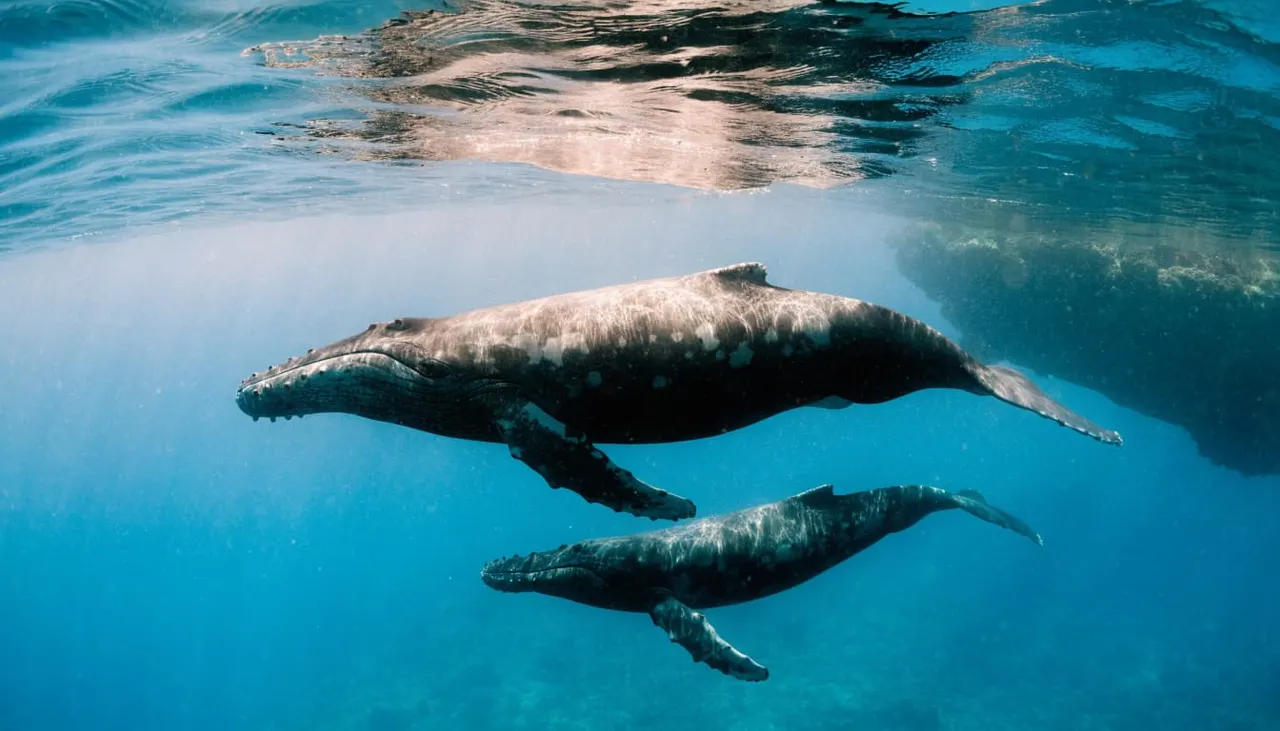
Hawaii is primarily breeding and nursery habitat, rather than a major feeding destination. The adults and calves you may see together face different energy demands and heat-loss challenges.
Adults arrive with stored energy
Many North Pacific humpbacks feed heavily in colder northern waters before migrating toward breeding areas. Krill and small schooling fish help build the reserves that support travel and reproduction.
NOAA’s humpback whale species profile notes that some humpbacks migrate as far as 5,000 miles between feeding and breeding grounds.
That figure describes the species’ migration capacity, not every whale’s journey to Oahu. Still, it gives you perspective on the stored energy behind a brief surface appearance.
Calves have different insulation needs
Newborn calves have thinner blubber than adults. One proposed advantage of warm breeding waters is that they reduce heat loss during early development.
Research on water temperature and whale heat balance discusses that proposed benefit. Warmth is one part of the breeding-habitat picture, rather than a complete explanation for migration.
For humpback whale thermoregulation, the distinction matters: an environment that reduces a calf’s heat loss also gives a large adult less opportunity to shed heat. When you spot a mother and calf, you’re watching two animals sharing habitat with different thermal needs.
Activity and stored energy affect the heat budget
Swimming muscles produce heat. Travel, courtship activity, and nursing also draw on energy reserves, although they place different demands on each animal.
This connects humpback whale thermoregulation with the larger breeding-season energy budget. A whale must maintain body functions while managing stored fuel and exchanging heat with its environment.
Hawaii doesn’t provide the same concentrated feeding opportunities as productive northern feeding grounds. Adults therefore depend largely on reserves accumulated before migration, although occasional feeding can occur.
You shouldn’t interpret that seasonal reliance on blubber as evidence that a whale is weak or distressed. It’s part of the annual cycle.
Likewise, a burst of activity doesn’t establish overheating. A breach shows you a whale leaving the water, not its internal temperature or reason for jumping.
Your best interpretation stays close to what you can observe. You might describe repeated breaches or steady travel, but those observations alone don’t identify a thermal problem.
What you can observe without guessing
From a boat, you can notice a rolling back, a flipper above the surface, or a calf surfacing beside an adult. These details make the encounter rewarding without revealing everything happening beneath the skin.
You can’t see blood-vessel constriction, measure core temperature, or determine how much heat a fluke is transferring to the water. Even a clear photograph captures appearance rather than physiology.
Avoid labeling a dive as an effort to cool down. Similarly, a blow is an exhalation, not proof that a whale is releasing excess body heat.
Your role is to watch without changing the animal’s behavior. In Hawaii, federal rules prohibit approaching humpback whales within 100 yards, including by boat or while swimming.
Let the captain manage the vessel’s position. Never swim toward, chase, touch, or attempt to interact with a humpback. Respectful distance gives whales room to travel, rest, and care for calves.
Explore Oahu’s winter habitat with us
At Living Ocean Tours, our seasonal whale-watching cruises depart from Kewalo Basin Boat Harbor, near Waikiki. You can search for blows and surfacing whales while enjoying views of Oahu’s coastline.
Our crew supports responsible observation, but wild animals choose their own routes and behavior. Your outing may bring a distant breach, quiet travel, or another brief glimpse of life offshore.
For a winter wildlife outing, CHECK AVAILABILITY for a whale-watch departure.
If your family also wants time on the reef, our Honolulu ocean tours offer other ways to explore. We’re the only tour company with professional snorkel guides, so beginners have guidance during their snorkeling experience. Across our outings, the approach stays consistent: observe wildlife without touching or disturbing it.
Frequently asked questions
Does blubber make Hawaii too warm for humpbacks?
Blubber reduces heat loss, but it doesn’t prevent all heat exchange. Circulation and less-insulated body regions help whales balance insulation with heat transfer.
You shouldn’t assume a humpback is overheating simply because it has thick blubber in tropical water. Its heat balance also depends on activity, body condition, and surrounding conditions.
Do humpbacks sweat to cool down?
Sweating isn’t a useful cooling route across submerged whale skin. Evaporative cooling requires water to evaporate into air, so it doesn’t work the same way underwater.
Instead, heat moves between the whale and surrounding water through its tissues and body surfaces. Blood circulation helps control that exchange. A whale’s blow isn’t the equivalent of sweating.
Are breaches or flipper slaps cooling behaviors?
You can’t identify cooling from either behavior alone. A visible movement doesn’t establish the animal’s internal temperature or motivation.
When you’re watching, describe the action without assigning a thermal explanation. A whale may breach repeatedly or remain quiet, and neither pattern gives you a temperature reading. Both can be memorable parts of a wildlife encounter.
Appreciate the heat balance beneath the surface
Humpback whale thermoregulation combines insulation, blood circulation, and heat exchange with the ocean. Hawaii’s warm water changes that balance, while adults and calves bring different needs to the same habitat.
On your next winter outing, enjoy the visible behavior without treating it as a medical reading. A quiet mother-and-calf sighting offers a view of breeding habitat in use.
The strongest takeaway is controlled heat exchange: blubber retains warmth, while circulation helps a whale manage where heat travels.


