
Humpback Whale Blowholes on Oahu Whale Watching Trips
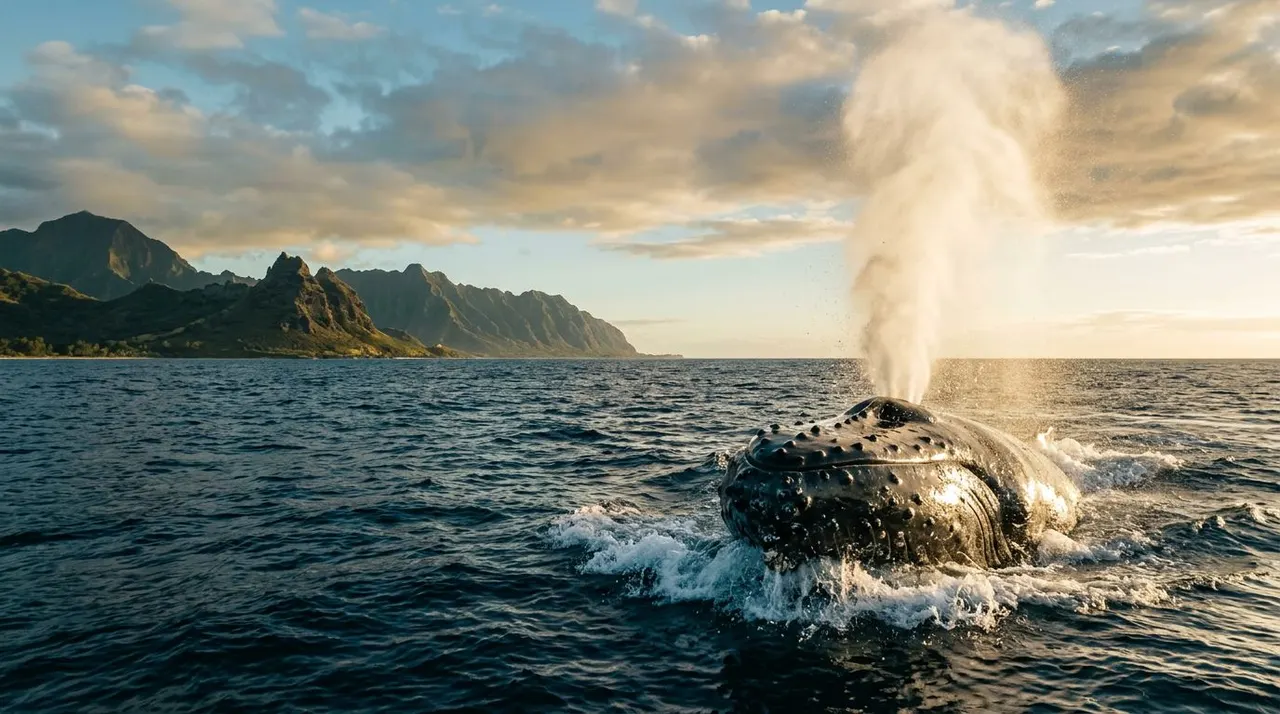
A humpback whale’s blow can look like a sudden burst of smoke above the Pacific. That white plume is actually warm, moist air leaving the whale’s lungs after a long dive.
When you join an Oahu whale watching trip, understanding that brief cloud helps you read the whale’s behavior. You can tell when it has surfaced, when it is preparing to dive, and why the shape of each blow changes with the wind. First, you need to understand how humpback whale blowholes work.
A blowhole is a breathing valve, not a water fountain
Humpback whales are baleen whales, and they breathe through two blowholes on top of the head. The openings sit near the highest point of the skull, so the whale can breathe without lifting its entire head above the surface.
That placement is an adaptation for life in the ocean. A whale can surface, open its blowholes, and exchange air within seconds. When it dives, muscular tissue closes the openings and helps keep water out of the respiratory system.
The visible “blow” begins when the whale exhales forcefully. Air from the lungs passes through the nasal passages and exits through the blowholes. Because that air is warm and saturated with moisture, it cools quickly when it meets the outside air. The moisture condenses into a mist that you can see from a boat.
The plume isn’t a jet of seawater from the lungs. Surface water may cling to the whale’s head, and wind can mix spray into the blow, but the main visible cloud comes from condensed breath. You may also hear a short whoosh as the air leaves under pressure.
A whale doesn’t breathe through its mouth. Its respiratory and digestive pathways stay separate, which allows the animal to feed underwater while protecting the lungs. You can find a useful explanation of the muscles surrounding whale respiratory openings in this discussion of blowhole muscles.
The blowhole also gives scientists a practical way to study whales without touching them. Researchers can measure the height, duration, and moisture pattern of a blow to estimate breathing effort. Oregon State University’s research on measuring whale blows shows how aerial observations can turn a quick exhale into useful biological data.
Why humpback whale blows look different
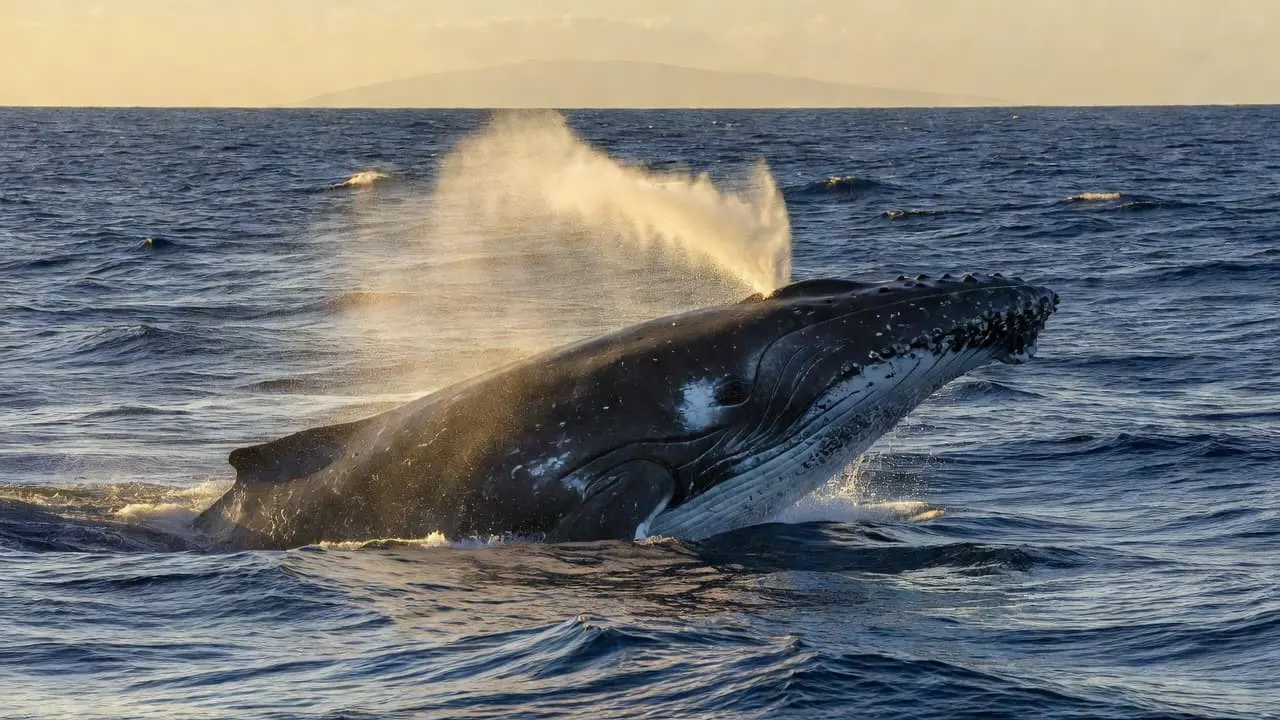
No two whale blows look exactly alike. The plume depends on the whale’s breathing cycle, the angle of its head, the wind, and the humidity around the surface.
A calm day may reveal a tall, clean column of mist. Strong wind can flatten that column or push it sideways before you see the next breath. Choppy water can make a smaller blow harder to spot, while low sunlight may illuminate the mist and make it appear larger.
Humpbacks often take several quick breaths after returning from a dive. During this time, you may see a series of blows at regular intervals. The whale replenishes its oxygen supply before submerging again. After the final breath, its back may arch, and the tail flukes may rise above the surface as it begins a deeper dive.
The size of the blow doesn’t tell you everything about the whale. A large plume can come from a strong exhalation, favorable humidity, or the right viewing angle. A smaller plume doesn’t automatically indicate a problem. You need to watch the whole sequence rather than judge the animal from one breath.
You may also notice that humpback blows tend to look broader than the narrow spouts associated with some toothed whales. Humpbacks have paired openings, and the two streams can merge into a single misty plume. From a distance, that shape may appear heart-like or rounded.
A close-up of another baleen whale’s breath can help you compare the effect. This close-up whale exhalation shows how a blow changes as warm respiratory air meets cooler ocean air. The exact appearance varies by species, weather, and distance.
For you as a passenger, the science adds meaning to every sighting. You aren’t waiting for random white spray. You are watching an animal complete a controlled breathing cycle at the surface.
How breathing shapes a whale watching encounter
Humpbacks spend much of their time below the surface, so the blowhole is often your first sign that a whale is nearby. A naturalist may spot the mist before you do, then point out the whale’s location and likely direction of travel.
On Oahu, seasonal whale watching usually takes place from January through March, when North Pacific humpbacks visit Hawaiian waters. These warm waters support courtship, calving, and early care for young whales. The animals still need to surface regularly, even during social activity or travel.
Your best chance of following a whale comes from observing patterns. Look for the first blow, then keep your eyes on the same area. The next breath may appear several body lengths away if the whale has moved beneath the surface. Binoculars can help, but you shouldn’t stare only through them. Your unaided view gives you a wider field for spotting the next plume.
Watch the water around the blow as well. A patch of smooth water may show where a whale recently passed. A dark back can appear after the mist, followed by a rolling dive. Calves often surface more frequently than adults, which can create a different rhythm for the group.
Your captain and crew also read these signals. They use the whale’s direction, dive pattern, and distance to decide where the boat can wait without crowding the animals. A good trip doesn’t chase every blow. It gives you time to observe the whale’s natural movements.
You can improve your experience with a few simple habits:
- Keep your eyes moving across the horizon instead of watching one fixed point.
- Listen for the sound of an exhale, especially when the wind is light.
- Notice the order of events, including blow, back, pause, and dive.
- Follow crew instructions so everyone has room to watch safely.
A whale may surface on the opposite side of the boat, so staying alert matters. The most memorable sighting often begins with a small mist that appears when you least expect it.
Choosing an Oahu whale watching trip
Your boat affects what you can see and how comfortable you feel while waiting between surfacings. A stable vessel gives you a better chance of keeping your eyes on the horizon, especially when the ocean has a steady swell.
Living Ocean Tours departs from Kewalo Basin Boat Harbor, a short drive from Waikiki. The company operates Coast Guard-inspected, custom-built double-decker vessels with shaded seating, restrooms, dry storage, and sturdy ladders. The Lokahi also includes a SeaKeeper stabilization system that reduces side-to-side rolling.
That comfort matters during whale watching because the experience depends on patience. You may spend several minutes scanning the water before the next blow appears. A steady deck lets you focus on the ocean instead of fighting every movement under your feet.
Living Ocean Tours offers seasonal whale watching along with snorkeling, wildlife cruises, sunset sails, and Friday night fireworks cruises. The company is also the only tour company with professional snorkel guides, which benefits guests who choose a marine-focused itinerary during the same Oahu vacation.
You can explore Living Ocean Tours’ ocean excursions to compare available experiences and seasonal schedules.
When you book a whale watching trip, look for a crew that values responsible wildlife viewing. Boats should maintain the required distance from humpback whales and avoid cutting across their path. You should never swim toward, touch, feed, or attempt to attract a whale.
A respectful approach protects the animals and improves your view. When the boat slows and waits, the whale decides what happens next. That often gives you a clearer look at its breathing rhythm than a fast approach ever could.
If you want to plan a seasonal outing, you can check whale watching availability before your Oahu visit.
What you should remember on the water
Humpback whale blowholes are more than a striking feature. They are the visible end of a sophisticated breathing system that lets a massive mammal live, travel, and communicate in the ocean.
When you see a plume above Oahu’s water, watch what follows. The next breath, the rolling back, and the tail dive each tell you where the whale is in its surface cycle. Wind and humidity may change the shape, but the basic process stays the same: warm, moist air leaves the lungs, condenses, and becomes visible.
Your role is simple. Stay patient, give the whale space, and let the crew help you follow its movement. With that approach, even a brief blowhole spray becomes a close look at whale biology in action.
Conclusion
The next time a humpback surfaces near Oahu, focus on the blow before the rest of the body appears. That mist is condensed breath, released through two muscular openings after the whale returns from a dive.
By watching the timing and shape of each blow, you can understand more than where the whale is. You can recognize its breathing rhythm and observe its behavior without disturbing it. The best whale watching memories begin with that quiet moment when you spot a plume rising over the Pacific.


