
Honolulu whale watching: Drone rules near humpback whales
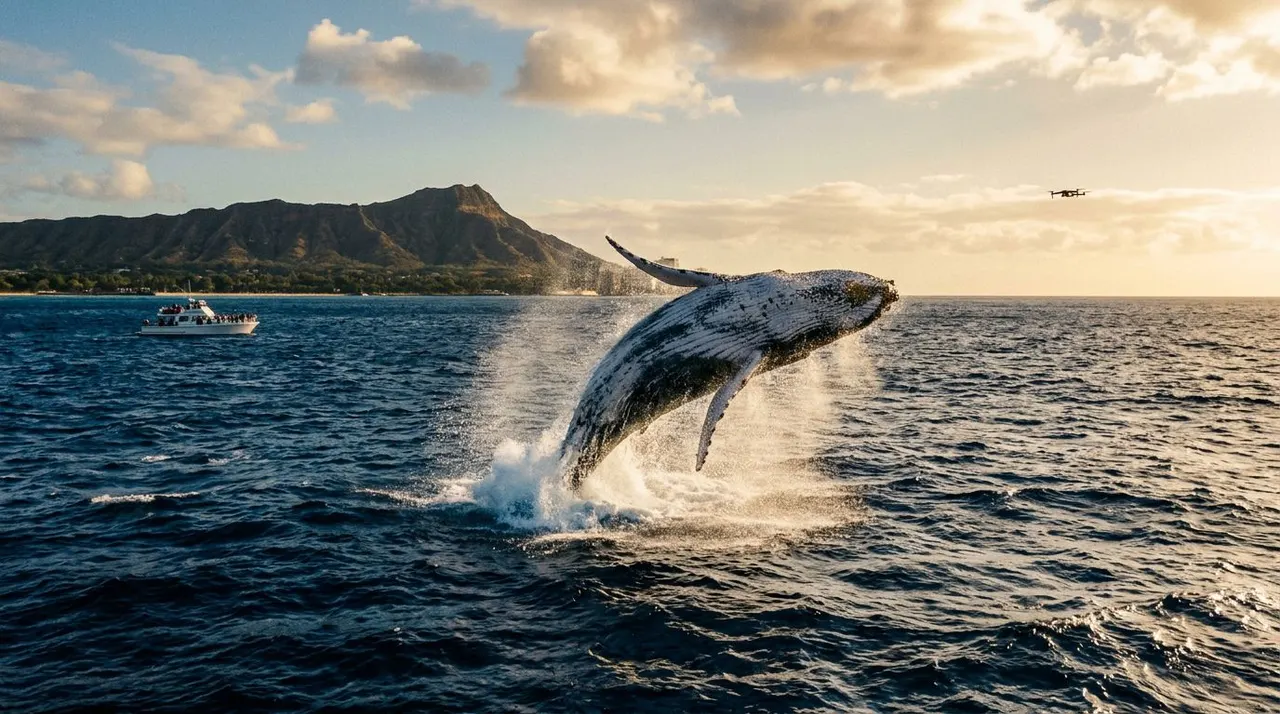
A drone can capture a beautiful view of a breaching whale, but flying one too close can violate federal law and disturb the animal. If you’re planning Honolulu whale watching, you need to understand the distance rules before you bring an aircraft to the coast.
Hawaii protects humpback whales wherever they travel in Hawaiian waters. The safest way to enjoy the season is to watch from a responsible boat, follow your captain’s instructions, and keep your camera focused on observation rather than pursuit.
Honolulu whale watching: The drone distance rules you need to know
Federal law prohibits approaching a humpback whale within 100 yards, which equals 300 feet or about 90 meters, by any means. The rule covers boats, kayaks, swimmers, paddleboards, drones, and other objects.
A drone doesn’t get a special exception because it flies above the water. If you guide it toward a whale, hover over the animal, or use it to follow a whale’s path, you may be making a prohibited approach.
NOAA also requires aircraft to remain at least 1,000 feet above humpback whales in Hawaii. That rule applies to manned aircraft, and the federal guidance treats unmanned aircraft systems as a method of approaching wildlife. Read NOAA’s marine life viewing distances before planning any aerial wildlife footage.
These protections apply year-round, not only during the winter whale season. They apply inside the Hawaiian Islands Humpback Whale National Marine Sanctuary and throughout Hawaiian waters, which extend up to 200 nautical miles offshore.
A drone launched from a beach or boat is still subject to the same wildlife approach limits. Changing the launch point doesn’t change the rule.
The regulations also prohibit intercepting a whale, causing a whale to approach you, or disrupting its normal behavior. Narrow exceptions exist for authorized scientific research, official government duties, emergency situations, or activities covered by a NOAA permit. A recreational drone flight does not qualify automatically.
Why flying a drone near humpback whales is a bad idea
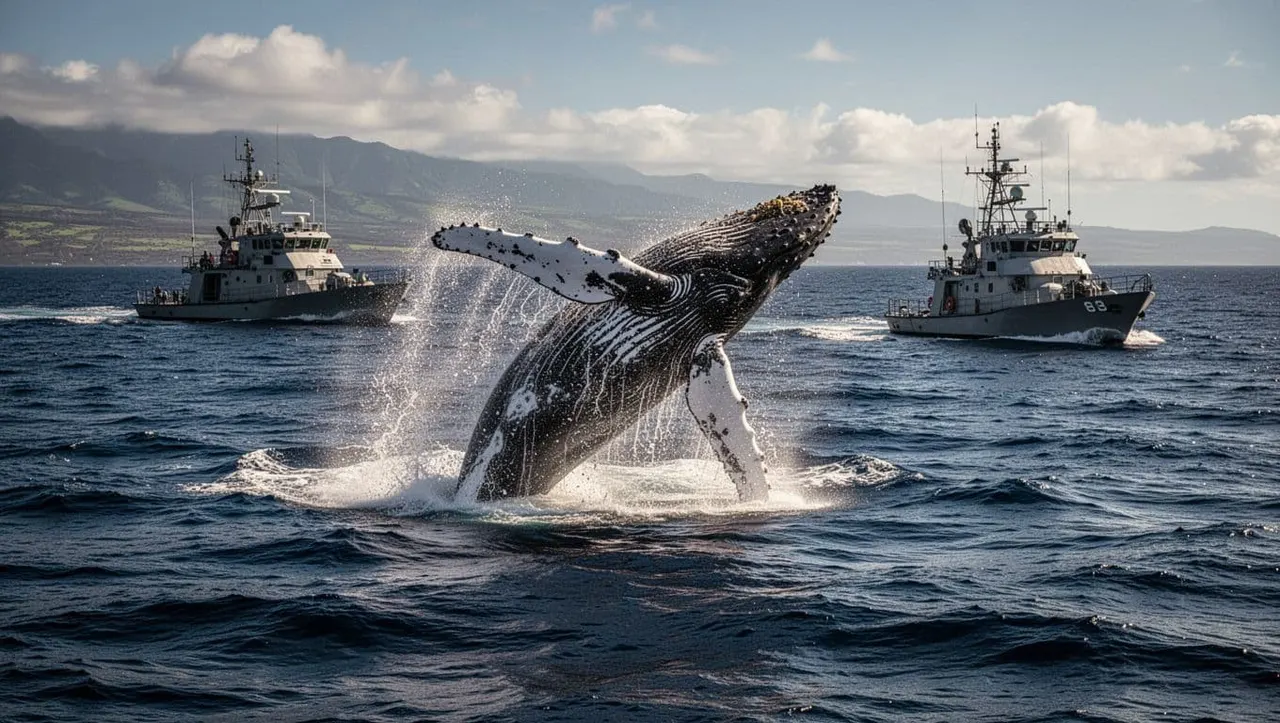
Humpback whales surface to breathe, rest, communicate, and care for their calves. Their behavior can change when a boat, aircraft, or other object follows too closely. A low drone also creates noise directly above the animal, where a whale has little opportunity to avoid it.
The issue isn’t only the distance between the drone and the whale. Your flight pattern matters, too. Circling a whale, cutting across its travel direction, or moving in front of it can interfere with normal movement even when you believe you’re outside the 100-yard boundary.
A breach often lasts only a few seconds. That short window can tempt you to move closer for a better angle. However, chasing a whale for a dramatic shot increases the chance of crossing the legal limit and encourages the animal to change course.
The same principle applies when a whale approaches your position. You must not steer a boat, kayak, or drone toward the animal to keep the encounter going. Follow your vessel operator’s instructions and allow the whale to choose its own distance.
The Hawaiian Islands Humpback Whale National Marine Sanctuary regulations explain that the restrictions protect whales from harassment and disruption. They also give visitors a clear standard that is easy to follow: stay back, observe, and never pursue.
How a responsible Honolulu whale watching tour works
A professional whale watching crew watches the entire scene, not only the whale in front of the boat. Captains consider the animal’s direction, other vessels, sea conditions, and the position of nearby whales before adjusting the boat.
Living Ocean Tours operates from Kewalo Basin Boat Harbor, just minutes from Waikiki Beach. Its seasonal humpback whale watching trips run from January through March, when these whales return to Hawaii’s warm waters.
You can review the company’s Honolulu ocean tours or visit the dedicated whale watching tour page to check current details. The tour gives you a legal viewing platform without asking you to manage a drone around moving wildlife.
Living Ocean Tours uses Coast Guard-inspected double-decker vessels, including the Coral Kai and Lokahi. Both boats offer shaded seating, restrooms, dry storage, and sturdy ladders. The Lokahi also features a SeaKeeper stabilization system, which helps reduce rolling when the ocean becomes active.
You can watch from the deck with a phone, camera, or binoculars while the crew handles navigation and wildlife spacing. Living Ocean Tours is also the only tour company with professional snorkel guides, giving you access to knowledgeable ocean professionals across its marine experiences.
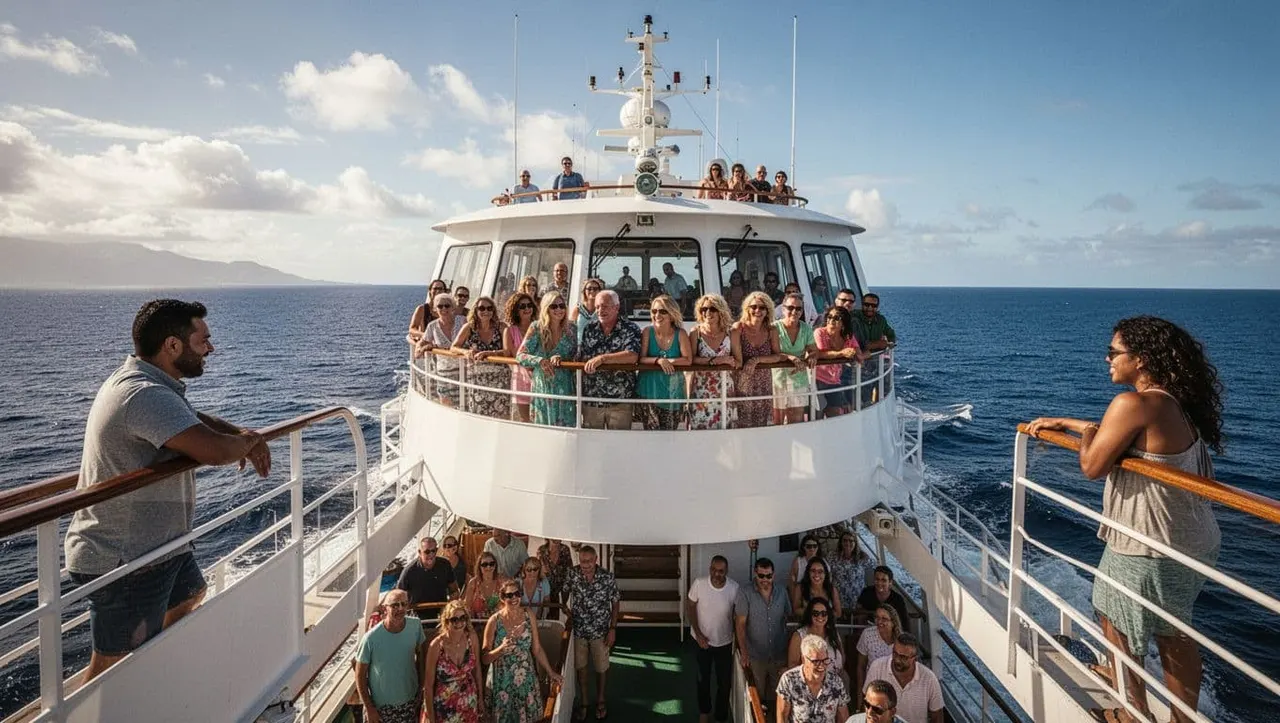
The crew also follows an important conservation standard: observe wildlife without touching, feeding, or chasing it. That approach creates a better experience for you and leaves the whale in control of the encounter.
What to do if a whale comes close to your boat
A close encounter can happen without anyone pursuing the whale. When it does, your best response is calm observation.
- Keep your drone grounded. If you already have one in the air, don’t fly it toward the whale or use it to maintain a close position.
- Follow the captain’s directions about where to stand, when to remain seated, and how to move around the deck.
- Keep your hands, phones, and cameras inside the boat when a whale surfaces nearby. Never reach toward the animal.
- Don’t call, whistle at, feed, or throw anything into the water to attract attention.
- Let the crew manage the vessel’s speed and direction. You shouldn’t ask the captain to chase a breach or cut across a whale’s path.
The federal rule also applies when several boats gather around the same animal. Even if another vessel moves too close, you must maintain your own safe distance. A crowd of boats can limit the whale’s ability to travel, rest, or surface comfortably.
NOAA’s Hawaii marine wildlife viewing guidance includes drones in the 100-yard approach restriction. If you see a suspected violation, record the location and time if you can do so safely, then contact the NOAA Fisheries Enforcement Hotline at 1-800-853-1964.
How to photograph whales without a drone
You can capture strong whale photographs from a boat without aerial footage. Keep your camera ready, use a zoom lens when available, and leave enough space around the animal to show the ocean and its movement.
A wide view often tells a better story than a tight crop. It can show the whale’s blow, tail, splash, and distance from the vessel without encouraging you to move closer. Short video clips also work well because breaches, tail slaps, and surface dives happen quickly.
Binoculars help you follow activity without relying on a phone screen. If you’re traveling with children, give them a chance to watch first and photograph second. The memory becomes more meaningful when you experience the animal’s behavior directly.
Good Honolulu whale watching doesn’t depend on a perfect frame. You may see a blow on the horizon, a fluke disappearing beneath the surface, or a full breach beside the boat. Each moment is valuable because the whale remains wild and undisturbed.
For a guided seasonal outing, you can view the Living Ocean Tours whale watch and choose a departure that fits your Honolulu plans.
Keep drone footage out of the whale encounter
Humpback whales deserve room to travel, surface, and care for their young. In Hawaii, that protection includes a 100-yard approach limit by any means and a 1,000-foot aircraft separation requirement.
Leave the drone behind, book a responsible viewing trip, and let your captain manage the distance. With the right approach, you can enjoy Honolulu whale watching while protecting the animals that make the season special.


