
Honolulu Sunset Cruise: A Complete 2026 Guide
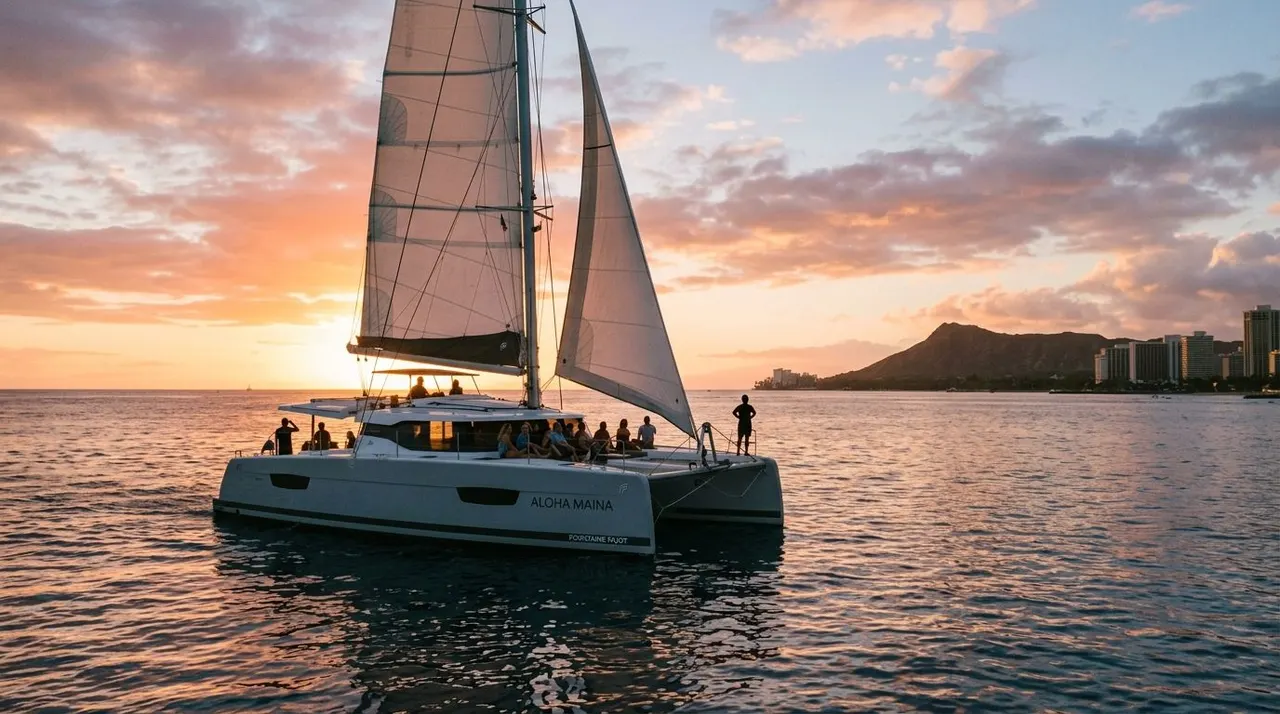
You're probably in the same spot a lot of Waikiki visitors hit around late afternoon. Beach bag half packed, phone full of photos, dinner plans not quite locked in, and a glance out toward the water that makes you think, “Should we do a sunset cruise tonight?”
That instinct is usually right. A Honolulu sunset cruise is one of the easiest ways to turn an ordinary Waikiki evening into something memorable. You get the coastline, Diamond Head, trade winds, open ocean color, and a much better angle on sunset than you'll get from a crowded stretch of sand.
What catches people off guard isn't whether a cruise is worth doing. It's the practical stuff. Which boat fits your group. What changes between summer and winter sailings. Whether BYOB really means you can bring whatever you want. And if you're traveling with a baby or toddler, whether the operator has a clear safety policy.
This is the part most guides rush past. If you want the version that goes smoothly from check-in to sunset photos, the details matter.
Sailing into the Sunset A Waikiki Dream
A lot of travelers decide on a cruise at exactly the same moment. They've spent the day around Waikiki, maybe did the beach, maybe walked Kalakaua, maybe wrangled kids through lunch, and now the light starts to soften. Out on the water, catamarans are already moving toward the horizon while the shoreline begins to glow.
That's when a sunset cruise stops sounding like a tourist extra and starts sounding like the right plan.
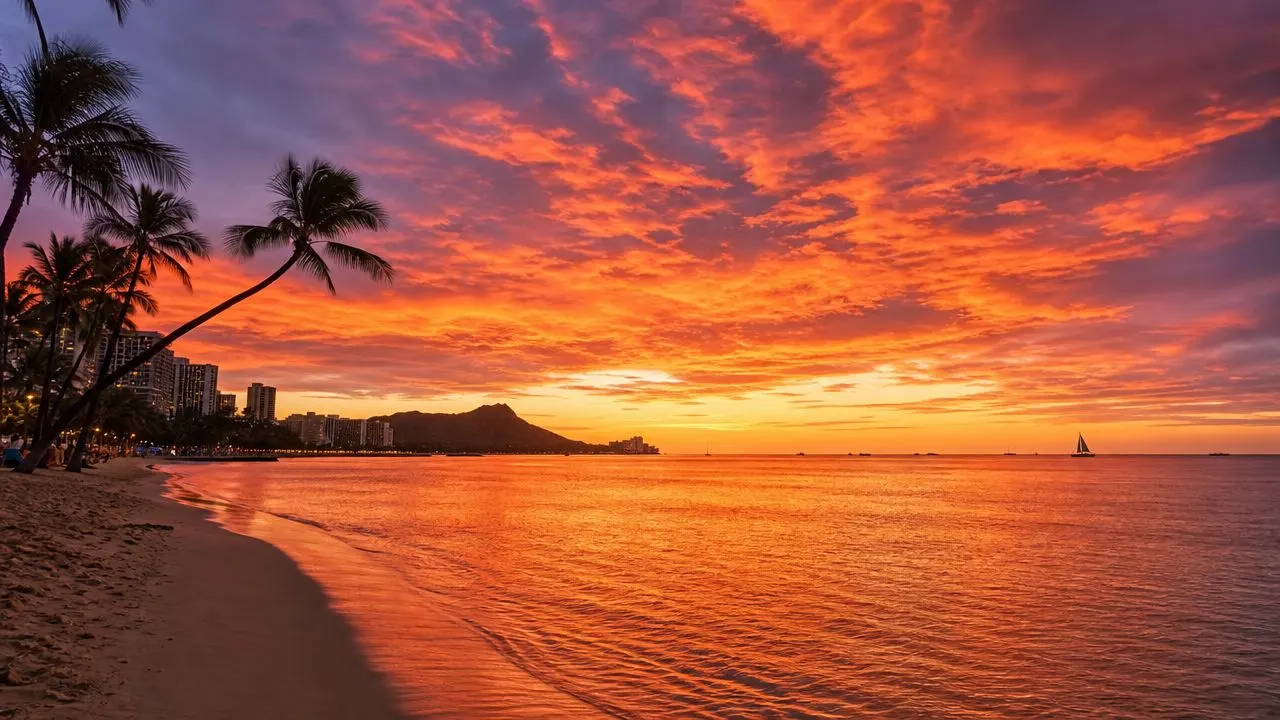
A good Honolulu sunset cruise gives you a different Waikiki. The hotels flatten into a skyline, Diamond Head looks sharper from offshore, and the whole evening slows down once the engines settle and the harbor drops behind you. If you're choosing between staying on land or getting out on the water, the cruise usually wins on atmosphere alone.
One practical thing locals and repeat visitors learn fast is that not every cruise feels the same. Some are social and loud. Some are better for couples. Some work well for grandparents, kids, and mixed-age groups because the logistics are simpler than a full dinner event. If you want a sense of what the evening pace looks like before booking, this Waikiki sunset cruise overview gives a helpful snapshot.
The best sunset cruise isn't the fanciest one. It's the one that matches your group's energy after a full day in Waikiki.
That's the lens to use for every decision that follows. Start with who's going. Then look at season, boarding point, onboard rules, and whether you want drinks, dinner, or just clean ocean views and an easy evening.
Best Times and Seasons for Your Cruise
A sunset cruise in July does not feel the same as a sunset cruise in January, even if the boat and route are similar. The sky can be beautiful in either season. The pacing of the evening changes, and that affects who will enjoy it most.
What changes by season
Many Waikiki sunset sails run for about an hour and a half, with departure times shifting through the year based on sunset and operator scheduling. The Holokai sunset sail page gives a clear example of how timing can vary by season.
The biggest difference is where the sunset falls within your trip. The Waikiki Sunset Cruise on Expedia notes that summer trips often build toward sunset near the end of the sail, while winter trips can catch sunset earlier and finish with more of the city lights on the water.
That changes the mood more than first-time visitors expect.
In summer, the light hangs around longer. You get a slower golden-hour buildup, easier photo conditions, and more time when Diamond Head and the Waikiki skyline still have color and definition. If your group cares about pictures, proposals, or that classic warm-sky sailing feel, summer usually delivers the cleaner visual payoff.
Winter has its own upside. Humpback whale season overlaps with many winter cruises, so some departures give you a small chance of spotting a blow or breach on the horizon. The trade-off is that winter water can feel rougher, and the ride can be bouncier on smaller catamarans. Guests who are sensitive to motion should take that seriously and sit farther back near the center of the boat when possible.
Families should think about bedtime and wind exposure, not just sunset color. Babies and toddlers can do fine on the right boat, but winter evenings feel cooler after the sun drops, and some operators have stricter age or infant policies than others. Before you book, check the operator's sunset cruise check-in and boarding details so you know how early to arrive and whether the boarding process will be easy for your group.
Summer vs. winter in practical terms
Choose summer if you want:
- Longer-feeling light
- Better conditions for casual phone photos
- A more gradual, relaxed buildup to sunset
Choose winter if you want:
- A stronger chance of seeing seasonal whale activity offshore
- More contrast between sunset colors and Waikiki's evening lights
- A slightly different feel once darkness settles in earlier
Neither season is better for everyone. Summer is easier for travelers who want that postcard version of Waikiki from the water. Winter works well for repeat visitors, couples who like moodier evening light, and anyone who does not mind a cooler breeze for the chance at whales and sparkling shoreline views after sunset.
What to Expect Onboard a Waikiki Cruise
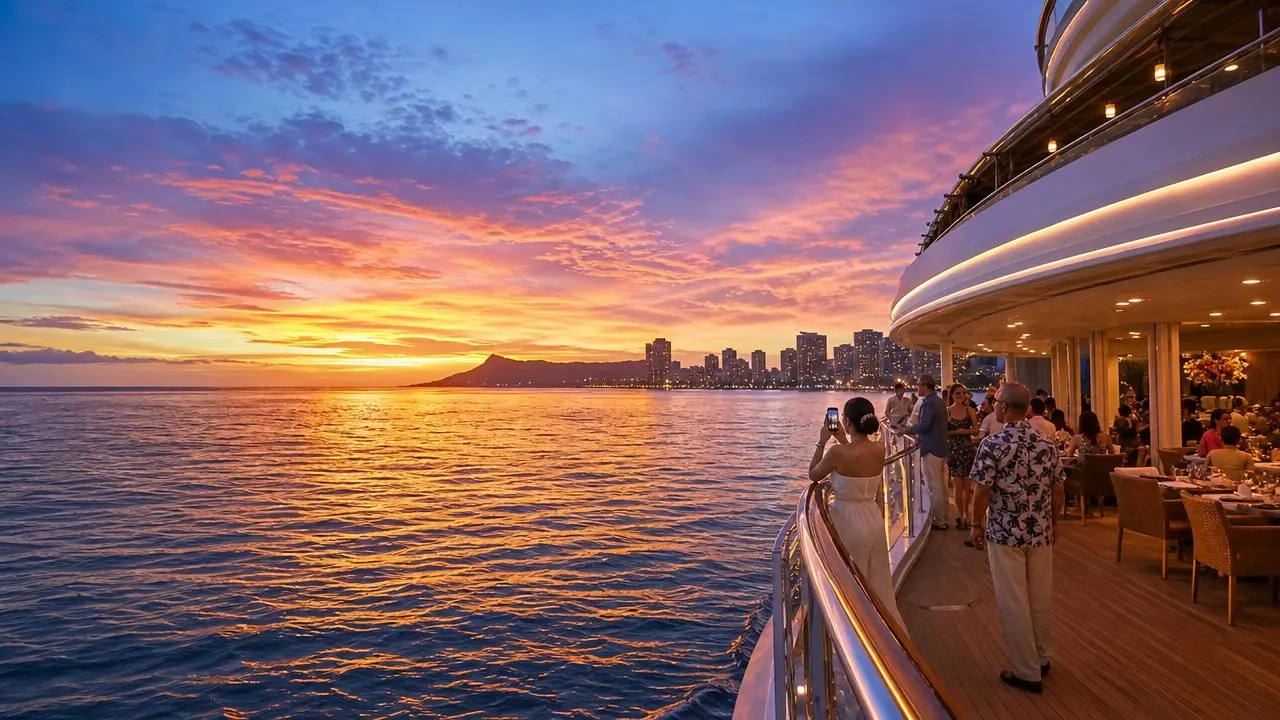
You feel the difference as soon as the lines come off the dock. Harbor noise drops away, the breeze picks up, and Waikiki starts looking less crowded and more like a postcard. For first-timers, that shift is half the appeal.
Most sunset cruises out of Waikiki keep the onboard routine simple. After check-in and a short safety talk, crew members help guests board, find a spot, and get settled before the boat clears the harbor. The first few minutes are usually the busiest. Once you are outside the basin, the pace relaxes fast.
A common format is a 90-minute trip on a catamaran or double-decker power boat. Living Ocean Tours lists its Waikiki sunset cruise as a 90-minute departure from Kewalo Basin on a double-decker vessel, with current pricing and age details on the Living Ocean Tours Waikiki Sunset Cruise page. That trip length works well for a lot of visitors because it feels like a real outing without turning into a long evening commitment.
The ride itself depends a lot on where you sit. Upper decks usually get the best photos and the strongest breeze. Lower or more central seats tend to feel steadier, which matters for anyone prone to motion sickness or traveling with kids. If your group includes grandparents, toddlers, or anyone unsure about boat motion, choose comfort over the best selfie angle.
Expect a casual social atmosphere, not a formal dinner-cruise setup. Some boats play music and encourage guests to move around for photos. Others stay quieter and let the view do the work. Shoes may come off on certain catamarans, spray can reach the rails, and phones should be secured once the boat picks up speed.
The details that catch visitors off guard are usually the practical ones. BYOB rules vary by operator, and the difference matters. Some boats allow beer, seltzer, or canned cocktails but do not allow glass bottles. Some provide cups and ice, while others expect you to bring your own. Before you pack a cooler or stop at ABC Store, check the operator's Waikiki sunset cruise BYOB rules and drink policy.
Families should also ask about child and infant policies before booking, not at the dock. A few operators are very family-friendly, while others have minimum age rules, infant waivers, or boarding setups that are less convenient with strollers and car seats. That is not always obvious from the booking page.
Once the sun starts dropping, the boat usually slows or holds the most scenic angle offshore. That is when people spread out, the cameras come up, and Diamond Head and the Waikiki skyline start competing for attention. Stay off your phone for a minute or two. The best part of these cruises is often that quiet stretch right before sunset, when everyone finally stops fussing with logistics and just watches the water.
Navigating Policies BYOB Tipping and More
The avoidable problems usually happen before the boat leaves the dock. Guests show up with the wrong drinks, assume babies can come without asking, or realize too late that they only brought cash for parking and nothing for crew tips.
The cans only rule
BYOB on Oahu usually means canned drinks only. Beer, hard seltzer, canned cocktails, and canned wine are commonly fine. Glass bottles usually are not, even if the label says wine, juice, or mixer.
That rule is easy to miss and annoying to learn at check-in. Crews are protecting bare feet, crowded decks, and the simple fact that broken glass on a boat is a pain to clean up properly. Before you stop at ABC Store or pack hotel leftovers, check the operator's Waikiki sunset cruise BYOB rules and drink policy.
A few practical tips help:
- Bring cans, not bottles
- Assume you need to carry your empties or hand them to crew as directed
- Do not pack a full cooler unless the operator says coolers are allowed
- If you want wine, buy canned wine instead of bringing a bottle and hoping for an exception
Infant and child policies are not all the same
Families should confirm age rules before booking. Some sunset cruises welcome young kids and infants. Others have minimum age requirements, separate waivers for infants, or boarding conditions that are awkward if you are carrying a baby and extra gear.
The primary issue is boat design, not friendliness. A catamaran with a beach-loading style or a quick step down from the dock can feel very different from a larger vessel with easier boarding. Parents with toddlers should also ask whether life jackets sized for small children are provided onboard or issued only on request.
If you are traveling with a baby, ask three direct questions before you book: Are infants allowed, what is the boarding setup, and is there any part of the ride that tends to get rougher in winter?
Tipping and onboard extras
Crew tipping is customary on Waikiki sunset cruises, especially if staff help with boarding, take photos, serve drinks, or keep the ride comfortable for first-time boat guests. If service is solid, tipping at the end is the normal move.
Some boats make this easy with card-based tipping. Others still get more tips in cash. Bringing a little cash saves guesswork.
Also check what is included. "BYOB" does not always mean ice, cups, or openers are provided. Some operators cover those basics. Some expect guests to bring everything themselves.
Summer versus winter matters more than visitors expect
The sunset is good year-round, but the ride can feel different by season. Summer usually brings later sunsets, warmer evenings, and calmer water. Winter often has earlier departure times, a little more breeze, and a higher chance of a bumpier ride, especially for guests who do not spend much time on boats.
That matters for families and anyone prone to motion sickness. In winter, I tell visitors to eat light, take motion sickness medication early if they use it, and bring an extra layer even if Waikiki felt warm onshore. Offshore wind after sunset can surprise people fast.
Navigating Policies BYOB Tipping and More
In this context, many visitors make avoidable mistakes. The phrase BYOB sounds simple, but on Waikiki sunset cruises it often isn't explained well enough.
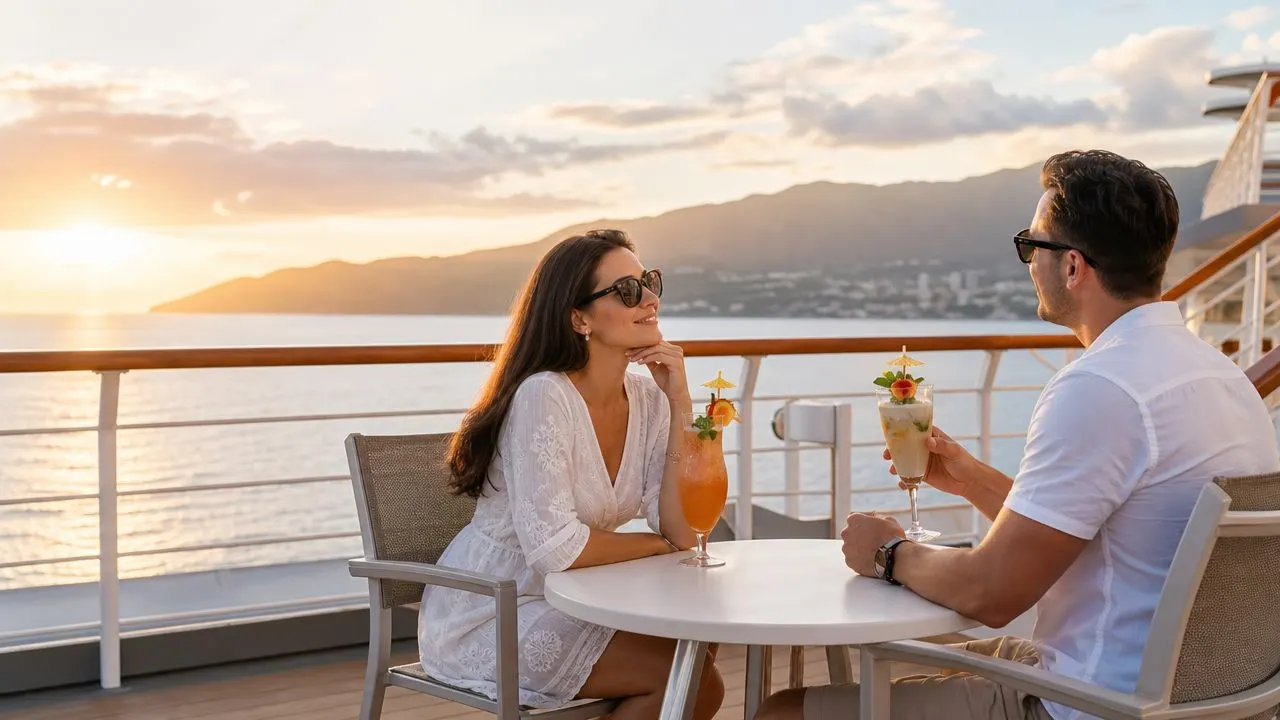
The cans only rule
The biggest issue is what I call the ghost glass problem. Guests read “bring your own drinks,” show up with wine or mixers in glass bottles, and then learn at the dock that those containers aren't allowed.
According to the Living Ocean Tours BYOB sunset cruise guide, 30% of first-time guests on BYOB cruises arrive with prohibited glass bottles, and that same guide is one of the few that explicitly lists canned wine as an acceptable option.
That detail matters more than it sounds.
If a cruise allows BYOB alcohol, the safe assumption is cans only unless the operator says something else in writing. That applies to beer, hard seltzer, canned cocktails, and canned wine. Don't bring glass wine bottles. Don't bring mixers in glass. Don't assume a corkscrew will solve anything.
Dockside reality: “BYOB” does not mean “bring any bottle you want.”
If you're packing drinks for a mixed group, canned options are the cleanest move. They're faster to board with, easier for crew to manage, and much less likely to cause trouble at check-in.
Other policies people forget
Beyond drink rules, these are the small things that regularly affect the evening:
- Bring ID: If alcohol is part of your plan, keep government-issued identification with you.
- Carry cash: Some boats have cash-bar features, and many guests still prefer cash for crew tips.
- Read the cancellation terms before booking: Operators usually spell out weather and timing rules clearly, but guests often skip that page.
- Ask child-policy questions in advance: If you're traveling with small children, don't assume the rules are obvious or consistent.
The practical approach is simple. Treat the policy page as part of the trip, not fine print after the fact. Five minutes of reading can save a surprisingly frustrating dockside conversation.
Essential Tips for a Flawless Cruise
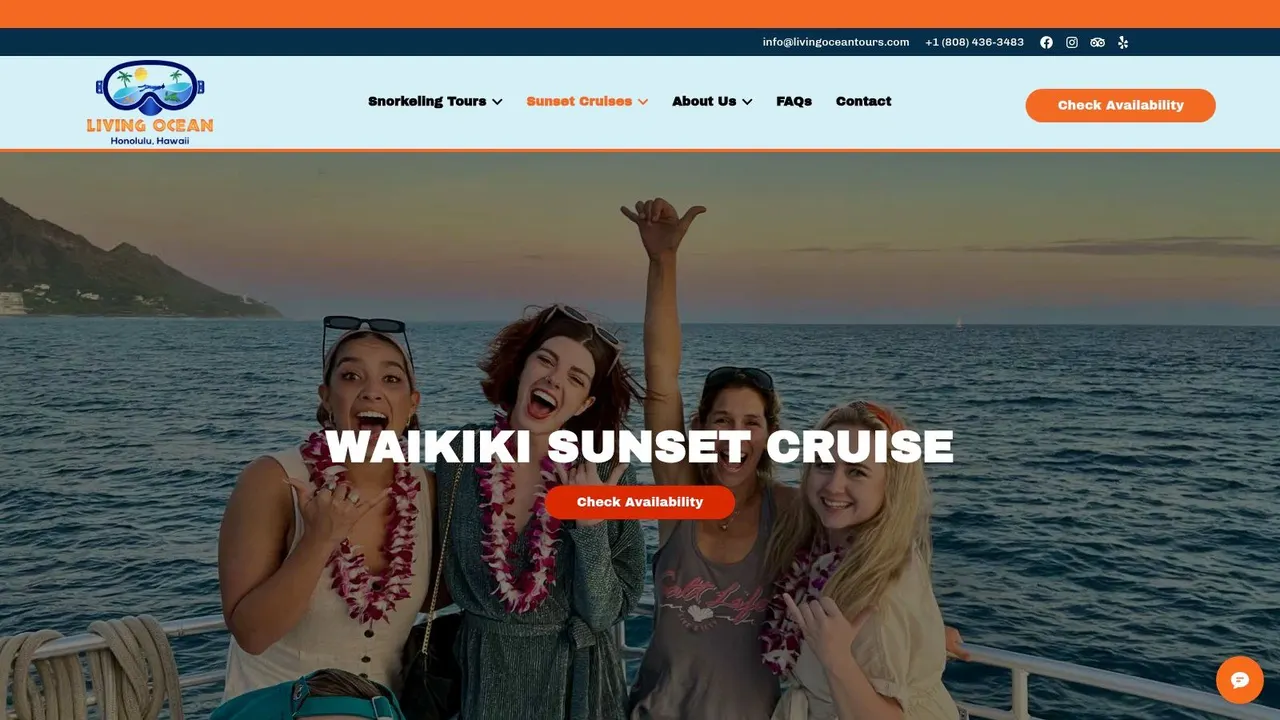
You feel warm walking out of the hotel, then 20 minutes into the cruise the trade wind picks up, your phone is slippery, and the baby in your group is fussing because nobody asked about carrier rules before booking. That pattern is common on Waikiki sunset cruises. The fixes are simple if you handle them before you leave.
Pack for the ride back to shore, not just the first photo at golden hour. Waikiki often stays warm on land, but the temperature feels different once the boat is moving and the sun drops behind the clouds or horizon line.
A few small choices make the evening easier:
- Bring a light layer: A thin hoodie or cover-up is usually enough. Kids and grandparents feel that evening wind first.
- Use a phone strap or secure grip: Sunset photos are great. Dropped phones are common.
- Apply sunscreen before boarding: Late afternoon sun still hits hard on the water. Non-aerosol sunscreen is usually the least hassle around other guests.
- Wear footwear you can move in: Heels and slick sandals are a poor match for wet steps and boat ladders.
- Keep a small dry pouch or zip bag: It helps with phones, room keys, and anything you do not want splashed.
Families with very young kids should do one extra round of checking before they pay. According to a 2025 Hawaii Activities internal report cited in its Waikiki sunset cruise guide, 22% of Waikiki sunset cruise inquiries came from families with infants, while only 15% of operators clearly spelled out infant safety guidelines.
That gap shows up at check-in.
Ask direct questions and get the answers in writing if possible. Is there a minimum age? Does the operator require an infant carrier? Can toddlers sit on a parent's lap the whole time, or are there rules once the boat is underway? Are infant-size life vests available onboard? Those details vary more than visitors expect, especially between smaller catamarans and larger double-decker boats like the one mentioned earlier.
Season matters too. Summer cruises usually bring calmer water and later sunsets, which is easier for families with young kids who do better in steadier conditions. Winter often delivers better whale season energy and dramatic skies, but the ride can be bumpier, the breeze cooler, and little ones may tire out faster.
The smoothest evenings usually come from one habit. Read the policy page, then ask one or two specific follow-up questions before booking. That five-minute check saves a lot of dockside stress.
Essential Tips for a Flawless Cruise
The easiest way to enjoy a sunset cruise is to pack for the last half hour, not the first. Waikiki can still feel warm on shore, but the breeze offshore changes the feel of the evening fast once the light drops.
Final checklist before you leave the hotel
- Bring a light layer: After sunset, the wind can feel cooler than people expect, especially for kids and older relatives.
- Use a secure phone grip or strap: Boats and slippery hands aren't a great combination.
- Keep sunscreen simple: If you're applying before boarding, reef-safe and non-aerosol options are the easiest choice.
- Carry your ID: If your group is bringing drinks or ordering them, don't leave identification in the hotel room.
Families should do one more check before booking. The Hawaii Activities guide to Waikiki sunset cruises notes that 22% of Waikiki sunset cruise inquiries come from families with infants, while only 15% of operators provide clear infant safety guidelines, such as requiring babies to be in a carrier.
That's not a small detail. If you're traveling with an infant or toddler, ask direct questions before you pay. Is a baby carrier required? Can a toddler walk around? Are there size-specific life vest rules? Don't rely on assumptions.
Families usually don't run into problems because cruising with kids is impossible. They run into problems because the policy wasn't clearly explained before arrival.
For photos, the sweet spot is usually before the sun fully drops. For comfort, the sweet spot is a small bag, secure shoes, and not overpacking. On a Honolulu sunset cruise, less stuff almost always means a better evening.
Honolulu Sunset Cruise FAQ
What happens if it rains or the weather turns rough?
Most Waikiki cruises still operate with light rain because brief showers are normal in Hawaii. If conditions become unsafe, operators generally cancel or reschedule. The key is to check the operator's weather policy before the day of departure so you know how refunds or rebooking work.
Is parking available near Kewalo Basin?
Yes, paid public parking is typically available around Kewalo Basin. The practical issue isn't whether parking exists. It's whether you leave enough time to find a stall, walk over, and check in without stress. If your group is already juggling strollers or older relatives, rideshare can be easier.
Are there restrooms on the boat?
Most commercial sunset cruise vessels have a marine restroom onboard. It may be compact, but it's usually there. If someone in your group needs easy restroom access, it's still smart to ask before booking rather than assume every vessel layout is the same.
Can you get seasick on a Honolulu sunset cruise?
Yes, some guests can, even on calmer Waikiki evenings. If you know you're sensitive, take motion-sickness medication ahead of time based on the product instructions, stay where there's fresh air, and look toward the horizon instead of down at your phone.
A sunset cruise should feel easy, not uncertain. If you want a harbor-based option with clear trip details, seasonal timing, and online booking, Living Ocean Tours is a practical place to start for planning your Waikiki evening on the water.


