
Honolulu Snorkeling Tour Guide for First Timers
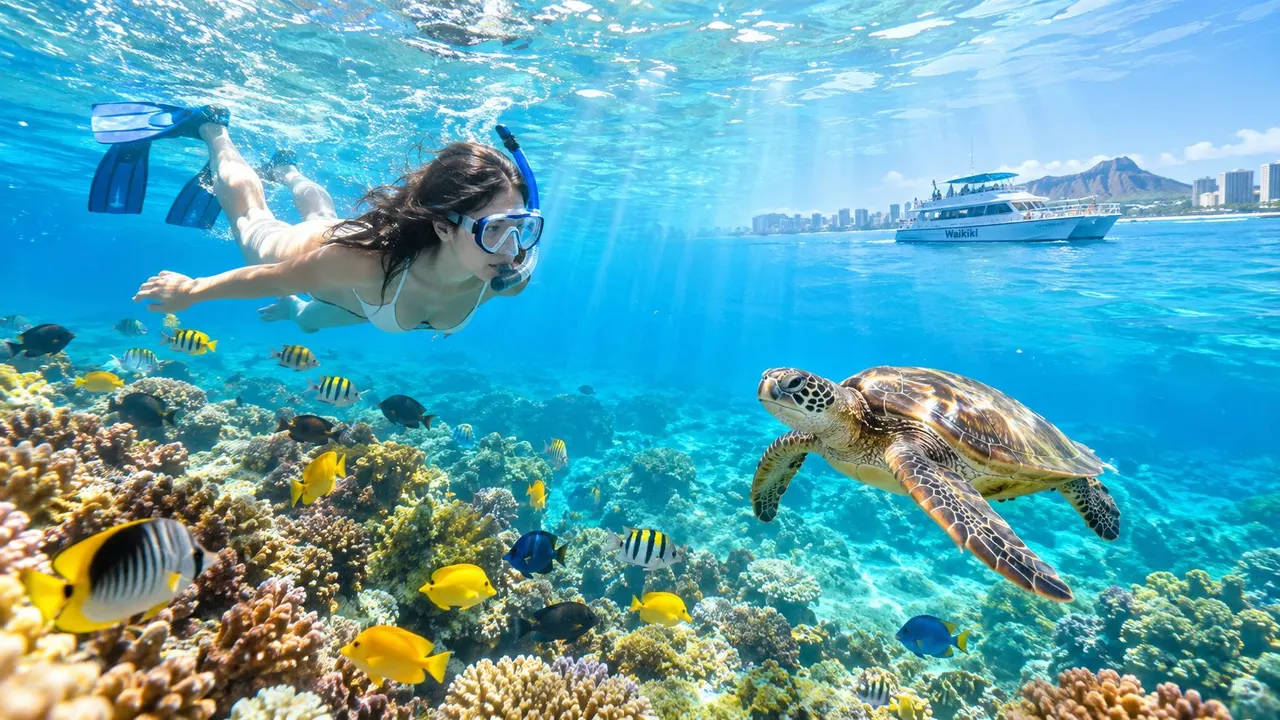
You've just checked into Waikiki, the bags are still by the door, and someone in your group is asking the question nobody wants to answer too late: “Can I snorkel?” The water looks calm from the beach, the reef photos are beautiful, and the search results for a Honolulu snorkeling tour all sound easy. Yet the right choice depends less on finding the most famous spot than on matching the experience to your swimming comfort, energy, and need for support.
A guided trip gives first-timers a clear path from harbor to reef, fitted equipment, practical instruction, and someone watching the conditions while you focus on breathing and looking beneath the surface. This guide will help you choose between shore and boat access, turtle snorkeling and family wildlife cruises, seasonal whale watching, and a tour structure that works for weak swimmers, older travelers, and children.
Introduction to Your Honolulu Snorkeling Tour Adventure
Your group may reach the beach with different comfort levels. One person is ready to swim out, while another is still deciding whether breathing through a tube feels natural. Hawaii visitor surveys show snorkeling is a mainstream part of the visitor experience, with participation appearing at 45.7%, 46.5%, 44.1%, and 39.7% across figures in the state's 2015 to 2024 series in the official Hawaii tourism data table. Ocean swimming and snorkeling also recur together as visitor activities, so many Waikiki travelers arrive expecting time in the water.
Calm-looking water can still challenge a weak swimmer. A beach entry may require someone to manage a leaking mask, unfamiliar fins, small waves around the legs, and breathing through a snorkel at the same time. For a first-timer, those tasks can feel like trying to learn several skills while walking on a moving floor.
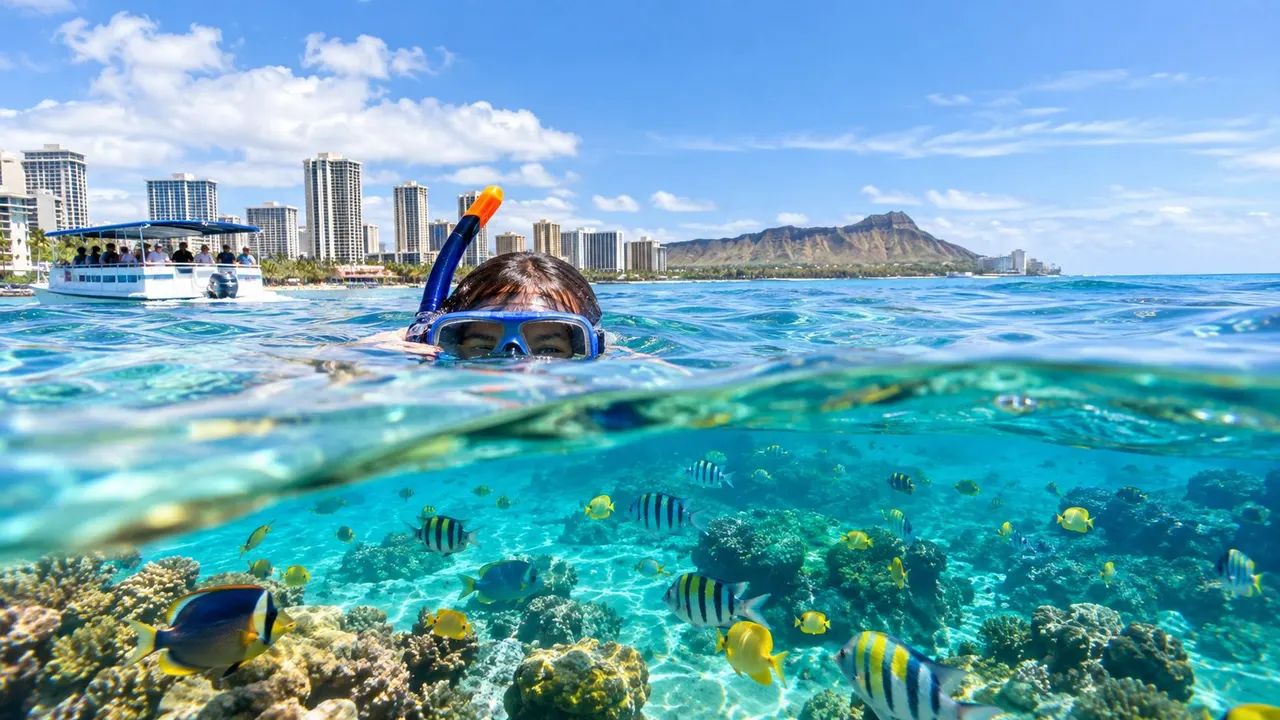
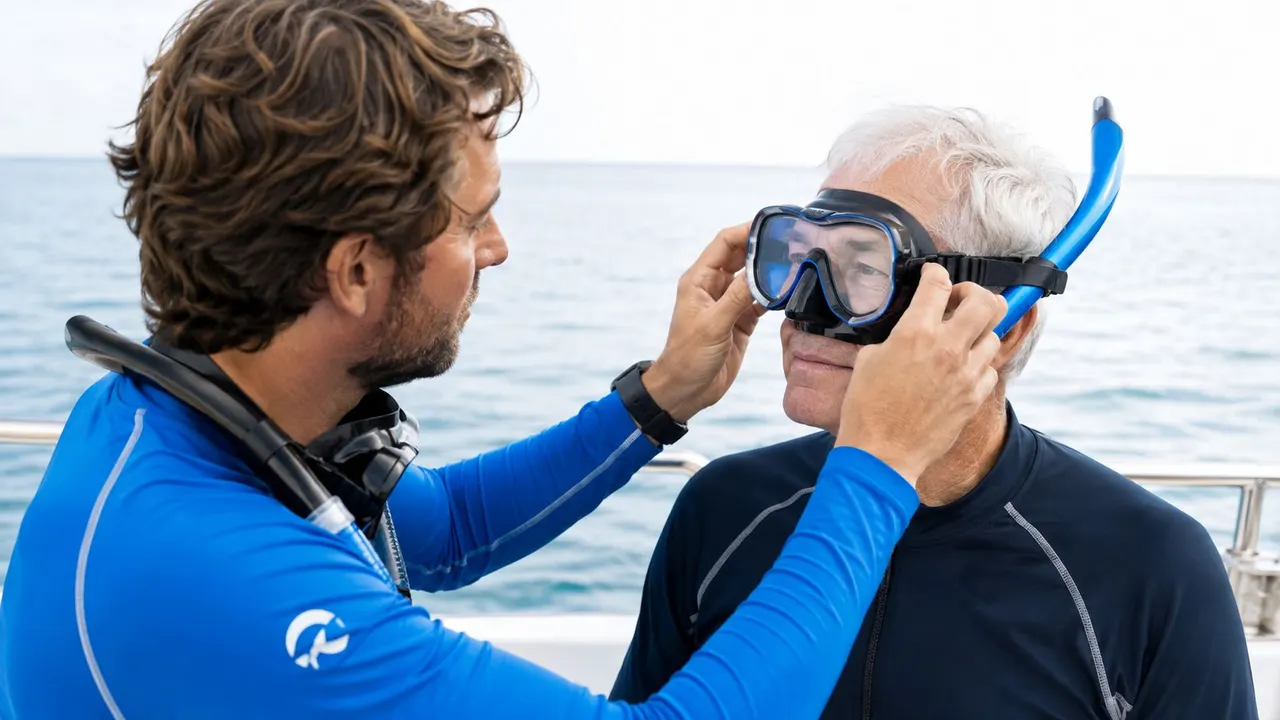
A boat-based Honolulu snorkeling tour gives the experience a clearer structure. Equipment can be fitted before entry, instructions can be practiced while everyone is dry, and guides can watch the conditions and the group. That support matters for children, older travelers, and anyone who swims comfortably in a pool but feels less certain in open water.
What your group is really choosing
The location is only one part of the decision. Compare these practical needs:
- Comfort level: Decide whether your group needs flotation support, close supervision, or time to practice before moving away from the boat.
- Wildlife focus: Choose between looking for turtles and reef fish or prioritizing slides and open-water play.
- Daily rhythm: A morning departure may suit an energetic group, while an afternoon or sunset trip may fit a slower schedule.
- Seasonal priority: Reef wildlife is available throughout the year, while humpback whale encounters belong to their visiting season.
Living Ocean Tours operates guided snorkeling from Kewalo Basin Boat Harbor, with equipment, instruction, and guides included. Its offerings include the Deluxe Waikiki Snorkel and Wildlife Cruise. When comparing operators, look for specific support such as flotation options, gear fitting, and active guide supervision rather than relying on “family-friendly” alone.
Reviews can help you assess communication and guest experience. Your clearest question is practical: how will the crew support someone who is not a strong swimmer?
How a Guided Honolulu Snorkeling Tour Works
A good tour unfolds like a short lesson with a boat ride in the middle. You begin at Kewalo Basin Boat Harbor near Waikiki Beach, meet the crew, and receive an explanation of the route, water conditions, equipment, and wildlife rules. The briefing isn't filler. It gives a first-timer a mental map before the mask goes on.
From the harbor to the reef
The usual sequence looks like this:
- Check-in and orientation: The crew confirms your group, explains where to store personal items, and describes what the day's conditions may allow.
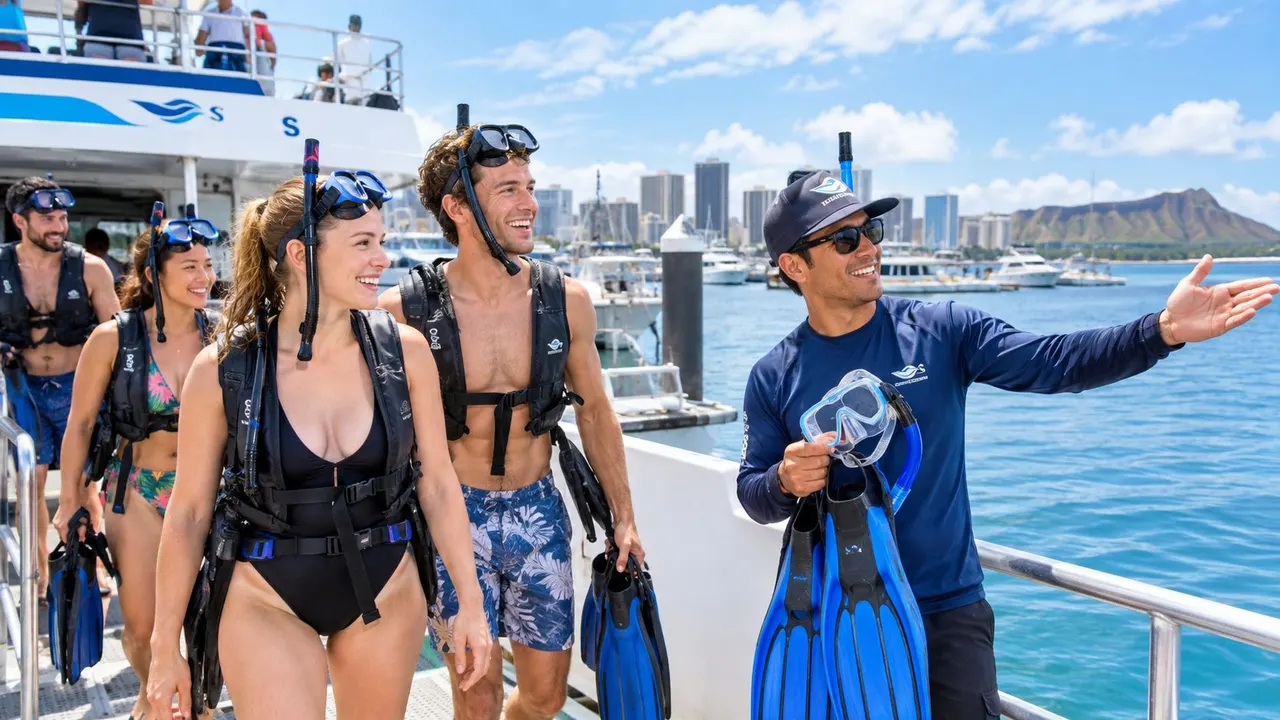
- Gear fitting: Your mask should seal comfortably around your eyes and nose, while fins should stay secure without pinching. Flotation equipment should match the swimmer, not just be handed over without adjustment.
- Safety briefing: Guides explain how to enter the water, how to signal for help, where to stay, and how to avoid contact with the reef.
- Boat transfer: The ride from the harbor gives the crew time to identify the most suitable area for that day. The exact route may change with wind, swell, visibility, or wildlife movement.
- Guided snorkeling: Once in the water, guides help guests settle their breathing, point out fish and turtles, and maintain group spacing.
- Return and wrap-up: After the water session, you climb aboard, remove wet gear, and return to the harbor with time to ask questions.
The boat functions like a moving classroom. Instead of asking a nervous guest to learn equipment, navigation, wildlife etiquette, and breathing technique alone, the crew introduces each idea in the order it becomes useful.
What guides actually do
A guide isn't there only to point at colorful fish. The crew can help a guest adjust a mask, offer flotation assistance, identify a safer position in the group, and recognize when someone needs a break. Guides also manage the group around sensitive habitat, helping swimmers remain above the bottom instead of standing on coral.
That management matters in Oahu's high-demand marine areas. A University of Hawaii-linked study recorded annual snorkel dives ranging from 28,000 to 100,000 at several Hawaiian marine protected areas, with 818,140 snorkel dives at Hanauma Bay in the study dataset and 22,493 at Pupukea MLCD on Oahu. These figures are summarized in the Hawaii snorkeling research overview. High participation makes careful guiding more than a convenience. It helps protect the place everyone came to see.
Most tours provide masks, fins, flotation equipment, instruction, and guide support, but check the individual booking details before you leave your hotel. Bring a swimsuit, reef-conscious sun protection, a towel, water, and only the valuables you can keep secure.
Practical rule: If you're unsure whether you can manage the equipment, ask the operator before booking how flotation and in-water assistance work.
Choosing the Right Tour Type for Your Group
A tour should match the least confident swimmer in your group. Calm-looking water can still create problems when someone tires, swallows water, loses a mask seal, or drifts away from the boat. The right choice provides a manageable pace and a clear way to pause, rather than expecting every guest to snorkel for the same length of time.
Compare the main experiences
Choose the Turtle Canyons Snorkel Excursion when observing turtles is the main goal. The excursion centers on Hawaiian green sea turtles and a natural cleaning-station environment, where cleaner fish remove algae and parasites from turtles. That setting may make observation more predictable, but guests still need to keep a stable distance and leave the animals' route clear.
The Deluxe Waikiki Snorkel and Wildlife Cruise fits families and mixed-ability groups that need options between snorkel sessions. Children can spend part of the outing enjoying the boat's water activities, while stronger swimmers snorkel without making a less confident guest remain in the water. The key advantage is flexibility, not just the number of attractions.
A Waikiki Sunset Cruise suits guests who want coastline views and a golden-hour outing instead of reef time. The operator describes BYOB and cash-bar options. Sunset Cruise Waikiki gives travelers another sunset option to compare.
Whale watching serves a different purpose again. Humpback whales visit Hawaiian waters from November through May, with the highest concentration typically from January through March, according to NOAA's Hawaii Humpback Whale National Marine Sanctuary information. The Waikiki Whale Watch option suits travelers whose priority is seasonal wildlife rather than snorkeling.
| Tour Type | Best For | Key Features | Season |
|---|---|---|---|
| Turtle Canyons Snorkel Excursion | Turtle-focused travelers and eco-minded guests | Guided reef viewing near a turtle cleaning station | Available according to operator schedule |
| Deluxe Waikiki Snorkel and Wildlife Cruise | Families and mixed-ability groups | Snorkeling and several ways to enjoy the water from the boat | Available according to operator schedule |
| Waikiki Sunset Cruise | Couples and groups seeking a relaxed boat outing | Sunset views, BYOB, and cash-bar options | Daily according to operator schedule |
| Whale Watch | Seasonal wildlife enthusiasts | Humpback whale viewing from the water | November through May, with highest concentration typically January through March |
Use a simple comfort filter before booking: if anyone cannot swim 25 meters without stopping, prioritize the Deluxe cruise for its flotation support and shorter snorkel rotations over the turtle-focused excursion. Families should also ask how guests re-enter the boat, where they can wait between rotations, and what happens if a swimmer needs to stop early. Those answers reveal whether the tour can support your group when conditions feel different in the water than they did from the deck.
Best Snorkeling Spots and Seasons Around Honolulu
Location changes the experience before you ever put on a mask. Shore entries near Waikiki can be convenient, but boat-accessed reef areas may offer a more managed route, clearer separation from beach traffic, and better access to marine habitat. Neither option is automatically right for everyone. The conditions and your comfort decide that.
Shore access near Waikiki
Queen's Beach and Sans Souci Beach are commonly identified as beginner-friendly snorkeling areas along the Marine Life Conservation District south of the hotels. The area is marked near lifeguard stand 2F, with sandy entry points near Queen's Beach or Kapiolani Park Beach. Sand matters because it gives a new snorkeler a clearer place to enter without stepping directly onto living reef.
A boat trip to a reef shelf such as Turtle Canyon changes the logistics. You don't need to make your way from a crowded shoreline or decide where to swim after entering. The crew chooses a suitable area, explains the boundaries, and watches the group while guests focus on breathing and observation.
Why the bottom matters
Reef guidance recommends entry points over sand or another sturdy substrate, plus enough depth to keep swimmers above the bottom. Fin contact and standing on reef surfaces can break coral, while kicking close to the seabed can stir sediment and cloud the water. Reef Resilience's recreational reef impact guidance supports a simple technique: keep your body horizontal, move smoothly, and avoid using the reef as a handhold or footrest.
Better visibility starts with better body position. Neutral buoyancy protects the reef and keeps your own view from disappearing inside a cloud of disturbed sand.
Protected water is helpful for beginners, but “calm” doesn't mean risk-free. A sheltered route can still require proper flotation, supervision, and a realistic assessment of swimming ability.
Timing wildlife expectations
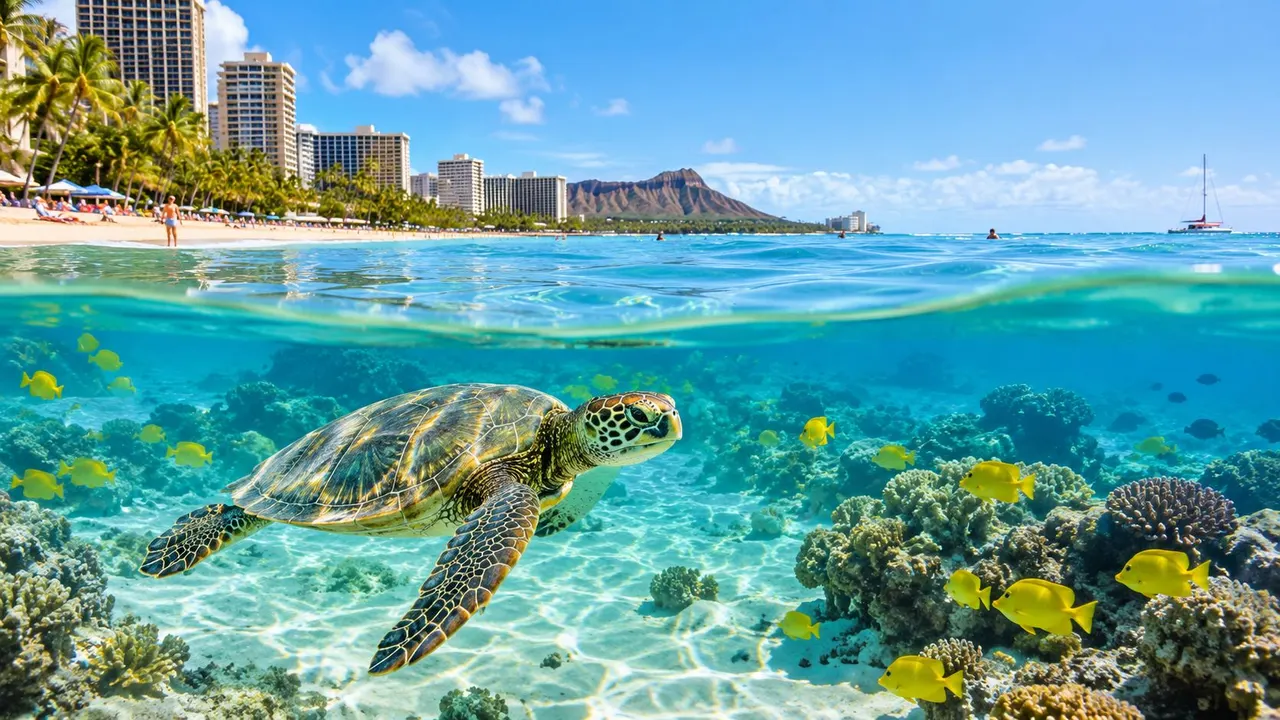
Turtles and reef fish are year-round possibilities, but wildlife is never a guaranteed performance. The most responsible tours observe animals where they naturally behave instead of chasing them into another part of the reef.
Whales follow a clearer seasonal pattern. NOAA identifies November through May as humpback whale season, with the strongest concentration typically from January through March. If whale encounters are your priority, choose a whale watch during that window rather than expecting a standard snorkeling trip to deliver the same experience.
Safety Gear and Comfort for First Time Snorkelers
Calm-looking water is one of snorkeling's most misleading signals. A swimmer can feel fine at the shoreline, then become tired after trying to keep the face in the water, breathing through a tube, and staying oriented above a reef. The risk deserves direct attention, especially for visitors who aren't strong swimmers or who haven't snorkeled before.
A Hawaii safety summary identifies snorkeling as the leading cause of tourist drownings in the state, recording 204 snorkeling deaths from 2012 through 2021, with 90% involving visitors. The same summary cites a review in which 71% of near-drowning incidents occurred in calm seas. Those figures appear in Living Ocean Tours' safety discussion, and they explain why “the ocean looks flat” isn't a sufficient safety assessment.
What meaningful support looks like
A responsible operator should explain support in practical terms. Ask whether the crew provides:
- Fitted equipment: A mask should seal without excessive tightening, and fins should stay on without creating pain.
- Flotation support: A vest or other approved flotation aid can reduce the effort required to remain at the surface.
- In-water guidance: Guides should be available to help guests settle, signal, and return to the boat when needed.
- Group spacing: A group needs room to observe wildlife without piling onto a turtle cleaning station or reef edge.
- Weather decisions: The operator should have clear procedures for changing or canceling a route when conditions aren't appropriate.
Older travelers and families with children should share relevant concerns before departure, not after entering the water. Tell the crew if someone tires quickly, feels anxious with a mask, or needs help climbing a ladder.
A simple first-timer technique
Start by floating face down while keeping the body long and relaxed. Neutral buoyancy means you aren't sinking onto the reef or kicking hard to remain at the surface. Horizontal trim means your legs stay behind you rather than dropping toward the bottom, which reduces accidental fin contact and keeps sediment from obscuring the view.
Pack lightly:
- Swimwear: Wear something secure and comfortable under the gear.
- Sun protection: Use reef-conscious protection and cover exposed skin where practical.
- Hydration: Bring water unless the operator confirms it will be provided.
- Dry items: Pack a towel and a change of clothes for the return trip.
- Personal medication: Keep essential items in the way the operator recommends.
- Valuables: Leave unnecessary jewelry and electronics at the hotel whenever possible.
If you can't comfortably swim, don't hide that fact. A guided trip may still be suitable, but the crew needs accurate information to recommend the right conditions and support.
Booking Tips Pricing and What to Expect on the Day
A calm forecast does not guarantee an easy swim. Wind, current, boat movement, and a tired child can change how comfortable the water feels within minutes. Ask booking questions that reveal the support available, not only the departure time: How long is each water session? Can guests rest between rotations? What flotation help and staff guidance are available for nervous or weak swimmers?
Check the full price before paying. Confirm whether it includes reef-safe sunscreen, wetsuit rental, harbor fees, equipment, and instruction. Ask whether rescheduling after swell or other ocean changes carries a fee, and read the cancellation terms exactly as written. These details work like the small print on a rental agreement. They matter most when plans change.
Morning and afternoon departures can both suit a Honolulu itinerary. Choose the time when your group is most alert and least rushed, especially if children need breakfast, medication, or extra time to get ready. Ocean conditions can shift, so the crew may adjust the route or timing rather than follow a fixed promise about visibility.
Your booking checklist
Before confirming, ask:
- Price details: What fees, rentals, and onboard services are included?
- Weather policy: Is a changed route different from a canceled trip? How are refunds and rescheduling handled?
- Group format: Will your group share the boat, and how many guests are expected?
- Swimming support: Can the crew provide flotation or a shorter water session for guests who tire quickly?
- Check-in process: What identification, arrival time, and parking information should you prepare?
- Motion comfort: Where is the calmest place to sit, and what food or drink should motion-sensitive guests avoid before boarding?
- Personal items: Is there secure storage, and which items should remain ashore?
Living Ocean Tours departs daily from Kewalo Basin Boat Harbor and lists turtle-focused and Deluxe snorkel options alongside sunset and seasonal whale watch departures. Review the specific trip page because inclusions, timing, and weather terms may differ between departures.
A calm day-of sequence
Arrive with enough time to check in without rushing. Listen during the briefing, test the mask seal before leaving the dock, and tell the crew if anything feels uncomfortable. On the boat, use handholds while moving and store loose belongings as directed.
Once in the water, treat the first few minutes as a trial rather than a test. Breathe slowly, stay near the assigned support, and pause before fatigue affects your kicking or mask seal. A shorter session with steady breathing can be more enjoyable than remaining in the water until you feel overwhelmed.
Sustainable Snorkeling and Responsible Wildlife Viewing
Responsible snorkeling isn't a separate add-on to the experience. It improves the encounter because animals behave more naturally when guests don't chase, touch, surround, or block them. At a turtle cleaning station, stay where the guide positions the group, keep out of the turtle's travel lane, and watch without reaching toward the animal.
The same principle protects the reef. Enter over sand when possible, keep your body above the bottom, and use steady fin strokes instead of standing on coral. A stable swimmer sees more because the water remains clearer and the group creates less disturbance.
Whale watching has a firm compliance rule. NOAA says vessels must not approach a humpback whale within 100 yards, as explained in NOAA's boating guidance. Follow the crew's instructions even when a whale appears close, because responsible viewing includes giving wildlife room to choose its own direction.
Living Ocean Tours combines guided instruction, safety, and responsible wildlife viewing across its snorkeling and seasonal ocean excursions. Choose the experience that matches your group's swimming comfort first, then select the wildlife or sightseeing focus that fits your visit.
Living Ocean Tours offers guided Honolulu snorkeling from Kewalo Basin, including turtle-focused trips and a family-oriented Deluxe Waikiki Snorkel and Wildlife Cruise with flotation support, instruction, and wildlife guidance. Visit Living Ocean Tours to compare the available experiences and choose a departure that suits your group's comfort in the water.


