
Honolulu Snorkel Company: Your 2026 Buyer’s Guide
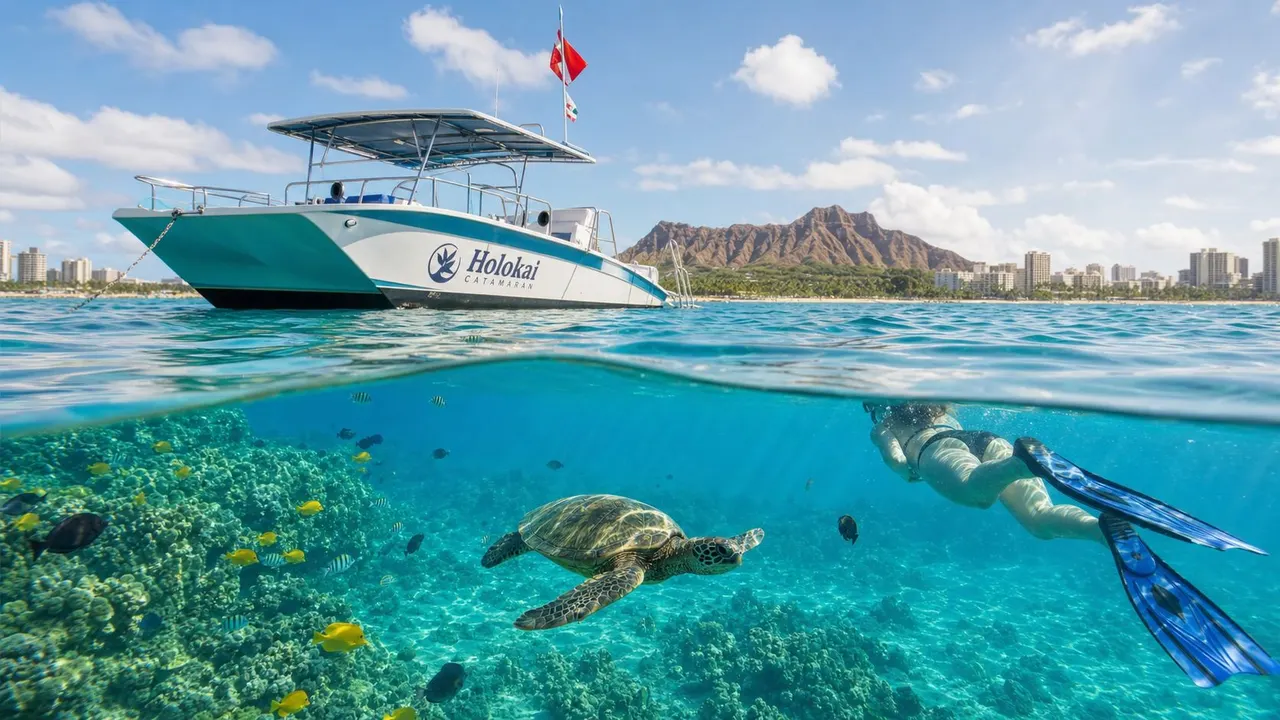
You're probably doing what most Waikiki visitors do on the first planning night. You've got a few tabs open, a stack of activity brochures on the hotel desk, and five different snorkel tours that all sound almost identical. Every company promises turtles, clear water, friendly crew, and “the best experience.”
That's where people get stuck.
A good Honolulu snorkel company doesn't just sell seats on a boat. It shapes the whole day. The crew decides whether a nervous first-timer relaxes or panics. The vessel size changes whether the trip feels personal or crowded. The company's wildlife practices determine whether you get a respectful marine encounter or a sloppy cattle-call swim.
The smartest way to choose isn't to ask which company is “best” in the abstract. It's to ask how to judge one like a captain would. If you want a practical starting point, this Honolulu snorkeling guide is useful for narrowing the field before you book.
Finding Your Perfect Honolulu Snorkel Tour
Standing on Kalakaua Avenue, every snorkel ad looks polished. The hard part is that the details travelers need aren't on the flyer. You don't see how patient the in-water guide is with kids. You don't see whether the captain rushes the site selection. You don't see if the company treats turtle viewing like wildlife stewardship or a photo op.
That's why I tell visitors to stop comparing tours like restaurant menus. Compare them like ocean operations.
A family with young kids usually needs something different from a couple celebrating an anniversary. A confident swimmer can enjoy a stripped-down wildlife trip. A first-time snorkeler usually does better with more instruction, easier water entry, and crew who watch body language instead of waiting for someone to ask for help.
A memorable snorkel day usually feels calm before it feels exciting.
The right operator should fit your group's pace, not force your group to fit the boat's pace. If you've got grandparents, younger children, or anyone who gets uneasy in open water, small operational details matter more than marketing language. Departure location, check-in flow, age rules, time in the water, and how the crew briefs beginners all tell you more than glossy tour copy ever will.
A strong Honolulu snorkel company makes guests feel taken care of before the engines even start.
What to Expect on a Guided Snorkel Tour
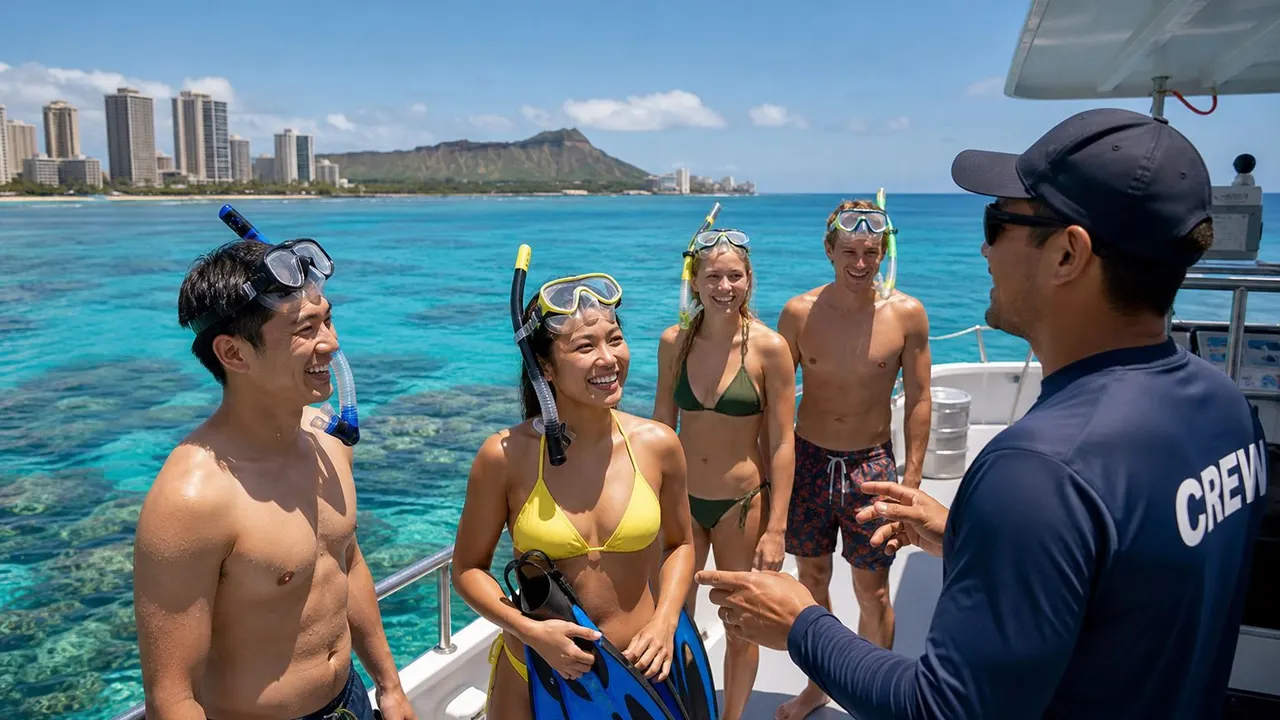
You can usually tell what kind of trip you booked before the boat leaves the harbor. Guests are checking in without confusion, masks are being fitted before anyone feels rushed, and the crew is watching who looks confident and who needs a little more coaching. That early rhythm matters. A crew that runs the dock well usually runs the water well too.
For example, a clear snorkel check-in process tells you the operation has thought through timing, gear flow, and guest safety before anyone steps aboard.
The flow of a solid trip
A good guided snorkel tour follows a simple sequence. Check in, gear fitting, boat briefing, site briefing, water entry, guided snorkel time, then a calm exit and headcount before the ride in. If any part feels sloppy, guests usually spend the rest of the trip catching up instead of relaxing.
Equipment quality is one of the first things to notice. Good operators hand out masks that seal properly, fins that fit, snorkels that are clean and functional, and flotation that helps people stay relaxed on the surface. Beginners do better when they float comfortably and breathe slowly. They struggle when they are fighting a leaking mask or burning energy with oversized fins.
Site choice matters just as much. Turtle Canyon is popular because turtles are regularly seen there, and operators often choose it for that reason. Living Ocean Tours describes it as a cleaning station where Hawaiian green sea turtles are commonly spotted on snorkel runs (Turtle Canyon snorkel overview). That is the kind of detail worth paying attention to when you compare companies. A strong operator is choosing sites based on conditions, visibility, current, and the odds of a calm wildlife encounter, not just what sounds good in an ad.
What beginners should notice
The best briefings are practical. Crew should explain how the mask should sit on your face, how to clear a snorkel, how to enter the water without swallowing half the ocean, and what to do if you feel anxious once your face is in. Good guides also explain what they will do for you in the water. Will they stay nearby? Do they bring flotation rings? Will they help with mask defogging after entry if needed?
Watch how the crew teaches reef etiquette too. That tells you a lot about the company.
- Keep your distance from wildlife. Give turtles room to surface, swim, and change direction.
- Don't touch coral or stand on reef. Even light contact can damage living habitat.
- Respond quickly to crew instructions. In current or boat traffic, fast response keeps small issues from turning into bigger ones.
Practical rule: If a crew can teach a nervous first-timer without making it awkward, they usually know how to manage the whole trip well.
A memorable guided tour should feel organized, safe, and unhurried. You are not just paying for a boat ride to a snorkel spot. You are paying for site judgment, in-water supervision, gear that works, and a crew that knows how to turn open ocean into a good day for every skill level.
How to Choose the Right Honolulu Snorkel Company
You can feel the difference before the boat even leaves the harbor. One crew checks masks, asks who is new to snorkeling, and explains how the day will change if wind or current shifts. Another crew starts loading people fast and hopes the water sorts everyone out. That first ten minutes tells you a lot.
Price matters, but it should sit lower on the list than crew judgment, boat fit, and how a company treats the reef and wildlife. If you want a useful comparison point before booking, browse a few different Oahu snorkel tour formats and itineraries and note how much each operator explains about the actual experience, not just the scenery.
One company visitors often compare is Living Ocean Tours, listed among highly reviewed Honolulu snorkel operators on its Google review embed shown below.
Start with the crew, not the brochure
A polished website does not tell you how a crew performs once a guest panics in open water or conditions change halfway through the trip. Good operators brief clearly, watch the ocean constantly, and help beginners without turning them into the center of attention.
That last part matters more than many visitors expect.
A company can advertise itself as beginner-friendly and still run a trip that feels rushed or hands-off. The better crews catch small problems early. They notice a loose mask strap, a guest breathing too fast, or a family that needs a calmer entry plan. That is how a tour stays enjoyable instead of turning into a recovery job.
Here's the checklist I'd use:
| What to evaluate | What good looks like | Why it matters |
|---|---|---|
| Crew instruction | Clear mask fit, breathing tips, and entry guidance | Guests settle in faster and use less energy |
| In-water support | Guides stay engaged and visible in the water | Tired or anxious swimmers get help early |
| Boat operation | Organized boarding, timing, and safety briefing | The trip feels calm from start to finish |
| Wildlife handling | Respectful spacing around turtles and reef | Encounters are better for guests and safer for animals |
Vessel size changes the whole feel
Boat size shapes the day more than many booking pages admit. It affects noise, motion, how quickly people get in and out of the water, and whether the trip feels personal or crowded.
Living Ocean Tours was founded in 2011, operates with 1 to 10 employees, and runs tours with a maximum guest capacity of 40 passengers from 1125 Ala Moana Blvd, Slip B-01, Honolulu, HI 96814 (company profile details). That does not guarantee a great trip, but capacity is still worth checking because it often tells you how much space, attention, and flexibility you can expect onboard.
Smaller groups usually mean easier coaching and less waiting at the ladder. Larger boats can offer more stability and amenities. Neither format is automatically better. The right choice depends on whether your group cares more about personal attention, extra deck space, shade, ride comfort, or onboard features for kids and non-snorkelers.
Eco claims should be specific
Any company can say it loves the ocean. Ask what that looks like during a real charter.
Strong answers are concrete. Crew should explain how they position guests around turtles, how they prevent reef contact, what they do when conditions are poor, and whether they skip a wildlife encounter when the pressure on the animals is already too high. Eco-conscious travelers should ask for specifics, including whether a company contributes to conservation funds or can point to evidence that their tours don't cause turtle stress or reef degradation (eco-conscious traveler guidance).
If the answer stays vague, keep looking.
The right Honolulu snorkel company is the one that can explain its standards clearly, run an orderly boat, match the trip to your group, and treat the ocean like the main responsibility, not just the backdrop.
A Closer Look at Popular Oahu Tour Itineraries
You book a snorkel tour expecting clear water, good crew support, and enough time in the ocean to settle down and see marine life. Then you get onboard and realize the trip is built more for deck entertainment, photos, or a quick cruise than for snorkeling itself. That mismatch is common in Honolulu, which is why itinerary details matter as much as the company name.
A useful starting point is this overview of Oahu snorkeling excursions, because it shows how different trip formats are built for different priorities.
Turtle-focused snorkel trips
These trips work best for guests who want the water time to be the main event. A good turtle itinerary gets to the site efficiently, gives the crew time to brief everyone properly, and leaves enough in-water time for nervous snorkelers to relax after the first few minutes.
Tour duration and age policy tell you a lot about how the trip will feel. A dedicated 2-hour turtle tour may give you about 1 hour in the water, while a 2.5-hour family-oriented cruise may divide the outing between snorkeling and onboard features. Many tours set a minimum age of 3 (tour format and age policy details).
That trade-off matters. Guests who care most about turtles, reef fish, and time in the water usually do better on the focused itinerary. Families with younger kids or mixed confidence levels often enjoy a trip with more built-in variety.
For a turtle-centered option, the Turtle Canyons Snorkel Excursion is the kind of itinerary many visitors are looking for.
Family-friendly deluxe cruises
These trips make sense for groups that do not all want the same thing.
On a family boat, one person may spend the whole stop snorkeling, another may be happiest staying dry in the shade, and a child may care more about the ride than the reef. That does not make it a worse tour. It makes it a different product, and that distinction is where a lot of visitors get tripped up.
The trade-off is straightforward. You usually get a broader activity mix and less of a pure snorkel focus. If the goal is keeping the whole group happy, that can be the better call.
A Waikiki snorkel waterslide cruise fits that category well.
The right family tour is the one that matches your group's energy, swim ability, and attention span.
Sunset cruises and private charters
Some of the best boat days off Honolulu do not involve masks and fins at all. Sunset cruises are a better fit for guests who want skyline views, trade wind breeze, and an easy evening on the water without the setup that comes with snorkeling.
Living Ocean Tours runs a Waikiki Sunset Cruise with a 90-minute duration and a BYOB format that excludes glass bottles, and the company also offers private charters for up to 40 guests (company tour information). That setup works well for couples, celebration groups, and multi-generational families who want a relaxed outing without committing to a longer charter.
You can look at the Waikiki Sunset Cruise tour page or consider an alternative sunset cruise option.
Private charters are different again. They are best for groups that want control over pace, guest list, and tone. For birthdays, family reunions, and company outings, that flexibility often matters more than squeezing into a standard shared departure.
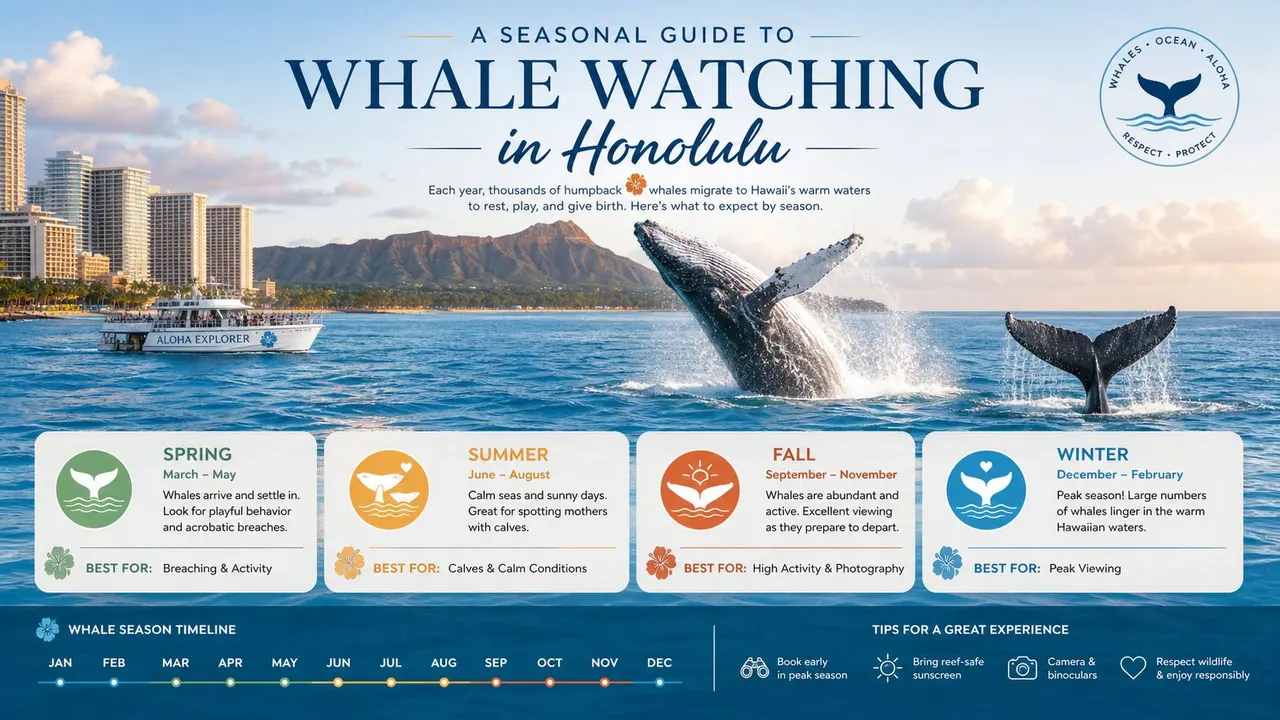
Seasonal Guide to Whale Watching in Honolulu
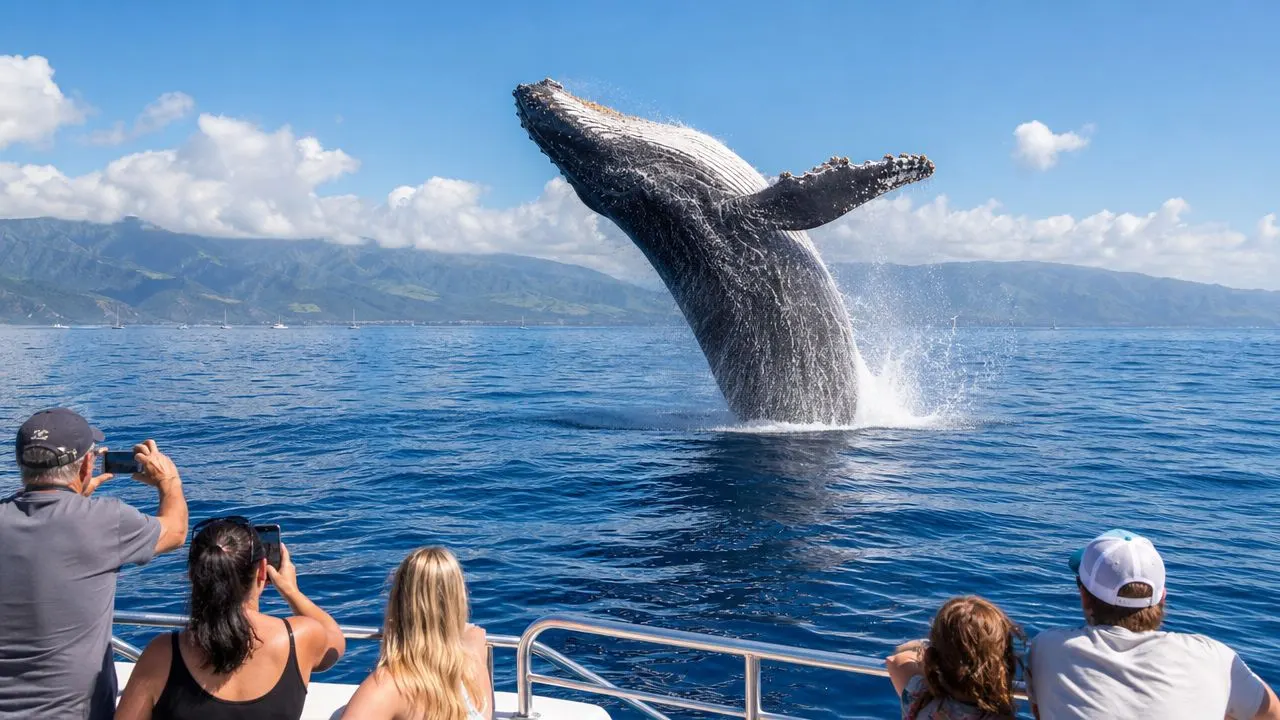
Winter adds a different kind of ocean day to the Honolulu lineup. If your trip falls between January and March, whale watching becomes worth serious consideration because that's when humpback whale encounters are part of the local season described by the operator background for Living Ocean Tours.
If you want to see what that option looks like in practice, this Oahu whale watching page gives a good sense of the seasonal trip style.
When it makes sense to go
Whale watching is a better fit than snorkeling for some visitors. If someone in your group doesn't want to get in the water, this is often the easiest way to share a memorable marine experience. It also works well after you've already done a snorkel day and want a second ocean outing that feels totally different.
What matters most is expectation. You're observing wildlife on their terms. A good crew knows how to scan for spouts, tail slaps, and breaches while keeping the boat positioning respectful.
What a good whale watch feels like
The strongest tours don't chase the moment. They stay patient, explain what guests are seeing, and let the experience build naturally. A humpback sighting feels better when the crew gives it context instead of treating every movement like a stunt show.
For guests visiting in whale season, a dedicated Waikiki whale watch tour is the cleanest way to do it.
A whale watch is at its best when the crew respects the animal first and the camera second.
Booking Tips for a Smooth Sailing Day
A good snorkel day often starts the night before. The guests who have the easiest morning are usually the ones who already know where they're parking, what they're carrying, and how much rushing they've removed from the plan.
If your dates fall on a busy travel week, start with a clear Oahu snorkel tour booking guide and lock in details early. The best experience is not just getting a seat on a boat. It is getting the right departure, the right check-in window, and enough time to show up calm.
When to book
Availability shifts fast on Oahu, especially for morning turtle runs and holiday travel periods. For a popular turtle tour during holidays, summer, spring break, and weekend mornings, booking 2 to 6 weeks ahead is recommended. Slower weekdays often need only 7 to 14 days of lead time (booking timing guidance).
That lead time matters for more than convenience. Better booking windows usually give you more choice on departure times, more room to coordinate with kids or non-snorkeling family members, and less chance of settling for a tour that fits your calendar but not your group.
What to bring and what to ask
Pack for the boat you're boarding, not for a full beach day. Bring reef-safe sunscreen, a towel, a swimsuit, and a dry change of clothes. Add a hat, sunglasses, and a waterproof case if you want photos without risking your phone.
Ask a few smart questions before you confirm. Where does the boat depart from. How early is check-in. Is parking straightforward. What flotation is available for hesitant snorkelers. Those answers tell you a lot about how organized the company is.
Living Ocean Tours departs from Slip B-01 at 1125 Ala Moana Blvd in Kewalo Basin Boat Harbor (departure location listing). That harbor works well for Waikiki visitors because the run to offshore snorkel grounds is short, which usually means less transit time and more time in the water.
Families should check the fine print before booking. Confirm the minimum age, ask how the crew supports nervous kids, and make sure a parent or guardian is ready to complete any waiver requirements for minors. On a well-run boat, those details are handled clearly before anyone leaves the dock.
Frequently Asked Questions About Snorkel Tours
Do I need to be a strong swimmer to snorkel on a tour
No. Reputable operators provide flotation and in-water guidance, which helps beginners stay calm on the surface. The best crews also coach breathing and mask fit before anyone drifts away from the boat.
Why do some companies ban full-face snorkel masks
Because they can create avoidable risk in real ocean conditions. Some companies, including Honolulu Snorkel Company, explicitly ban full-face masks due to safety concerns. The main risks are potential CO2 buildup and the difficulty of removing the mask quickly in an emergency (full-face mask safety policy).
That's one of those rules that may sound strict until you've worked around anxious first-timers in moving water. Traditional mask-and-snorkel setups are simpler, easier to clear, and easier to remove fast.
Are there age limits on most tours
Usually, yes. Many operators set a minimum age of 3, and minors typically need an adult with them and a guardian-signed waiver. That doesn't make the tour less family-friendly. It usually means the company has thought through safety before taking reservations.
Are bathrooms on the boats common
On many commercial tour vessels, yes. Still, use the shore facilities before departure if you can. It makes boarding smoother and keeps the first part of the trip more relaxed.
If you want a company that focuses on guided snorkeling, sunset cruises, seasonal whale watching, and private charters along the Waikiki coastline, Living Ocean Tours is a strong place to start. They operate daily from Kewalo Basin near Waikiki, offer turtle snorkel trips and family-friendly wildlife cruises, and build their trips around safety, instruction, and responsible wildlife viewing.


