
Honolulu shoreline haze: What You Can See by Boat
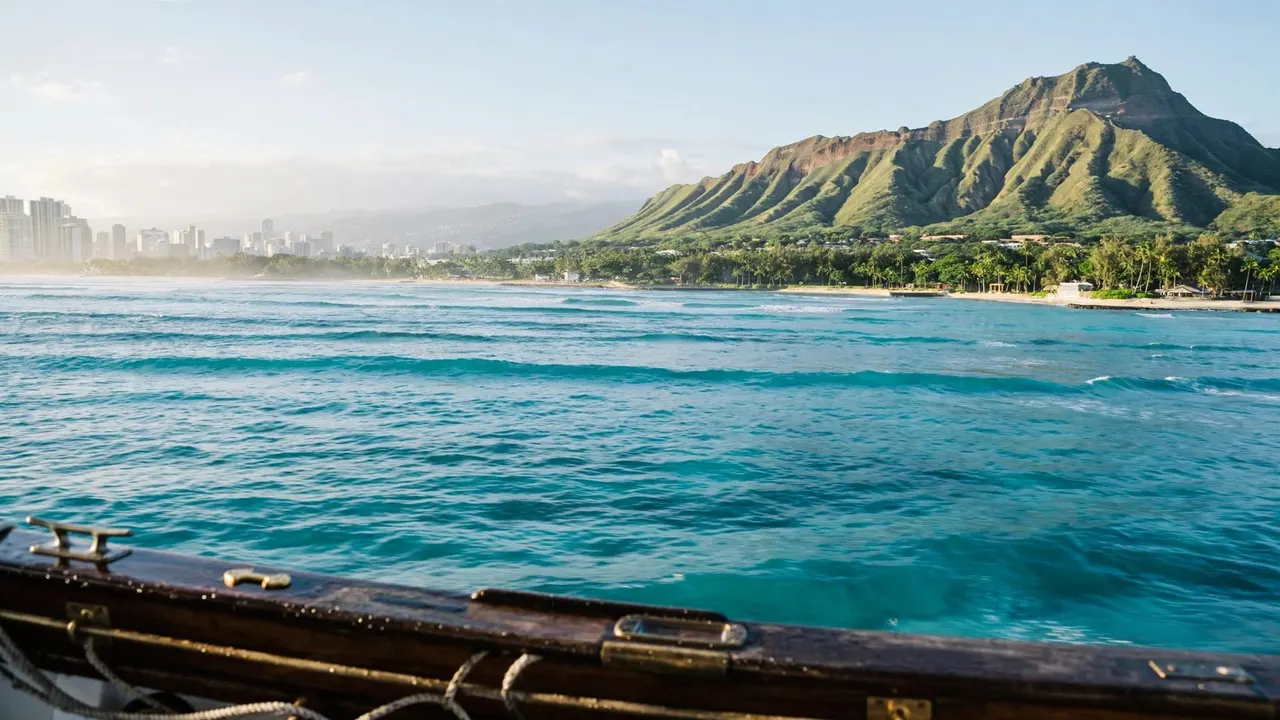
Honolulu shoreline haze softens distant landmarks and can blur the boundary between ocean and sky, without explaining every condition on the water. At Living Ocean Tours, we help you enjoy coastal views with realistic expectations, whether your attention stays on Diamond Head or the water nearby.
A pale skyline can look disappointing from your hotel, yet the shoreline may reveal different details once you change your viewing angle. Haze also differs from passing rain, fog, and the glare bouncing off the ocean. Start by separating what affects the scenery from what affects your comfort and activities aboard.
Key Takeaways for Your Coastal Outing
- Distant buildings and ridgelines usually lose definition before nearby objects do, so a faded skyline doesn’t mean every view disappears.
- Haze, vog, fog, and rain can reduce visibility for different reasons. Appearance alone doesn’t identify the cause.
- An upper deck can improve your sightline, but extra height won’t remove particles or moisture between you and the coast.
- Shoreline appearance doesn’t establish underwater visibility or determine whether a trip operates. Your captain and crew assess conditions aboard.
How Honolulu shoreline haze changes your view
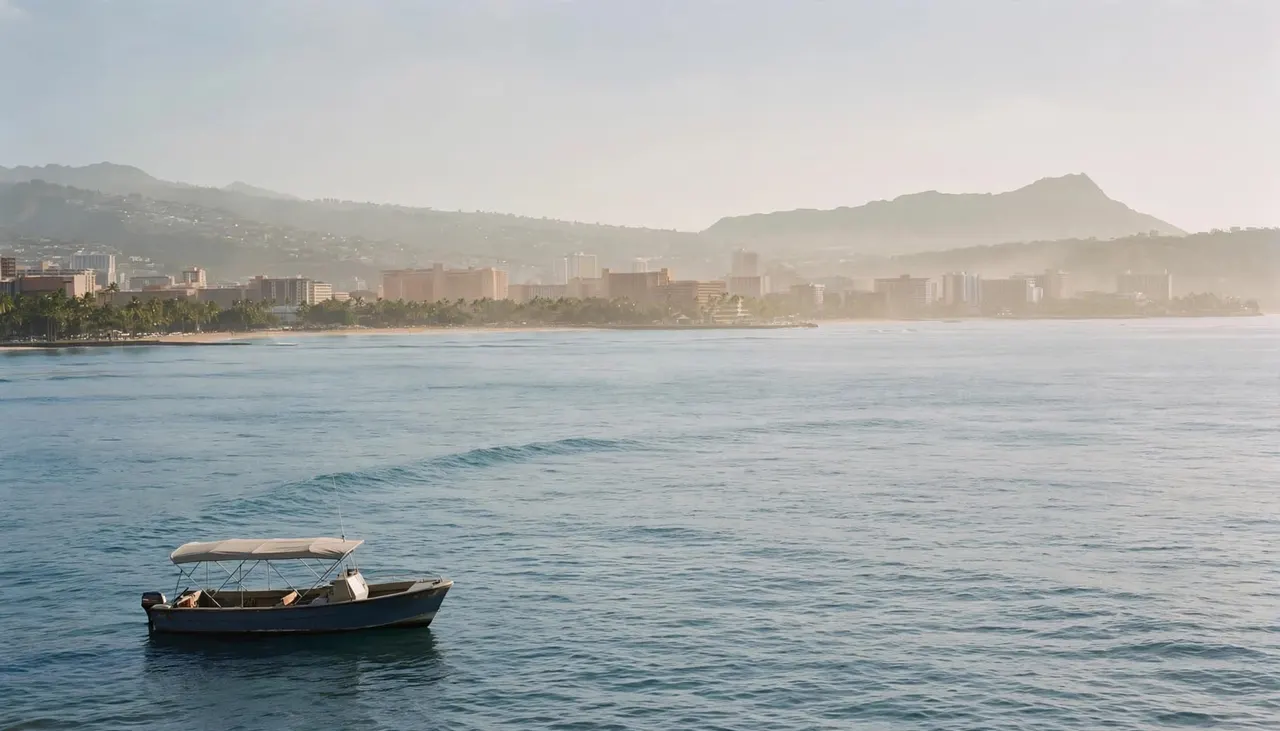
Distant landmarks lose contrast
When airborne particles scatter light, the difference between a distant object and its background becomes less distinct. You may still recognize Diamond Head’s outline while losing the smaller details along its slopes.
The same effect can flatten the Waikiki skyline. Individual hotels become harder to separate, especially when pale buildings sit against a bright sky.
Distance matters because light travels through more atmosphere before reaching your eyes. Consequently, nearby water and boat railings may look crisp while the coast looks washed out. That contrast is normal; your eyes aren’t necessarily having trouble focusing.
The shoreline and horizon are different views
Looking toward Honolulu gives you buildings, beaches, and mountain contours. Looking offshore gives you the ocean’s distant boundary with the sky.
Those views can have different clarity during the same outing. A recognizable coastline doesn’t guarantee a sharp offshore horizon, and a clear patch of ocean doesn’t guarantee detailed mountain scenery.
As the boat turns, your angle to the sunlight also changes. Give yourself time to look in several directions rather than judging the entire outing from one seat.
Haze, vog, fog, and rain aren’t interchangeable
Haze doesn’t automatically mean vog
Honolulu shoreline haze describes an appearance, rather than a diagnosis of what is in the air. Sea-salt particles, moisture, pollution, and other airborne material can affect how clearly you see distant scenery.
Vog has a particular meaning: volcanic smog associated with volcanic activity. The 13News Now explanation of vog describes it as a form of air pollution that can produce visible haze.
However, a gray or milky coastal view isn’t enough to identify vog. Avoid treating every softened view of Diamond Head as evidence of volcanic emissions.
Fog and showers change the scene differently
Fog consists of tiny water droplets suspended near the surface. It can obscure nearby scenery as well as distant land, depending on its density.
Rain showers may instead create a localized curtain across part of the coastline. You might see one stretch of Honolulu clearly while another disappears behind rain.
These differences help you describe what you’re seeing, but they don’t make you responsible for assessing navigation conditions. If the view changes abruptly, follow the crew’s instructions and keep working areas clear. The captain handles the operational decisions.
Separate coastal visibility, water clarity, and air quality
A faded skyline doesn’t measure snorkeling conditions
Your view through the air and your view underwater involve different conditions. Underwater clarity depends on material suspended in the water, along with light, recent surf, and other local factors.
For that reason, don’t use the sharpness of distant hotels as your snorkeling report. Likewise, blue sky doesn’t establish clear water at a reef.
If you’re swimming, listen to the briefing about boundaries, flotation, and returning to the boat. Tell your guide promptly if you feel uncomfortable or lose track of the group. Once you’re near marine life, observe without touching, and keep your fins away from coral.
Air quality deserves separate attention
A scenic view isn’t an air-quality measurement either. For environmental context, IVHHN’s air-quality data resources provide access to current and historical information.
That distinction matters if you have asthma or another condition affected by airborne irritants. Follow your clinician’s advice and keep prescribed medication accessible.
If you develop breathing difficulty, chest discomfort, or other concerning symptoms aboard, alert the crew immediately. Don’t dismiss physical symptoms because the skyline still looks attractive. Your comfort deserves attention independently of the photographs you hoped to take.
Sunlight and deck position change the experience
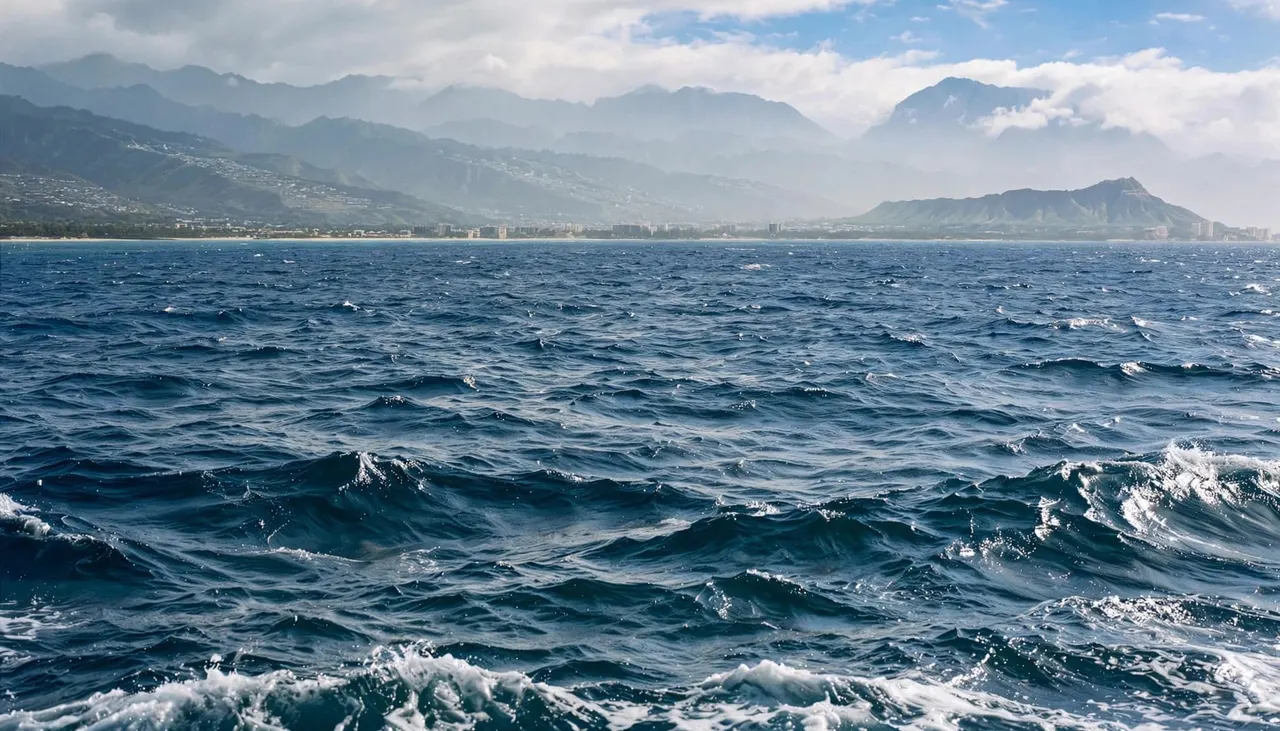
Light can hide detail or reveal shape
Honolulu shoreline haze can look stronger when you face bright sunlight. Backlighting reduces visible detail and may turn a distant ridge into a silhouette.
Meanwhile, reflections can make the water appear brighter than the coast. Polarized sunglasses can reduce reflected glare, although the effect changes with your viewing angle. They won’t remove atmospheric haze.
Morning isn’t a guaranteed clear-view window, and evening isn’t a guaranteed colorful one. Choose daylight when coastal detail matters most. Choose an evening outing when you’re comfortable enjoying shifting light, silhouettes, and reflections without expecting a particular sunset.
Height helps your sightline, not the atmosphere
An upper deck can give you fewer nearby obstructions and a broader view of the water. However, the atmosphere still limits the detail reaching your eyes.
Moving upstairs can clear a railing or another passenger from your view, but it can’t clear haze between you and Diamond Head.
A lower deck can still provide excellent scenery when your sightline is open. Choose a comfortable position, follow directions when moving between decks, and share viewing space. You don’t need to remain upstairs to appreciate the coast.
Enjoy the shoreline with Living Ocean Tours
Our Honolulu ocean tour options give you different ways to spend time along Waikiki’s coast. You can choose an outing centered on snorkeling or enjoy the scenery from aboard our family-friendly, double-decker vessels.
We’re the only tour company with professional snorkel guides. If your plans include swimming, that support gives you someone to approach about equipment, flotation, and group boundaries. Guidance doesn’t promise perfect visibility, but it helps you understand what to do during your time in the water.
For couples and families, Honolulu shoreline haze doesn’t have to dominate the outing. Nearby ocean textures, changing light, and recognizable coastal shapes can still hold your attention. Choose the experience your group wants, rather than building the day around one distant photograph.
Give yourself room to enjoy the boat ride as well as the view. A comfortable outing leaves time to watch the water, talk with your group, and notice scenery beyond the skyline.
Take better photographs when the coast looks pale
Build your photograph around something you can see clearly. Nearby waves or a small amount of boat foreground can give a hazy coastline depth without requiring sharp detail everywhere.
Keep your horizon level and avoid excessive digital zoom. Enlarging a low-contrast skyline usually makes its lack of detail more obvious. Instead, leave room around Diamond Head’s silhouette or capture the relationship between open water and the city.
Also, wipe salt spray from your lens before deciding the atmosphere caused a blurry image. A smudge on a phone camera can add its own unwanted glow.
Secure your device before moving, and take photographs only from permitted areas. If the boat changes heading, another angle may offer less glare. A few thoughtful frames leave you more time to enjoy the scenery directly.
Frequently Asked Questions
Does Honolulu shoreline haze mean my boat tour will be canceled?
Haze alone doesn’t tell you whether a departure will operate. Your captain considers visibility alongside wind, seas, traffic, and the planned route. Follow any boarding or seating instructions, and don’t pressure the crew to continue farther offshore for a clearer photograph.
Will going farther offshore give me a sharper skyline?
Moving away from land changes your perspective, but it doesn’t guarantee sharper detail. You’re also looking through more atmosphere toward the shore. A wider coastal panorama may appeal to you even when individual buildings remain soft. The captain chooses the route for operating conditions, rather than a promised photo angle.
Can you still enjoy coastal sightseeing without seeing every landmark?
Yes. You can enjoy the ocean, nearby scenery, changing light, and time with your group without identifying every building. Your view also changes as the vessel turns. Keep expectations flexible and treat any clear landmark view as part of the outing, rather than its sole purpose.
Enjoy the coast without expecting perfect clarity
A softened skyline changes your view, but it doesn’t describe everything happening on the ocean. Separate distant contrast from water conditions and your own comfort.
Choose an open, comfortable sightline and let the crew handle route decisions. With flexible expectations, you can appreciate Honolulu’s shoreline for the scenery available that day, rather than the photograph you pictured before boarding.


