
Honolulu seabirds: A Coastal Boat Tour Guide
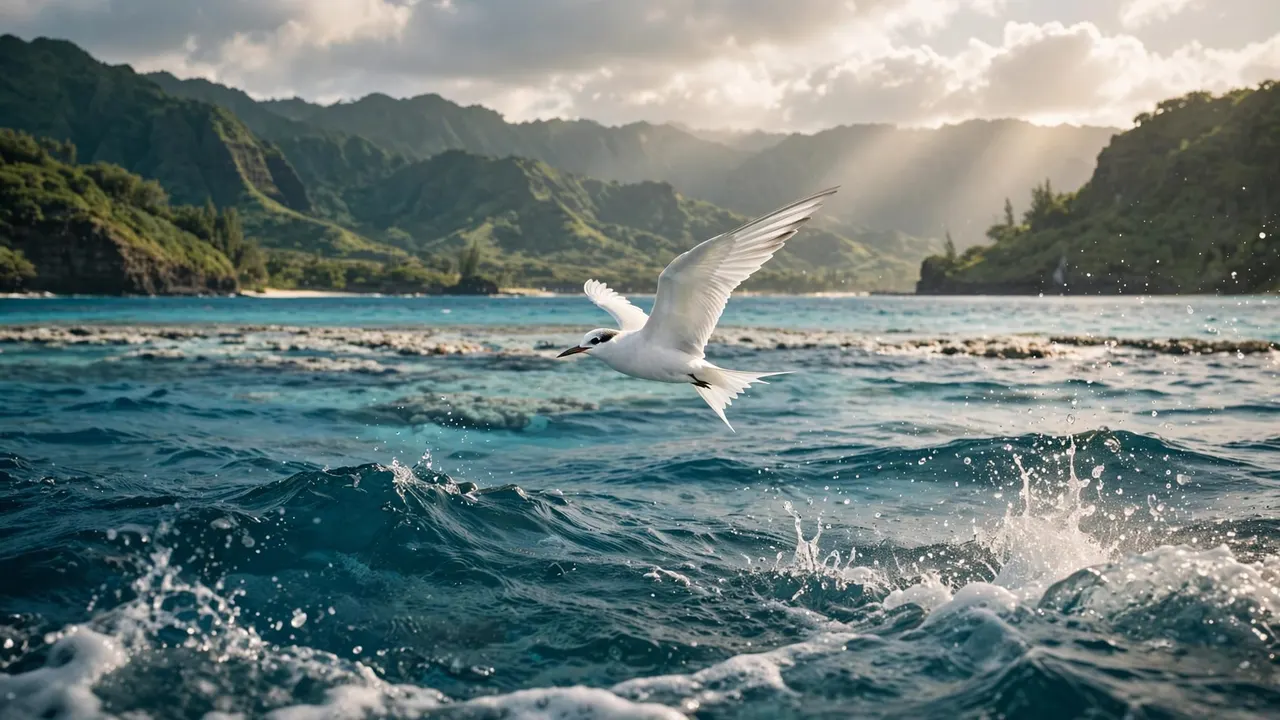
A bird skimming the waves can turn your Living Ocean Tours outing into a wildlife moment before you even reach a reef. Watching for Honolulu seabirds adds another reason to look beyond the shoreline, especially when you know which shapes and flight patterns to notice.
You don’t need birding experience or expensive equipment to enjoy the search. You need patient observation, a comfortable viewing spot, and realistic expectations about animals that follow their own schedules. Start with the coastline, then learn the clues that make a passing bird easier to recognize.
Key Takeaways for Your Coastal Birdwatching Trip
- Watch for shearwaters, boobies, white terns, and other seabirds, but treat every encounter as a possibility.
- Flight style and body shape often help more than color when you’re watching from a moving boat.
- Choose your outing for its main activity, because a recreational coastal cruise isn’t a dedicated offshore birding expedition.
- Let the captain manage wildlife encounters, and never feed birds to bring them closer.
Start Your Search Near Waikiki
Living Ocean Tours departs from Kewalo Basin Boat Harbor, minutes from Waikiki. Once you’re outside the harbor, you can scan the water while enjoying Honolulu’s shoreline and views toward Diamond Head.
For departure planning, the guide to Kewalo Basin boat tours helps you understand the harbor setting before you arrive. Confirm your departure details rather than assuming your boat leaves directly from Waikiki Beach.
Your comfort matters during the stretches between sightings. Living Ocean Tours operates Coast Guard-inspected, custom-built double-decker vessels, including the Coral Kai and Lokahi, with shaded seating, restrooms, and dry storage.
The Lokahi also has SeaKeeper stabilization to reduce rolling. Ocean motion still varies, so ask about your assigned vessel if that feature matters to you.
Living Ocean Tours describes itself as the only tour company with professional snorkel guides. That support benefits beginners choosing an outing with time in the water; seabird watching happens from the deck.
You can review guest experiences and check available departures before choosing your ocean day.
Honolulu seabirds to Recognize on Open Water
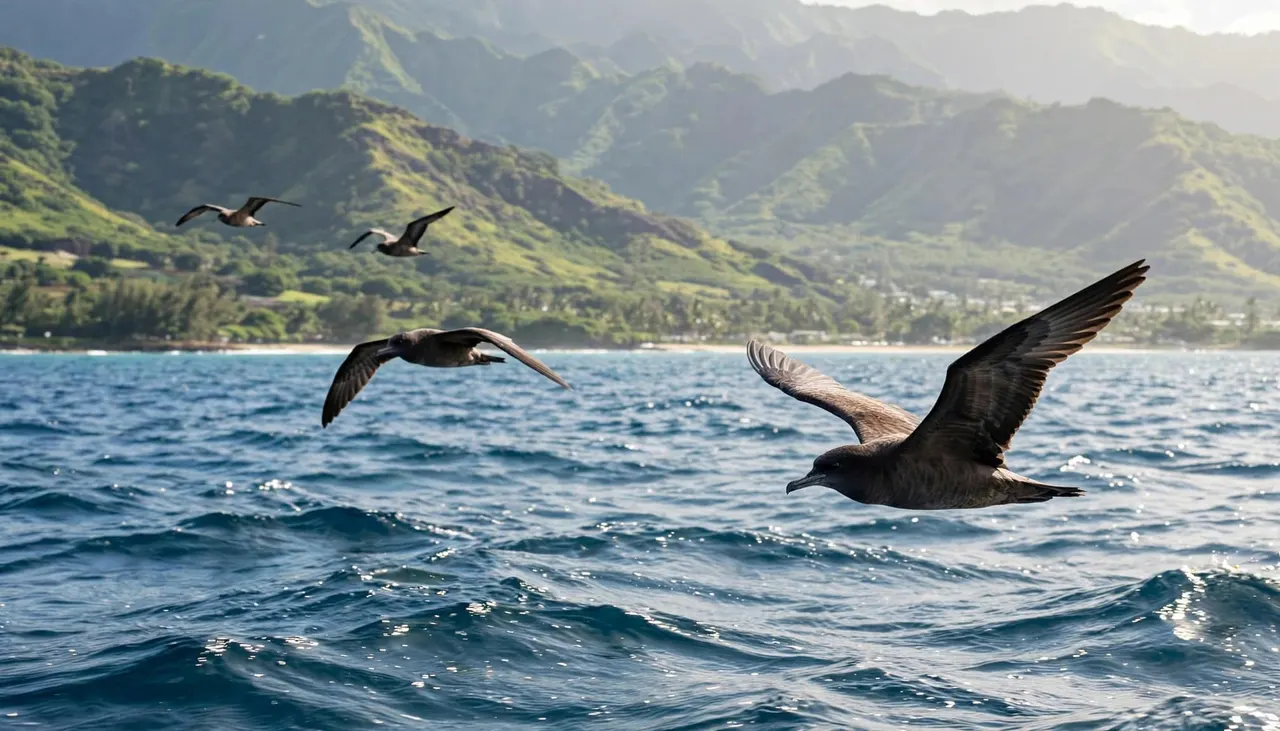
Start with a few recognizable birds instead of trying to identify everything. Hawaii’s native bird directory is a useful reference for matching common names with Hawaiian names.
Wedge-Tailed Shearwaters: Watch Just Above the Waves
Wedge-tailed shearwaters, known as ʻuaʻu kani, have long, narrow wings and a wedge-shaped tail. Their flight often combines short bursts of wingbeats with gliding close to the sea.
Look for a bird that banks along a swell, briefly disappears behind it, then comes back into view. A distant shearwater can blend into blue water, so movement may catch your attention before its body does.
Plumage varies, which makes color alone unreliable. Instead, watch the wing shape and low flight. If you lose the bird, keep looking slightly ahead of its last position rather than searching the entire horizon.
Boobies: Notice the Larger Body and Pointed Wings
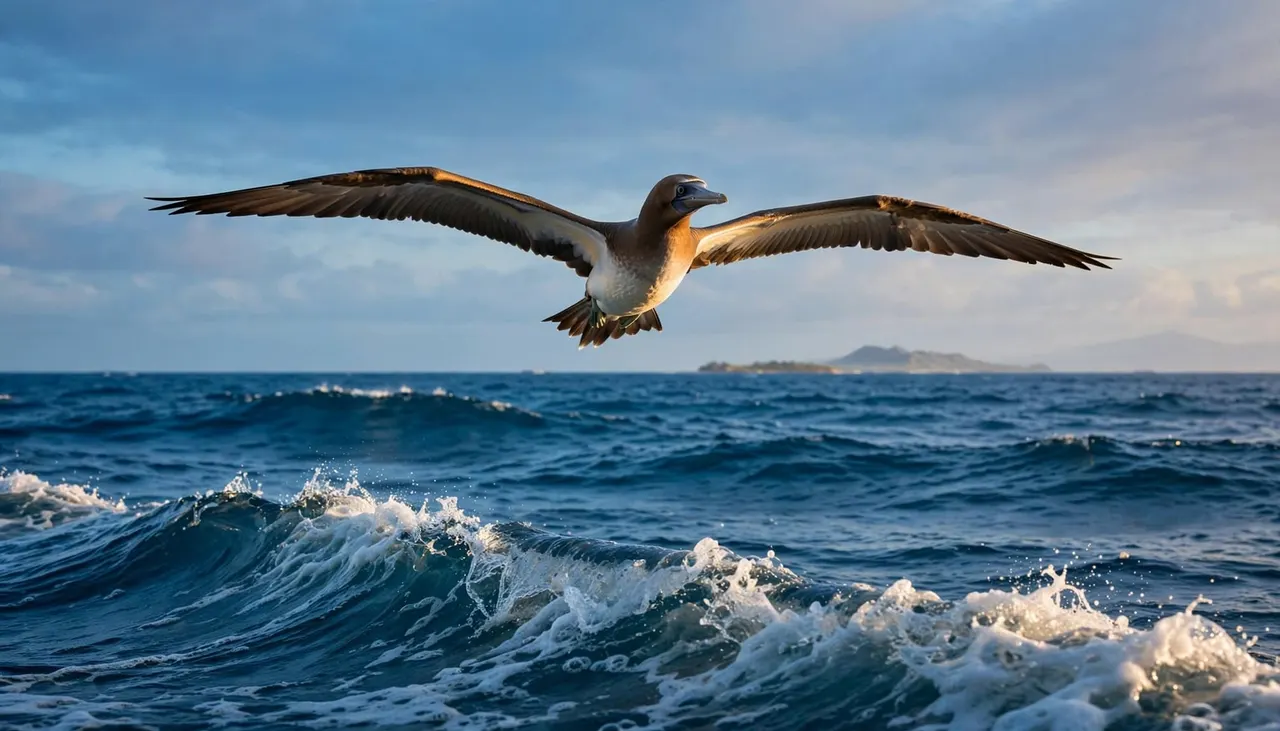
Brown boobies and red-footed boobies are possible birds to watch for in Hawaiian waters. Their pointed wings and substantial bodies give them a different silhouette from a small tern.
An adult brown booby has dark upperparts and a contrasting white belly. Red-footed boobies have several plumage forms, so a white body isn’t a universal identification clue.
Although feet help with close identification, you probably won’t see them clearly on a flying bird. Watch for deliberate flight and plunge-diving behavior instead. Then use a photograph or field guide to narrow the identification without claiming certainty.
Look Above the Shoreline, Too
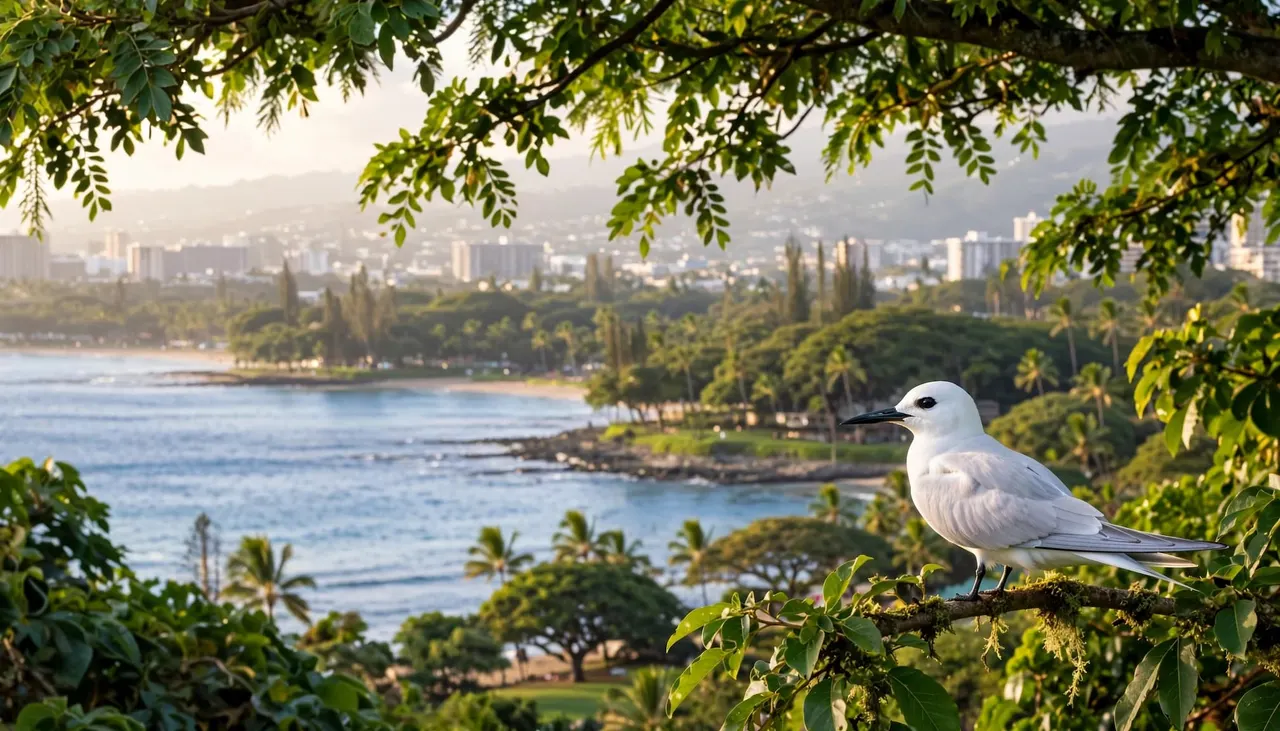
Your search for Honolulu seabirds doesn’t have to stay at wave level. Scan the sky and coastal trees before boarding, then continue watching above the boat.
White Terns: A Bird You May Notice Around Town
White terns, or Manu-o-Kū, have white plumage, dark eyes, and a slender bill. Honolulu is unusual because these seabirds also nest in trees throughout its urban surroundings.
Their nesting habit deserves extra care: a white tern lays its egg directly on a branch rather than building a conventional nest. Therefore, a perched bird may have more reason to remain in place than you realize.
Watch from a distance, and don’t crowd beneath a bird for a photograph. The Hawaii seabird species directory includes Manu-o-Kū among the islands’ native seabirds. Seeing one around town can help you recognize its pale shape over the ocean later.
Frigatebirds and Tropicbirds: Study the Silhouette
A great frigatebird, or ʻiwa, has long wings and a deeply forked tail. You may notice its dark silhouette circling high above the water.
Tropicbirds offer another distinctive outline. Adults have pale bodies and long tail streamers that can stand out against darker water or coastal slopes.
However, distance can hide those streamers. A small white bird far offshore isn’t automatically a tropicbird, and a large dark bird isn’t automatically a frigatebird.
For a useful observation, remember the shape, height, and direction of flight. Those details give you more to work with than a quick impression of color.
Read Flight Before Reaching for Your Camera
You can learn plenty about Honolulu seabirds by watching one bird for several seconds. First, find it with your eyes. Then decide whether binoculars or a camera will improve the view.
Notice whether it glides close to the waves, circles high overhead, or repeatedly changes direction above one patch of water. If several birds gather, they may be feeding on prey near the surface.
That activity doesn’t guarantee dolphins or whales below. Treat the birds themselves as the encounter rather than expecting another animal to appear.
NOAA’s account of seabird observations at sea shows how much careful scanning matters offshore. You can borrow that patient approach without turning your vacation into a scientific survey.
A feeding flock is worth watching where it is. Asking the captain to drive through it can interrupt the behavior you came to see.
For photographs, keep your camera strap secure and use a short burst if your device allows it. Stay behind the rail, and avoid backing into a walkway while following a flying bird.
Choose Your Timing Without Expecting a Checklist
Daylight gives you a better chance to compare markings than fading evening light. However, morning isn’t automatically calm, and an afternoon departure isn’t automatically rough.
Wind, swell, glare, and visibility all affect your experience. Ask about current conditions, then choose an outing whose main activity suits your group.
Your chances of seeing Honolulu seabirds also depend on where birds are feeding and how far the boat travels. A short coastal route covers different habitat than an offshore expedition.
Nesting information for Kaʻena Point doesn’t predict what you’ll see off Waikiki. Likewise, the winter whale season isn’t a seabird calendar.
Young birds can complicate identification, too. Red-footed booby juveniles differ from adults, as Hawaii Marine Animal Response’s seabird guide explains. Before adding an unfamiliar bird to your list, consider whether age or plumage variation explains its appearance.
Leave room for an unidentified sighting. Enjoying a bird’s flight doesn’t require a perfect species label.
Watch Wildlife Without Changing Its Day
Respectful viewing starts with letting the animal continue what it was doing. Your captain decides how to position the vessel around wildlife, taking boat traffic and conditions into account.
Never toss food overboard to attract birds. Feeding changes their behavior and brings them into places where vessels, fishing gear, or people can create hazards.
Also, avoid urging the crew to chase a bird or move closer to a feeding group. A distant view can still show natural hunting and flight.
If a bird lands aboard, give it space and alert the crew. Don’t surround it, offer water, or attempt to pick it up.
The same approach applies when other animals appear. Observe without touching, and follow crew instructions around turtles or marine mammals.
Don’t apply turtle or whale viewing distances to seabirds. Different animals have different guidance, and nesting birds need protection from disturbance as well as physical contact.
Your most useful contribution is simple: keep food and loose belongings secure, share the viewing space, and let wildlife move freely.
Prepare for Comfortable Birdwatching on Deck
A little preparation helps you notice more without turning the outing into a gear-heavy activity. Choose equipment you can manage safely while the boat moves.
Bring Practical Optics and Sun Protection
Compact binoculars can help with distant birds. An 8x magnification is a practical starting point because higher magnification also magnifies movement.
Attach a neck strap, and find the bird with your eyes before raising the binoculars. Otherwise, you may spend the entire sighting searching a narrow field of view.
Bring sunglasses, sunscreen, a secure hat, and a light layer for wind. Keep your phone or camera protected from spray when you aren’t using it.
If motion sickness affects you, ask a pharmacist or doctor about suitable options before departure. Tell the crew early if you feel unwell rather than pushing through discomfort.
Give Children a Simple Spotting Task
For younger observers, start with movement rather than species names. Ask them to notice whether a bird is gliding, flapping, circling, or diving.
That keeps the search interesting even when identification is difficult. You can compare observations together while staying seated or standing in a crew-approved spot.
Agree on an easy way to point out a bird, such as “low over the water on the right.” Avoid sudden rushing toward one rail, especially when several guests notice the same animal.
During quiet stretches, watch the changing coastline together. A comfortable family outing includes time to enjoy the scenery between wildlife encounters.
Make the Coast Part of Your Wildlife Experience
Watching Honolulu seabirds rewards attention more than equipment. Learn a few silhouettes, scan patiently, and let the crew handle vessel positioning.
With Living Ocean Tours, you can combine that search with coastal scenery and an outing that matches your family’s interests. Choose your main activity first, then welcome whatever birds appear.
The most memorable sighting may be brief: a shearwater banking over a swell or a white tern passing above the boat. Give it room, and enjoy the moment as it happens.


