
Hawaiian Wrasses: A Snorkeler’s Field Guide to Oahu
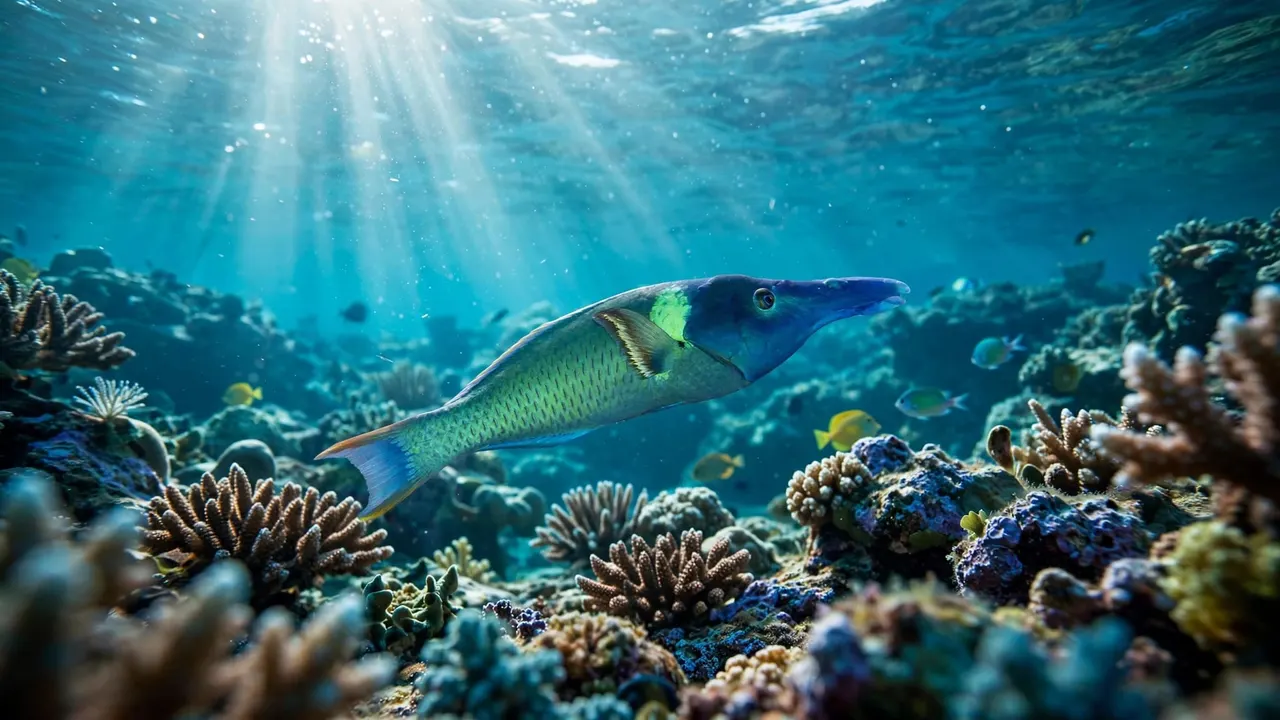
A colorful fish darts past your mask, but its shape and markings can tell you more than its color. To identify Hawaiian wrasses, start with body shape, then check a distinctive marking before the fish disappears behind the reef.
Living Ocean Tours takes you from Kewalo Basin Boat Harbor near Waikiki to offshore snorkeling areas with professional in-water guides. You don’t need to memorize dozens of species to enjoy these encounters.
Begin with four recognizable wrasses, and let patient observation fill in the details.
How to Recognize Hawaiian Wrasses at a Glance
Start with the silhouette
Look for a fish with an elongated body, a relatively small mouth, and a continuous dorsal fin along its back. Many wrasses move close to reef surfaces, changing direction as they inspect their surroundings.
However, that outline gives you a starting point, not a confirmed identification. Some wrasses are slender; others look sturdier. Watch the entire fish rather than concentrating on one bright patch.
For comparison, butterflyfish generally have taller, flattened profiles. Reef triggerfish have more angular bodies. Recognizing those differences helps you narrow the possibilities before you start matching colors.
Pick one memorable field mark
Next, look for a feature you can remember after the fish leaves. A long snout, an orange shoulder marking, or a yellow tail is more useful than remembering “something green.”
Compare your observations with Hawaiian wrasse reference photographs, paying attention to the whole pattern. Several species share colors, so one feature rarely settles the identification.
Try to retain two clues together: body shape and a marking. If you only catch a partial view, keep the identification broad. You can enjoy watching an unfamiliar wrasse without assigning it the wrong name.
Spot the Saddle Wrasse and Bird Wrasse
These two species offer memorable features you can look for from a comfortable surface position.
Saddle wrasse: check behind the head
For a saddle wrasse (Thalassoma duperrey), look for an orange marking immediately behind the head. That shoulder-area “saddle” gives you a useful place to focus when the fish turns sideways.
Watch for a full side view rather than chasing its tail. A passing fish may briefly reveal the marking, then hide it as its body angles away.
Don’t treat any orange patch as a match. Check its position behind the head and confirm the wrasse-like profile. If glare or distance obscures those features, wait for another natural pass instead of closing the gap.
Bird wrasse: look for the extended snout
The bird wrasse (Gomphosus varius) has a long, pointed, beak-like snout. That shape is your strongest initial clue, especially when the fish darts around the reef.
Females have contrasting dark and pale coloration with an orange snout. Males can appear green or blue. Because their colors differ, the extended mouth helps you recognize the species across those appearances.
Follow the fish with your eyes while keeping your position. Its quick movements can make a photograph difficult, but you don’t need one to notice the snout. A clear profile is more informative than a blurred close-up.
Read Changing Colors Before Naming a Species
Hawaiian cleaner wrasse: small fish, distinctive stripe
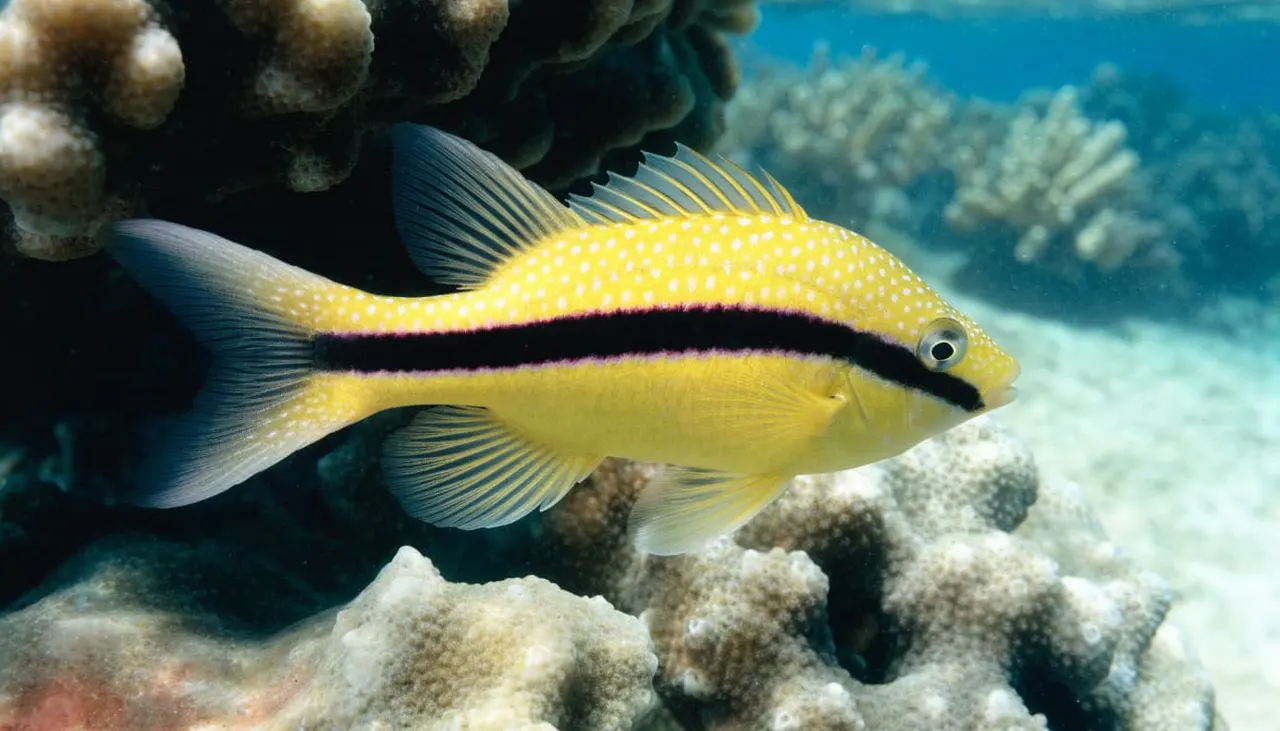
An adult Hawaiian cleaner wrasse (Labroides phthirophagus) has yellow coloration and a black stripe that broadens toward the rear. Magenta borders add another identifying detail.
This small species reaches about 3.9 inches. Juveniles look different, with a dark body and a broad purple stripe along the back.
The species is restricted to the Hawaiian Islands. However, that doesn’t mean every small striped fish you see is one. Check the stripe’s shape, overall proportions, and visible coloration together before deciding.
Yellowtail coris: juveniles can fool you
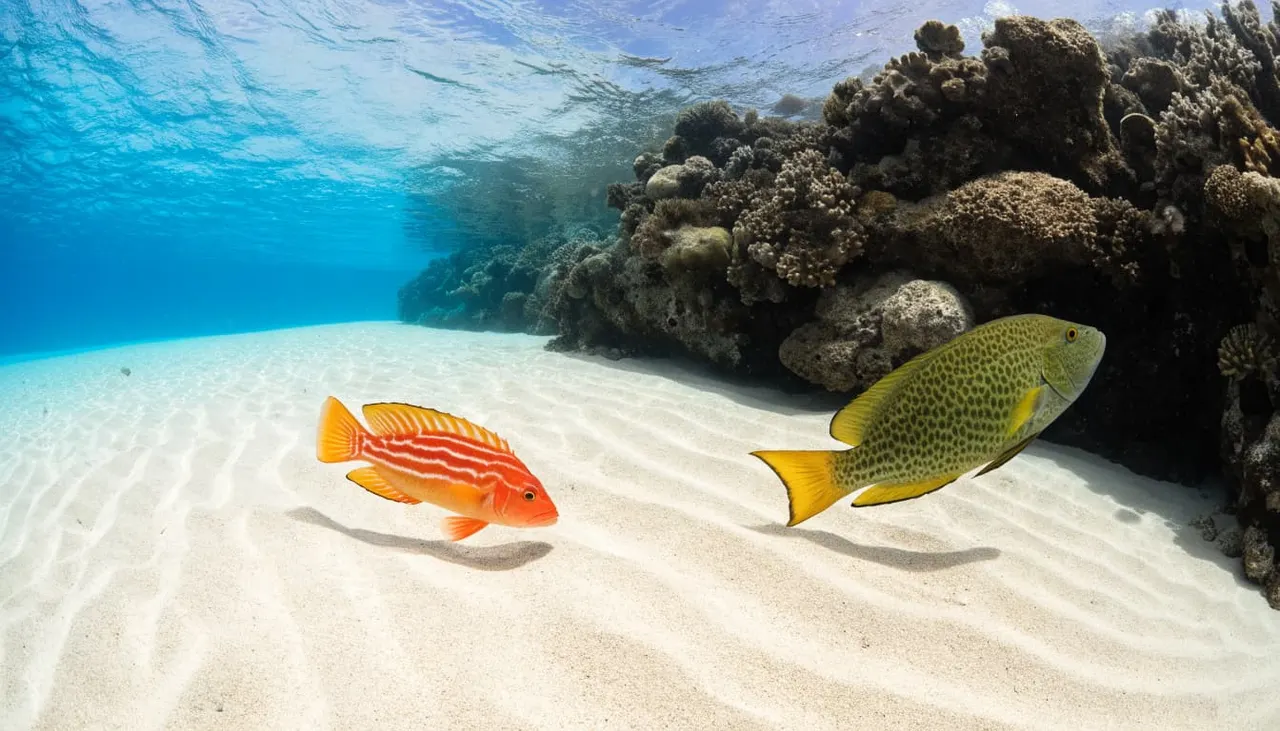
A juvenile yellowtail coris (Coris gaimard) is orange with five white spots edged in black. Adults develop a yellow tail and numerous small blue spots across an orangish-brown body that darkens toward the rear.
Males can have a green bar along the side and reach about 12.4 inches. Don’t assume every adult has an entirely green body.
The NOAA-hosted Fishes of Hanauma Bay guide describes these life-stage differences and covers 114 reef and shore fish species.
An orange juvenile and a spotted, yellow-tailed adult can belong to the same species. Compare life-stage photographs before ruling out yellowtail coris.
These changes explain why color alone can mislead you when identifying Hawaiian wrasses.
Use Behavior to Check Your Identification
Once you have a likely identification, watch what the fish does. Behavior adds context, although it doesn’t replace visible field marks.
A Hawaiian cleaner wrasse may attend a cleaning station, where other fish pause while it removes parasites. Watch for repeated visits and interactions rather than assuming every small fish beside a larger one is cleaning it.
Yellowtail coris eat animals such as mollusks and crabs. Still, a brief view of a fish inspecting the bottom doesn’t reveal exactly what it found.
Give one patch of reef 20 to 30 seconds of attention. Notice whether the fish stays nearby, returns along a route, or disappears into shelter. This is an observation exercise, not a promise that a particular species will appear.
If you take a photograph, record the details you could actually see: snout shape, stripe position, tail color, and approximate size. Later, a wrasse species identification guide can help you compare possibilities.
Avoid assigning sex or life stage from a fleeting glimpse. A cautious identification is more useful than a confident guess, especially when sunlight changes the apparent color. You can also ask your guide which visible feature supports the name.
Choose Oahu Conditions That Support a Clear View
Your most useful fish sighting happens where you can float comfortably and stay aware of your surroundings.
Hanauma Bay offers a managed shore-entry setting. Its fish guide can help you prepare, but it doesn’t predict which wrasses you’ll encounter during your visit.
Meanwhile, Shark’s Cove and Three Tables require careful attention to rocky access and swell. In October, don’t assume the North Shore will retain calm summer conditions. Check the actual entry, exit, surf, and visibility before committing.
For any site, consider your swimming ability before thinking about fish identification. High surf, strong currents, heavy shorebreak, and high winds are reasons to reconsider entering. At lifeguarded beaches, ask about current conditions.
A well-fitting mask makes observation easier because you spend less time clearing leaks. Flotation support can also help you relax, but it doesn’t replace swimming ability or appropriate conditions.
While watching Hawaiian wrasses, periodically locate your companion, guide, and return point. Don’t let an absorbing sighting carry you away from your group.
You also don’t need repeated breath-hold dives to make a useful identification. When distance hides the details, enjoy the broader reef scene. A comfortable surface view is worth more than a closer look that puts you beyond your limits.
Get Guided Support Near Waikiki
If you’d rather focus on reef observation than shore-entry logistics, compare Living Ocean Tours snorkeling experiences.
You depart from Kewalo Basin Boat Harbor near Waikiki. Professional in-water snorkel guides help with equipment, orientation, and respectful wildlife observation. Living Ocean Tours describes itself as the only tour company with professional snorkel guides.
For beginners, that support gives you someone to ask when your mask leaks or a fish catches your attention. Still, tell the crew about your swimming confidence before entering. Follow their briefing and stay within the designated swimming area.
The company’s vessels provide shaded seating, onboard restrooms, and ladders for water entry and exit. Those comforts make the time around your snorkel easier, especially when you’re traveling with family.
No particular wrasse sighting is guaranteed. Choose guided reef time for the support and observation opportunities, while leaving room for whatever wildlife appears.
For a Turtle Canyons snorkel departure, you can CHECK AVAILABILITY before planning your morning.
Observe Without Changing the Fish’s Behavior
Your position affects what you’ll see. If a fish changes direction sharply as you approach, give it more space.
Keep your hands and fins clear of coral, including when you turn. A backward kick can strike the reef even while you’re looking into open water. Never stand on coral or use it as a handhold.
If you need to adjust your mask, move away from the reef and use flotation or ask your guide for help. Don’t overturn rocks or lift rubble to uncover hidden fish.
At cleaning stations, stay far enough away that visiting fish can approach and leave freely. Also, don’t assume every turtle-cleaning interaction involves a Hawaiian cleaner wrasse. Watch the actual fish before attaching a name.
Never feed, touch, corner, or chase wildlife for a clearer view. Waiting for a fish to cross your sightline gives you a better chance to observe its normal activity.
Key Takeaways for Identifying Hawaiian Wrasses
- Start with the body outline, then confirm a distinctive marking or snout shape.
- Look for the saddle wrasse’s orange shoulder marking and the bird wrasse’s extended snout.
- Compare juvenile and adult appearances before naming cleaner wrasses or yellowtail coris.
- Keep identification within your swimming limits, and leave uncertain sightings unidentified.
Frequently Asked Questions
Can you identify wrasses without diving below the surface?
Yes, when visibility and distance allow you to see their larger features. A bird wrasse’s snout or a saddle wrasse’s shoulder marking may be visible from above.
However, small details can disappear against coral or glare. Don’t dive repeatedly or leave your group to confirm a name. Instead, remember what you saw and compare it later.
Start with one or two species before your outing. That gives you something recognizable to look for without turning the swim into a test.
Does a cleaning station guarantee Hawaiian cleaner wrasses?
No. A cleaning station describes an interaction, not a guaranteed species list.
Hawaiian cleaner wrasses remove parasites from visiting fish, but other reef fish also participate in cleaning behavior. A turtle encounter alone doesn’t confirm this wrasse’s presence.
Look for the cleaner wrasse’s small, slender body and characteristic coloration. If you can’t see those details, enjoy the interaction without naming the cleaner. Your guide may help identify a visible fish, but uncertainty is normal during moving-water observations.
Leave With a Better Eye for the Reef
That fish passing your mask becomes easier to recognize when you remember its shape and one clear marking. For Hawaiian wrasses, life-stage changes make patient observation especially useful.
Learn a few field marks before your swim, then let fish move through your view naturally. A rewarding reef encounter leaves both you and the wildlife free to continue at a comfortable pace.


