
Hawaiian sea hares: An Oahu Snorkeling ID Guide
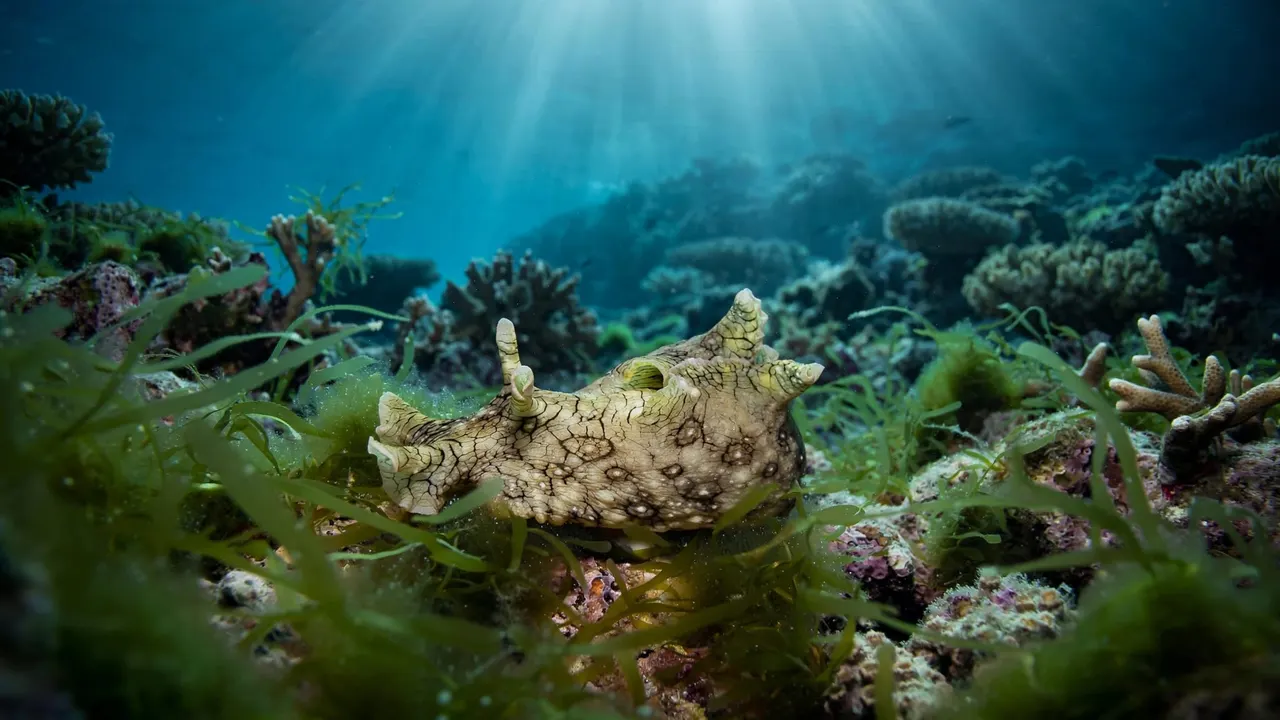
You can recognize Hawaiian sea hares by their soft, folded bodies and rabbit-ear-like sensory structures called rhinophores. Some have striking dark rings, but body shape is a better starting point than color alone.
At Living Ocean Tours, we encourage you to notice the smaller reef residents during our guided reef experiences. A sea hare can blend into algae so well that you swim past without noticing it.
Start with the animal’s outline, then study its markings without moving closer than your swimming control allows.
Key Takeaways
- Hawaiian sea hares are marine mollusks, and some have a thin internal shell rather than an obvious external shell.
- Look for a fleshy body, folded sides, and paired rhinophores before relying on spots or rings.
- The Hawaiian spotted sea hare appears in older references as Aplysia dactylomela, while newer studies use Aplysia argus.
- Observe from the water column without touching the animal, moving rocks, or standing on coral.
How to Identify Hawaiian Sea Hares
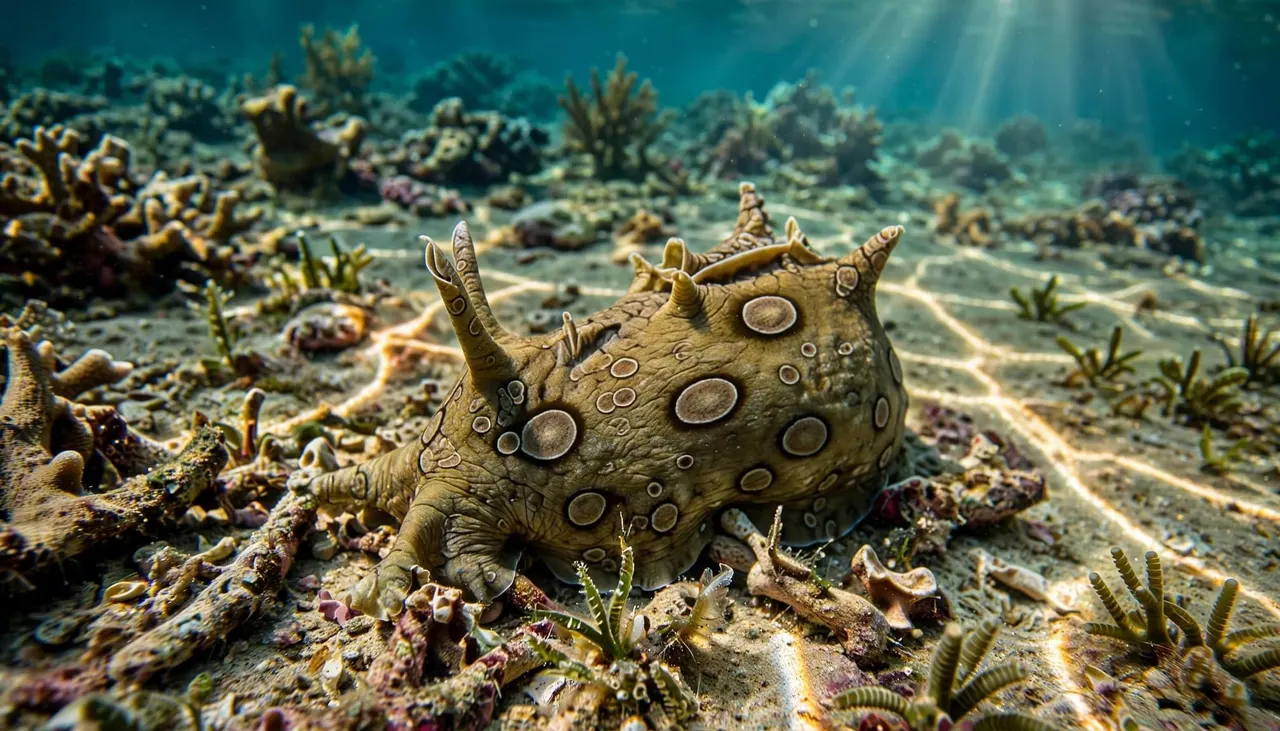
Illustration of a sea hare among reef growth.
Start with the body and “ears”
First, look for a broad, fleshy animal that crawls along the bottom. A sea hare has a muscular foot underneath, while the upper body can appear bunched or folded.
The paired rhinophores near its head create the rabbit-ear impression behind its common name. These sensory structures help the animal detect chemicals in the water. Additional tentacles sit closer to its mouth.
In larger Aplysia sea hares, the side folds, called parapodia, can resemble loose wings. However, you don’t need to see every feature. A clear view of the head and overall outline often gives you a useful starting identification.
Use markings as supporting evidence
Spotted sea hares can have green, brown, or cream backgrounds with dark rings and connecting lines. Their colors can blend with surrounding algae, so watch for an outline that interrupts the reef’s texture.
The Australian Museum’s historical spotted sea-hare reference shows the conspicuous rings associated with these animals.
Still, Hawaiian sea hares don’t all share that pattern. A missing ring doesn’t rule out a sea hare, and a ringed body alone doesn’t settle the scientific name. Combine several visible features rather than treating one marking as proof.
Why Hawaiian Sea-Hare Names Can Differ
You may encounter two scientific names when comparing a sighting with identification resources: Aplysia dactylomela and Aplysia argus.
Older Hawaiian references commonly use A. dactylomela for spotted animals. However, the 2013 Pacific sea-hare taxonomy study proposed A. argus for the Indo-Pacific spotted sea hare, including Hawaiian animals.
The 2026 study of Aplysia systematics also treats Hawaiian records as A. argus and reserves A. dactylomela for the Atlantic species.
For your snorkeling notes, “spotted sea hare” is a useful common-name identification. Add Aplysia argus when your photographs support that identification.
You don’t need to resolve the entire classification while floating above the reef. Record the features you can see, including the head, body folds, and markings. That information is more useful than assigning a confident species name to a blurry photograph.
Where to Look While Snorkeling Oahu
Scan algae-covered surfaces
Because sea hares generally graze on macroalgae, algae-covered surfaces deserve your attention. Slowly scan reef edges, rubble, and patches of marine growth within the safe snorkeling area.
Look for a rounded body that seems slightly separate from its surroundings. Then pause long enough to notice crawling movement or a distinct head.
Although Hawaiian sea hares can occupy shallow habitats, shallow water doesn’t automatically mean safe water. Surge can push you toward rocks or coral. Stay where you can remain comfortably afloat, and leave narrow crevices alone rather than trying to inspect them closely.
Let conditions set your pace
Clear water and manageable surface movement make small animals easier to notice. However, visibility never matters more than your ability to swim comfortably and stay with your buddy.
Daytime sightings are possible, but don’t expect every sea hare to be exposed. One study described Hawaiian spotted sea hares as nocturnal, so animals may be less conspicuous during a daytime outing.
Give promising patches a slow visual scan rather than covering a large distance. If you don’t find a sea hare, keep enjoying the reef’s other residents. A particular animal is a discovery, not an appointment.
Observe Without Disturbing the Reef
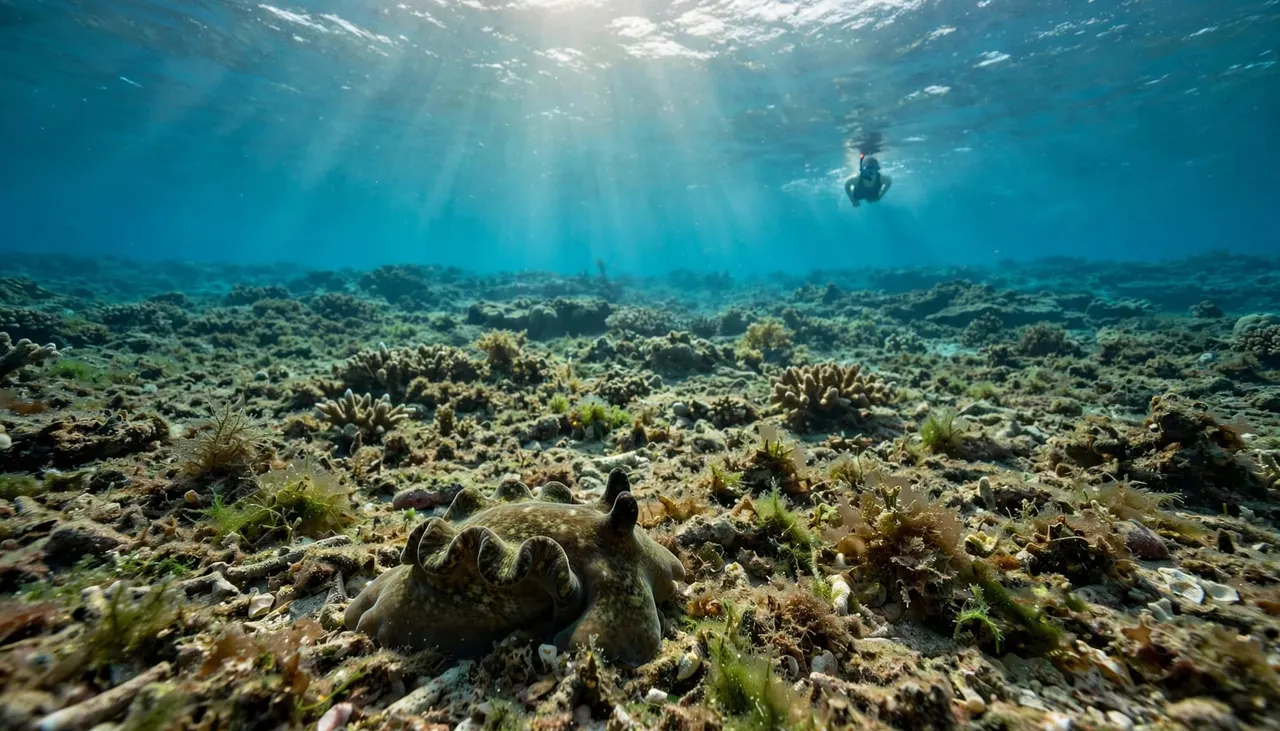
Keep your body and fins clear of the bottom while watching reef wildlife.
Keep your position without grabbing anything
Before concentrating on a small animal, make sure you can hold your position without touching the reef. Keep your body horizontal and your fin movements controlled.
If surge keeps carrying you toward the bottom, move away. You shouldn’t need to brace against rock, coral, or another animal to get a better look.
For families, establish that habit before anyone spots something exciting. Children can point from a comfortable distance while an adult stays nearby. A shared sighting is more enjoyable when nobody rushes toward it or crowds the animal.
Leave its behavior unchanged
Watch Hawaiian sea hares without lifting, stroking, feeding, or repositioning them. Also, leave surrounding rocks and algae in place. Moving their cover changes the habitat you’re trying to observe.
Some sea hares release purple, pink, or red ink-like material as a defense. That response isn’t an identification test, and you should never provoke it for a photograph.
If a closer look requires touching the bottom or disturbing the animal, stay farther away and accept the wider view.
The same hands-off approach protects the rest of the reef. Coral is living tissue, so even an accidental fin strike can cause damage.
Photograph Features You Can Actually See
A useful identification photo shows more than an attractive patch of color. When conditions allow, include the head and enough of the body to reveal its shape.
Start with a wider image that records the animal’s surroundings. Then use your camera’s zoom, if available, rather than swimming down into a tight space.
A slightly angled view can reveal the rhinophores and side folds together. However, take only the angles you can obtain while floating safely. Don’t turn the animal or move vegetation out of the frame.
Afterward, record Oahu as the location and add the date and habitat you observed. “On algae-covered rubble” is useful information when it accurately describes your sighting.
For couples, one person can photograph while the other watches their shared position and surroundings. Trade roles without separating. That keeps the search enjoyable and helps prevent a camera from narrowing your attention too much.
Explore Waikiki With Our Professional Snorkel Guides
You can build confidence with guidance before focusing on smaller reef animals. We’re Oahu’s only tour company with professional snorkel guides, and our approach centers on observing wildlife without touching it.
Our trips depart from Kewalo Basin Boat Harbor, near Waikiki. Before entering the water, tell our crew about your snorkeling experience and ask about anything unfamiliar. Once you’re swimming, follow the crew’s directions and stay within the designated area.
Our Deluxe Waikiki Snorkeling and Wildlife Cruise combines reef exploration with a boat-mounted waterslide, water trampoline, and floating lily pad. It’s an option for families and couples who want snorkeling alongside other water activities.
Sea hares aren’t a promised sighting. Instead, bring your curiosity and point out unfamiliar animals without approaching them. You can CHECK AVAILABILITY for your preferred outing.
Frequently Asked Questions
Are Hawaiian sea hares the same as nudibranchs?
No. Both belong to the broader group of marine gastropods often called sea slugs, but they are different groups. Many nudibranchs have exposed dorsal structures, such as gill plumes or finger-like cerata. A sea hare’s folded body and characteristic head structures offer a different combination of clues.
Do all Hawaiian sea hares have dark rings?
No. Ringed markings are associated with spotted sea hares, but Hawaii has other sea-hare forms. Even within spotted animals, appearance varies. You should consider the body outline and sensory structures alongside the pattern instead of expecting every individual to resemble one reference image.
Can you pick one up to identify it?
You should leave it where you found it. Handling isn’t necessary for a snorkeling identification and can disturb the animal. Photograph visible features from your existing position instead. If you can’t obtain a clear view safely, a broader identification such as “sea hare” is enough.
Notice the Small Details, Leave the Reef Undisturbed
Identifying Hawaiian sea hares starts with a patient look at body shape, sensory structures, and markings. Scientific names can differ between older and newer references, so record what you can see without forcing a species-level answer.
Your strongest reef skill is controlled observation. Stay with your buddy, keep your fins clear of coral, and let each animal continue its day undisturbed.


