
Hawaiian reef squid: A Snorkeler’s Guide to Oahu
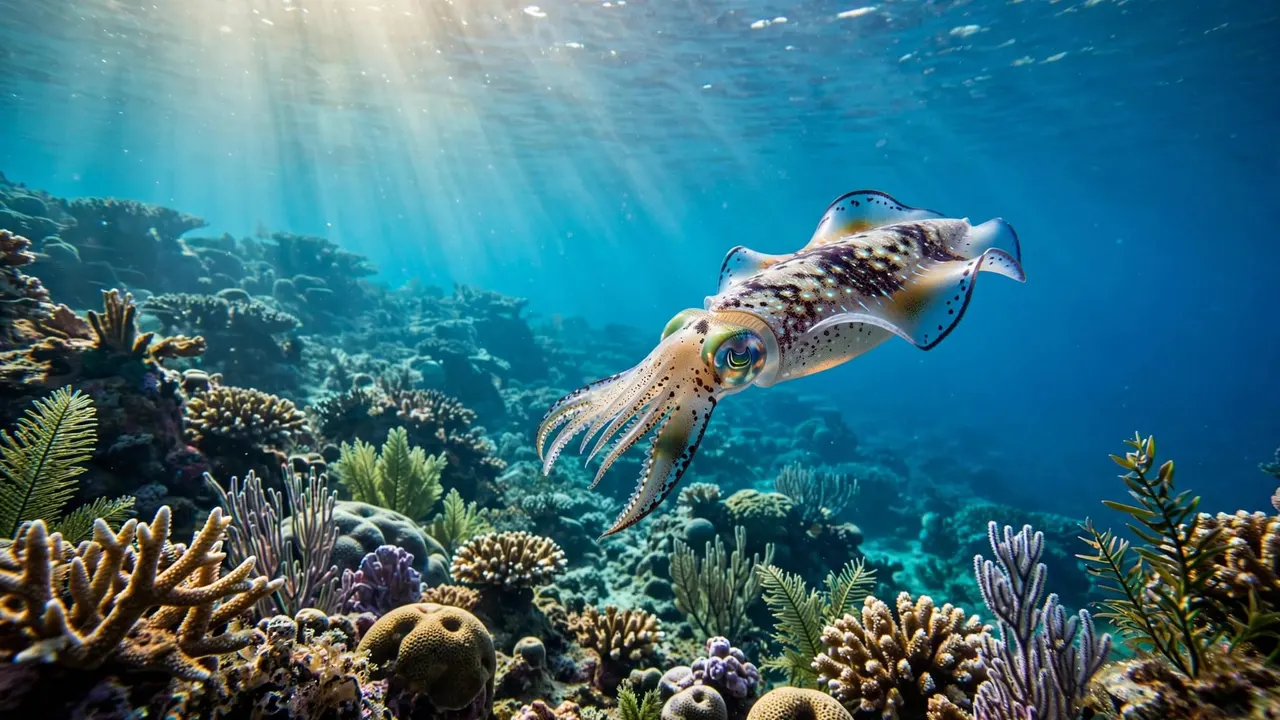
You might swim past Hawaiian reef squid before realizing the pale shapes ahead are living animals. With Living Ocean Tours, you can explore Waikiki’s reefs with guided instruction while learning to notice wildlife beyond the turtles.
Your biggest advantage is the willingness to slow down, because a hovering squid can disappear against bright water. Start with its shape, then learn where to scan and how to watch without interrupting its movements.
Key Takeaways
- Look for an elongated body, large eyes, and broad fins running along both sides of the mantle.
- Scan the water above and beside the reef instead of watching only the coral below.
- Treat squid sightings as a bonus, since no Oahu location or departure guarantees an encounter.
- Float quietly, keep your distance, and let wildlife choose whether to remain nearby.
How to Recognize Hawaiian Reef Squid
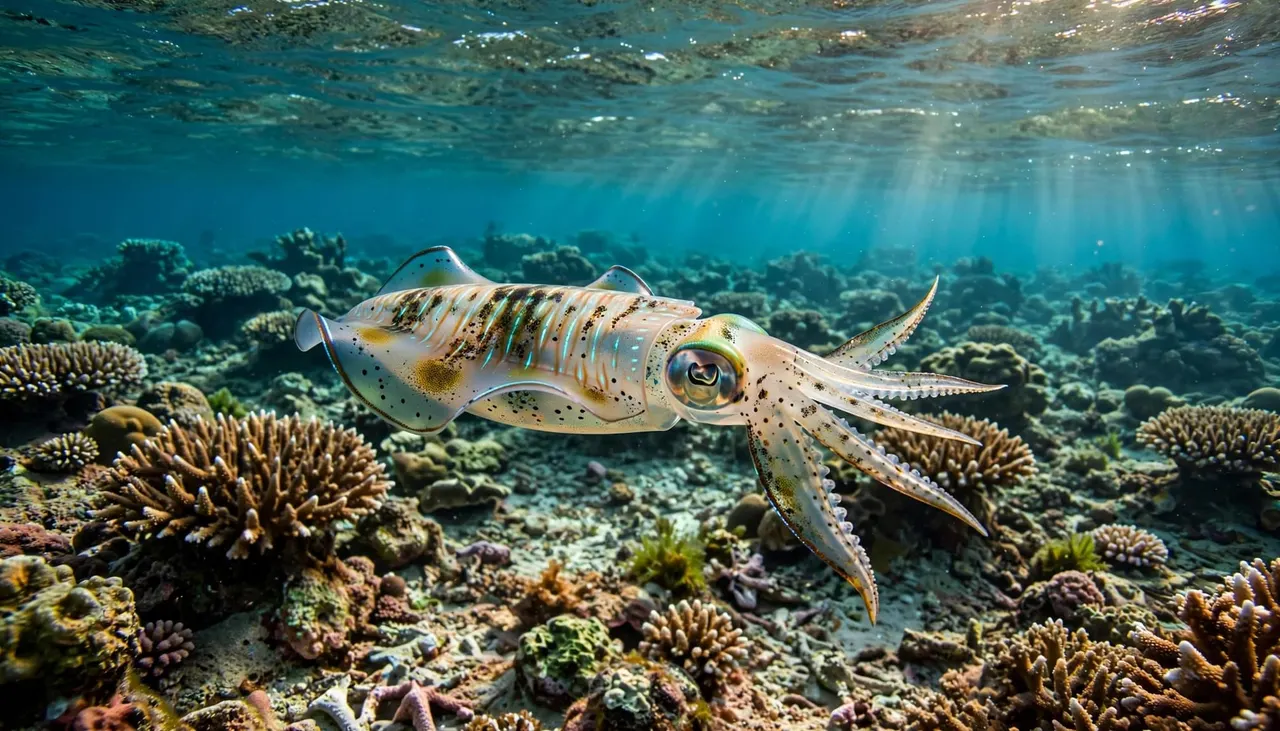
Color alone won’t identify your squid. Its outline and movement offer better clues, especially when sunlight and water clarity change what you see.
Follow the fins and body shape
The reef squid associated with Hawaii is commonly identified as Sepioteuthis lessoniana, the bigfin reef squid. That name refers to its broad lateral fins, which extend along much of the mantle.
Look for a streamlined body behind a distinct head with prominent eyes. Eight arms and two longer feeding tentacles surround the mouth, although you won’t necessarily distinguish them while snorkeling.
Unlike a reef fish, Hawaiian reef squid don’t have an obvious tail fin. Instead, their paired fins ripple along the body as they hover or move slowly.
Separate reef squid from bobtail squid
Hawaii also has the Hawaiian bobtail squid, Euprymna scolopes. However, that small, rounded animal is different from the elongated squid you’re trying to identify above a reef.
The National Institutes of Health describes Hawaiian bobtail squid as nocturnal residents of shallow coastal waters. Don’t transfer their nighttime habits or famous relationship with light-producing bacteria to reef squid.
An octopus offers another useful comparison. Its rounded mantle lacks the long, paired fin outline you should look for on a reef squid.
Read Their Colors and Movements
Once you’ve recognized the shape, watch what changes. A brief encounter becomes more interesting when you notice fin movement, spacing, and shifting patterns rather than rushing toward the animal.
Watch patterns without assigning meanings
Squid skin contains pigment-bearing structures called chromatophores. By expanding or contracting them, squid change their visible patterns. Other skin structures reflect light and contribute to their shimmering appearance.
You might notice pale areas, darker bands, or flashes of iridescence. However, a single color doesn’t give you a reliable translation of the animal’s behavior.
Avoid labeling every darkening squid as angry or every pale squid as relaxed. Body orientation, nearby animals, and your own movement also matter. For your field notes, describe what you saw instead of guessing its emotional state.
Notice hovering and sudden departures
During slow movement, the fins can ripple while the squid holds its position. For a faster escape, it expels water through its siphon and moves by jet propulsion.
If you encounter several squid together, watch their spacing. Individuals can adjust position without maintaining a rigid formation.
A sudden departure is your cue to stop following. Hawaiian reef squid gain nothing from a snorkeler trying to keep pace, and chasing usually ends your viewing opportunity.
Where to Look While Snorkeling Oahu
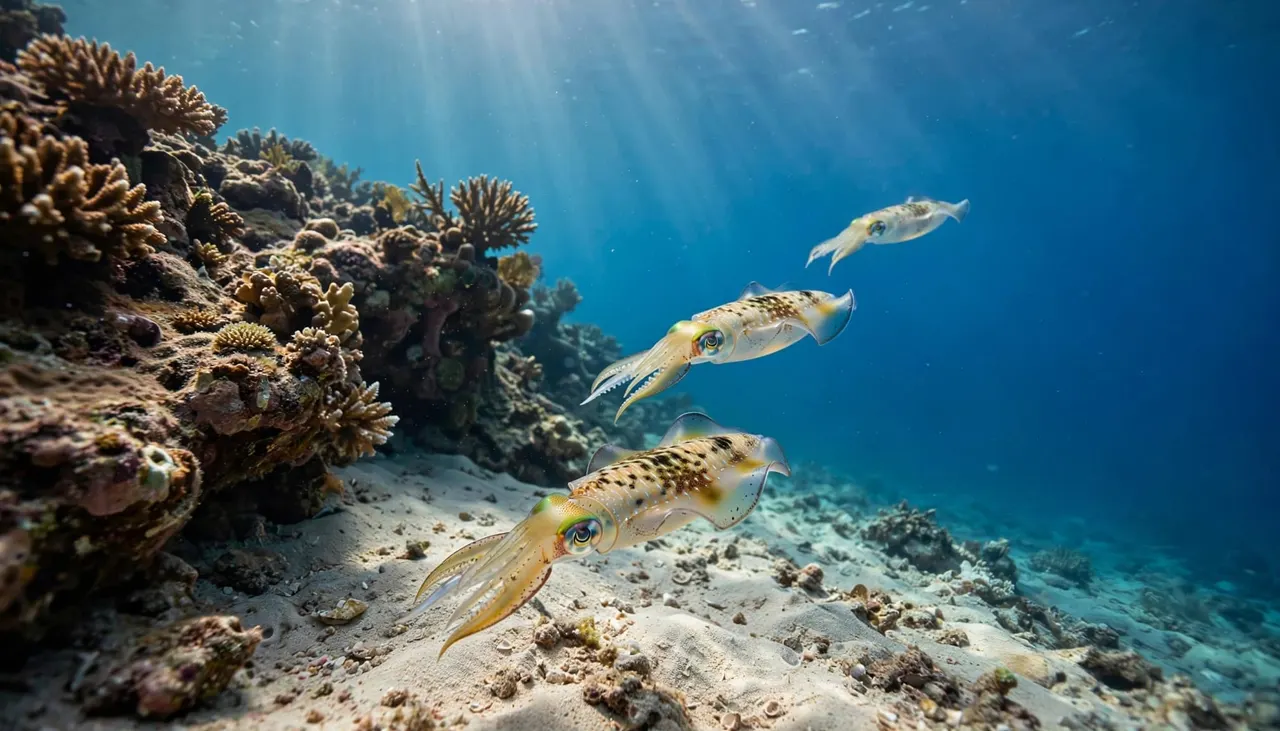
Build your search around safe conditions and a careful scan. A famous snorkeling destination doesn’t automatically offer predictable squid encounters.
Search the water around the reef
If you spend your entire swim looking straight down, you can miss animals suspended beside you. Periodically scan ahead, then check the water above sandy openings and along reef edges.
Look for an outline before searching for color. A pale, oval form with two rippling edges deserves a second look.
Keep your search within the designated snorkeling area. Don’t swim farther offshore or cross a current because something resembles a squid. Ask your guide to help identify it, then observe from your existing position.
Choose access for safety, not promises
Hanauma Bay offers snorkeling within a managed marine-life conservation area. Shark’s Cove has rocky access and requires careful assessment of conditions. Neither should be treated as a guaranteed squid location.
For an offshore Waikiki outing, Turtle Canyons is known for its Hawaiian green sea turtle cleaning station. Plan around the broader reef experience and consider any squid encounter an extra discovery.
Ask your guide whether there have been recent observations. Local information can help you look attentively, but wildlife moves and sightings remain unpredictable.
Watch Without Changing the Encounter
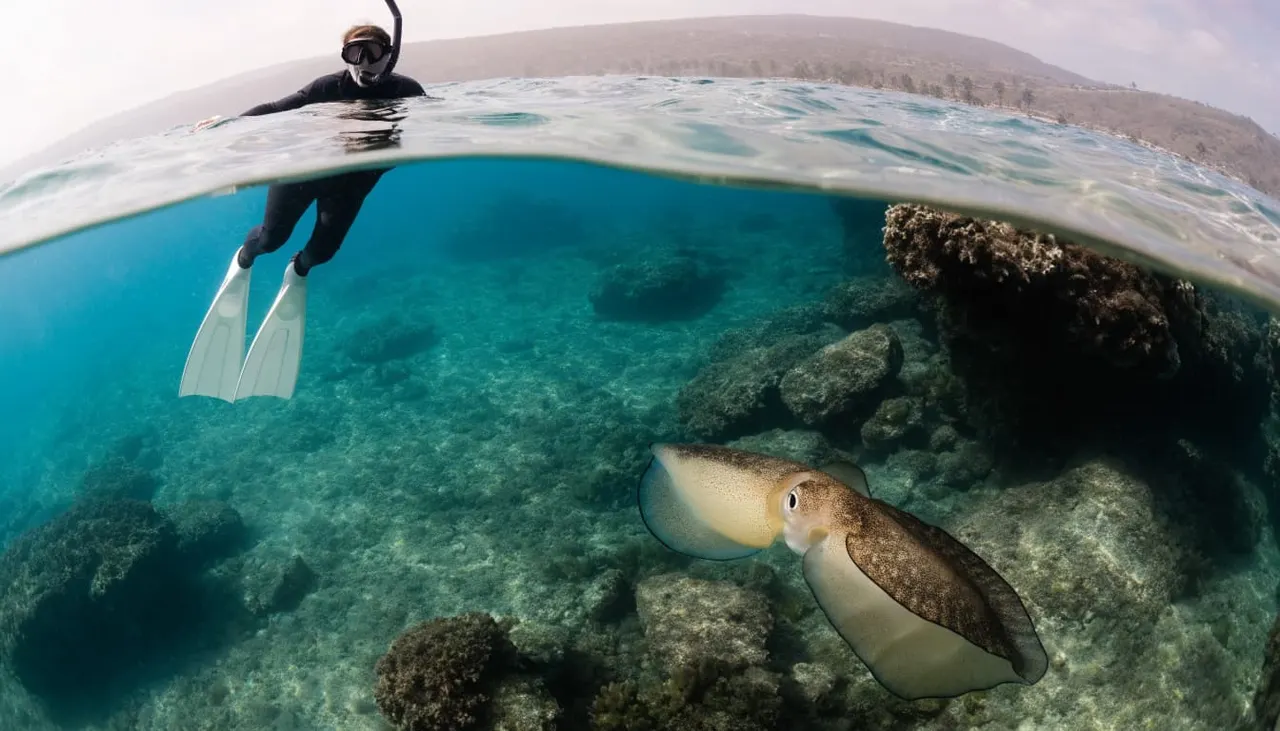
When you spot Hawaiian reef squid, reduce unnecessary movement. Keep your hands close to your body and use small fin strokes rather than splashing toward them.
Stay alongside your buddy and leave the animal an open route away. If several snorkelers notice the same squid, avoid forming a circle around it. Give everyone room without surrounding the wildlife.
If a squid repeatedly moves away when you approach, increase your distance instead of trying another angle.
Your camera should follow the same rule. Use the view available from where you’re floating, and accept a smaller subject in the frame. A sharp photograph never justifies crowding an animal or kicking the reef.
Researchers have studied non-invasive squid identification methods using observation and photographs of Caribbean reef squid. That research concerns a different species, but it offers a useful reminder that documentation doesn’t require handling.
After your swim, record the location, approximate depth, number of animals, and visible patterns. An estimate is enough when you don’t know a measurement. These details make your sighting more useful than an unsupported species guess or a claim about what its colors meant.
Prepare for the Ocean Before Searching for Squid
A wildlife search should never distract you from your comfort or surroundings. First, check your mask seal and practice breathing through the snorkel before moving away from the entry point.
If you’re new to snorkeling, tell the crew before entering. Instruction and appropriate flotation can help, but you still need to follow the briefing and stay within your abilities.
For a shore outing, choose a lifeguarded location that suits your experience. Ask about current conditions, identify your exit, and skip the swim when waves or visibility make you uncomfortable.
Pack for comfort rather than complicated photography:
- Wear a well-fitting mask and snorkel, with fins suited to your ability.
- Use sun-protective clothing to reduce exposed skin.
- Bring drinking water and keep valuables in secure dry storage.
- Follow the crew’s flotation requirements and snorkeling boundaries.
Keep your fins clear of coral, even when you pause to watch something. Coral is living animal tissue, and careless contact can damage it.
Also, check your buddy regularly. Looking up to confirm your position takes only a moment and helps prevent a quiet wildlife observation from becoming an unintended separation.
Explore Waikiki’s Reefs With Living Ocean Tours
You can compare guided snorkeling excursions departing from Kewalo Basin Boat Harbor, near Waikiki. Living Ocean Tours provides snorkeling equipment and instruction, so you can spend less time arranging rentals and more time getting comfortable in the water.
The company describes itself as Oahu’s only tour operator with professional snorkel guides. For your family or mixed-experience group, that means access to guidance on mask fit, flotation, and respectful wildlife viewing.
Onboard shaded seating, restrooms, dry storage, and sturdy entry ladders add practical comfort before and after your swim. Still, guided snorkeling takes place in the ocean, so conditions and wildlife vary.
Book for reef exploration, helpful instruction, and the chance to observe marine life responsibly. Hawaiian reef squid remain a possible discovery, never a promised inclusion. Share your interest with the crew before entering so they know what you’re hoping to identify.
For a turtle-focused snorkeling outing, CHECK AVAILABILITY, then confirm the current trip details and participation requirements before booking.
Frequently Asked Questions
Can you guarantee a reef squid sighting on Oahu?
No snorkeling location or tour guarantees Hawaiian reef squid. Choose your outing for safe access, appropriate guidance, and the overall marine environment. Then treat a squid sighting as an unexpected highlight rather than the measure of a successful trip.
Do you need to dive below the surface?
You don’t need to pursue a squid underwater. If it’s visible from the surface, floating quietly gives you a viewing position without closing the distance. Stay within your snorkeling area’s boundaries and resist the temptation to dive after an animal that moves away.
Should you visit at a particular time or season?
There isn’t a verified Oahu-wide schedule for dependable reef squid encounters. Choose your departure around suitable ocean conditions and your comfort level. Ask about visibility and recent observations, but avoid treating a particular hour or month as a sighting guarantee.
Bring a Patient Eye to Oahu’s Reefs
Recognizing Hawaiian reef squid starts with their outline, rippling fins, and movement through open water. Your most useful skill is patient observation, paired with enough awareness to keep yourself and the reef safe.
Whether you snorkel with a guide or choose suitable shore access, leave wildlife room to continue its day. If those pale shapes become squid, enjoy the encounter without turning it into a chase.


