
Hawaiian reef sponges: Honolulu Snorkeling Field Guide
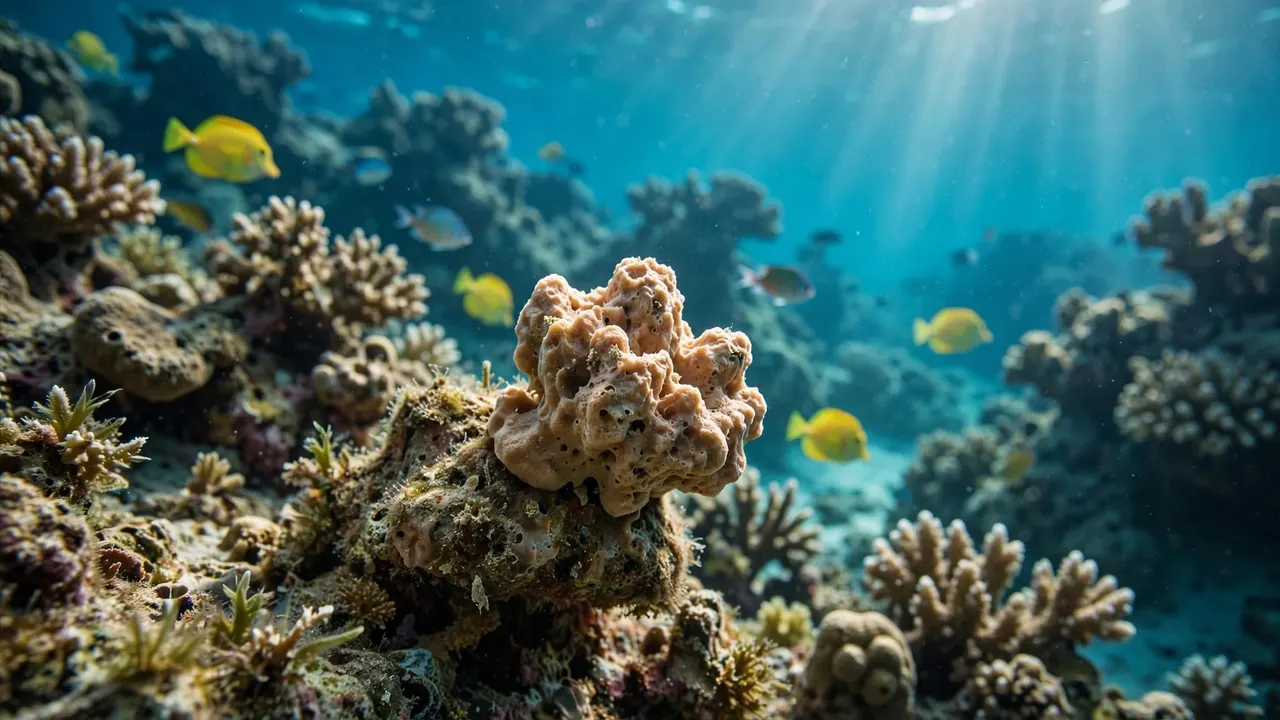
Hawaiian reef sponges are living animals you can look for on reef surfaces while snorkeling Honolulu. At Living Ocean Tours, we ask you to leave these animals and their surroundings undisturbed.
You might notice an irregular patch or small mound before you recognize it as a sponge. However, appearance alone rarely gives you a reliable species name.
Start with what you can observe safely: growth form, surrounding habitat, and visible openings, without touching or approaching beyond your swimming ability.
Key Takeaways
- Look for Hawaiian reef sponges as part of the reef community, rather than expecting every animal to resemble a household sponge.
- Record shape and surroundings, but don’t turn color or a photograph into a confident species identification.
- Keep your body, fins, and camera clear of living surfaces, and leave hidden animals and their habitat undisturbed.
Your most useful discovery may be a small detail you previously swam past. A careful observation still has value when you can’t attach a species name.
What Hawaiian reef sponges look like
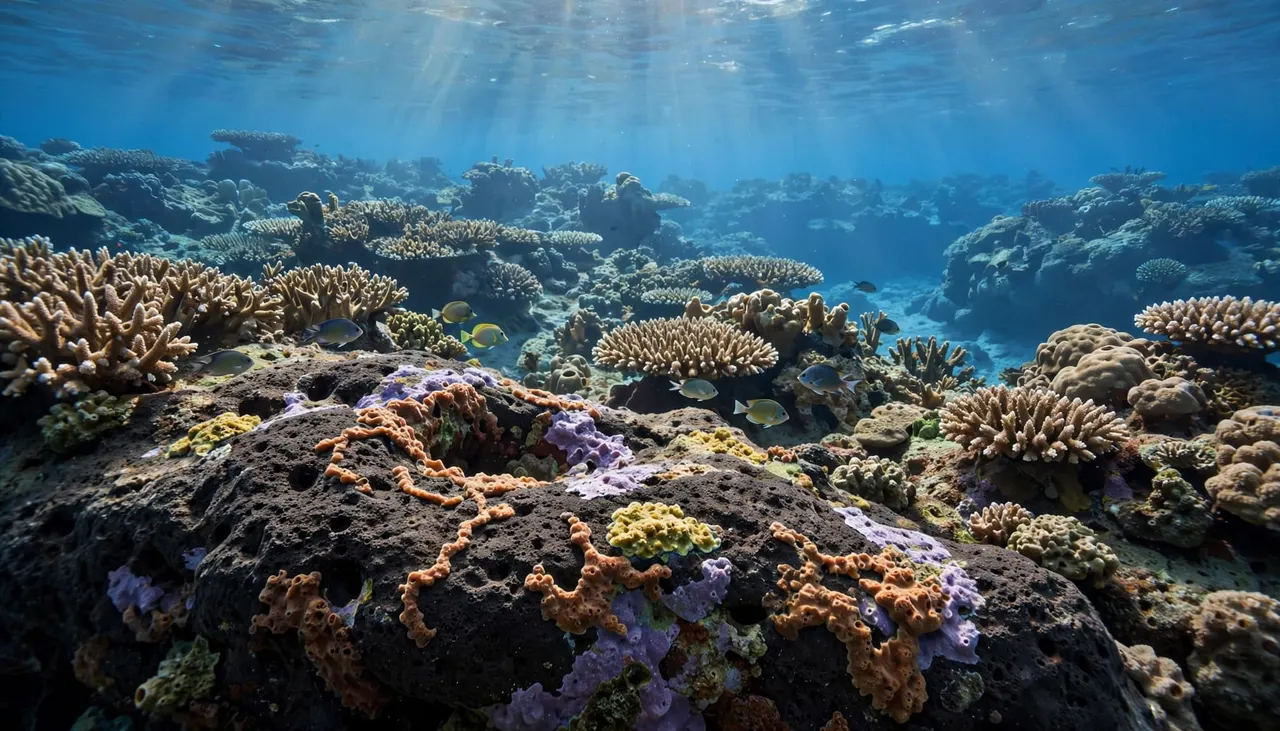
Illustration of reef growth forms, not a species-identification chart.
Notice the growth form first
Sponges belong to the animal phylum Porifera. Unlike fish, they don’t swim across your field of view, so you need to notice their outlines against the surrounding reef.
You may encounter growth that looks like a thin coating, an irregular lump, or a projection with visible openings. Treat those features as observations rather than names.
For Hawaiian reef sponges, a description such as “low, uneven growth on a shaded rock surface” is more useful than a confident guess. It preserves what you saw without claiming more than your view supports.
Separate a sponge candidate from its neighbors
Coral, algae, tunicates, and other attached organisms can complicate your first impression. At snorkeling distance, several unrelated animals can look like colored patches.
Visible openings may help you notice a possible sponge, but they don’t establish its identity. Likewise, a smooth-looking surface doesn’t mean an organism is safe to handle.
Instead, consider the entire patch and its edges. Notice whether neighboring growth covers part of it, and whether the apparent shape changes as you move. Keep your observations provisional, especially when sunlight, water movement, or distance limits your view.
Why a photograph rarely settles the species name
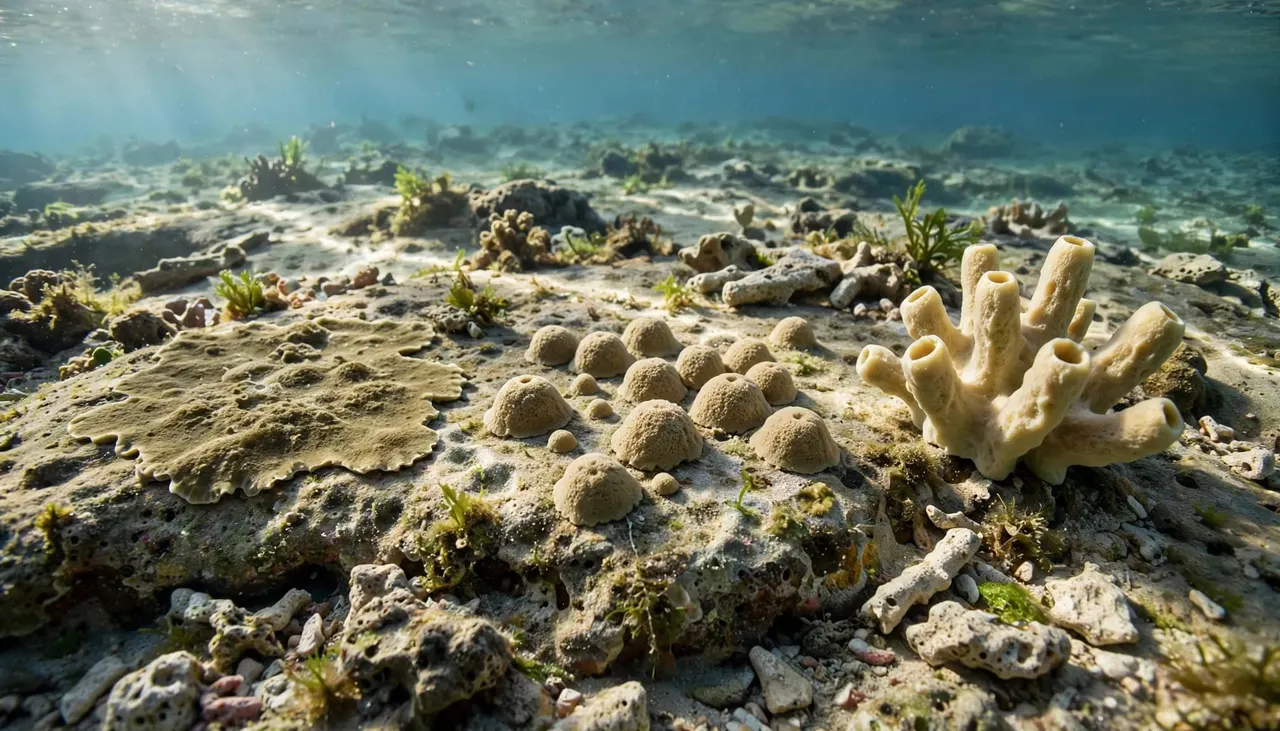
Illustrated growth forms show why an outline alone isn’t a species diagnosis.
What Oahu research reveals
In February 2025, the University of Hawaiʻi at Mānoa reported 10 sponge species new to science from Kāneʻohe Bay. Researchers at the Hawaiʻi Institute for Marine Biology used genetic and structural characteristics in their work.
The findings appeared in PeerJ and Zootaxa, with six species described in one study and four in another. Researchers collected reef-associated sponges using Autonomous Reef Monitoring Structures, known as ARMS.
That work gives you a useful perspective: even a clear underwater photograph doesn’t contain all the evidence scientists use to identify a sponge.
Keep observations separate from identification
A snorkeling photograph records an animal’s appearance under particular conditions. It doesn’t reveal every structural feature, and it provides no genetic information.
As you learn about Hawaiian reef sponges, resist matching a patch to the first similar photograph you find. Different organisms can resemble one another, while lighting can change the appearance of the same subject.
You can still build a useful record. Save the location, approximate depth if known, visible growth form, and whether the subject occupied an exposed or sheltered surface. A cautious description is more dependable than an unsupported species label.
Where to direct your attention while snorkeling Honolulu
Begin with reef surfaces already visible from your normal swimming position. You don’t need to enter a crevice or reach beneath a ledge to appreciate smaller reef animals.
Look along the boundaries between different kinds of growth. An irregular edge or contrasting texture can draw your attention to something you would otherwise overlook.
However, don’t assume a shaded patch is a sponge. Shadow can hide details, and several organisms may occupy the same small area. Stay with what you can see comfortably.
Keep Honolulu and Kāneʻohe Bay geographically distinct in your expectations. The university’s discoveries came from Kāneʻohe Bay on windward Oahu; they aren’t a checklist of species you should expect along Waikiki.
During your swim, let visibility set the scale of your observations. When details aren’t clear, enjoy the broader reef instead of moving closer until your fins nearly touch it.
Your goal is to notice more within a safe viewing distance. Finding a particular organism should never determine how far you swim or whether you enter difficult water.
Photograph Hawaiian reef sponges without disturbing them
Take a wider photograph before attempting a closer view. The wider frame preserves the surrounding habitat and helps you relocate the subject within your image collection.
Then photograph details only if you can hold a comfortable position without contact. Keep your camera within your own swimming space rather than extending it into a hole or beneath an overhang.
A camera can disturb concealed wildlife even when your hands never touch the reef. Leave animals concealed, and never move rubble or remove growth to improve a photograph.
Water depth and available light also affect recorded color. Because of that, avoid treating a bright orange or purple patch in a photograph as a dependable identification feature.
For a simple record, pair a habitat view with a detail view when conditions allow. Afterward, add notes while you still remember the setting.
If getting the photograph requires holding the reef, entering a crevice, or losing track of your buddy, leave the photograph untaken.
A clear record matters less than maintaining safe positioning. You can always remember an observation without collecting an image.
Observe reef life without contact
Keep your fins and equipment clear
Float with enough clearance that your fins won’t strike the reef during an ordinary kick. Also account for the space behind you, which is easy to forget while watching something below.
Never stand on coral to adjust your mask or steady yourself. NOAA’s marine-life viewing guidelines advise against touching, kicking, or standing on coral while snorkeling or diving.
Apply the same hands-off approach to sponge growth. Don’t squeeze an animal to test its texture, scrape its surface, or collect a piece.
Secure loose equipment, too. A dangling camera strap can contact the reef while your attention stays on the subject.
Keep observation within your swimming limits
Snorkel with a buddy, remain aware of your surroundings, and stop when you become tired or uncomfortable. A small reef discovery never justifies ignoring current, waves, or a difficult return.
If your mask leaks, move your attention back to your breathing and position. Use appropriate flotation and ask for help rather than using the reef as support.
For activities involving diving, Hawaiʻi’s published ocean-water diving rules require divers to mark their position with a dive flag and remain within the stated surfacing limit of 100 feet.
Most importantly, don’t let looking downward make you unaware of boats, other swimmers, or changing conditions.
Give yourself time to get comfortable first
Your first few minutes should be about equipment and breathing, not identifying Hawaiian reef sponges. Settle your mask, establish a comfortable pace, and stay aware of your buddy.
Once you’re relaxed, choose one visible area to observe rather than swimming continuously in search of something more dramatic. That approach gives you time to distinguish shapes without rushing.
For families, keep the goal modest. Noticing one unusual patch together can be more satisfying than trying to complete a species checklist. Children also need reminders that rock-like growth may be living tissue.
If anyone feels uncomfortable, end the observation and address that first. Enjoying the reef depends on having enough attention left for your surroundings and your own well-being.
Frequently Asked Questions
Are sponges plants or coral?
Sponges are animals, but they aren’t coral. Their attached growth and unfamiliar shapes can make that distinction difficult to recognize during a swim.
For practical observation, you don’t need to resolve every uncertain patch underwater. Treat anything attached to the reef as living habitat, keep clear, and record only the features you can see.
Can you identify a sponge by its color?
Color alone doesn’t establish a species. Underwater light changes how colors appear, and unrelated organisms can share similar shades.
Use color as one descriptive detail alongside growth form and surroundings. Even then, leave the species name open unless you have evidence that supports it. The Kāneʻohe Bay research shows how much more identification can involve.
Should you turn over rubble to find hidden sponges?
No. Turning rubble changes the position of living habitat and can disturb animals sheltered beneath it. Keep your search limited to surfaces visible without rearranging anything.
The same principle applies to cameras and lights: don’t insert equipment into spaces you can’t observe safely. An animal remaining out of sight is a normal part of an undisturbed reef.
Leave the reef as you found it
Hawaiian reef sponges give you a reason to notice the smaller details of Honolulu’s underwater habitats. You don’t need a species name to appreciate an unfamiliar growth form or record a careful observation.
Make clearance and comfort your priorities. Keep your equipment close, leave concealed habitat alone, and let uncertain identifications remain uncertain.
Your most rewarding reef discovery is one you can enjoy without changing the animal’s surroundings.


