
Hawaiian reef crabs: Your Oahu Snorkeling Field Guide
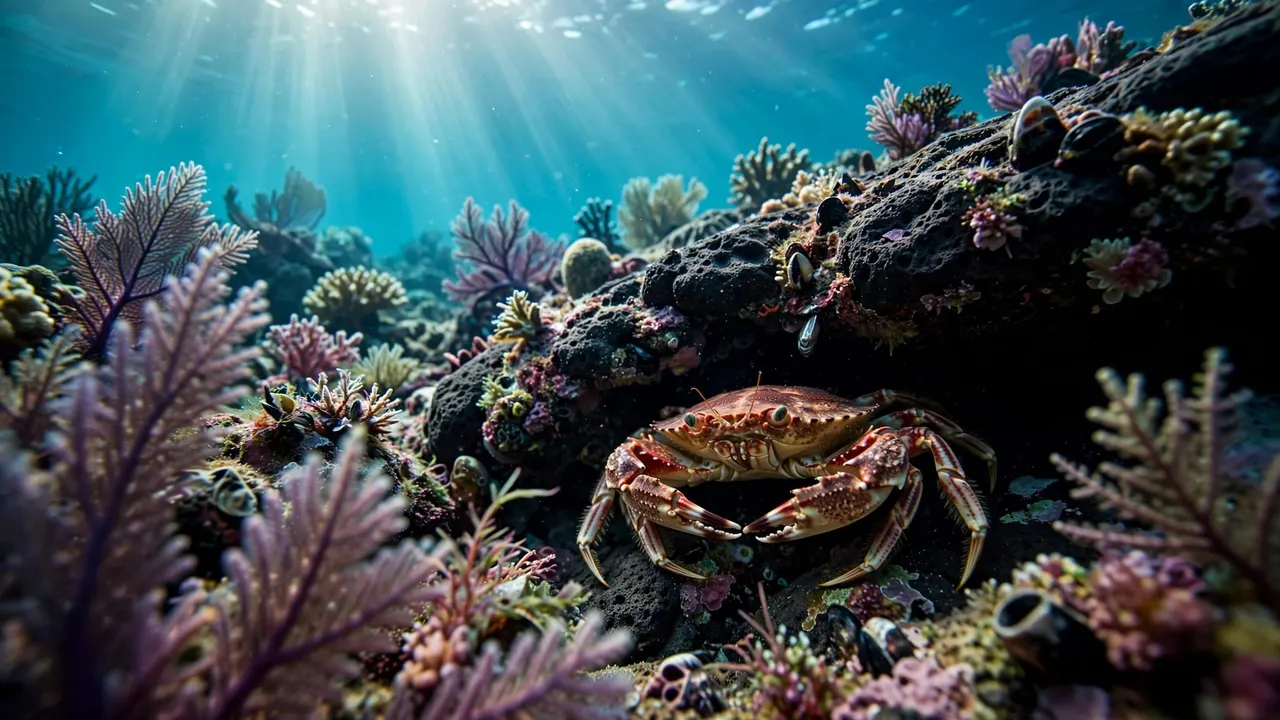
You can swim over a crab without noticing it, even when you’re watching the reef closely. Hawaiian reef crabs often reward slower observation, especially around shaded cracks, rocky edges, and shells that suddenly start moving.
At Living Ocean Tours, our professional snorkel guides help you explore Oahu’s marine life with a hands-off approach. Start with shelter, body shape, and movement, and you’ll have useful clues without needing to name every animal you see.
Key Takeaways for Your Snorkel
You don’t need a species checklist to appreciate the reef’s smaller residents. These habits will help you spot more without disturbing their habitat:
- Look along crevice openings and reef edges while keeping your fins clear of the bottom.
- Recognize a hermit crab by its borrowed shell; paddle-shaped rear legs suggest a swimming crab.
- Leave rocks, shells, and wildlife where they are, even when moving them would improve your view.
Crab sightings are a bonus to a reef outing. Small animals can remain hidden throughout your swim, so enjoy the surrounding fish and coral too.
Where Hawaiian reef crabs Hide
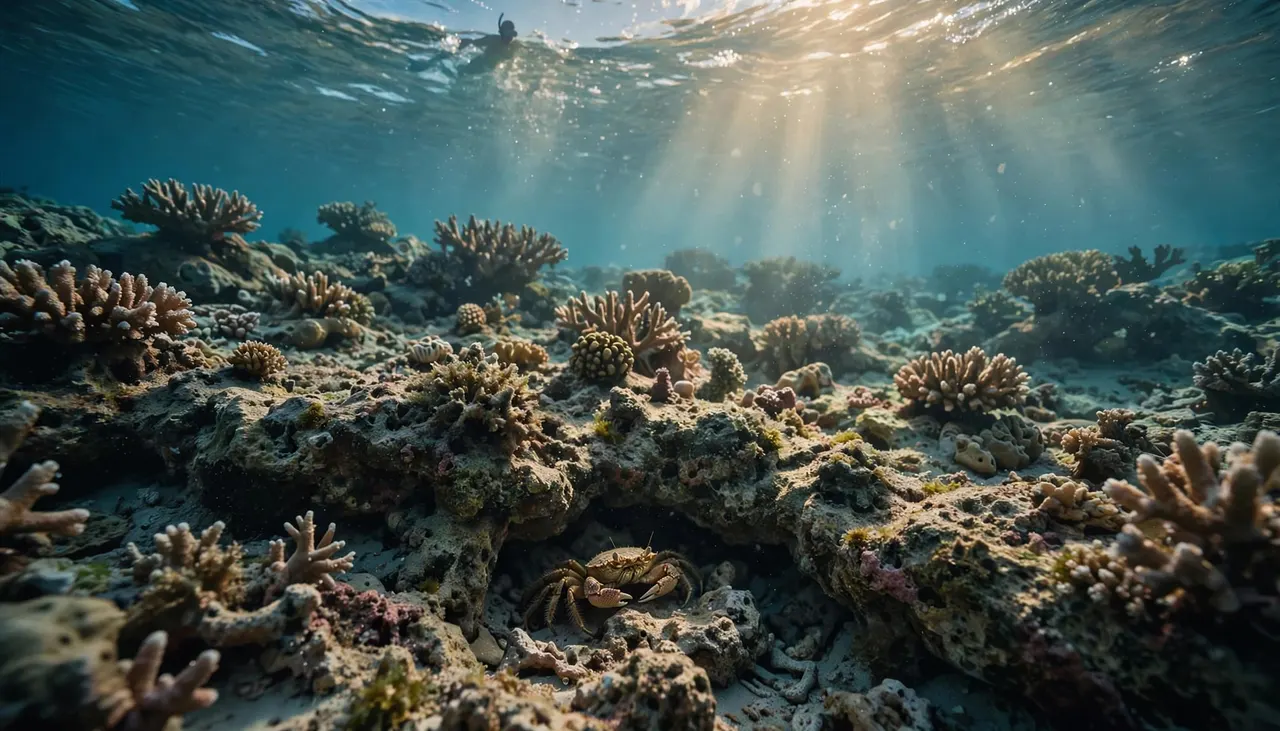
Scan the edges of shelter
Instead of looking only at the bright tops of coral heads, study their shaded margins. A claw or leg may be visible where a crevice meets open water.
Rocky bottoms, rubble, and the spaces beneath ledges provide shelter for different Hawaiian crustaceans. However, viewing from the surface limits how much detail you can see.
Keep your body horizontal and pause above an open area with comfortable clearance. Let your eyes follow the boundary between light and shadow. If you can’t see farther inside, leave the animal hidden.
Watch shells beside sand and rubble
A shell moving across the bottom deserves a second look. Hermit crabs carry protective shells, so you may notice their shelter before seeing their legs.
Look where sand meets scattered rubble rather than concentrating only on living coral. These boundaries offer another place to observe small animals.
Although shallow water can bring the bottom closer, it also leaves less room for your fins. Skip any patch where you would need to stand, kneel, or push against the reef to stay balanced.
Tell Hermit Crabs From True Crabs
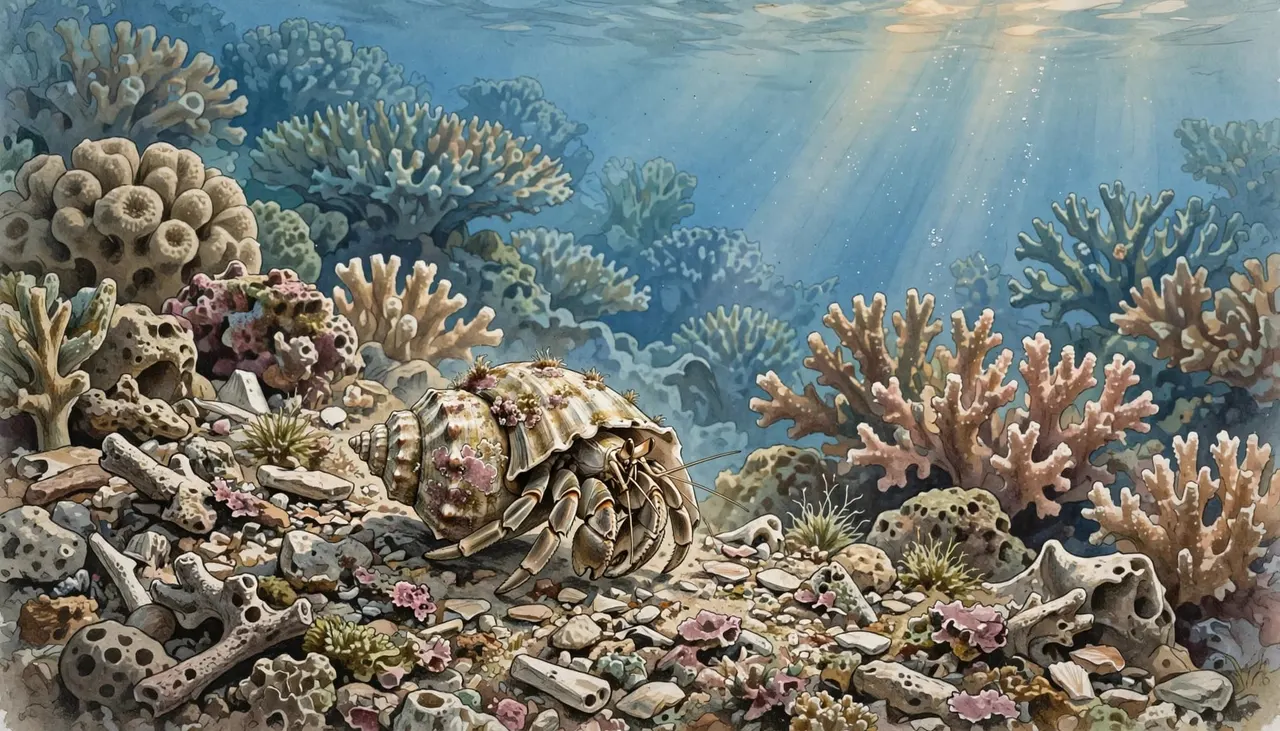
A borrowed shell is the clearest clue
A hermit crab has a soft abdomen that needs protection. Its body fits inside an empty snail shell, while its claws and walking legs extend through the opening.
If the animal withdraws, you may see nothing more than a shell again. Give it space rather than trying to encourage another appearance.
Monterey Bay Aquarium’s hermit crab guide also emphasizes observing tide-pool animals without disturbing or collecting them. That restraint matters underwater, too.
A true crab has a broad protective carapace and doesn’t carry a borrowed snail shell. You may see its body pressed against rock or partly concealed inside a crack.
Rear legs can reveal a swimming crab
Some crabs have flattened, paddle-like rear legs. These help them swim and provide a useful clue when the animal is visible.
However, that feature identifies a broad group rather than an exact species. You don’t need to get closer to settle the name.
For Hawaiian reef crabs, a clear view of the shell, carapace, or rear legs can tell you more than a fleeting impression of color. Note whichever features you can see comfortably, then continue your swim.
Hawaiian Crabs Worth Recognizing
The left-handed tide-pool hermit crab
Waikiki Aquarium identifies Calcinus laevimanus, the left-handed tide-pool hermit crab, as one of Hawaii’s common tide-pool hermits.
Its enlarged left claw has black-and-white coloring and can close the shell opening like a door. If you get an unobstructed view, the claw is an interesting feature to watch.
The aquarium also describes more than six hermit-crab species in Hawaii’s tide pools and reef shallows. That variety makes shell-carrying crabs worth noticing even when you can’t name them.
Leave empty shells in the water. A shell that looks unoccupied can still become another hermit crab’s shelter as it grows.
Other hermits favor ledges or deeper coral
Hawaii’s 2015 State Wildlife Action Plan places Hopper’s hermit crab, Aniculus hopperae, on exposed rocky shores at depths of 3 to 70 feet. It uses caves and shelter beneath ledges.
The same plan associates Hazlett’s hermit crab, Calcinus hazletti, and Laurent’s hermit crab, Calcinus laurentae, with branching corals at roughly 20 feet or deeper.
These habitat details explain why a surface snorkeler won’t see every Hawaiian hermit crab. They aren’t a reason to enter caves or dive beneath ledges.
Keep your attention on accessible habitat. A brief view of a crab near its shelter is enough for a rewarding observation.
Read Crab Behavior Before Taking a Photo
Give a hidden animal time
Once you notice a crab, reduce unnecessary movement while maintaining a safe position. Repeated approaches can send it farther into shelter.
Watch what remains visible. You might see legs reposition, a claw move, or a hermit crab withdraw into its shell.
Those actions are useful observations even without an exact identification. You’re learning how the animal uses its surroundings.
Because surge can move you toward the reef, staying still doesn’t mean abandoning awareness. Keep track of your buddy and your clearance above the bottom. If holding your position becomes difficult, move away rather than bracing against coral.
Photograph the view you already have
Use your camera’s zoom or crop the image afterward instead of lowering yourself onto the reef. Include some surrounding habitat when you can.
A wider image can preserve details about the crab’s shelter that a tight close-up misses. Meanwhile, a short video may capture movement more clearly than a single photograph.
Don’t reach into a crack, reposition a shell, or feed an animal for a better image. Your camera should record an encounter without changing it.
For families, looking for moving shells can make a gentle observation activity. Keep children beside their adult buddy rather than sending them toward the bottom.
Protect the Reef While Looking for Crabs
Keep your hands and fins off the bottom
Coral is living habitat, and small animals depend on the spaces around it. Touching, standing, or dragging fins across coral can damage that habitat.
Hawaii prohibits taking, breaking, or damaging stony coral in state waters under HAR §13-95-70. Your viewing habits should also protect the surrounding rocks and shelters.
Don’t overturn stones or probe holes to expose hidden crabs. Leave occupied and apparently empty shells where you find them.
If seeing a crab requires moving its shelter, leave it unseen. The rock, shell, or ledge is part of its habitat.
When you need a break, use your flotation support or return to the boat or an appropriate exit. Don’t use the reef as a resting place.
Give larger wildlife space, too
While watching Hawaiian reef crabs, you may also notice sea turtles or other marine animals nearby. Keep your attention broad enough to avoid crowding them.
NOAA’s Hawaii wildlife-viewing guidelines advise viewing from a distance and never touching, chasing, or feeding wildlife.
Let animals choose their direction of travel. Don’t follow a turtle through the water to extend an encounter.
Sun protection also deserves planning. A rash guard reduces exposed skin, while appropriate sunscreen protects the areas still uncovered. Regardless of what you wear, your most direct reef-protection habit is maintaining clearance above the bottom.
Plan a Guided Reef Outing From Waikiki
When you’re new to snorkeling, managing your mask and flotation can take most of your attention. Our professional in-water guides provide support so you can grow comfortable before concentrating on smaller reef animals.
We provide snorkeling gear and flotation devices, and our trips depart from Kewalo Basin Boat Harbor near Waikiki. You can explore our Oahu snorkeling and ocean tours for a guided marine-life outing.
A guided trip still requires realistic expectations. Hawaiian reef crabs are small and often concealed, so no individual crab encounter is promised. Enjoy the larger reef scene while treating any crab sighting as an extra discovery.
Tell your guide you’re interested in small reef life before entering the water. Also mention if you’re a first-time snorkeler or feel uneasy about your equipment. Your comfort comes before a close view.
If you’d like help getting comfortable on a reef outing, choose a departure that fits your vacation plans.
Frequently Asked Questions About Reef Crabs
Can you see crabs without diving down?
Yes, you can spot exposed crabs and moving hermit shells from the surface when visibility and depth allow. However, small animals inside crevices may remain hidden. Stay at the surface if that’s where you’re comfortable, and never sacrifice safe clearance for a closer look.
Should you pick up a shell to see whether it’s occupied?
No. Watch for movement without handling it. A hermit crab may remain tucked inside, and an empty shell can provide future shelter. Taking or repositioning shells interrupts the habitat you’re there to enjoy.
Are reef crabs dangerous to snorkelers?
Keep your distance and avoid handling them. Crabs can pinch when disturbed, and reaching into reef holes can expose your hands to sharp surfaces or hidden animals. Hands-off observation protects both you and the crab while avoiding unnecessary contact with the reef.
Enjoy the Small Discoveries Without Disturbing Them
Hawaiian reef crabs reward patient attention to shelter and movement. You don’t need a perfect species identification to appreciate a shell-carrying hermit or a claw emerging from a shaded crack.
Keep your hands off the habitat and your fins clear of coral. You’ll leave the crab’s home intact while noticing reef life that’s easy to overlook.


