
Hawaiian pufferfish: Your Oahu Snorkeling ID Guide
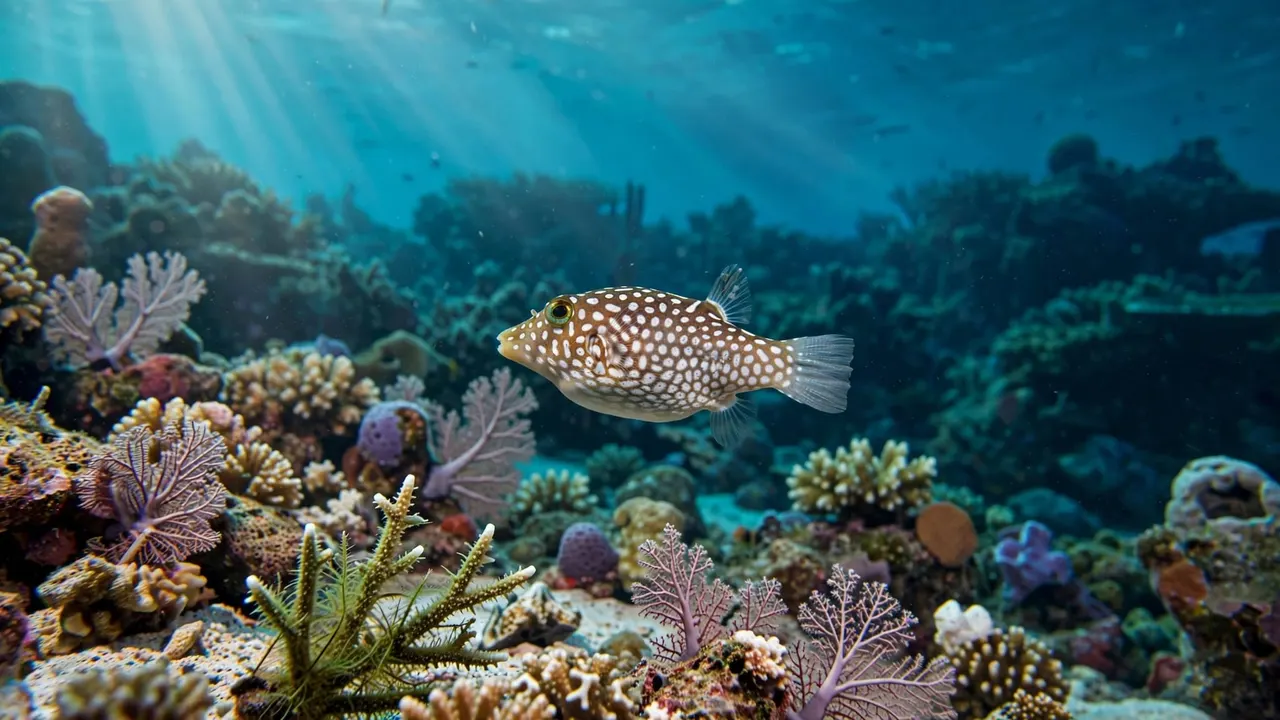
You could swim past a Hawaiian pufferfish without noticing its spotted body hovering beside the reef. With Living Ocean Tours near Waikiki, you can slow down and appreciate smaller reef residents alongside Oahu’s better-known wildlife.
The easiest identification starts with body shape, then markings, rather than waiting for a fish to inflate. Learn a few visible clues before entering the water, and let patient observation fill in the details.
Key Takeaways for Your Reef Visit
- Look for a small, rounded fish with a pointed snout and pale spots when identifying the Hawaiian whitespotted toby.
- Compare the whole body before deciding which Hawaiian pufferfish you’ve seen.
- Scan reef edges and sheltered openings without reaching into them.
- Never touch, chase, feed, or provoke a fish to make it inflate.
Your viewing distance matters as much as your identification skills. Give fish enough room to continue their normal activity.
How to Identify a Hawaiian pufferfish
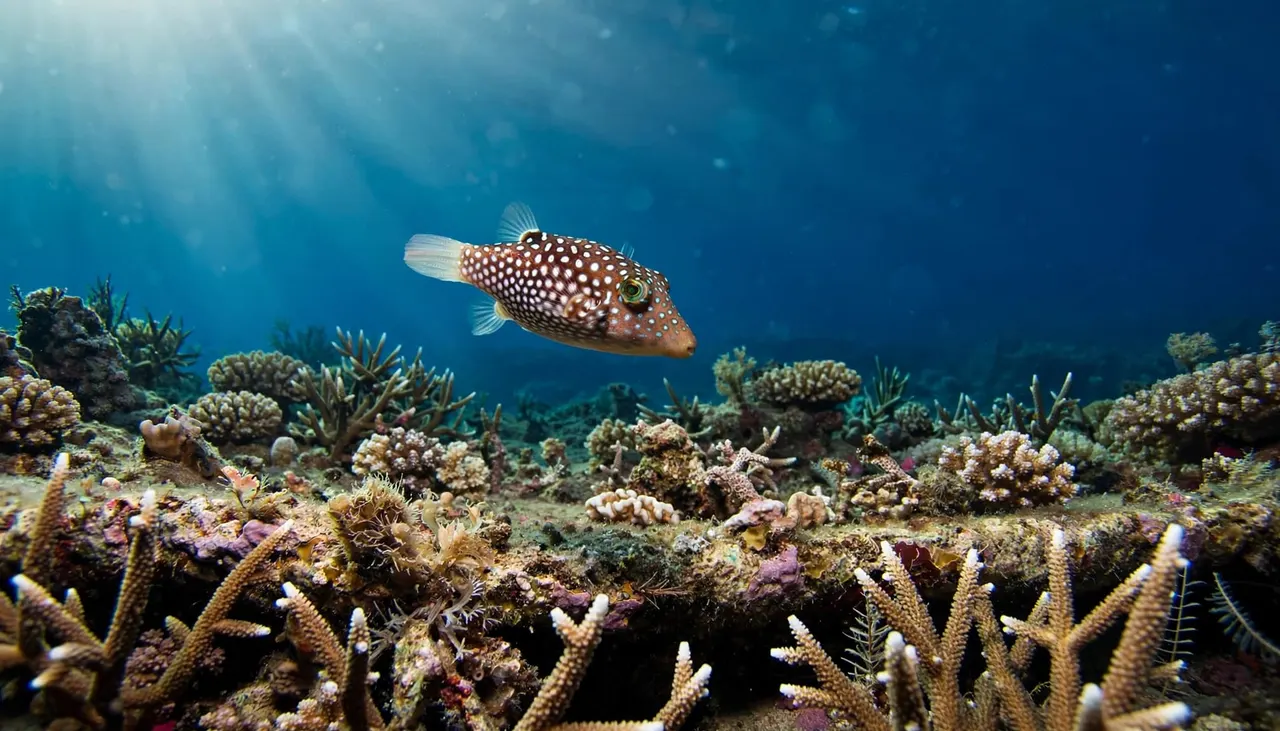
The Hawaiian whitespotted toby, Canthigaster jactator, is a useful species to learn first. Its small size makes an unhurried look especially helpful.
Check the Snout and Spotted Body
Look for a brown body covered with small bluish-white spots. The pointed snout gives this toby a different profile from larger, blunt-faced puffers.
NOAA’s Hawaiian whitespotted toby account identifies it as a sharpnose puffer with a brown, white-spotted body.
Try to retain two features together: the pointed face and the spotted pattern. Underwater light can alter how colors appear, so a single pale dot won’t settle an identification. A side view gives you a better comparison than a glimpse of the tail.
Expect a Small Fish, Not a Balloon
Reference accounts give slightly different maximum sizes: one lists 8 centimeters, while FishBase lists 9 centimeters total length. For snorkeling purposes, expect a fish roughly 3 to 3.5 inches long at maximum size.
You may see a toby alone or near another individual. However, proximity doesn’t confirm that two fish are a pair.
Most importantly, you don’t need an inflated fish to recognize a puffer. Watch its ordinary swimming shape and leave its defensive behavior undisturbed.
Tell Tobies Apart From Larger Puffers
“Hawaiian pufferfish” describes more than one possible reef encounter. Small tobies, larger puffers, and porcupinefish can all leave you with a similar first impression.
These broad clues help you organize what you saw.
| Fish | Useful visual clue | Identification caution |
|---|---|---|
| Hawaiian whitespotted toby | Small brown body, pale spots, pointed snout | Confirm shape and markings together |
| Guineafowl puffer | Larger, rounded body; dark spotted and yellow forms occur | Color alone can mislead |
| Porcupinefish | Visible, substantial spines | Don’t approach for a closer inspection |
Use the table as a starting point rather than a final identification.
Recognize a Larger, Blunt-Faced Puffer
The guineafowl puffer, Arothron meleagris, has a fuller body and blunter face than the small whitespotted toby. Its dark form has numerous pale spots, while yellow coloration also occurs.
Because both fish can look spotted, check their proportions before comparing color. A broad head and bulky body point you toward a different identification than a tiny, sharp-snouted toby.
You can compare scientific names afterward with the list of Hawaii’s fish species. A name remembered correctly is more useful than a confident guess.
Notice Spines Without Closing the Gap
Porcupinefish belong to a different family, Diodontidae. Their conspicuous spines help distinguish them from the small tobies in the pufferfish family, Tetraodontidae.
You may notice the rounded outline first. Next, look for visible spines from your existing position.
Don’t move closer simply to count them or inspect their attachment. If the fish turns into shelter, accept the partial view. A broad identification such as “porcupinefish” is better than assigning a species from incomplete details.
Scan Reef Habitat Before Searching Farther
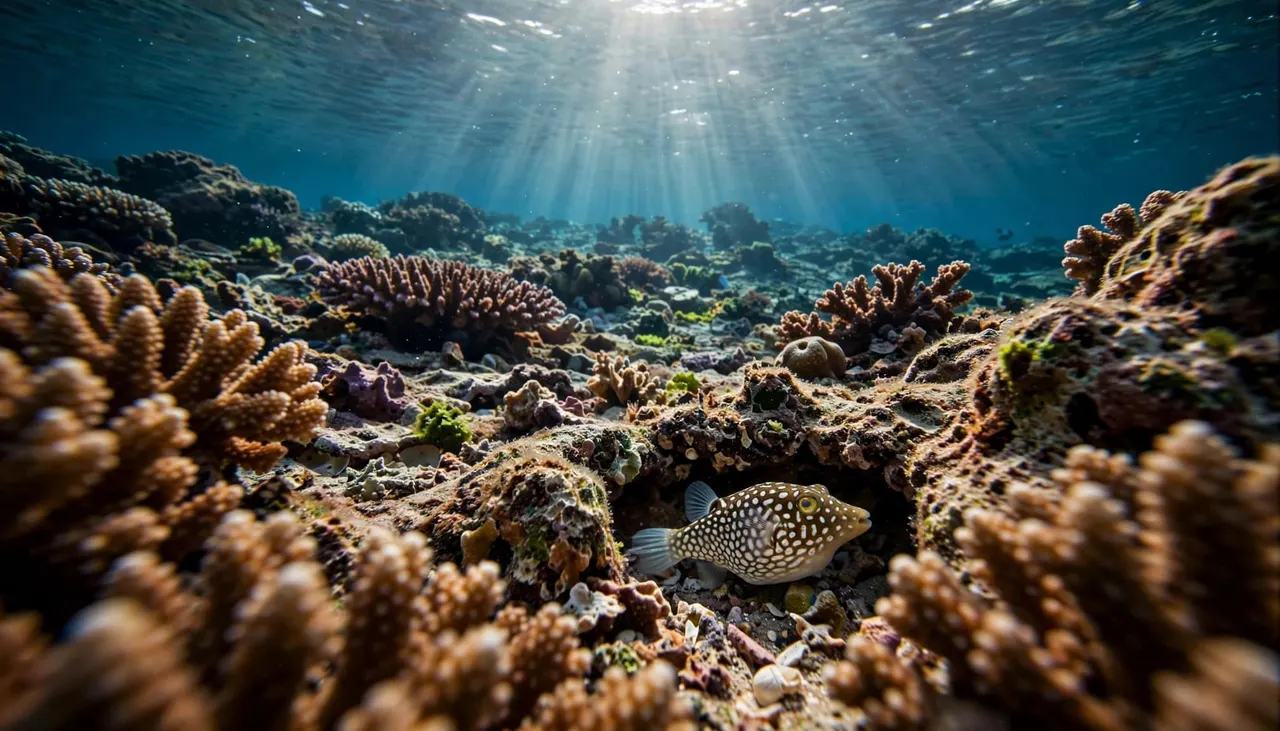
To look for a Hawaiian pufferfish, give reef structure your attention. Scan coral edges, rocky surfaces, and openings where a small fish can blend into the background.
FishBase describes the whitespotted toby as reef-associated, with a recorded depth range of 1 to 30 meters. That range describes habitat records, not a recommended snorkeling depth. You should remain at the surface within a suitable swimming area.
Its reported diet includes sponges, algae, worms, and other small marine organisms. However, a fish pausing beside coral isn’t automatically feeding.
Watch one patch for 20 to 30 seconds before moving onward. A fish’s outline may become easier to separate from rock and shadows once you stop kicking.
If it returns along the same edge, follow the route with your eyes. Don’t assume one repeated movement proves territorial behavior. Several observations give you more information than a quick pass.
Choose an Oahu Snorkeling Site for Today’s Conditions
You can explore reef habitat from shore or by boat. Your choice should depend on swimming confidence, access, and current ocean conditions, rather than a promised fish sighting.
Consider Guided Reef Access Near Waikiki
Offshore reef visits near Waikiki let you enter from a boat rather than cross a rocky shoreline. That can suit couples or families who want help with equipment and a clear swimming plan.
Turtle Canyons is known for its natural turtle-cleaning area. Between larger wildlife encounters, you can watch reef edges for smaller fish.
Still, an offshore location remains an open-water environment. Follow the crew’s designated boundaries, stay with your buddy, and ask about the conditions before entering. No tour or reef location guarantees a pufferfish encounter.
Treat Shore Access as Part of the Adventure
Hanauma Bay offers a managed shore-entry setting, while Pupukea’s Shark’s Cove and Three Tables require careful attention to swell and rocky access.
North Shore reefs can be appealing during settled summer conditions. In October, however, don’t assume those conditions will continue. Check the actual surf, entry, and exit before committing.
At Shark’s Cove, sharp or slippery rock can complicate access. Choose another outing if getting in or out exceeds your ability. Clear-looking water in a photograph doesn’t tell you what conditions you’ll face today.
Watch Without Triggering a Defensive Response
A Hawaiian pufferfish encounter should leave the fish free to swim, shelter, or feed. Keep your hands relaxed and avoid blocking its path.
Pufferfish can contain tetrodotoxin, a potent toxin. That general warning doesn’t establish toxin levels or toxic body parts for every species. Your practical rule is straightforward: observe without handling, and never collect or eat a fish you’ve found.
Inflation is a defensive response, not a behavior to request for a photograph. Never chase, corner, or touch a pufferfish to produce it.
Keep your fins above coral and avoid reaching toward a ledge for balance. If you need to adjust equipment, move to a suitable clear area or ask your guide for help.
Meanwhile, stay aware of your buddy and the water around you. Concentrating on a small fish can distract you from your position.
If the fish darts away when you approach, give it more space. A photograph isn’t worth crowding wildlife or drifting beyond your group’s boundaries.
Get Comfortable With Living Ocean Tours
Living Ocean Tours departs from Kewalo Basin Boat Harbor, close to Waikiki. You can explore its Oahu snorkeling and ocean tours to choose an outing that fits your group.
The company describes itself as Oahu’s only tour company with professional snorkel guides in the water. That support helps you address a leaking mask, discuss flotation, or take a calm break before returning to the boat.
Its Coast Guard-inspected double-decker vessels include shaded seating, onboard restrooms, dry storage, and sturdy boarding ladders. Before entry, tell the crew about swimming nerves or equipment concerns.
For a turtle-focused reef outing, CHECK AVAILABILITY and ask about the experience that suits your family.
Comfortable gear gives you more attention for Hawaiian pufferfish identification. Once you’re settled, ask your guide to help confirm uncertain sightings rather than swimming after a fish.
You can also check the company’s full booking calendar below.
Frequently Asked Questions
Are All Hawaiian Pufferfish the Same Species?
No. Hawaiian waters contain several pufferfish species, including small tobies and larger puffers. For identification, compare body shape, snout, markings, and approximate size. If you only see part of the fish, keep your identification broad and ask your guide afterward.
Will You See a Pufferfish on Every Oahu Snorkel Trip?
Sightings aren’t guaranteed. Habitat, visibility, ocean conditions, and the fish’s movements all affect what you see. You improve your observation by watching suitable reef structure patiently, but covering more ground doesn’t promise an encounter.
Can Beginners Look for These Fish?
Yes, when the outing and conditions match your swimming ability. Fit your mask before entry, discuss flotation with the crew, and stay with your buddy. Watch from the surface rather than diving toward a fish or following it into a reef opening.
Leave the Reef Ready for the Next Encounter
Recognizing a Hawaiian pufferfish starts with a small set of clues: its outline, face, and markings. Patient observation helps you put those details together without disturbing the animal.
Choose conditions that suit you, keep your fins clear of coral, and accept uncertain identifications. Your most memorable sighting may be a small spotted fish continuing its routine while you float nearby.


