
What Hawaiian Green Turtles Eat at Turtle Canyon, Oahu
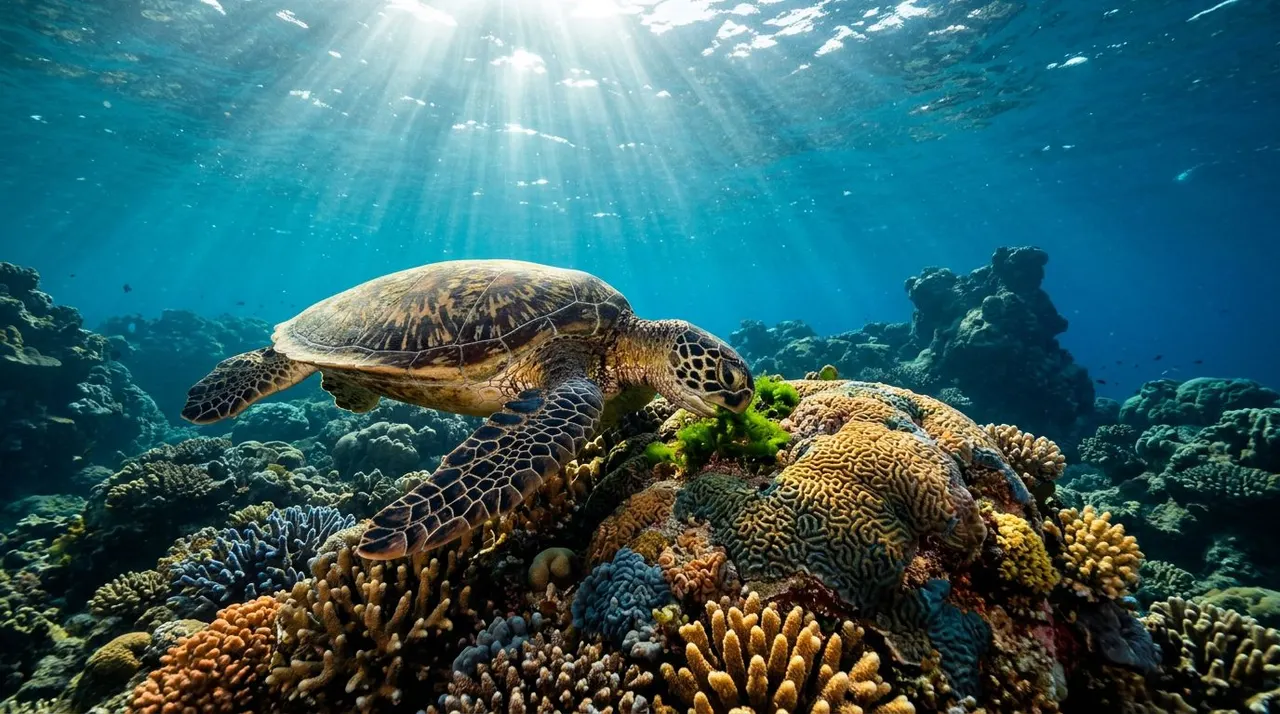
When you see a green sea turtle glide over the reef at Turtle Canyon, it may look as if it is searching for lunch. However, many turtles visit this popular Waikiki site to rest or use its natural cleaning station. Their main food is usually found elsewhere.
Hawaiian green turtles primarily eat algae and seagrass, especially after they reach adulthood. At Turtle Canyon, you may still see one nibbling along a reef surface, but you should never feed or touch it. Understanding the turtle’s diet helps you enjoy the encounter while protecting the habitat that supports it.
The main foods Hawaiian green turtles eat
Adult green turtles are mostly herbivores. Their diet centers on marine plants, including algae, seaweed, and seagrass. The exact food depends on what grows in their feeding area and what the turtle can reach.
According to NOAA’s green turtle profile, algae and seagrasses make up most of an adult green turtle’s diet. You may also hear Hawaiian green turtles called honu, the Hawaiian word commonly used for these animals.
At rocky reef sites, a turtle can scrape algae from hard surfaces with its beak. It may move slowly across a ledge, taking repeated bites before drifting to another patch. This grazing behavior helps trim algae from the reef, although turtles aren’t the only animals that keep reef growth in balance.
A green turtle’s name doesn’t come from the color of its shell. The name refers to the greenish color of its body fat, which comes from its plant-heavy diet. Its shell may look olive, brown, gray, or nearly black depending on the turtle, lighting, and viewing conditions.
Young green turtles can have a broader diet than adults. Juveniles may eat small invertebrates, jellyfish, crustaceans, and fish before they shift toward a plant-based diet as they mature. Maui Ocean Center’s Hawaiian green turtle guide provides more background on this change in feeding habits.
What turtles may eat around Turtle Canyon
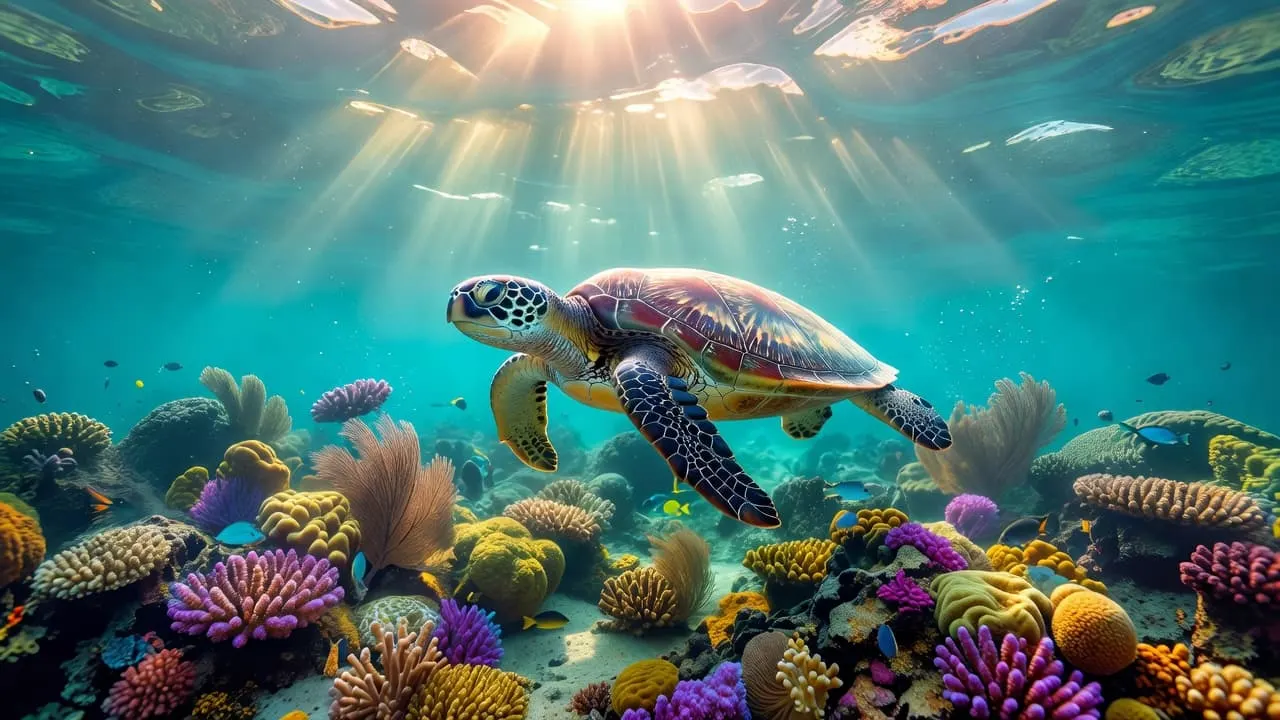
Turtle Canyon is a reef area off Waikiki with rocky surfaces, coral growth, sandy patches, and changing ocean conditions. Algae can grow across parts of the reef, giving turtles opportunities to graze when they are hungry.
Still, you shouldn’t assume every turtle you see is eating. A honu might hover above the bottom, rest on a ledge, or swim through the area without taking a bite. Turtle Canyon is best known for turtle encounters at a natural underwater cleaning station, so resting and cleaning behavior is common.
You may notice a turtle:
- Moving its head close to a rock while grazing algae
- Pausing on the seafloor or beside a reef ledge
- Swimming slowly through the cleaning area
- Rising toward the surface for air
- Changing direction when swimmers move too close
Green turtles don’t eat coral, snorkelers’ food, or anything you carry into the water. They also don’t need treats from people. Feeding can change their natural behavior and may cause them to associate boats or swimmers with food.
The reef itself supports far more than turtles. Small reef fish, sea urchins, crabs, and other animals use the same habitat. Algae is food for many reef creatures, while the reef provides shelter and resting areas for turtles.
You may see a turtle feeding in another part of Oahu and later encounter it at Turtle Canyon while it rests. Sea turtles travel between feeding areas, resting sites, and cleaner stations. A single snorkel location shows only one part of that daily routine.
Why Turtle Canyon attracts sea turtles
Turtle Canyon has conditions that make turtle sightings popular with snorkelers. The reef offers underwater structure, relatively shallow viewing areas, and a natural cleaning station where turtles may pause while small marine animals remove organisms from their shells and skin.
That behavior can make a turtle appear unusually calm. You might see one holding position in the water while fish work around its shell. Another may rest near the bottom, then swim away when it needs air.
The cleaning station is not a performance or a guaranteed appointment. Ocean conditions, water clarity, boat traffic, weather, and turtle movement all affect what you see. Some trips produce a close view of a resting honu. On another day, you may see turtles farther away or only for a short time.
That uncertainty is part of observing wildlife in its natural home. You get a more respectful experience when you watch the turtle’s behavior instead of expecting it to approach you.
Turtles also need to surface regularly. If one begins swimming upward, give it room. Blocking its path can force it to change direction or spend extra energy avoiding people. A turtle that swims away isn’t ignoring you. It is following its normal routine.
Hawaii’s Department of Land and Natural Resources sea turtle guidance also emphasizes responsible viewing and protection of these animals. Following local guidance protects the turtles and keeps the reef welcoming for future visitors.
How to watch a turtle without disturbing it
Your behavior in the water matters more than the turtle’s distance from you. A calm swimmer can watch natural behavior without creating stress.
Keep your hands off the turtle, even if it swims close. Its shell may look sturdy, but touching can disturb the animal and transfer sunscreen, oils, or bacteria. Never grab a flipper, hold onto the shell, or try to guide a turtle toward your group.
You should also avoid chasing a turtle for a better photograph. Move slowly, keep your body relaxed, and let the turtle choose its direction. If the animal turns away, swims faster, or repeatedly changes course, give it more space.
A few simple habits make your encounter safer:
- Keep your fins away from the reef and the turtle
- Avoid standing on coral or rocky reef surfaces
- Don’t surround a turtle with swimmers
- Never feed fish or sea turtles
- Follow your guide’s directions about distance and positioning
- Use an underwater camera without a flash if possible
Good buoyancy control helps you protect the reef. If you’re new to snorkeling, a professional guide can show you how to float comfortably without kicking the bottom. You don’t need advanced swimming skills to observe turtles responsibly, but you do need patience.
The best turtle encounter is one where the honu continues its normal behavior while you watch quietly from a respectful distance.
Choosing a Turtle Canyon snorkel tour
A guided trip gives you more than a boat ride to a reef. You get local instruction, safety support, equipment help, and someone who can explain what the turtle is doing.
Living Ocean Tours departs from Kewalo Basin Boat Harbor, a short drive from Waikiki Beach. Its Turtle Canyon Snorkel Excursion runs for about two hours, with approximately one hour in the water. The company reports a 95% success rate for spotting Hawaiian green sea turtles at the natural cleaning station.
Living Ocean Tours is also the only tour company with professional snorkel guides. That matters if you’re snorkeling for the first time, traveling with children, or want help reading turtle behavior without crowding the animals.
The crew supplies snorkeling gear and provides guidance for different comfort levels. The boats include shaded seating, restrooms, dry storage, and sturdy ladders for entering and leaving the water. You can view the Turtle Canyon snorkeling adventure when you want current tour details and availability.
Before booking, consider the experience you want. A morning trip may offer bright underwater visibility, while afternoon conditions can vary with wind and water movement. Families should also check age requirements, swimming comfort, and weather policies before choosing a date.
The most useful question isn’t whether a tour can promise a turtle to pose beside you. Ask whether the crew knows how to find the cleaning area, explain wildlife behavior, and keep the group respectful when a turtle appears.
Living Ocean Tours focuses on observation rather than interaction. That approach lets you see turtles as wild animals, not attractions trained to approach boats or swimmers.
What to remember before you enter the water
Hawaiian green turtles mainly eat algae and seagrass, while younger turtles may consume more animal-based food. At Turtle Canyon, the turtles you see may be resting or using the cleaning station rather than feeding.
You can protect them by keeping your distance, avoiding contact, staying off the reef, and refusing to feed wildlife. When you let the honu control the encounter, you get to witness a real part of its natural routine.
The turtle may arrive looking for a quiet place to rest, clean, or graze. Your responsibility is simple: watch carefully, move gently, and leave the reef exactly as you found it.


