
Hawaii daylight saving time: Plan a Waikiki Sunset Cruise
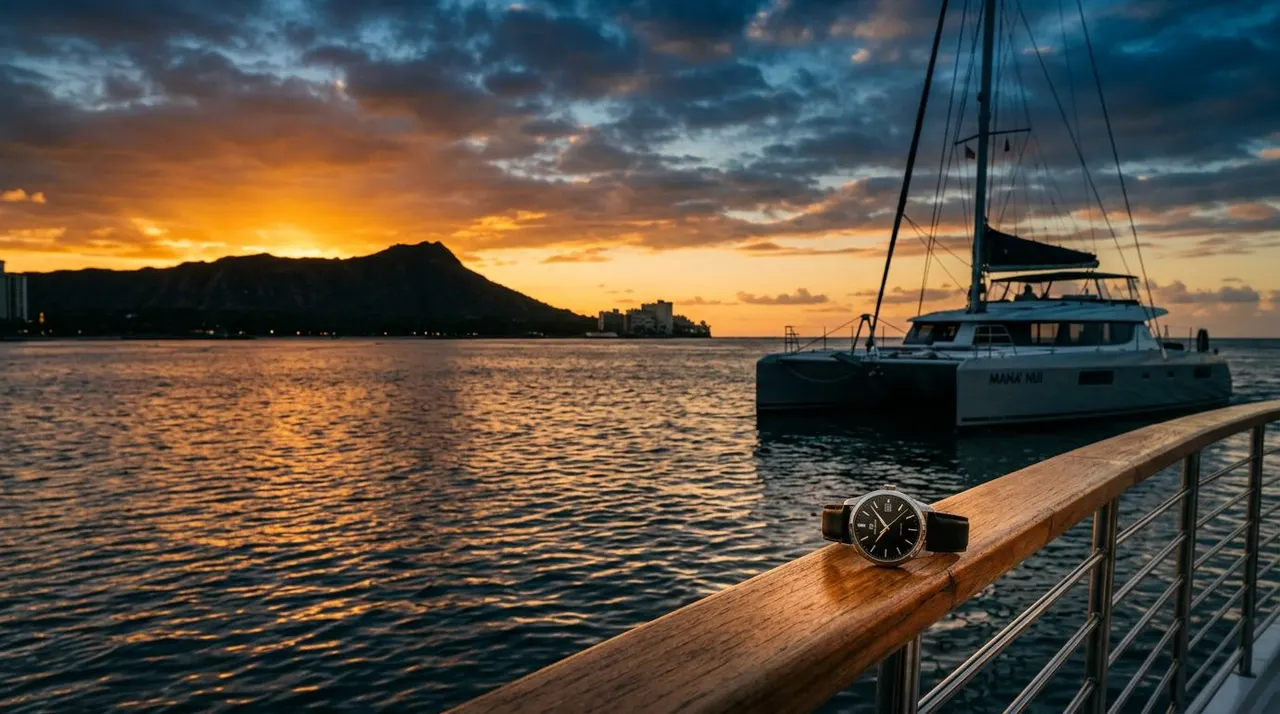
If you’re planning a Waikiki sunset cruise, Hawaii daylight saving time can create a small but important scheduling puzzle. Hawaii stays on the same clock all year, while most of the mainland moves forward in spring and back in fall.
That fixed schedule makes local travel easier once you understand it. You can plan your hotel pickup, dinner reservation, and boat departure using Honolulu time without adjusting your watch twice a year. First, you need to know why Hawaii keeps one standard time.
Why Hawaii daylight saving time stays on standard time
Hawaii uses Hawaii-Aleutian Standard Time, commonly abbreviated as HST. The state remains on standard time throughout the year and doesn’t move its clocks forward for a summer schedule.
The U.S. Department of Transportation’s daylight saving time guidance lists Hawaii among the U.S. locations that don’t observe daylight saving time. That rule applies statewide, including Honolulu, Waikiki, Maui, Kauai, and the Island of Hawaii.
Hawaii’s location limits seasonal daylight changes
Hawaii sits close to the equator compared with most of the United States. As a result, the length of the day changes less dramatically across the seasons.
Northern cities can gain several hours of evening light in summer. Honolulu gains much less. Moving the clock forward would change the number on the clock, but it wouldn’t create more sunlight.
Hawaii still has longer days in summer and shorter days in winter. The difference is simply moderate enough that a clock change offers limited value for daily schedules.
The state has used one clock for decades
Hawaii briefly tried daylight saving time in 1933. According to History’s account of states without daylight saving time, the change lasted only three weeks before officials repealed it.
Hawaii later opted out of the federal Uniform Time Act provisions in 1967. The decision kept local schedules consistent instead of creating a seasonal clock change that offered little extra daylight.
For you, the practical result is simple: a sunset cruise departure in Honolulu follows local time in January, June, and November.
What Hawaii daylight saving time means for your itinerary
When you arrive in Oahu, set your watch and phone to Honolulu time. Your cruise ticket, hotel front desk, restaurant reservation, and rideshare pickup all use the local clock.
The confusion usually starts when you call home. The time difference between Hawaii and the mainland changes during the months when other states observe daylight saving time.
The mainland time gap changes seasonally
When the West Coast observes Pacific Daylight Time, Honolulu is three hours behind Los Angeles, San Francisco, Seattle, and Portland. During Pacific Standard Time, the gap becomes two hours.
The difference changes across other time zones as well:
| Mainland location | During mainland daylight time | During mainland standard time |
|---|---|---|
| Pacific Time | Hawaii is 3 hours behind | Hawaii is 2 hours behind |
| Mountain Time | Hawaii is 4 hours behind | Hawaii is 3 hours behind |
| Central Time | Hawaii is 5 hours behind | Hawaii is 4 hours behind |
| Eastern Time | Hawaii is 6 hours behind | Hawaii is 5 hours behind |
The U.S. Naval Observatory’s daylight time reference confirms that Hawaii uses standard time only. You can use that information when scheduling a video call or telling family when you’ll return to your hotel.
Honolulu’s clock never jumps forward or backward
Your Honolulu schedule stays stable throughout the year. A 5:30 p.m. cruise check-in remains 5:30 p.m. local time, regardless of what the mainland clock does.
Your body may still feel out of sync after a long flight. That jet lag comes from crossing time zones, not from a local clock change. Give yourself extra time before a boat trip, especially if you land the same day.
How sunset changes across the year in Honolulu
Hawaii’s clock stays fixed, but sunset doesn’t. Honolulu’s sunset shifts with the seasons, so you should check the date-specific departure schedule before booking your cruise.
A rough guide looks like this:
| Season | Approximate Honolulu sunset | What to expect |
|---|---|---|
| Winter | About 5:50 to 6:15 p.m. | Earlier boarding and quicker twilight |
| Spring | About 6:30 to 7:00 p.m. | More daylight after afternoon activities |
| Summer | About 7:05 to 7:20 p.m. | Later departures and longer golden light |
| Fall | About 5:50 to 6:45 p.m. | Sunset moves earlier as winter approaches |
These ranges are guides, not guarantees. Cloud cover, mountains, and your position offshore can change how long the sky stays bright.
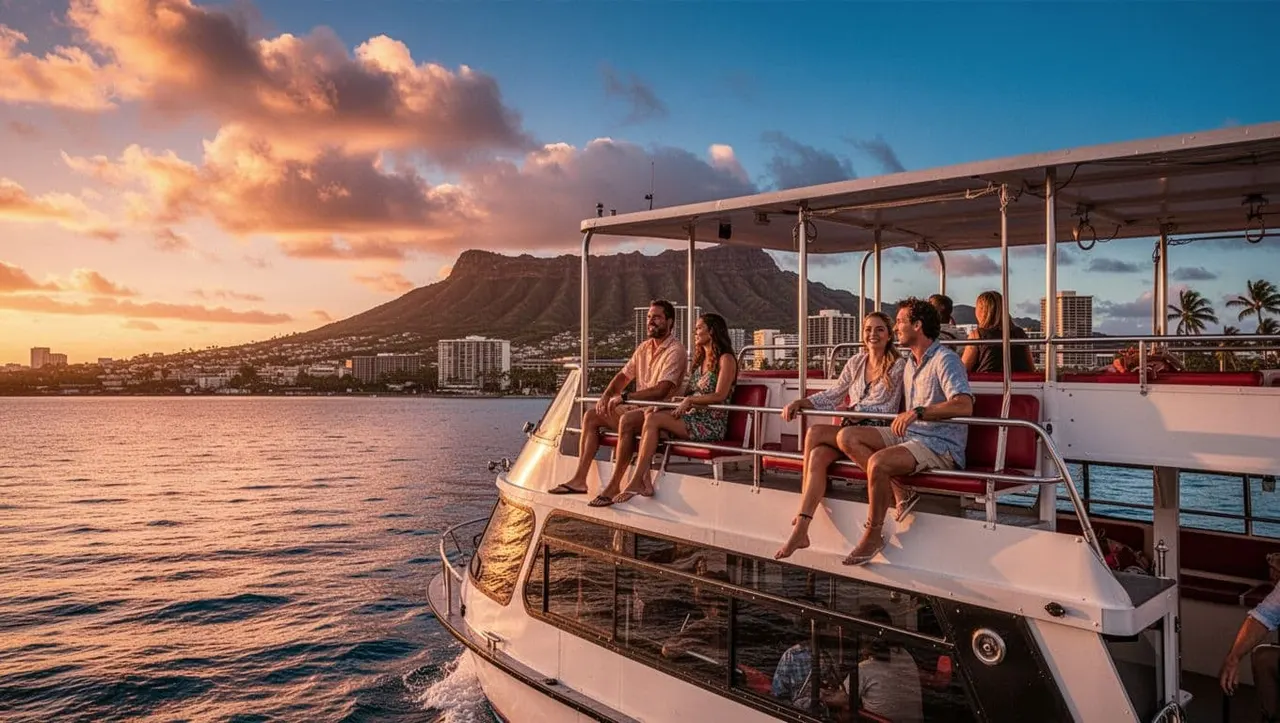
A cruise that leaves at 5:00 p.m. in December may reach the best sunset views quickly. The same departure time in July could place you on the water well before the sun reaches the horizon.
That difference matters when you choose between a cruise, dinner, and evening entertainment. Check the posted departure time, then compare it with the actual sunset for your travel date.
Why a Waikiki sunset cruise needs date-specific planning
A good sunset cruise depends on more than a clock. The boat needs enough time to leave the harbor, reach a clear viewing area, and give you time on the water before the last light disappears.
Departure times often change during the year to match the sunset. That adjustment helps you see the full transition from bright afternoon to warm gold and soft evening color.
A sunset is a moving target
The sun doesn’t set at the same point along the horizon every month. In summer, the sun sets farther north. In winter, it sets farther south.
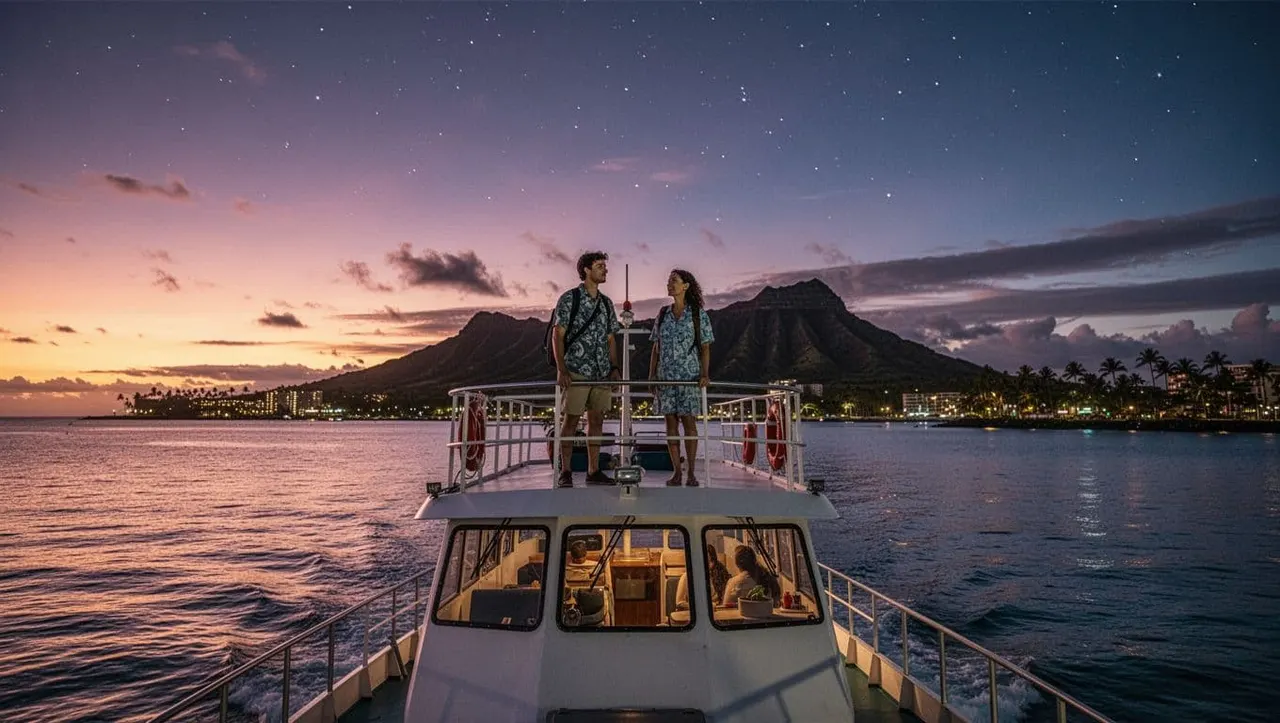
That seasonal shift changes the view from the boat. You may see Diamond Head outlined against orange light in one month, then watch the sky change over the western horizon in another.
Clouds can also improve the view. High clouds often catch pink and gold light, while heavy cloud cover can shorten the visible sunset. A boat gives you a wider view than a beach crowded with hotels and buildings.
Leave room before and after departure
Plan to arrive early instead of timing your arrival for the exact departure minute. Kewalo Basin Boat Harbor is close to Waikiki, but traffic along Ala Moana Boulevard can slow your ride.
After the cruise, keep your evening flexible. The boat may return after the sun has set, and you may want to stay by the water for a few minutes before heading to dinner.
A 30-minute buffer gives you time to find the harbor, check in, use the restroom, and settle aboard without rushing.
What to check before booking your evening cruise
A few details can make your cruise more comfortable. Read the booking information carefully, then match the tour with your schedule and the needs of your group.
Confirm the local departure time
Use the time shown by the tour operator, not the clock on a mainland booking website or an old email. If you booked months before your trip, check the confirmation again after you arrive.
Your phone should update to Hawaii time when you land, but travelers sometimes keep a second device on their home time zone. That can create mistakes when you read a departure time quickly.
Write the check-in time in your trip notes as Honolulu local time. Then plan transportation backward from that point.
Check the harbor and transportation plan
Many Waikiki visitors assume every boat leaves directly from the beach. In reality, ocean excursions may depart from a harbor a short drive away.
Living Ocean Tours operates from Kewalo Basin Boat Harbor, located minutes from Waikiki Beach in Honolulu. You should allow enough time for hotel pickup, traffic, parking, and walking from your drop-off point.
The U.S. daylight saving time background timeline can help explain why a mainland travel companion remembers a different time gap than you do. However, your harbor arrival time always follows Honolulu’s fixed clock.
Pack for changing conditions
The afternoon can feel warm on land, while the boat ride feels cooler after sunset. Bring a light layer, sunglasses, reef-safe sunscreen, and a small bag for personal items.
Wear secure footwear with soles that grip the deck. Avoid carrying large luggage or loose items that could move in the wind.
Fit ocean activities around Hawaii’s fixed clock
A fixed time zone makes it easier to build a full day around the ocean. You don’t need to account for a local clock change, but you still need to account for sunlight, heat, and travel time.
Schedule active water time earlier
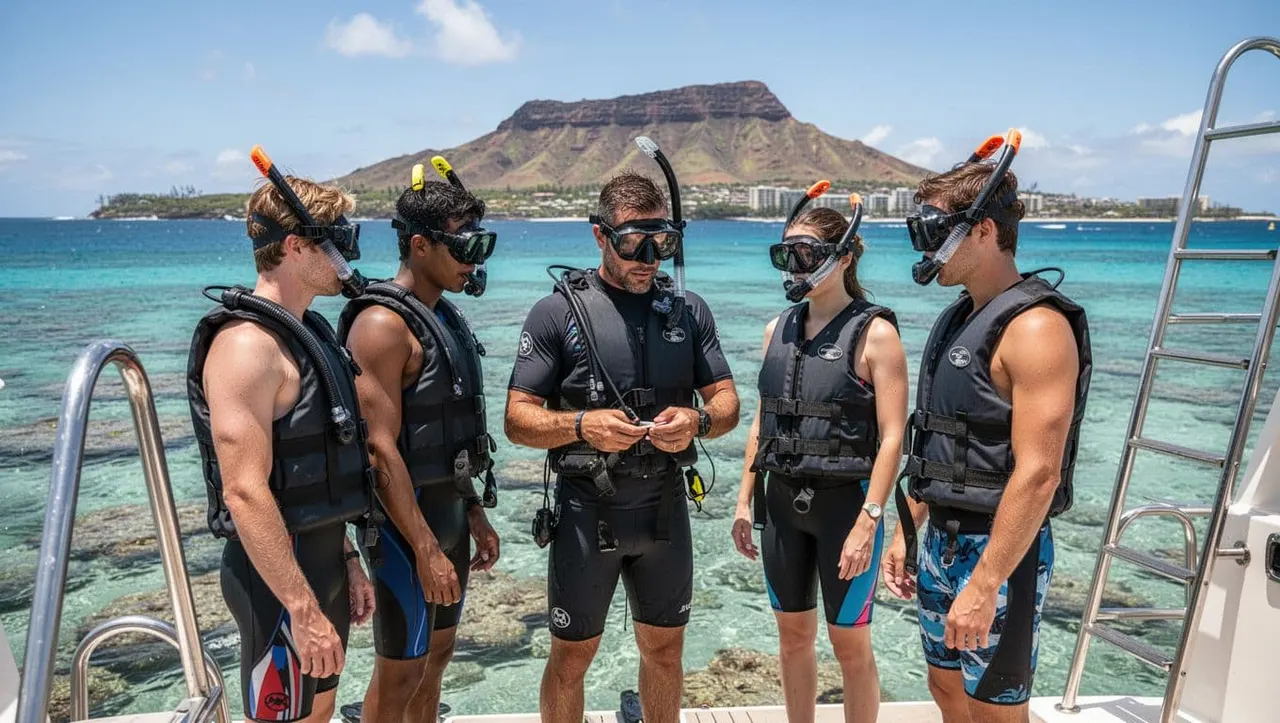
Daytime snorkeling usually gives you stronger natural light and warmer conditions. A morning or early afternoon trip can leave your evening open for a sunset cruise.
This arrangement works well for couples who want both reef time and a relaxed evening on the water. Families can also enjoy the ocean earlier, return to the hotel for a break, and board again later without rushing from one activity to the next.
If you want to compare available experiences, Living Ocean Tours lists its Waikiki sunset and snorkeling cruises in one place.
Leave a real break between activities
Avoid booking a hotel departure, snorkeling trip, and sunset cruise with no space between them. You need time to dry off, eat, change clothes, and travel to the harbor.
A two- to three-hour gap is more comfortable than a tight schedule. It also gives you a better chance of enjoying the cruise if the first activity runs late.
During summer, the later sunset can make the day feel longer. In winter, schedule your evening activities earlier because darkness arrives sooner.
What to expect from a Living Ocean Tours sunset cruise
Living Ocean Tours is based at Kewalo Basin Boat Harbor, just minutes from Waikiki Beach. The company offers ocean excursions along the Waikiki coastline, including sunset cruises with BYOB and cash-bar options.
Its custom-built, Coast Guard-inspected double-decker vessels, the Coral Kai and the Lokahi, provide shaded seating, restrooms, dry storage, and sturdy ladders for water access. The Lokahi also includes a SeaKeeper stabilization system that helps limit side-to-side rolling.
That extra stability can make the ride more comfortable if you are sensitive to motion. You can choose an open deck for wide views or find shaded seating when the afternoon sun feels strong.
Choose a boat experience that suits your group
Couples often prefer the open upper deck, where you can watch Diamond Head and the Waikiki shoreline change color. Families may appreciate the lower shaded areas, onboard restrooms, and easy access to the crew.
Living Ocean Tours is also the only tour company with professional snorkel guides. If you add a daytime reef adventure to your trip, beginners receive clear instruction and personal guidance before entering the water.
The crew’s approach also supports responsible wildlife viewing. You can enjoy Hawaii’s marine life while observing, not touching, sea turtles and other animals.
Check the departure calendar for your travel date because sunset times and available cruise slots change throughout the year. You can also CHECK AVAILABILITY before arranging dinner or transportation.
Pick the right cruise timing for your travel style
The ideal departure depends on what you want to see and how you want the evening to feel. Hawaii daylight saving time doesn’t change that choice, but the season does.
Couples can plan around the light
For a romantic evening, choose a departure that gives you time on the water before the horizon turns orange. You can watch the coast in full daylight, then stay aboard as the sky shifts through gold, pink, and violet.
A summer cruise may begin earlier than you expect because sunset comes late. In winter, the same experience may start closer to dinner time.
Bring a light layer for the return ride. Ocean air often feels cooler after the sun drops.
Families should prioritize comfort and buffer time
Families with young children may prefer an earlier departure, especially during winter when sunset arrives before 6:00 p.m. An earlier check-in also leaves room for bathroom breaks and questions before boarding.
Choose comfortable clothing and keep snacks or medications easy to reach. Ask the crew about seating if anyone in your group is sensitive to motion.
A spacious double-decker boat with shaded seating and restrooms can make the evening easier for parents. You can enjoy the view without treating every minute as a race.
Enjoy the sunset while protecting Hawaii’s ocean
A sunset cruise gives you a beautiful view, but the coastline is also a living habitat. Your choices on board can help protect the reef and marine animals you came to see.
Observe wildlife without touching it
Sea turtles, reef fish, dolphins, and seabirds need space. Keep your hands to yourself, avoid chasing animals, and follow crew instructions about distance and movement.
Never feed wildlife. Food can change animal behavior and create risks for both animals and visitors.
Responsible viewing keeps the encounter calm. You get a better experience when animals behave naturally instead of reacting to people.
Keep the boat and water clean
Use refillable water bottles when possible. Secure hats, towels, and small items before the boat picks up speed.
If you bring snacks or drinks, keep all packaging on board until you reach a proper bin. Even a small piece of plastic can harm marine life when it reaches the ocean.
Your crew can answer questions about local wildlife and conditions. Listen to safety instructions before departure, especially if you plan to move between decks.
Questions travelers ask about Hawaii daylight saving time
A few quick answers can help you plan your Waikiki evening without second-guessing the clock.
Does Hawaii ever change its clocks?
No. Hawaii stays on standard time year-round. The state doesn’t spring forward in March or fall back in November.
The change you notice comes from mainland states adjusting their clocks. Hawaii’s local time remains consistent.
How many hours behind the mainland is Honolulu?
The answer depends on the season and the mainland time zone. During mainland daylight time, Honolulu is three hours behind Pacific Time and six hours behind Eastern Time.
During mainland standard time, the gaps shrink by one hour. Check the current difference before calling home or booking a virtual appointment.
Does Hawaii’s fixed clock change sunset cruise times?
The clock itself doesn’t change, but the sunset does. Tour operators adjust seasonal departure times so you can be on the water near sunset.
Always read the departure time for your exact date. A July cruise and a December cruise may begin at different local times even when both are marketed as sunset experiences.
Is a Waikiki sunset cruise worth booking in winter?
Winter offers an earlier sunset and cooler evening conditions. You may board earlier, watch the sky change quickly, and still have plenty of time for dinner afterward.
Summer gives you a later sunset and longer daylight before the sky darkens. Both seasons offer a different view of the Waikiki coastline.
Make your Waikiki evening easy to remember
Once you understand Hawaii daylight saving time, the planning becomes straightforward. Honolulu keeps one clock all year, while the sun shifts gradually with the seasons.
Check your local departure time, compare it with the sunset for your date, and leave a buffer for transportation to Kewalo Basin Boat Harbor. Then choose a comfortable cruise that gives you enough time to enjoy the coastline without rushing.
A Waikiki sunset cruise lets you experience the changing light from the best possible viewpoint, offshore with Diamond Head, the city, and the Pacific spread around you. The clock stays the same, but the view never does.


