
Identifying a green turtle shell at Turtle Canyon
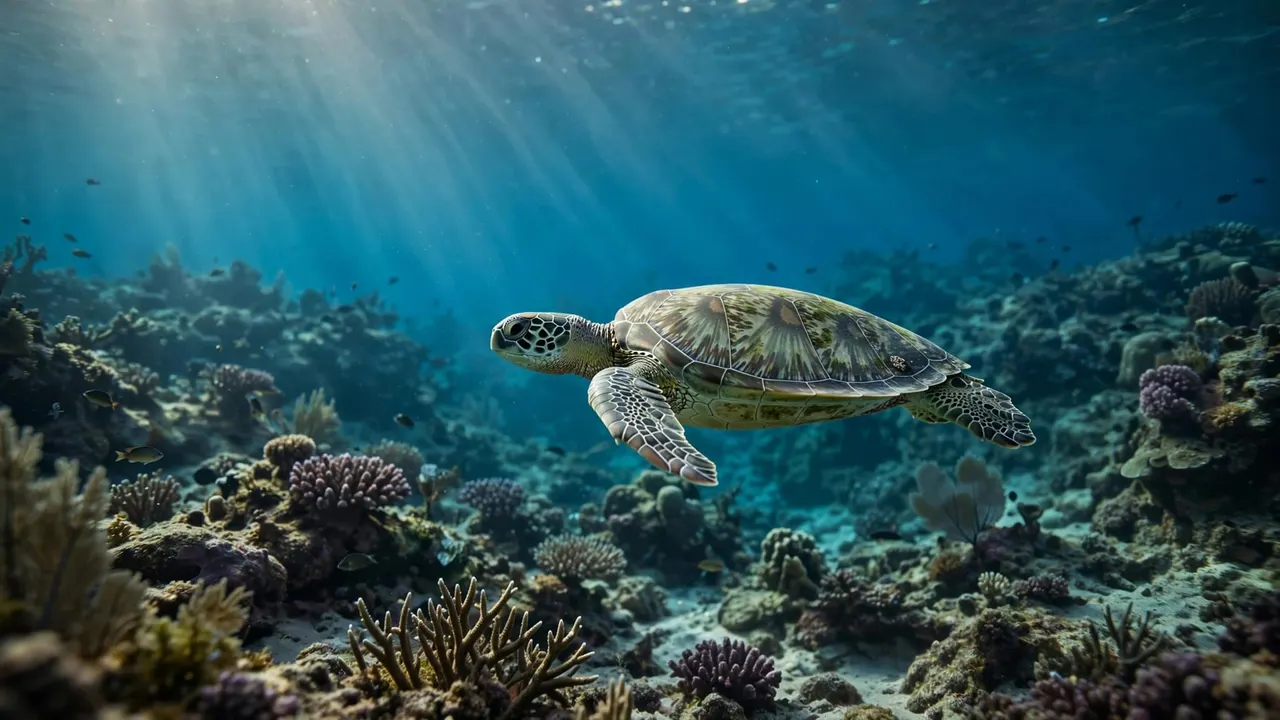
When a honu glides beneath you, the shell and exposed skin can look like one continuous pattern. To distinguish a green turtle shell from its skin, start with body position and large scute patterns, rather than a fleeting underwater impression.
At Living Ocean Tours, you can practice those observation skills during a respectful encounter at Turtle Canyon, off Waikiki. Begin with the broad shell outline, then follow its edge toward the turtle’s head, neck, and flippers.
Recognize a green turtle shell by its scutes
Look for the large sections across the back
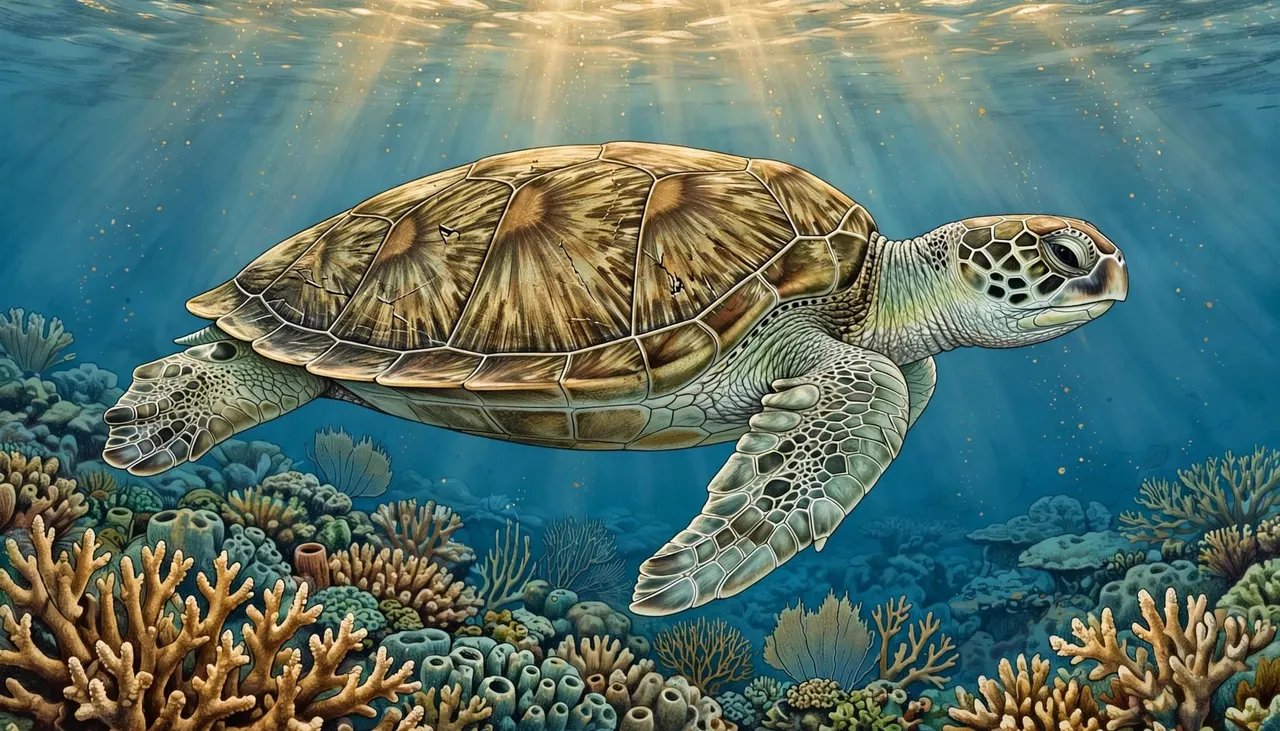
The upper shell is called the carapace. When you look down from the surface, it’s usually the largest continuous part of the turtle you can see.
Its outer covering contains scutes, which are plates made of keratin. That’s the same material found in your fingernails. The boundaries between these plates create the shell’s recognizable arrangement.
According to NOAA’s green turtle profile, green turtles have five scutes along the middle and four on each side. Smaller scutes also border the shell.
You don’t need to count every plate during a moving encounter. First notice the broad central row and the sections beside it.
Remember that the shell belongs to the animal
A green turtle shell is part of the turtle’s body. Under its outer covering, the shell contains bone connected with the ribs and backbone.
The underside has its own name: the plastron. You might glimpse it when a turtle changes direction, but you shouldn’t swim underneath to inspect it.
Because both surfaces belong to the living animal, neither is something to tap or handle. You can distinguish the shell through observation alone.
Find skin around the head, neck, and flippers
Follow the shell edge toward the neck
The most useful boundary is where the oval carapace ends and another body part extends beyond it. At the front, you’ll see the neck leading to the head.
The head has scales, so a patterned surface doesn’t automatically mean you’re looking at shell. Location gives you a stronger clue: the head and neck sit beyond the broad carapace.
Watch as the turtle changes its head position. That movement helps you separate the neck from the shell behind it.
Don’t expect a sea turtle to pull its head completely inside the shell. Unlike many land turtles, sea turtles can’t retract their heads and flippers that way.
Watch the flippers move independently
The flippers extend outward from openings around the shell. Their surfaces are skin-covered, even though you may notice scales.
As the turtle swims, the front flippers sweep through the water. Meanwhile, the broad shell keeps its overall outline.
That contrast gives you an easy observation cue: the flipper changes position relative to the shell. You can follow the movement without needing a close-up.
Near the back, the hind flippers and tail also extend beyond the shell. These exposed body parts help you recognize where the carapace stops, especially during a side-on view.
Use shape and location before small markings
You can make the distinction faster by looking at the whole turtle first. A distant view often reveals the shell outline more clearly than a rushed attempt to inspect tiny details.
Use these visible features together when identifying a green turtle shell.
| What you notice | Shell cue | Skin-covered body cue |
|---|---|---|
| Position | Broad covering over the back or underside | Head, neck, flippers, and tail |
| Pattern | Large scutes arranged across the carapace | Scales on exposed body parts |
| Movement | Overall shell outline remains consistent | Neck and flippers change position |
| Boundary | Defined edge around the carapace | Body parts extend beyond that edge |
The strongest clue is the combination of location, plate arrangement, and movement. A single marking gives you less information.
Smithsonian Ocean’s sea turtle overview explains that shell shape, scute patterns, and head scales help distinguish sea turtle species. Those features also remind you why scales and scutes shouldn’t be treated as interchangeable terms.
For your Turtle Canyon encounter, start with the large oval. Then locate the head and front flippers. Once those landmarks are clear, the shell-to-skin boundary becomes much easier to follow.
If waves interrupt your view, pause rather than swimming closer. Wait for another natural angle while staying with your group.
Watch shell and skin at the cleaning station
Turtle Canyon is known for its turtle-cleaning station. Here, reef fish attend to visiting Hawaiian green sea turtles, or honu.
This behavior gives you more to watch than a turtle passing through open water. You may see fish working around the turtle while it holds position near the reef.
Look at where each fish approaches. A fish beside a large plate on the back is near the shell. One near the neck or flipper is beside exposed skin-covered tissue.
However, the fish itself doesn’t define the boundary. Keep using the turtle’s anatomy as your reference.
A fish moving across a turtle doesn’t mean every surface it visits is shell. Follow the body outline first.
A green turtle shell may appear different as the turtle turns or the viewing angle changes. Keep your attention on the scute arrangement and shell edge instead of trying to interpret every patch you see.
Let the cleaning visit continue uninterrupted. Don’t descend toward the turtle, separate it from nearby fish, or move into its route to open water. Watching the full interaction gives you a richer encounter than chasing one detail.
Observe without touching or blocking a turtle
Give the turtle a clear route
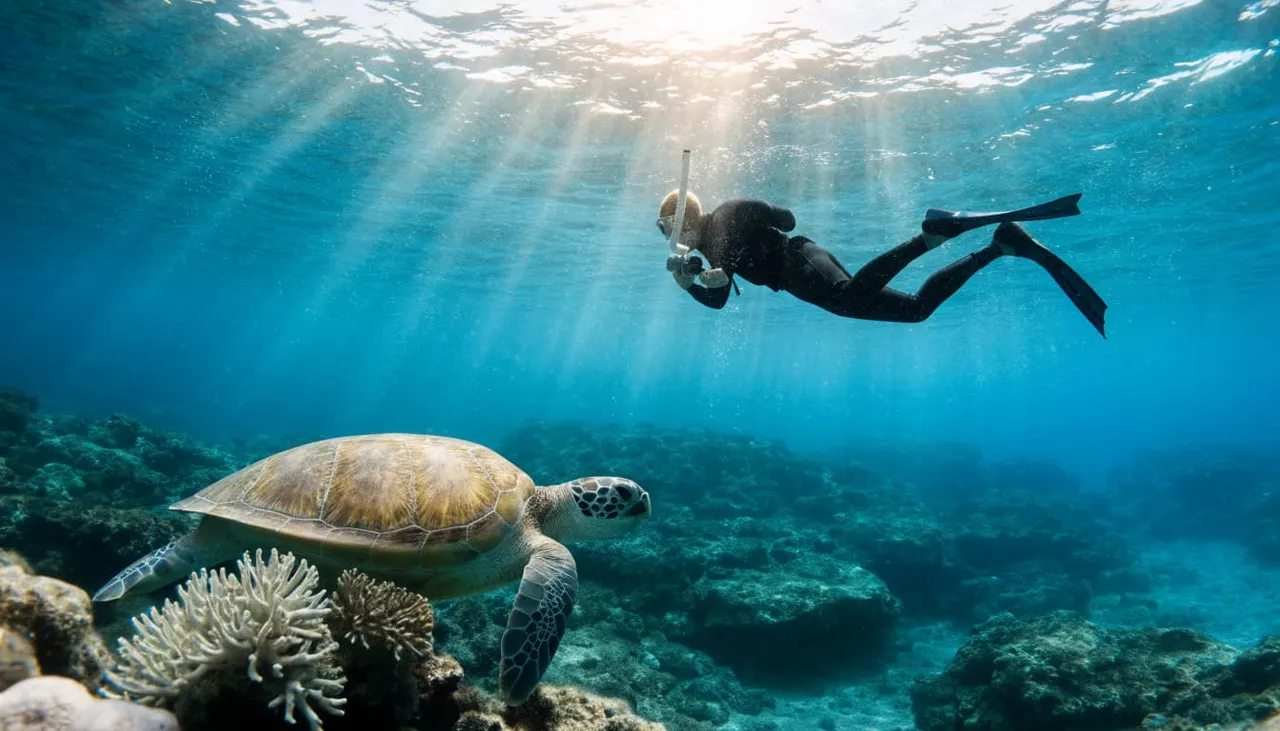
Your observation should leave the turtle free to swim, rest, and surface for air. Stay to the side rather than positioning yourself directly above it.
Never touch, chase, feed, ride, or surround a turtle. If one approaches unexpectedly, stay calm, keep your hands to yourself, and give it room to pass.
The Hawaii Department of Land and Natural Resources explains that Hawaiian sea turtles have federal and state protection. Respectful viewing protects their normal behavior as well as your encounter.
If other snorkelers gather nearby, avoid joining a circle around the animal. Leave open water available in every direction.
Get comfortable before focusing on anatomy
A leaking mask or rushed breathing makes careful observation harder. Tell your guide if you’re new to snorkeling, uneasy in open water, or helping a child.
Before swimming away from the boat, get help with your mask fit and flotation equipment. Then use slow, controlled fin kicks rather than splashing toward a sighting.
Keep your fins above the coral. If you need to adjust your gear, move into clear water with your guide’s direction instead of standing on the reef.
Comfort helps you pay attention without crowding wildlife. You can notice the neck, scutes, and flipper movements while staying aware of your group.
Practice your observation skills on our guided snorkel
With our guided Turtle Canyon snorkel tour, you visit Waikiki’s turtle-cleaning station with equipment and in-water support. We depart from Kewalo Basin Boat Harbor, minutes from Waikiki.
We’re the only Oahu tour company with professional snorkel guides in the water with you. That support helps beginners settle into their equipment and gives families clear direction around wildlife.
Our guides can help you understand what you’re seeing without encouraging closer approaches. Your priority remains comfortable swimming and respectful observation, whether you’re following a flipper stroke or noticing the shell’s scutes.
You can explore our ocean experiences using the availability button below.
For a trip focused on Turtle Canyon, CHECK AVAILABILITY for our Turtle Canyons Snorkel Excursion.
Key takeaways for your Turtle Canyon visit
You don’t need a close encounter to understand a turtle’s anatomy. Keep these observation cues in mind:
- Find the broad carapace first, then look for its large scute arrangement.
- Follow the shell edge toward the head, neck, flippers, and tail to locate exposed skin-covered parts.
- Watch movement without changing the turtle’s behavior, and leave its route to the surface open.
Treat the cleaning station as a place to observe natural activity. You’ll have more attention available for the details when your mask fits well and your breathing feels comfortable.
Frequently asked questions
Are the scutes the same thing as skin scales?
Scutes cover the shell, while scales occur on exposed areas such as the head and flippers. Both can form visible patterns, which explains why the distinction can seem confusing underwater.
When observing a green turtle shell, look for the larger plates arranged across the broad carapace. Then use body position to separate those plates from scales beyond the shell edge.
Can you identify the boundary from the surface?
Yes, you can often distinguish the shell and exposed body parts while floating at the surface. The broad back, projecting head, and moving front flippers provide useful landmarks.
However, waves, your viewing angle, and the turtle’s position can hide parts of the boundary. Stay with your guide and accept the view available. You don’t need to dive down or approach the animal to complete your observation.
Leave with a clearer view of the honu
The shell-to-skin distinction becomes easier when you follow the turtle’s body outline. Locate the broad carapace, recognize its scutes, and watch the head and flippers move beyond its edge.
At Turtle Canyon, those details belong to a larger encounter with a living animal and its reef habitat. Give the honu space, and let its natural movements provide your next clear view.


