
How a green turtle shell protects ribs at Turtle Canyon
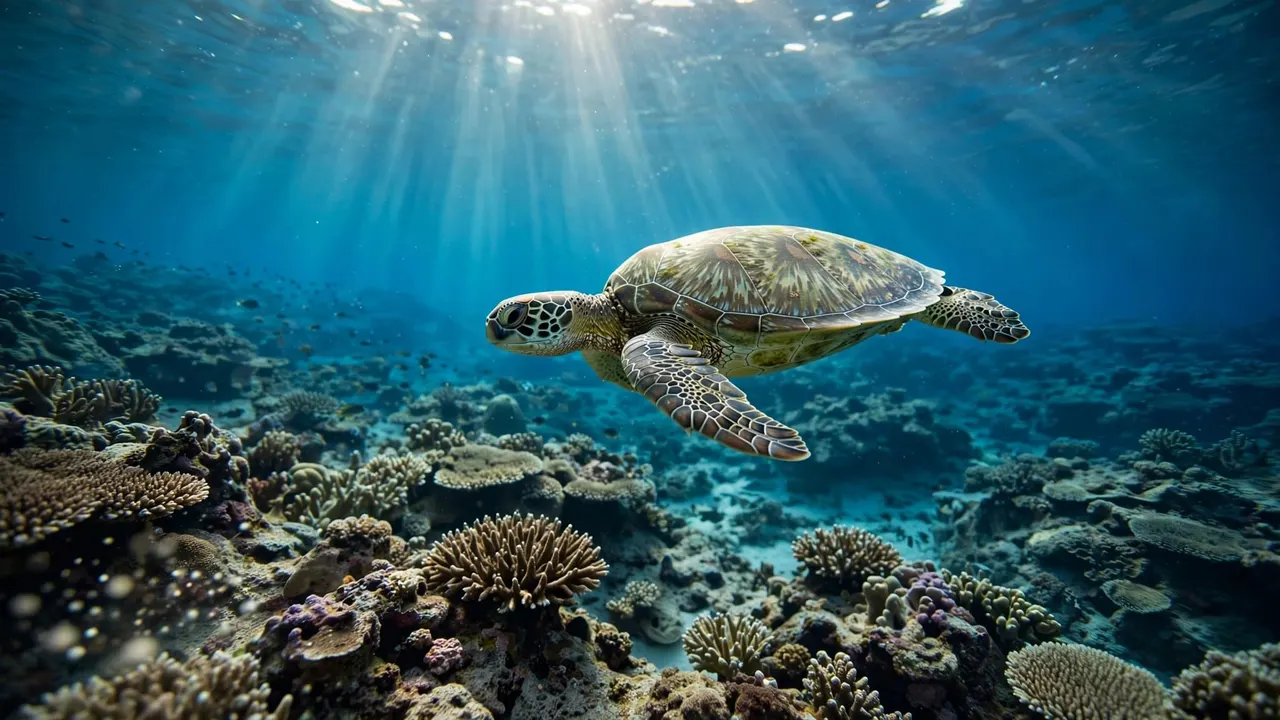
A green turtle shell protects the ribs because those ribs form part of its bony upper shell. The shell is part of the skeleton, so a turtle can’t separate from it or leave it behind.
At Living Ocean Tours, we bring a wildlife-first approach to our Honolulu ocean tours, including visits to Turtle Canyon off Waikiki, Oahu. Before you watch turtles glide above the reef, understanding that shell-to-rib connection gives you a clearer picture of the animal beneath the scutes.
Key Takeaways
- A turtle’s ribs connect with the carapace, the upper portion of its shell.
- The lower shell, called the plastron, protects the underside, while bony connections join the shell’s upper and lower sections.
- Because the ribs can’t expand like yours, turtles use other muscles to move air through their lungs.
- At Turtle Canyon, you may observe shell surfaces, swimming, and cleaning activity, but you can’t see the internal skeleton.
- Your best contribution is simple: float calmly, leave room for surfacing, and never touch a turtle.
How the green turtle shell connects to the ribs
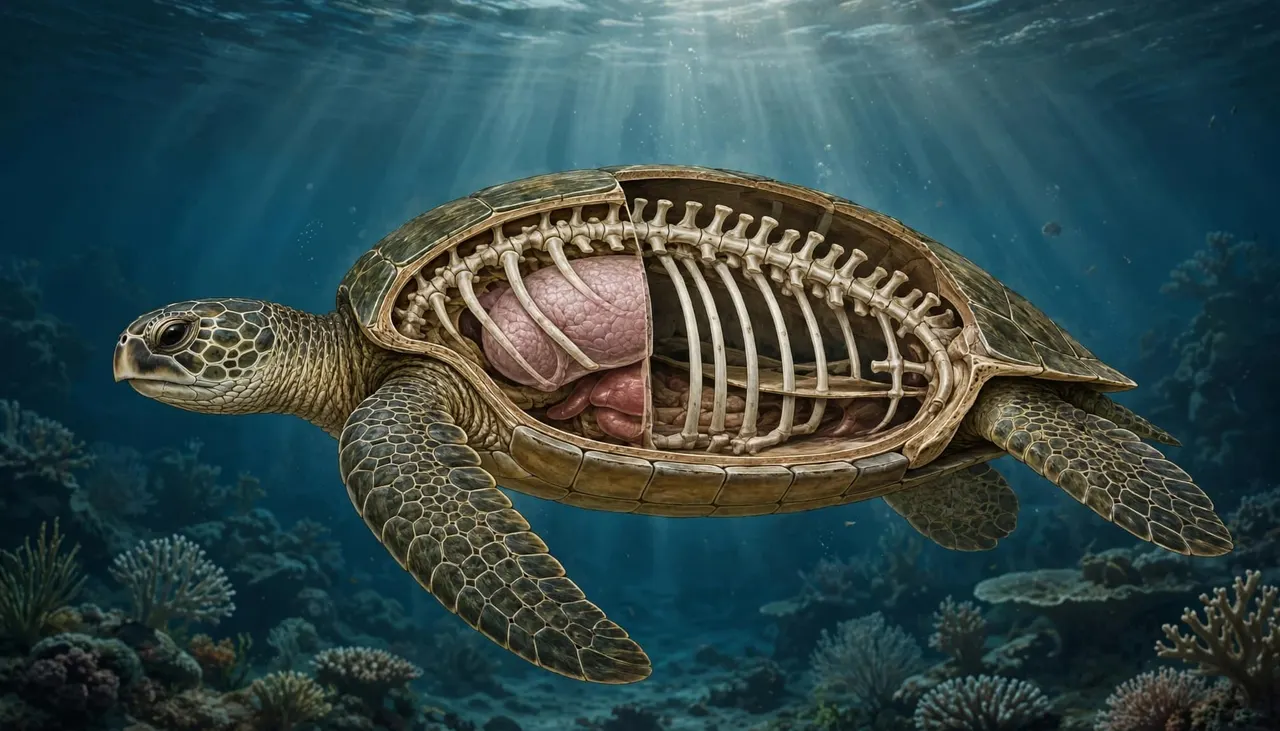
The upper shell incorporates the ribs
When you look at a green turtle shell, you’re seeing the outside of a structure connected to its skeleton. Beneath the surface, expanded ribs and bony plates join into the carapace. Portions of the backbone also connect with this upper shell.
The Smithsonian’s sea turtle anatomy guide describes flattened bone plates that grow between and fuse with the ribs. That connection explains why removing a turtle’s shell would cause catastrophic injury.
The ribs help form the protective structure itself. They aren’t a separate cage tucked beneath a removable covering. During a snorkel encounter, you see the exterior of this integrated system.
The lower shell completes the enclosure
The plastron forms the shell’s underside. Along the sides, structures called bridges connect it with the carapace. Together, these sections surround much of the body while leaving openings for the head, flippers, and tail.
The visible surface also differs from the skeleton beneath it. Hard-shelled sea turtles have keratin scutes over the bony shell. Keratin is the material in your fingernails, although a turtle’s scutes have their own shapes and arrangement.
Those surface outlines aren’t a map of individual ribs. From above the reef, you can notice the scutes without seeing the bones underneath them.
How the shell protects the ribs and body
A broad bony barrier surrounds the trunk
The green turtle shell places a hard surface between much of the turtle’s body and its surroundings. Because the ribs integrate into that surface, they belong to a broad, connected structure.
The shell’s shape also covers more than a narrow strip along the backbone. Its width helps enclose the trunk, while the plastron provides protection below. These connected sections make the shell central to the turtle’s body plan.
Jeanette Wyneken’s The Anatomy of Sea Turtles identifies the carapace, vertebrae, ribs, and rib derivatives as parts of the axial skeleton. That anatomical relationship is the reason the shell has such serious consequences for the animal when damaged.
Strong protection still has limits
A hard shell doesn’t make a turtle immune to injury. Boat strikes, entanglement, and other trauma can damage the shell and underlying tissues. Shell injuries can involve living bone, blood vessels, and nerves.
Sea turtles also can’t pull their heads and flippers completely inside their shells as some land turtles can. Their exposed body parts remain vulnerable.
A shell injury is an injury to the turtle’s body, not damage to an accessory it can replace.
If you notice a serious wound or entanglement while snorkeling, alert your guide. Don’t grab the turtle or attempt to remove material yourself.
Why turtles breathe without expanding their ribs
Their breathing muscles do different work
When you inhale, movements of your ribs help expand your chest. A turtle’s shell-bound ribs can’t perform that same movement.
Instead, turtles use specialized muscles associated with the body wall and internal organs to ventilate their lungs. These muscles change the space available for the lungs without requiring a flexible rib cage.
Research published in Nature Communications explains how rib incorporation changed turtle breathing. The shell’s structure rules out the rib movements that many other air-breathing vertebrates use.
This adaptation lets the turtle combine a rigid trunk with the ability to breathe air. You won’t see the familiar chest expansion you might expect from watching another animal.
Surfacing is part of normal turtle behavior
At Turtle Canyon, a turtle may leave the reef and rise toward the surface. Give it an unobstructed route, even if that means moving away from your preferred viewing position.
A slow ascent doesn’t invite a closer approach. The turtle needs access to air and room to choose its direction.
Likewise, a turtle hovering near the reef isn’t necessarily asleep or struggling. From the surface, you can’t determine its oxygen level, breathing needs, or health simply because it looks still.
What you can observe at Turtle Canyon Oahu
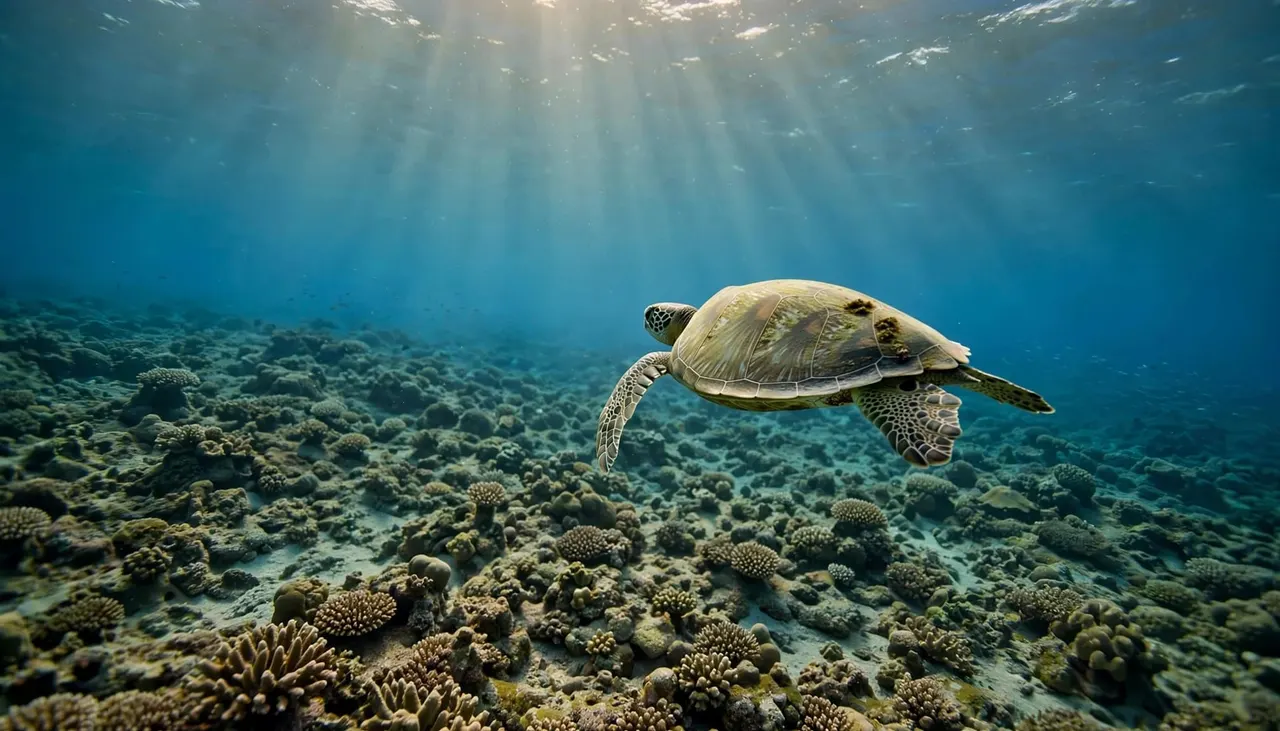
Turtle Canyon, also called Turtle Canyons, is an offshore reef area near Waikiki known for turtle-viewing opportunities and natural cleaning activity. Small reef fish may pick algae and other material from a turtle’s shell and skin.
While you float nearby, notice the outline of the carapace and how the animal moves its flippers. The rigid trunk stays comparatively steady as the flippers provide propulsion and control.
A green turtle shell can look smooth at a distance, but its surface has distinct scute boundaries. Algae, lighting, and water clarity can change how those patterns appear through your mask.
Cleaning activity concerns the outside of the animal. Fish removing surface material aren’t exposing or repairing the ribs beneath the shell. The interaction gives you a view of reef behavior, not an internal anatomy lesson.
You may also see a turtle pause, turn, or leave the area. None of those actions follows a visitor schedule. Several turtles sharing one reef don’t necessarily form a traveling group.
Stay with the scene rather than following an individual animal. You often notice more when you stop trying to close the distance.
Give turtles room to use their protective anatomy
The shell protects much of a turtle’s body, but it doesn’t protect the animal from every disturbance. Crowding can interrupt resting, cleaning, or surfacing behavior even when nobody makes physical contact.
Give turtles at least 10 feet (3 meters) of space. Treat that as a minimum viewing buffer, not a target you need to approach. If a turtle comes toward you, calmly create more room without surrounding it.
Never touch, ride, feed, or chase a turtle. Hawaiian sea turtles have federal and state protections, and respectful observation keeps your encounter focused on natural behavior.
Your equipment matters, too. Keep fins clear of coral and other snorkelers. Use flotation support when provided, and avoid standing on the reef to adjust your mask.
A camera doesn’t change these rules. Use the view available from your position instead of swimming closer for a shell photograph.
For families, agree on the distance rule before entering the water. Children can watch beside an adult or guide without competing for the nearest position.
If conditions or fatigue make it difficult to maintain your position, tell the crew early. Receiving help is a better choice than drifting into wildlife or pushing beyond your comfort level.
Explore Turtle Canyon with professional guidance
With our Turtle Canyons Snorkel Excursion, you depart from Kewalo Basin Boat Harbor, minutes from Waikiki, for an offshore reef experience.
We’re the only tour company with professional snorkel guides in the water with you. That support helps you manage equipment, understand wildlife-viewing etiquette, and feel more comfortable observing above the reef.
You receive snorkel gear, flotation support, and instruction. If you’re new to snorkeling, tell the crew before entering so you can get help with your mask and breathing technique.
Our approach centers on observing rather than touching. You can enjoy the excitement of a turtle encounter while letting each animal choose where to swim and when to surface.
Guest reviews offer another perspective on the experience:
For departure options, CHECK AVAILABILITY.
Frequently Asked Questions
Can a green turtle leave its shell?
No. A green turtle shell connects with the animal’s ribs and backbone. It grows with the turtle and remains part of its body throughout life. The shell isn’t a borrowed shelter or a covering the animal sheds whole.
Can you see the ribs while snorkeling?
You can’t see the ribs through an intact shell. What you observe is the outer surface, including its scutes and any algae growing there. Understanding the underlying anatomy helps you recognize why even gentle touching is inappropriate.
Is Turtle Canyon suitable for a first snorkel trip?
Our Turtle Canyon snorkeling tour includes instruction, equipment, flotation support, and professional in-water guidance. Tell the crew about your swimming comfort before entering. Ocean conditions still matter, so follow the crew’s directions and ask for assistance whenever you need it.
Appreciate the shell without disturbing the turtle
A turtle’s shell protects its body through its connection with the ribs and backbone. Once you understand that structure, every shell you observe becomes more than a patterned surface above the reef.
At Turtle Canyon, your most rewarding view comes with space and patience. Let turtles surface freely, watch their movements, and leave their shells untouched.


