
Why Do Flying Fish Leap Beside Your Boat?
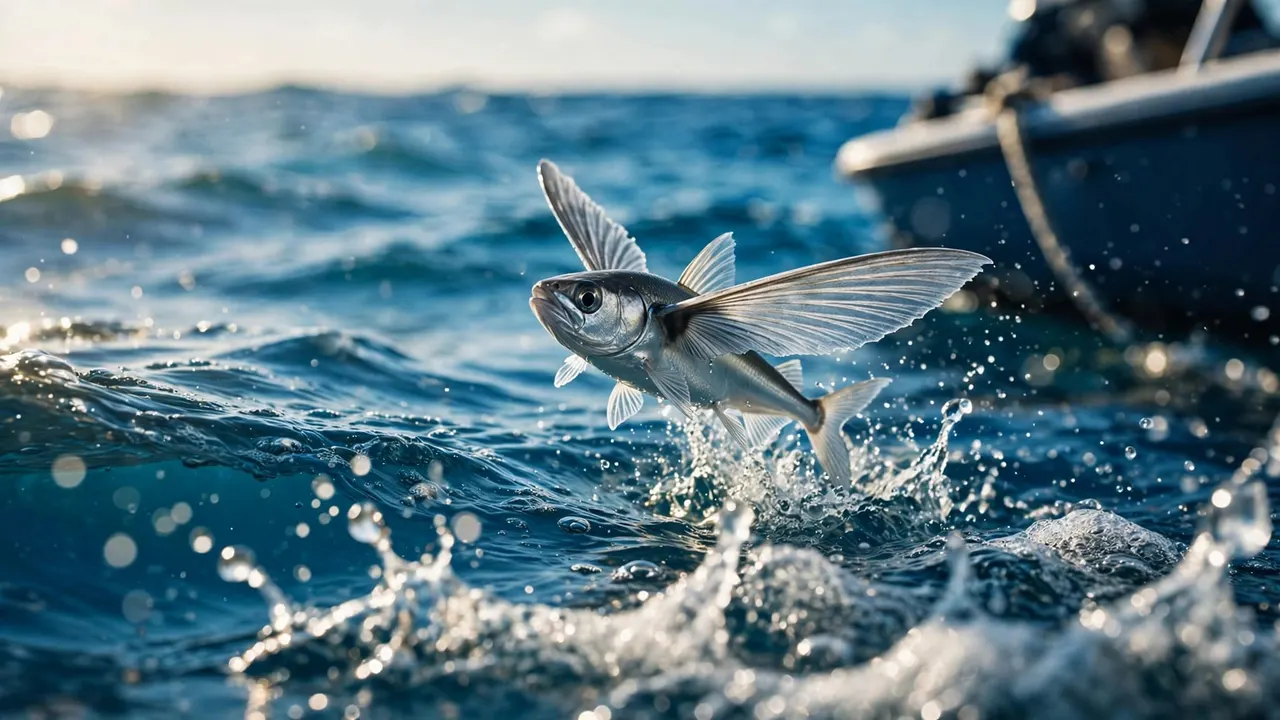
Flying fish leap out of the ocean mainly to escape underwater predators, then spread their enlarged fins to glide. If you spot them beside your vessel, you’re seeing a survival adaptation, although their position alone doesn’t reveal what triggered that particular launch.
On your boat ride with us at Living Ocean Tours, watching the surface adds another layer to your Oahu adventure. Understanding their movements helps you recognize these quick silver flashes before they disappear into the blue.
Key Takeaways
- Flying fish use speed underwater and enlarged fins in the air to escape danger.
- Their fins provide lift, but they don’t flap like a bird’s wings.
- A fish beside your boat isn’t necessarily following or racing the vessel.
- Watching the water ahead of a splash gives you a better chance of catching the next glide.
Why Flying Fish Leap Beside Boats
Escaping predators underwater
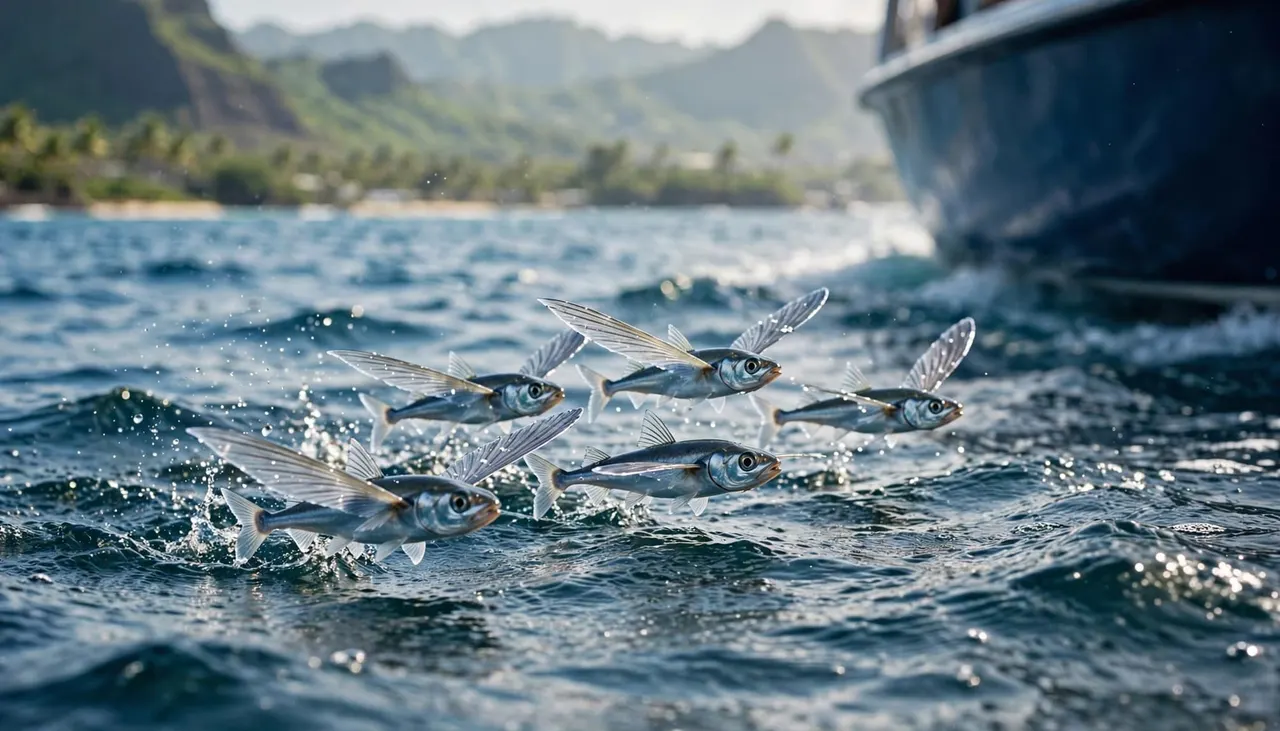
For a small ocean fish, leaving the water can create a useful gap between itself and a pursuing predator. Fish such as mahi-mahi and tuna hunt in the same open-water environment.
Once airborne, the fleeing fish can travel beyond the spot where its pursuer last saw it. That sudden change of direction and environment makes the escape possible.
Britannica describes gliding as a defense mechanism in the California flying fish, one member of this wider group. The general behavior helps explain what you’re watching, without identifying the species beside your boat.
Understanding the encounter beside your vessel
Your boat gives you a moving viewpoint across the fish’s habitat. Consequently, a launch that might go unnoticed from shore becomes easy to see against nearby blue water.
The fish’s position doesn’t establish the cause of its leap. You might see a predator nearby, but often the action beneath the surface remains hidden.
You also can’t infer that the fish is playing because it travels parallel to the hull. Its movement may briefly match your direction while it completes a glide.
Enjoy the encounter as a glimpse of ocean survival. The most useful clues are its launch, spread fins, and return to the water.
How Flying Fish Launch and Glide
Building speed beneath the surface
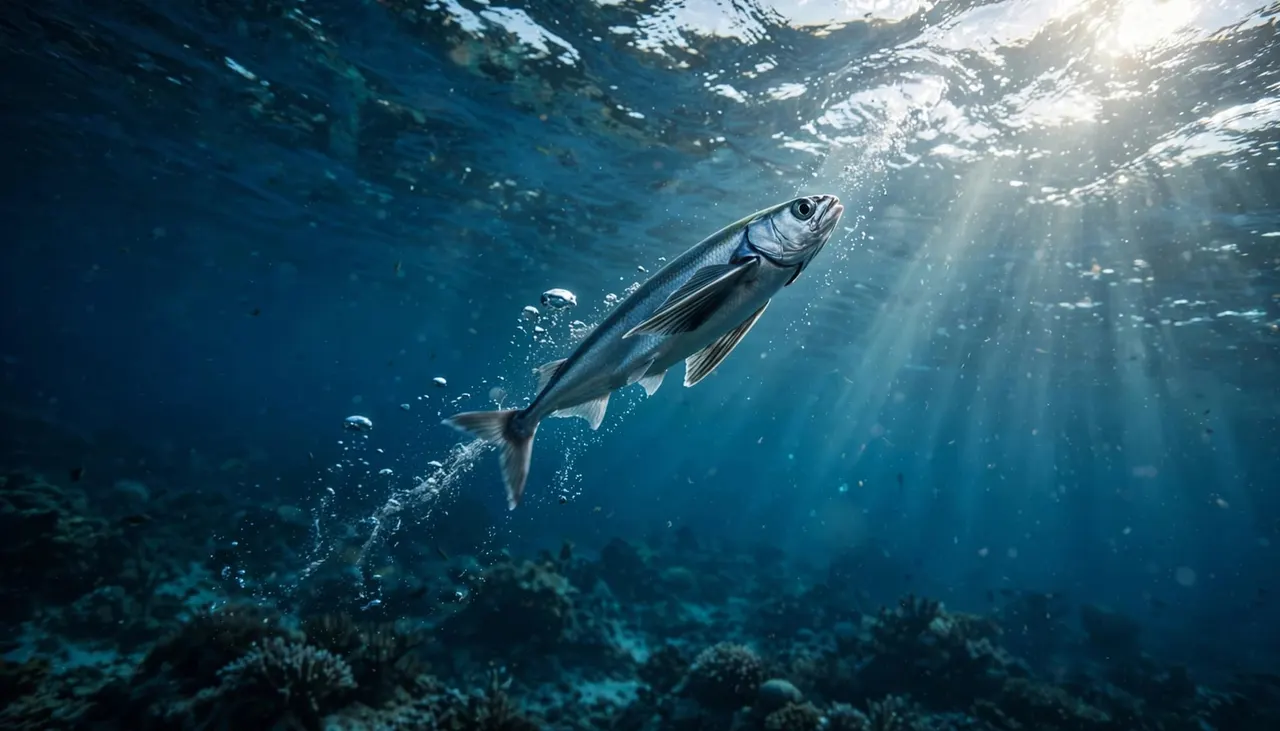
The airborne journey starts underwater. With its large fins folded against its body, the fish swims rapidly toward the surface.
Its tail supplies the propulsion needed to break through. Once clear of the water, the fish spreads its enlarged pectoral fins, the paired fins behind its head.
Some species also have enlarged pelvic fins farther back. These create the appearance of a second pair of wings, which explains descriptions of “four-winged” flying fish.
If you catch only the airborne portion, you’ve missed the underwater acceleration that made it possible. The leap depends on that swimming effort.
Using fins for lift
Once airborne, the fish glides rather than flaps. Air moving around its outstretched fins provides lift while its forward speed carries it across the surface.
Poseidon’s Web explains this launch-and-glide movement as a rapid departure from the water followed by travel through the air.
As the fish descends, its longer lower tail lobe can touch the water. Rapid tail movements can then supply another burst of speed without fully submerging the body.
From your viewing angle, that tail action may resemble fluttering wings. Look closely at the body: the broad fins generally remain extended while the tail does the extra work.
How Far Can Flying Fish Glide?
A glide can extend far beyond the splash where you first notice it. The National Wildlife Federation’s flying fish guide describes glides of up to 650 feet, or 200 meters.
For perspective, that’s farther than the length of two football fields laid end to end. However, you shouldn’t expect every fish to cover that distance.
A Loyola University New Orleans natural history account reports travel exceeding 1,200 feet. These reported observations don’t establish one universal limit for every species or encounter.
When you’re watching, separate a single airborne stretch from a longer sequence involving renewed tail contact. Otherwise, it’s easy to mistake several connected glides for one uninterrupted flight.
Your viewing angle also changes your impression. A fish moving away from the boat can look almost stationary, while one crossing your view appears much faster.
Rather than timing the encounter, follow its path. The transition between air and water is often the most interesting part.
How to Spot Them From the Deck
Scan close to the surface
Look across the water rather than down beside the hull. Flying fish often appear as narrow, silvery shapes skimming above the waves.
Start with movement. A sudden splash followed by a low, straight glide is easier to notice than the fish’s color alone.
Once you see one, keep watching the surrounding water. Other fish may launch nearby, giving you another chance to recognize the movement.
Polarized sunglasses can reduce reflected glare and make surface activity easier to follow. Still, looking up regularly matters more than having a particular pair of glasses.
Avoid staring only at the horizon. These small encounters happen much closer to the waterline.
Follow the landing without leaning out
Keep your feet secure and stay behind the rail. You don’t need to lean over the side to get a useful view.
Keep watching after the first splashdown. A fish may touch its tail to the water and launch into another glide.
If you’re taking photos, start with a wider view. Finding a fast-moving fish through a tightly zoomed phone screen can cost you the entire encounter.
For families, give children a simple viewing cue: watch for a silver shape that keeps moving after the splash. That helps them distinguish a glide from ordinary spray.
Let nearby guests know where you’re looking without crowding the rail or blocking the walkway.
What Else You Might See Around Oahu
The surface and reef reveal different parts of the same marine environment. While these gliding fish draw your attention above the waves, snorkeling introduces animals living around the coral below.
At reef sites such as Turtle Canyons, Hawaiian green sea turtles visit natural cleaning stations. Smaller fish remove material from their skin and shells while the turtles pause nearby.
You may also notice butterflyfish, parrotfish, and Hawaii’s state fish, the humuhumunukunukuāpuaʻa. Unlike the quick silver shapes offshore, these reef residents give you different colors, body shapes, and feeding behaviors to observe.
Look toward rocky openings for moray eels without reaching inside. Meanwhile, a spotted eagle ray may pass through deeper water beyond the reef.
Spinner dolphins are another possible sighting from the boat, but their presence doesn’t mean you should enter the water or approach them.
Across all these encounters, the rule stays consistent: observe without touching or chasing. Give animals room to continue feeding, traveling, resting, or surfacing on their own terms.
Enjoy the Journey With Living Ocean Tours
Your wildlife experience begins before you put on a mask. With us, you depart from Kewalo Basin Boat Harbor, just minutes from Waikiki, and travel through coastal waters worth watching throughout the ride.
Our Oahu snorkeling and wildlife tours combine time on the boat with opportunities to explore below the surface. You can enjoy the coastline while staying alert for the small encounters that are easy to miss.
For snorkeling, we’re the only tour company with professional snorkel guides. Our guides enter the water with you, provide support, and help you notice marine life around the reef.
If you’re new to snorkeling, that guidance gives you someone to follow and ask for help. You can focus on getting comfortable instead of trying to identify everything at once.
Choose your trip for the experience you want on the water. Flying fish are a bonus encounter, while guided reef exploration gives your day another rewarding focus.
When you’re ready to plan your ocean outing, explore the available departures below.
Frequently Asked Questions
Do flying fish leave the water to breathe?
They leave the water primarily for escape, rather than to take a breath. Like other fish, they use gills to obtain oxygen from water. When you see one airborne, you’re watching a temporary departure from its normal environment, followed by a return to swimming.
Can a flying fish land on a boat?
Occasionally, one can land aboard a vessel. If that happens during your trip, give it space and alert the crew. Don’t crowd around it or try to grab it for a photograph. A stranded fish needs a prompt return to the ocean, not extra handling.
Are sightings guaranteed on an Oahu boat tour?
No. You may see several glides during one outing and none during another. Their presence, surface activity, and your ability to notice them all vary. Keep watching during transit, but choose your tour for its planned activities rather than a particular unplanned wildlife encounter.
Make Every Surface Glimpse Count
Flying fish turn a brief moment beside your boat into a visible example of ocean survival. Their underwater speed, spread fins, and tail-powered relaunches explain the movement you’re seeing.
On your next outing, watch just above the waves and follow the fish beyond its first splash. Patient observation lets you enjoy the encounter without interrupting it.


