
Entangled Whale Waikiki: What You Should Do
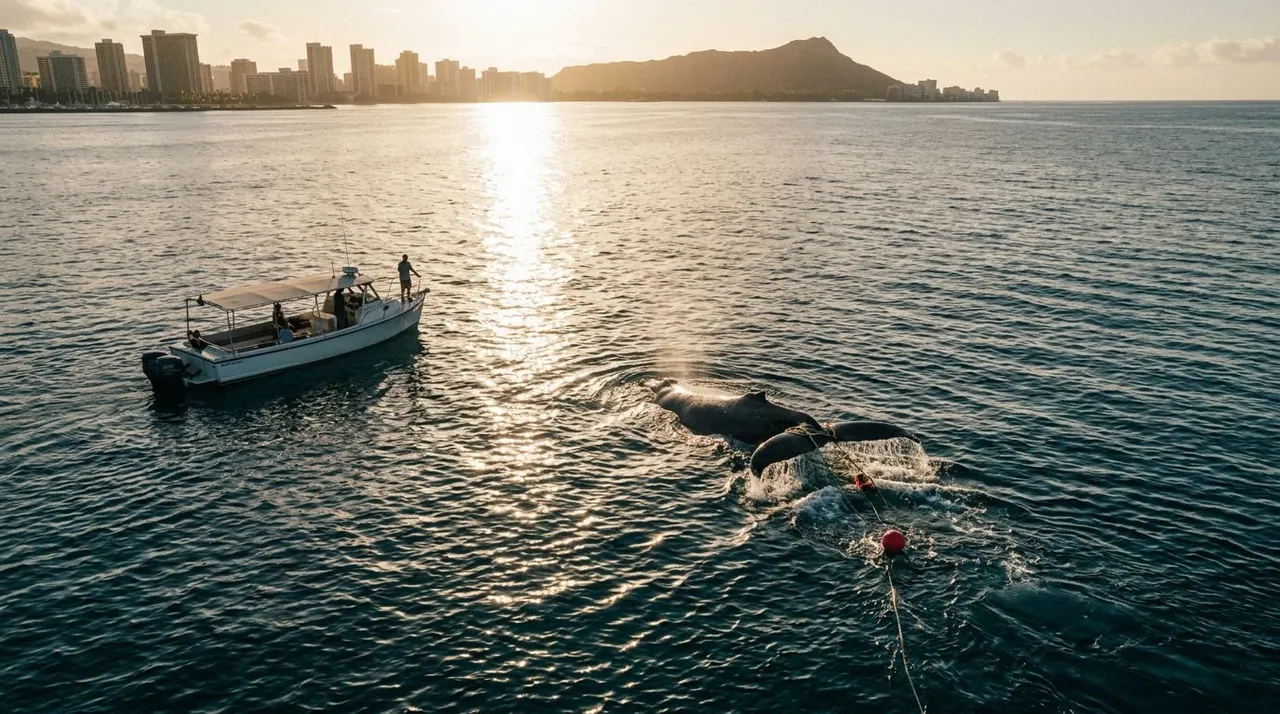
Seeing an entangled whale Waikiki visitors came to admire can turn a peaceful ocean trip into an urgent situation. Your actions matter, but an entangled whale needs trained responders, not a do-it-yourself rescue.
Stay calm, keep your distance, and collect useful details from a safe position. If you’re on a tour, alert the captain or crew immediately. If you’re on shore or a private boat, report the sighting to Hawaii’s marine wildlife hotline as soon as possible.
Key Takeaways
- Keep your boat, paddleboard, or personal watercraft away from the whale and its gear.
- Call Hawaii’s 24-hour marine wildlife hotline at (888) 256-9840.
- Share the location, time, whale’s condition, and visible signs of entanglement.
- Never pull on a line, approach the animal, or attempt to remove fishing gear.
- Listen to your captain and let authorized responders manage the rescue.
How to Recognize an Entangled Whale Waikiki Visitors Should Report
Whales can move unpredictably, so not every unusual behavior means an animal is entangled. Still, certain signs deserve an immediate report.
Look for rope, netting, buoys, or other gear trailing behind the whale. Lines may cross the animal’s back, wrap around its flukes, or hang near a pectoral fin. You might also see equipment floating several feet away while remaining attached below the surface.
An entangled whale may struggle to swim, roll repeatedly, slap its tail, or surface in an unusual pattern. It could appear unable to dive normally or show fresh wounds, bleeding, or deep grooves in its skin. A whale that repeatedly stops, changes direction sharply, or drags heavy gear also needs attention.
You don’t need to identify the whale’s species or diagnose the injury. Report what you see without guessing. A trained responder can determine whether the animal has fishing gear, marine debris, or another object around its body.
A whale can travel with attached gear for miles, so a sighting near Waikiki may not be the point where the entanglement began.
Keep your eyes on the whale only as long as you can do so safely. If you’re operating a boat, assign one person to observe while another handles communication. Don’t sacrifice control of your vessel to take a photograph.
What to Do When You See an Entangled Whale from a Tour Boat
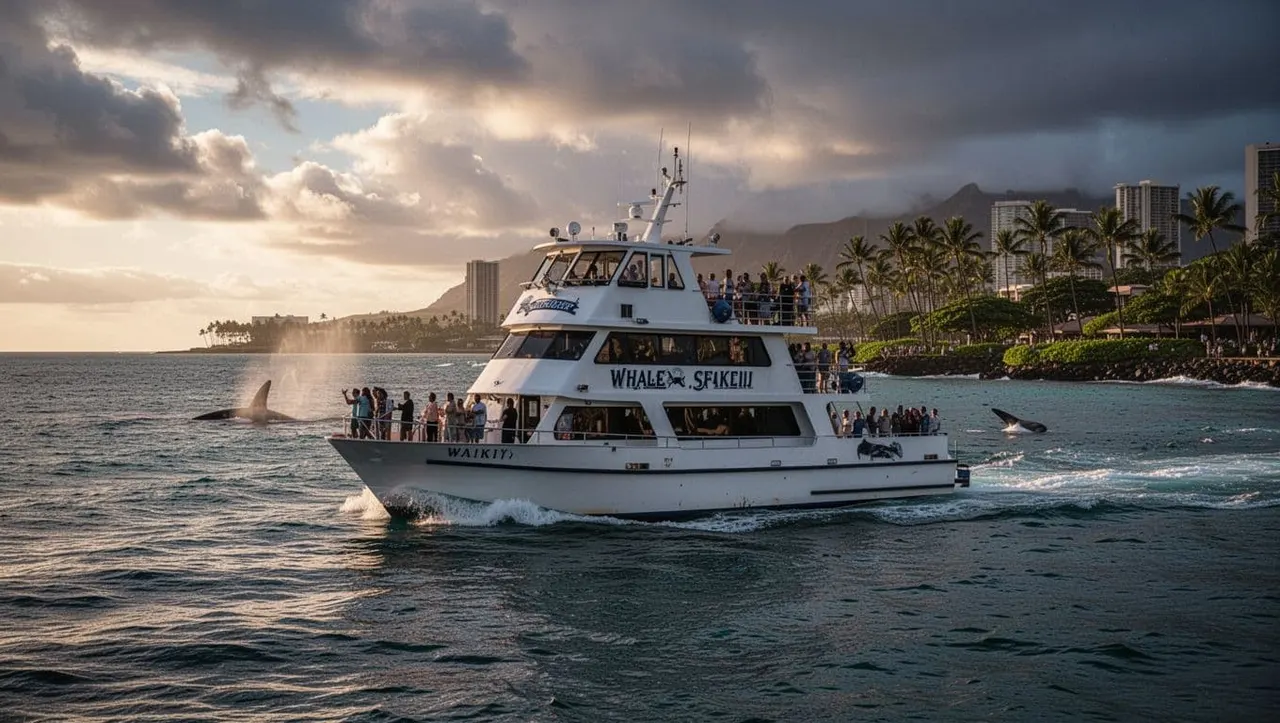
If you’re on a whale watching boat, tell the captain or crew member right away. Use clear words such as, “There appears to be line around the whale’s flukes,” or, “A buoy is trailing behind that whale.” Point toward the animal, but don’t crowd the rail or rush across the deck.
The captain can assess the situation, maintain a safe distance, and contact the proper response team. A professional crew also knows how to keep passengers quiet and organized while preserving a clear view of the animal.
Don’t ask the captain to chase the whale. Don’t encourage the boat to cut across its path. A distressed whale may dive suddenly, and a close vessel can increase stress or create a collision risk.
If several passengers see the animal, one person should provide observations while everyone else avoids shouting conflicting directions. Your crew may ask you to remember the whale’s last location, direction of travel, and the type of gear you saw.
Responsible whale watching depends on observing, not touching. That rule protects you, the animal, and the response team that may need to work close to the whale later.
Report the Sighting to Hawaii’s Marine Wildlife Hotline
Call (888) 256-9840, Hawaii’s statewide marine animal stranding, entanglement, and reporting hotline. NOAA identifies this number as a 24-hour contact for marine wildlife emergencies, including entangled whales.
You can also review NOAA’s marine animal reporting guidance before your trip. Hawaii’s Division of Boating and Ocean Recreation also provides information about protecting marine species.
When you call, give the responder as much accurate information as possible:
- Your island and location, such as Waikiki, Kewalo Basin, or a nearby beach
- The date and time of the sighting
- Your GPS coordinates, if your phone or vessel provides them
- The whale’s approximate size and visible markings
- Whether the whale is moving, diving, bleeding, or struggling
- The type and color of rope, netting, buoys, or other gear
- The whale’s direction of travel
- Your name and a reliable callback number
Photos and video can help responders, but only take them if you can do so without moving closer. Keep the images wide enough to show the whale, gear, and surrounding area. Avoid using a flash or making noise to attract the animal’s attention.
If you can’t make a phone call from the water, hail the U.S. Coast Guard on VHF channel 16. Tell them you have seen a potentially entangled whale and provide your location.
What You Must Not Do
An entangled whale may look helpless, but approaching it creates serious risks. Large whales can surface with little warning, and loose lines can wrap around a person, propeller, rudder, or paddle.
Never jump into the water. Don’t swim toward the whale, throw a flotation device, grab a line, or cut fishing gear. Even experienced swimmers and boaters can be pulled underwater within seconds.
Avoid following the whale for long distances. If it dives, don’t circle the area while waiting for it to resurface. Keep your vessel clear and let trained responders decide whether tracking is appropriate.
You should also avoid gathering other boats around the animal. A crowd can block the response team, increase noise, and make it harder to predict the whale’s movement. One accurate report is more useful than several vessels competing for the closest view.
Hawaii’s marine wildlife responders have specialized equipment and training. Their work may involve disentangling the whale at sea, attaching tracking devices, or returning later if the animal cannot be approached safely. Your role is to report and observe from a safe distance.
Plan a Responsible Whale Watching Waikiki Experience
Humpback whales visit Hawaiian waters during the winter season, with whale watching trips commonly operating from January through March. Ocean conditions and whale activity change each day, so a responsible operator keeps the experience flexible and follows viewing rules.
Living Ocean Tours operates from Kewalo Basin Boat Harbor, minutes from Waikiki Beach. Its seasonal whale watching tour gives you a comfortable way to search for humpbacks along the coast without operating your own vessel.
The company’s Coast Guard-inspected double-decker boats include shaded seating, restrooms, dry storage, and sturdy ladders. The Lokahi also has a SeaKeeper stabilization system that reduces side-to-side rolling, which can make the ride more comfortable if you’re sensitive to motion.
Living Ocean Tours is also the only tour company with professional snorkel guides. Those guides support guests on the company’s water-based experiences and help beginners understand safe, respectful behavior around Hawaii’s marine life.
If you want to combine wildlife viewing with time in the water, the company also offers Turtle Canyons snorkeling and a deluxe Waikiki snorkeling and wildlife cruise. The deluxe option includes a less-crowded reef, a boat-mounted waterslide, a water trampoline, and a floating lily pad. Whale sightings aren’t guaranteed on a snorkeling trip, but the tour provides another way to enjoy the coast while keeping wildlife protection at the center.
For seasonal whale viewing, you can CHECK AVAILABILITY.
If You Spot a Whale from Waikiki Beach
You can report an entangled whale even if you’re standing on shore. Note the beach name, nearby landmarks, and the direction the whale is traveling. If you have a phone with location services, save your coordinates before calling.
Don’t enter the water to get closer. Avoid using a drone, since its noise and movement may disturb the whale or interfere with responders. Keep children and pets away from the shoreline if the animal approaches shallow water.
A whale may disappear before you finish the call. Report the last confirmed location and explain how long ago you saw it. Responders can combine your information with reports from boat crews, lifeguards, and other observers.
If the whale becomes stranded, injured near shore, or poses a danger to people, call the same hotline immediately. Keep other beachgoers back and wait for instructions.
Conclusion
An entangled whale Waikiki visitors see needs professional help, not a closer look. Keep your distance, alert your captain or crew, and call Hawaii’s marine wildlife hotline at (888) 256-9840 with clear details.
Your careful observation can help trained responders locate the animal while protecting everyone nearby. The best whale watching experience leaves the whale undisturbed and gives you a responsible role in its protection.


