
Drone Waikiki Boat Tour Rules: Can You Fly?
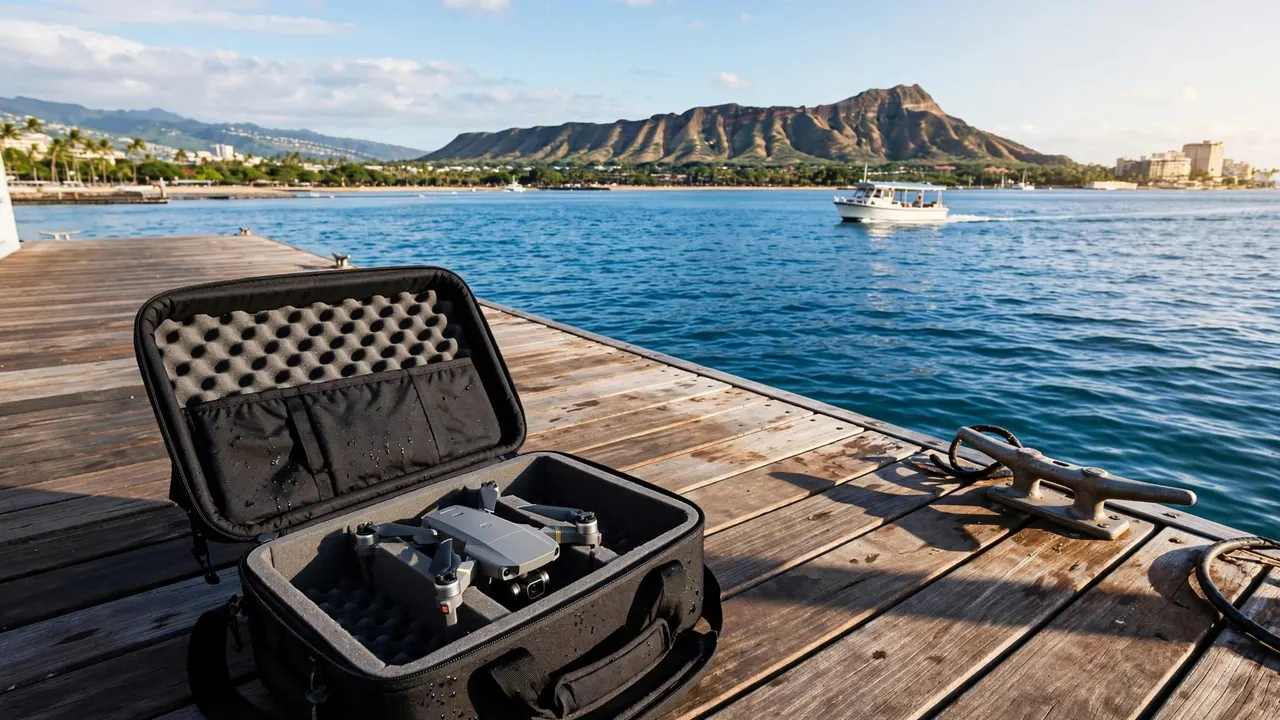
You can’t fly a drone on our Living Ocean Tours trips because we don’t allow drones on our tours. Leave yours at your hotel rather than bringing it to the dock.
Your drone Waikiki boat tour plans also involve more than FAA flight rules: a passenger vessel has its own restrictions, and wildlife needs space. You can still capture beautiful coastline photos without launching anything. Start with our onboard policy, then understand why ocean flights require more planning than an open patch of water suggests.
Key Takeaways Before You Board
- Leave your drone at your hotel for our tours, even if you only intend to carry it.
- FAA requirements still apply over the ocean, including visual line of sight and any required airspace authorization.
- Use a phone, camera, or suitable underwater camera instead, while following crew directions and giving marine life room.
A drone license, small aircraft, or quiet stretch of ocean doesn’t override an operator’s policy. For your trip with us, the practical answer is simple: pack for photography from the boat or water.
Your Drone Waikiki Boat Tour Starts With Our Policy
Drones aren’t allowed on our trips
Our policy covers drones on the tour, not merely takeoffs during certain portions of the trip. Don’t bring one expecting to launch after leaving the harbor or during a snorkeling stop.
That distinction saves you an awkward decision during boarding. Your captain and crew are preparing for departure, watching passengers, and managing a shared deck. They aren’t running a separate aerial photography session.
Even if you’re an experienced pilot, your flight qualifications don’t change what equipment you can use aboard our tours.
Leave the equipment at your hotel
Keep the drone, controller, batteries, and landing accessories out of your tour bag. You won’t need them to enjoy Waikiki’s offshore views.
Instead, bring a compact camera setup you can secure while boarding. A dry pouch helps protect your phone from splashes, although you should follow its manufacturer’s limits.
With less equipment, you can keep your hands available on stairs and avoid occupying space other guests need. You’ll also spend less time managing valuables and more time enjoying the coastline.
FAA Drone Rules Still Apply Over the Ocean
Your flight purpose determines your responsibilities
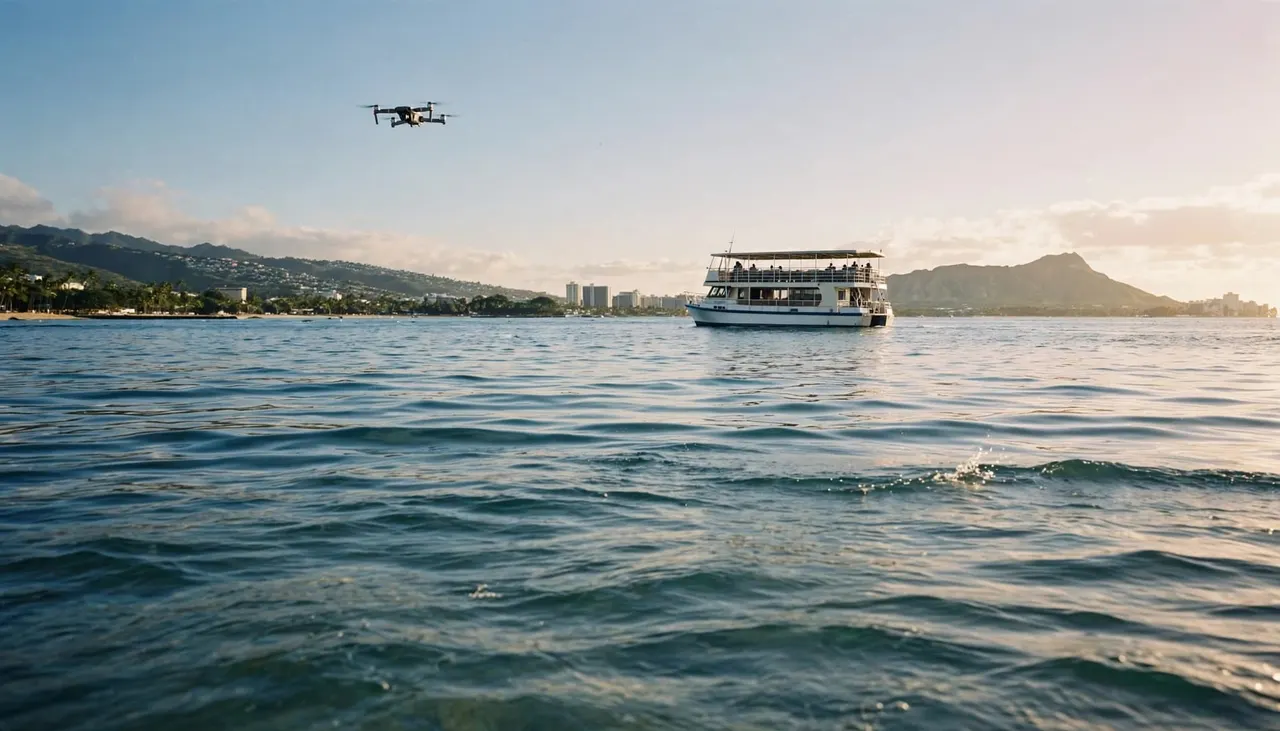
A drone Waikiki boat tour flight doesn’t become exempt from aviation rules because it happens offshore. For recreational flying, you must pass TRUST, the Recreational UAS Safety Test, and carry proof of completion.
The FAA’s recreational drone requirements also require visual line of sight. You must see the aircraft directly, or use a qualifying visual observer beside you who maintains communication.
Watching a controller screen alone doesn’t satisfy that requirement. A passenger standing elsewhere on a moving boat isn’t automatically a compliant observer, either.
If your flight supports a business, such as filming promotional material, the FAA’s Part 107 framework generally applies instead.
Airspace follows your actual location
For recreational operations in Class G airspace, the altitude limit is at or below 400 feet above ground level. That limit doesn’t grant permission to enter controlled airspace.
Waikiki’s proximity to Daniel K. Inouye International Airport makes location important. A vessel changes position, so a departure point doesn’t describe the airspace along its entire route.
Registration and Remote ID obligations also matter. A drone that requires registration generally must comply with Remote ID unless operating within an applicable exception, such as a Federally Recognized Identification Area.
These aviation requirements are separate from permission to use a boat as a launch site. They don’t change our no-drone policy.
Why a Boat Is a Difficult Launch Site
Your landing point can move
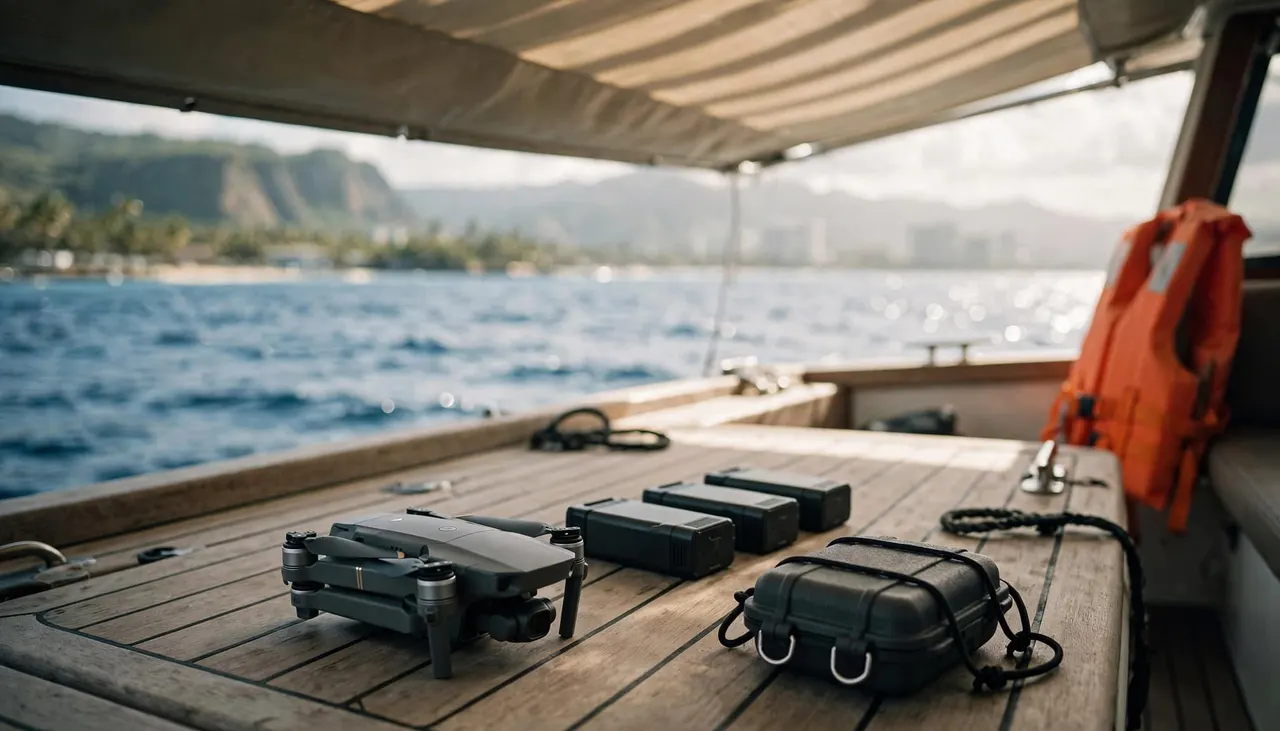
Even where an operator permits drone activity, a boat presents problems you don’t face on solid ground. Wind, current, and vessel movement can change the landing position while an aircraft is airborne.
A drone’s recorded home point may remain at its original takeoff coordinates unless its settings and capabilities account for movement. An automatic return could therefore head toward water where the boat used to be.
For drone Waikiki boat tour footage, those practical limits matter as much as camera quality. A clear view of Diamond Head doesn’t provide a reliable recovery area.
A passenger deck needs your attention
Rails, antennas, canopies, and other guests leave less clearance than an open field. Meanwhile, propellers create a hazard around faces, loose clothing, and children.
Don’t attempt a hand launch or hand catch on our trips. You shouldn’t ask a crew member to improvise one for you, either.
The captain may need passengers seated or a walkway cleared with little notice. Follow that instruction before adjusting your camera. Conditions around the vessel can demand a response even when everything looks calm from your position.
A boat can move away from a drone’s recorded home point. Automatic return settings aren’t a substitute for a safe recovery plan.
Keep Drones Away From Hawaii’s Marine Wildlife
Close aerial footage can disturb animals
Ocean wildlife doesn’t need to make an obvious escape attempt for your presence to affect it. Noise and proximity can cause stress, especially when an aircraft follows an animal.
NOAA’s marine-life viewing guidelines advise avoiding drone flights near animals. That guidance matters around whales, dolphins, seals, and sea turtles.
Don’t treat an animal surfacing near a boat as an invitation to launch. Enjoy the encounter from your existing viewing position, and let the captain manage the vessel’s movement.
Apply the same respect underwater
Responsible photography continues when you enter the ocean. Avoid chasing turtles, blocking their path, or moving closer simply to fill your frame.
Hawaii’s marine protected species information explains the protections surrounding these animals. Your camera doesn’t create an exception to wildlife rules.
Keep your fins and body clear of coral as well. If getting a photograph requires touching the reef or crowding an animal, let that image go. A comfortable swim and undisturbed wildlife are worth more than a close-up.
Build a Smaller, Better Camera Bag
For your drone Waikiki boat tour packing list, replace flying equipment with a few useful essentials. A phone, secure wrist strap, and dry pouch cover many everyday vacation photos.
For snorkeling, use a camera designed for underwater use or a housing rated for your device and intended depth. Attach it securely without creating loose straps that could catch on equipment.
Before departure, make sure your battery has charge and your device has storage available. Doing that at your hotel keeps boarding simpler.
From the deck, photograph Diamond Head, the Waikiki skyline, and the changing patterns on the water. Use your camera’s zoom rather than leaning beyond a rail.
Also, put the camera away during boarding instructions and water-entry briefings. If you’re traveling with children, helping them move safely takes priority over recording every moment.
Keep snacks, wrappers, and loose accessories contained because wind can send small items overboard quickly.
Enjoy Waikiki With Our Crew, Not a Controller
You don’t need an aerial perspective to enjoy the coast. Our Waikiki boat tours and ocean cruises depart from Kewalo Basin Boat Harbor, just minutes from Waikiki.
We’re the only Oahu tour company with professional snorkel guides in the water with you. If you’re new to snorkeling, you receive equipment and instruction before entering, with guidance as you explore.
That support lets you focus on your breathing, comfortable swimming, and respectful wildlife observation. You can take photos when conditions and your comfort allow, without making photography the entire outing.
Our boats also provide shaded seating, onboard restrooms, and dry storage. Between ocean activities, you have space to settle in and enjoy the view.
Leave the drone behind, bring a manageable camera setup, and let our crew handle the boat while you enjoy your time offshore.
Frequently Asked Questions
Can you bring a drone without flying it?
Not on our tours. Our policy is that drones aren’t allowed, so leave yours at your hotel instead of packing it for the boat.
Does a drone weighing less than 250 grams get an exception?
Our onboard policy doesn’t change with drone weight. A lightweight aircraft also isn’t exempt from every FAA requirement simply because of its size.
Does a Part 107 certificate let you launch from the boat?
No. Your pilot certificate doesn’t override our equipment policy or give you permission to use our vessel as a launch site.
Can you use a regular camera instead?
Yes, you can photograph your outing while following crew instructions. Secure your device, keep walkways clear, and put it away when you need both hands for safe movement.
Can you fly if the boat stops moving?
Stopping doesn’t change our no-drone policy. It also doesn’t remove airspace requirements, wildlife protections, or the practical challenges of operating around passengers and marine equipment.
Leave the Drone Behind and Enjoy the Coast
Your drone Waikiki boat tour plans have a straightforward answer for our trips: leave the aircraft at your hotel. Bring a secure camera instead, and keep your attention available for crew instructions and the ocean around you.
You’ll still have Waikiki’s skyline, Diamond Head, and the water in front of you. Traveling light gives you more room to enjoy them.


