
Coral bleaching or coral disease? A snorkeler’s guide
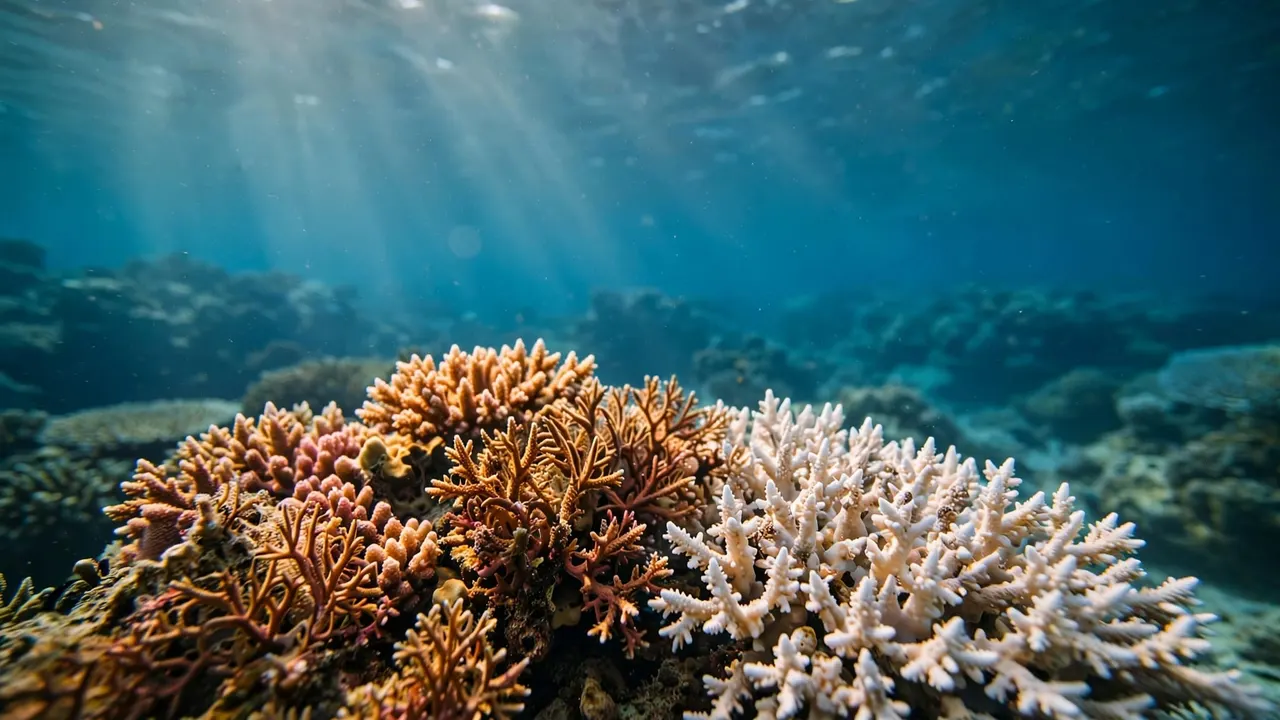
Coral bleaching usually involves paling of living tissue, while coral disease can cause localized tissue loss or other changes. However, a white patch alone won’t tell you which process you’re seeing.
At Living Ocean Tours, we encourage you to observe the reef without touching it or rushing to label its condition. Your most useful clues are patterns and context, including the colony’s surface, nearby coral, and surrounding water. Start with those clues, then keep your observations separate from a diagnosis.
Key takeaways before you enter the water
- Bleached coral can still be alive because pale tissue may remain over its white skeleton.
- Missing tissue, unusual bands, and irregular lesions deserve attention, but injury and feeding damage can look similar.
- A photograph becomes more useful when you record its date, location, and wider reef setting.
Your job as a snorkeler is to notice and describe. You don’t need to identify a disease to make a useful observation, and getting closer should never mean touching coral or losing track of your buddy.
How coral bleaching differs from coral disease
Bleaching changes the appearance of living tissue
Many shallow-water corals contain microscopic algae that provide energy through photosynthesis. These algae also contribute much of the coral’s familiar brown coloration.
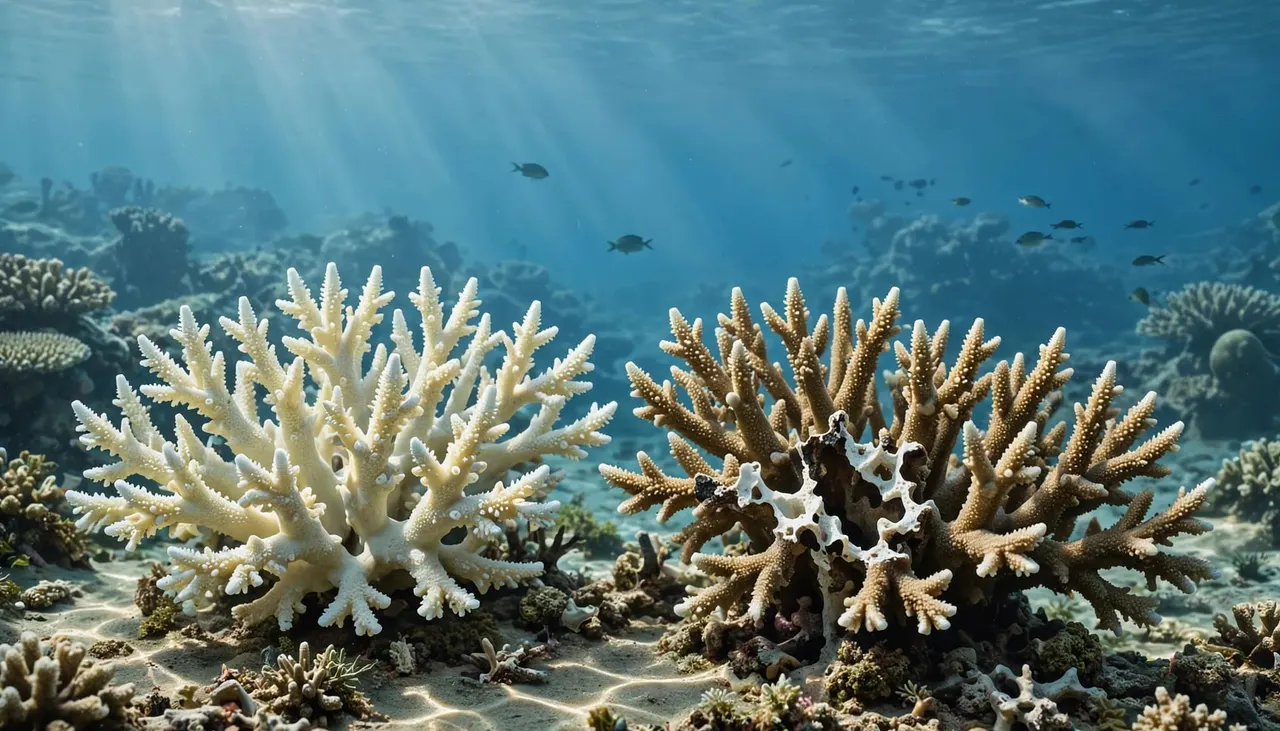
During coral bleaching, stress disrupts that partnership. Coral may lose algae or their photosynthetic pigments, so its tissue becomes pale and the underlying skeleton shows through.
You might notice an almost-white colony or uneven pale areas. However, you won’t necessarily distinguish thin living tissue through a mask. Bleached doesn’t automatically mean dead, although prolonged stress can lead to death. Recovery depends on conditions improving and the coral surviving the disruption.
Disease can produce localized changes
Possible disease signs include tissue loss, unusual discoloration, bands, or abnormal growth. A patch of freshly exposed skeleton can look bright white beside normally colored tissue.
Look for the pattern without treating it as proof. Is the change concentrated along an edge? Does it affect scattered patches or most of the colony?
NOAA’s coral disease field manual emphasizes the importance of distinguishing lesions and recognizing other causes of damage. Researchers use closer examination and observations over time, not color alone, to investigate what happened.
Read the whole reef, not one white patch
Compare nearby colonies and surfaces
Before concentrating on one pale area, look across the surrounding reef. Notice whether several colonies appear unusually light or whether the change is isolated.
Widespread paling can provide context for possible coral bleaching. Still, neighboring colonies don’t always respond equally because species, light exposure, and local conditions differ.
Also consider your view. Sunlit surfaces, shaded ledges, moving reflections, and camera settings can make colors look different. A naturally brown colony may be full of life. Brightness doesn’t provide a dependable health score, and vivid photographs don’t prove that coral is healthier.
Consider damage and older reef structure
Fish feeding, broken branches, abrasion, and other injuries can expose skeleton. Meanwhile, algae may grow over older dead areas and change their appearance.
You may also be looking at rock or old reef framework rather than living coral. Hard-looking surfaces beneath you aren’t interchangeable.
Watch fish movements and the outline of the colony, but don’t test its texture. Scraping a white patch, lifting a fragment, or brushing away algae would damage the reef and make your observation less useful.
What heat stress can tell you
Unusually warm water is a major cause of coral bleaching, although other environmental stresses can also disrupt the coral-algae partnership. The appearance of bleaching doesn’t identify its cause by itself.
NOAA Coral Reef Watch measures accumulated heat stress using Degree Heating Weeks, or DHW. Its satellite heat-stress product summarizes qualifying heat exposure over the preceding 12 weeks.
At 4°C-weeks, bleaching risk becomes significant. By 8°C-weeks, widespread bleaching and mortality of heat-sensitive corals become likely.
Those thresholds describe regional heat stress. They don’t establish whether the colony beneath your fins is bleached, diseased, injured, or recovering.
For your reef visit, the distinction matters: satellite information provides environmental context, while your photograph records one place and moment. Neither replaces repeated monitoring. Likewise, comfortable swimming temperatures don’t tell you how much heat stress coral has experienced over previous weeks.
Record an observation without disturbing the reef
Photograph the patch and its setting
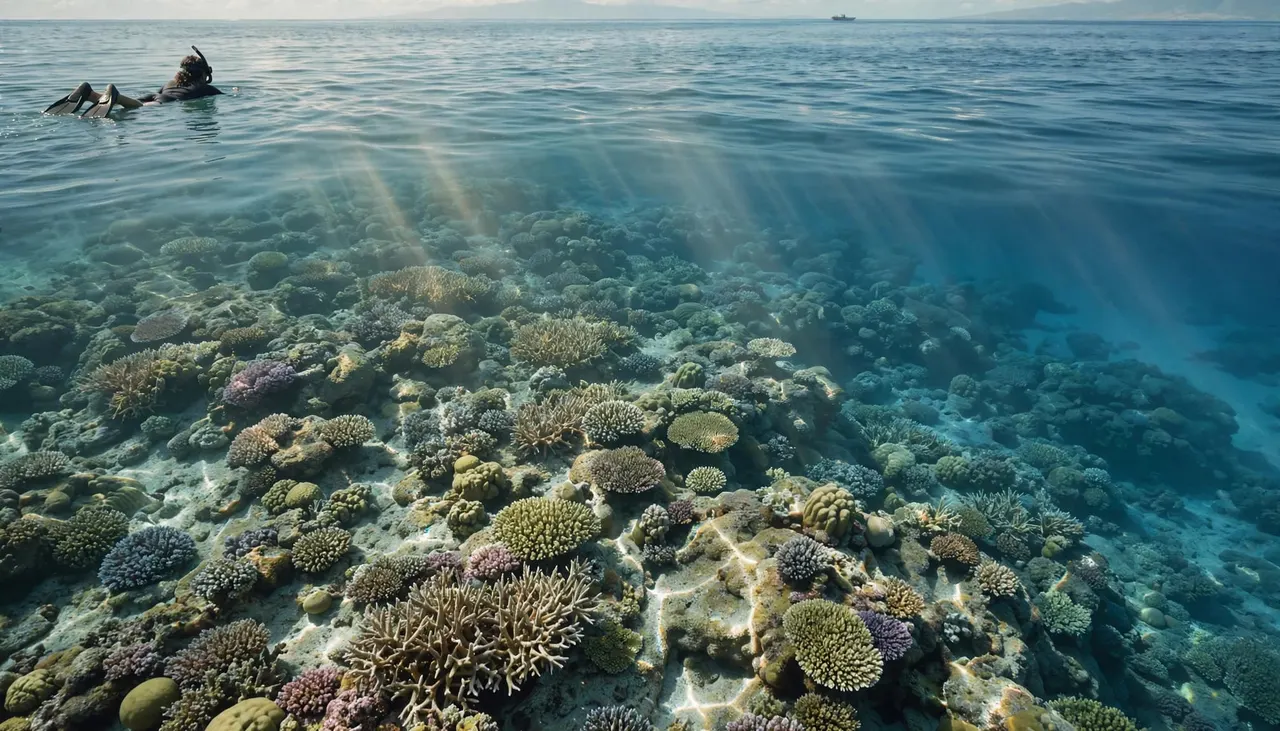
If conditions allow, take a wider photograph showing the colony and surrounding reef. Then capture another view of the unusual area without moving closer than your swimming control allows.
A clear relationship between the patch and nearby coral is often more useful than an isolated close-up. Keep your camera within your swimming space, and secure loose straps.
Afterward, record the date, site, and approximate location. Add depth only if you know it. Describe the visible pattern, such as pale tissue across a colony or a white patch beside normally colored tissue. Avoid assigning a cause.
Share observations without diagnosing disease
Show your photographs to your guide or share them with an appropriate reef-monitoring program. Include the wider view and your location notes together.
Neutral wording helps the recipient interpret the evidence. “White patch with an irregular edge” communicates what you saw without claiming a confirmed outbreak.
AGRRA’s coral disease resources cover disease signs and the uncertainty surrounding similar-looking conditions. That distinction matters when sharing images publicly, too. Calling every pale patch a disease outbreak can spread an inaccurate picture of a reef’s condition.
Keep the original photograph alongside any edited version. Color adjustments can change the appearance of the feature you’re trying to document.
Keep your swim comfortable and coral-safe
Leave room for fins and changing water
Float horizontally with enough clearance for ordinary kicks and unexpected movement. Account for the space behind you, especially when turning toward something interesting.
Waves and currents can move you toward shallow coral even while you’re watching carefully. If clearance becomes tight, move into open water rather than squeezing over a colony.
Never stand, kneel, or rest a hand on coral. Its living surface is delicate, even when the structure looks rock-like. You should also leave apparently dead patches untouched because nearby tissue and reef residents remain vulnerable to contact.
Put your buddy and breathing first
A leaking mask, fatigue, or anxiety deserves attention before another photograph. Signal your guide and use the designated support or return route.
For families, keep observation calm and brief. Children can notice a coral’s shape or pale areas, then discuss them after returning aboard. They don’t need to swim closer to complete an identification.
Stay with your buddy, follow the crew’s boundaries, and stop before you’re exhausted. Also, avoid feeding fish to improve a picture. Your strongest observation shows normal reef activity without changing the animals’ behavior.
Explore Waikiki reefs with professional guidance
At Living Ocean Tours, we’re Oahu’s only tour company with professional snorkel guides. You can ask questions about what you’re seeing while receiving support with positioning and responsible wildlife viewing.
Our guided ocean outings pair reef exploration with an observe-without-touching approach. You don’t need a biology background to enjoy the details, and you can tell our crew when you need help.
For a turtle-focused reef outing, choose our Turtle Canyon Snorkel Tour. You can also explore our Waikiki snorkeling tours when planning your ocean day.
Book for guided exploration rather than a promised wildlife sighting or a particular coral condition. Your experience can include fish movements, reef shapes, and small details you might otherwise overlook. For Turtle Canyon departures, CHECK AVAILABILITY.
Frequently asked questions
Can coral recover after bleaching?
Yes. Bleached coral can recover if it remains alive and conditions improve enough for its partnership with algae to recover. However, recovery isn’t guaranteed. From a single snorkel visit, you can’t determine how long a colony has been stressed or predict its outcome.
Can you identify coral disease from a photograph?
A photograph can document an unusual feature, but it rarely establishes a diagnosis alone. Researchers may need repeated images, detailed examinations, or laboratory work. Your contribution is stronger when you provide clear photographs and location information rather than naming a disease from its appearance.
Should you remove algae from a white patch?
Leave the patch untouched. Removing algae can disturb living tissue or other organisms and alter the feature you’re documenting. Instead, photograph what is visible from a comfortable distance. The same hands-off approach applies whether you suspect coral bleaching, injury, or disease.
Leave the reef untouched and better understood
Your most useful skill is separating what you can see from what you can conclude. Notice patterns, record unusual changes, and let scientific monitoring establish their cause.
Above all, protect living reef surfaces with careful positioning and controlled fins. You can leave with a richer understanding of coral while leaving the colony exactly where you found it.


