
Is a Cloudy Waikiki Sunset Cruise Worth It?
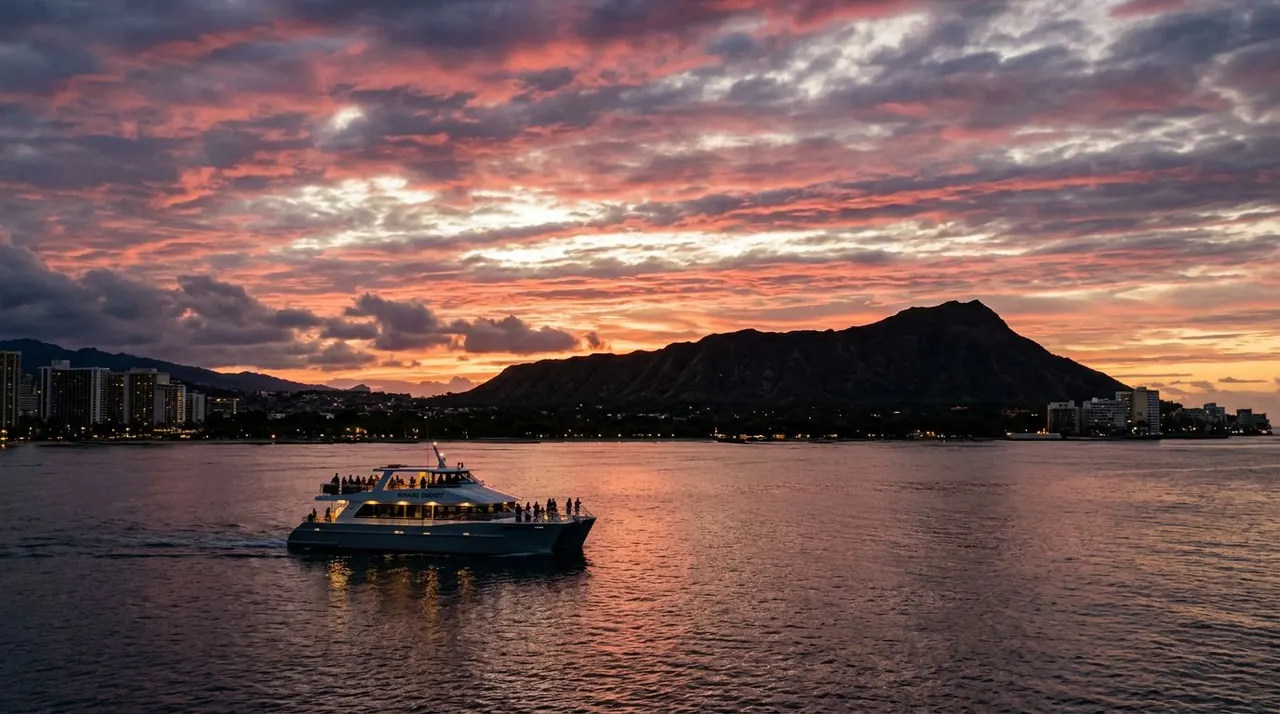
A cloudy sky can make you question your plans, especially when you booked a Waikiki sunset cruise for golden light and ocean views. The good news is that clouds don’t automatically ruin the experience. In Hawaii, they can turn the sky into a layered canvas of silver, pink, orange, and purple.
Your decision depends on the type of clouds, the wind, the rain forecast, and what you want from the evening. If you only want a clear view of the sun touching the horizon, you may feel disappointed. If you want a comfortable boat ride, changing coastal scenery, and a memorable evening on the Pacific, a cloudy cruise can still be worth your time.
Key Takeaways
- Thin or broken clouds often create better sunset colors than a completely clear sky.
- Thick overcast, steady rain, high winds, and rough seas can reduce the value of the cruise.
- A sunset boat ride offers more than the final few minutes of sunlight, including Waikiki coastline views and time on the water.
- Check the operator’s weather and cancellation policy before you book.
- Living Ocean Tours offers sunset cruises near Waikiki with BYOB and cash-bar options, depending on the cruise.
How Clouds Change a Waikiki Sunset
Clouds affect a sunset in several different ways. Their height, thickness, and location matter more than the simple word “cloudy” in a weather app.
High, thin clouds often improve the view. As sunlight passes through ice crystals and thin moisture layers, the sky can pick up soft pink, orange, and red tones. Those colors may spread across the clouds instead of appearing only near the horizon.
Broken clouds can create an even more dramatic scene. You might see bright openings between darker patches, with sunlight spilling across the water in shifting bands. The view changes every few minutes, so keeping your camera ready helps.
Low, thick clouds produce a different experience. They may turn the sky gray and hide the sun completely. Even then, you can still see texture in the clouds, reflections on the water, and the lights beginning to appear along the Waikiki shoreline.
Rain showers don’t always mean the entire evening will be wet. Oahu can experience brief showers that move across the coast, especially when trade winds push moisture toward the island’s mountain slopes. A passing shower may leave clear openings behind it.
The biggest concern is a solid storm layer that covers the western horizon. Since the sun sets toward the west, clouds in that direction can block the main event even when the sky above Waikiki looks bright.
A cloudy forecast describes the sky broadly. It doesn’t tell you whether the western horizon will be clear at sunset.
When a Cloudy Evening Is Still Worth It
You should consider the full cruise, not only the moment the sun disappears. The boat ride gives you time to see Waikiki from offshore, watch the coastline change in evening light, and enjoy a slower pace away from crowded streets.
A cloudy cruise often feels more relaxed because you aren’t focused on finding a perfect viewpoint or rushing to capture one specific photograph. You can settle into the ride and watch the sky develop as the boat moves along the coast.
The experience also depends on your travel companions. Couples may value the quiet setting, ocean breeze, and time together more than a clear horizon. Families often enjoy being on a boat at sunset even when the colors are muted. For many visitors, being on the Pacific is the main attraction.
A cruise is also a practical choice when you want to combine sightseeing with dinner or evening plans. You can finish the ride and continue to Waikiki restaurants, beach walks, or a show. The sunset becomes part of the evening rather than the only reason to leave your hotel.
The cruise may be less satisfying if you have limited time on Oahu and your top priority is a clear sunset photograph. In that case, you may prefer to wait for a more favorable forecast or choose a booking with flexible weather policies.
Your expectations matter. A cloudy evening can provide a moody, cinematic view, but it may not deliver bright orange skies or a visible sun. If you accept that difference before boarding, you’re more likely to enjoy the experience.
Which Cloud Conditions Create the Best Views?
You don’t need a perfect forecast to find a good sunset. You need the right combination of cloud cover and visibility.
| Weather condition | Likely sunset experience | Cruise outlook |
|---|---|---|
| Thin high clouds | Soft colors spread across the sky | Often a strong choice |
| Broken clouds | Light beams and changing views | Usually worthwhile |
| Low scattered clouds | Partial views with dramatic texture | Worth considering |
| Full low overcast | Limited color and no visible sun | Depends on your priorities |
| Passing showers | Short rain periods with possible clearings | Can still be enjoyable |
| Thunderstorms or strong winds | Poor visibility and rougher conditions | Safety takes priority |
A forecast showing 40 to 60 percent cloud cover can still produce a beautiful sunset. The percentage usually describes the chance or amount of precipitation or cloud cover over a wider area. It doesn’t guarantee that the horizon will stay blocked during your cruise.
Look at the hourly forecast rather than relying only on the daily icon. Check wind speed, precipitation timing, and the direction of incoming weather. Radar can show whether a shower is moving toward Waikiki or away from the coast.
Satellite images can also help you see the larger pattern. A narrow band of clouds near the horizon is different from a thick system covering the entire island. If you aren’t comfortable reading weather maps, ask the cruise operator what conditions look like on the day of departure.
Wind and ocean conditions matter as much as the sky. A cloudy but calm evening may be comfortable and enjoyable. A partly sunny evening with strong winds can feel less pleasant on an exposed upper deck.
What You Can See Beyond the Sunset
A sunset cruise gives you a different view of Oahu than you get from land. Waikiki’s hotels, palm-lined shore, and familiar beaches take on a new shape when you see them from the water.
Diamond Head is especially recognizable from offshore. Its profile changes as you move along the coast, and evening shadows add depth to the crater’s slopes. You may also see surfers, paddleboarders, and beachgoers finishing their day near shore.
As daylight fades, Honolulu’s coastline begins to glow. Buildings light up one by one, and the contrast between the dark ocean and the bright shoreline becomes more noticeable. A cloudy sky can make those city lights feel more vivid.
The boat itself adds another layer to the evening. You can listen to the water, feel the breeze, and watch the changing light without dealing with traffic or crowded sidewalks. If the sky blocks the sun, the coastline and open ocean still give you plenty to look at.
Marine life sightings are possible on ocean tours, but you shouldn’t book a sunset cruise with the expectation of seeing a specific animal. Wildlife moves freely, and conditions change. A responsible crew will help you observe marine life without chasing, feeding, or touching it.
You may also appreciate the cultural and environmental setting. Hawaii’s ocean is part of a living ecosystem, not simply a backdrop for vacation photos. Keeping your distance from wildlife and avoiding contact with coral or other marine life helps protect the places you came to enjoy.
Choose a Boat and Operator Carefully
Cloudy weather makes the quality of the boat and crew more important. If the sunset is muted, comfort, service, and the overall route carry more of the experience.
Start by checking where the boat departs. Living Ocean Tours operates from Kewalo Basin Boat Harbor, a short drive from Waikiki Beach in Honolulu. The location can make the evening easier to plan, especially if you want to avoid a long trip before or after the cruise.
The company operates Coast Guard-inspected, custom-built double-decker vessels, including the Coral Kai and Lokahi. Both include shaded seating, restrooms, dry storage, and sturdy ladders for water entry when a tour includes time in the ocean.
The Lokahi includes a SeaKeeper stabilization system designed to reduce rolling. That feature can matter if you are sensitive to motion or if the water becomes uneven. A steadier boat can help you relax, enjoy the views, and spend less time worrying about seasickness.
Living Ocean Tours also has professional snorkel guides, a feature that helps distinguish its ocean experiences from basic sightseeing trips. Even when your main plan is a sunset cruise, that level of marine knowledge supports safer, more respectful encounters on the water.
Depending on the selected cruise, you may choose between a BYOB setup and a cash-bar option. Confirm the details for your departure when booking, then bring only what the operator allows. Many guests find that a simple drink, comfortable seating, and an open view are enough for a satisfying evening.
The crew’s approach matters as much as the equipment. You want clear boarding instructions, honest communication about the weather, and guidance that helps first-time boat passengers feel comfortable. A good operator won’t promise a perfect sunset when conditions are uncertain.
Living Ocean Tours offers a Waikiki Sunset Cruise for couples, families, and visitors who want to experience the coastline from the water.
How to Prepare for a Cloudy Sunset Cruise
You can improve your experience with a few simple choices. Start by checking the forecast again on the day of your cruise. Weather can change quickly around Oahu, so an update from the operator may be more useful than a forecast you viewed several days earlier.
Bring a light layer even if the afternoon feels warm. Once the boat leaves the harbor, wind can make the upper deck feel cooler. A light rain jacket is also more useful than an umbrella, which may be difficult to manage in an open area.
Protect your phone and camera from spray. A waterproof phone pouch or small dry bag keeps your gear safer during boarding and while moving around the boat. If rain is possible, avoid carrying equipment you can’t protect.
Wear secure footwear with good traction. Boat decks can become damp, and flip-flops may not provide enough grip when you walk near ladders or seating areas. Comfortable clothing helps you enjoy the ride without constantly adjusting your outfit.
If you are prone to motion sickness, plan ahead. Eat a light meal, drink water, and follow any medication instructions from your doctor or pharmacist. Choose a seat near the center of the vessel when possible, since that area usually moves less than the bow or stern.
Arrive with enough time to park, walk to the harbor, and complete check-in without rushing. A stressful arrival can affect your mood before the cruise even begins.
Most importantly, set realistic photo expectations. Cloudy skies can create beautiful images, but your best shots may show the full sky, coastline, and ocean rather than a single sun disc. Use the changing light to your advantage, and keep watching after sunset because the sky can hold color for several minutes.
When You Should Reschedule or Choose Another Evening
A cloudy forecast alone usually isn’t a reason to cancel. However, some conditions can make the cruise less comfortable or reduce visibility enough to change the experience.
Ask about the operator’s cancellation and rescheduling policy if the forecast includes steady rain, high winds, or rough seas. Safety decisions belong to the captain and crew. A responsible operator may delay, modify, or cancel a trip when conditions make the route unsuitable.
You should also consider your personal tolerance for uncertain weather. If you are traveling for a special proposal, anniversary, or once-in-a-lifetime photograph, a flexible booking may give you more control. A clear evening offers better odds for a classic sunset image.
On the other hand, you may want to keep the reservation if the forecast shows scattered clouds and light showers. These conditions can produce breaks in the sky and may pass before the boat reaches the best viewing area.
Check these details before you commit:
- Whether the cruise runs in light rain
- What conditions trigger a cancellation
- Whether you receive a refund or rescheduling option
- How much notice the operator provides
- Whether the route changes during rough weather
- What drinks, food, and personal items you may bring
Don’t judge the entire evening by the forecast icon. Read the details, contact the operator, and make your decision based on safety and your own priorities.
Is a Waikiki Sunset Cruise Better on a Clear Evening?
A clear evening gives you the highest chance of seeing the sun reach the horizon. You can expect stronger visibility, brighter colors, and better conditions for classic vacation photos.
That doesn’t make a clear cruise automatically better for every traveler. Clear skies can produce a beautiful but simple view, while scattered clouds add texture and movement. The best evening depends on whether you prefer a clean ocean horizon or a more dramatic sky.
Clouds can also soften the harsh brightness that sometimes remains during the late afternoon. This makes it easier to look toward the horizon and take portraits without strong shadows. You may get more comfortable photos of your group when the sun filters through a thin layer.
For couples, the atmosphere often matters more than perfect conditions. A quiet ride with a warm drink and city lights coming into view can feel special even when the sky stays gray. Families may value the boat experience, harbor departure, and time together more than the final sunset color.
If you want to maximize your odds, book during a part of your stay when you have another evening available. Then you can keep the cruise if the weather looks promising or reschedule if a storm system arrives.
The best reason to book is the whole evening on the water. The sunset should add to the experience, not carry all of it.
A Simple Decision Guide
Use your goal to decide whether to keep or book a cloudy-evening cruise.
Choose the cruise when the forecast shows thin clouds, scattered clouds, or passing showers. These conditions can create color and changing light, especially if the western horizon has openings.
Keep the reservation when you care about the boat ride, Waikiki views, time with family, or a relaxed date night. Those parts of the experience remain available even when the sun stays hidden.
Ask about rescheduling when the forecast shows continuous rain, strong winds, thunderstorms, or rough ocean conditions. The crew can give you the most useful update because they know the route and current harbor conditions.
Consider another evening when your only goal is a clear sunset photograph. A boat ride can still be pleasant, but the exact image you want may depend on a visible horizon.
For most visitors, a partly cloudy evening is a reasonable reason to go. You get a chance at vivid colors without needing a perfectly clear forecast. Full overcast requires a more personal decision, based on how much you value the boat experience itself.
Conclusion
A cloudy Waikiki sunset cruise can still be worth booking when the weather includes breaks, thin cloud layers, or passing showers. Those conditions may create richer colors and more dramatic views than a completely clear sky.
If thick clouds cover the western horizon, the sunset may be muted, but you can still enjoy Waikiki from the water, comfortable seating, harbor access, and time away from the busiest parts of Honolulu. Check the marine forecast and cancellation policy before you go, then choose a cruise that offers value beyond the final few minutes of sunlight. For you, the best sunset may be the one that comes with a memorable evening on the Pacific.


