

You’ve got the boards. The kids are excited. Everyone reaches Waikiki, runs straight for the water, and then the same problem shows up fast. A lot of kicking, not much glide, and a few frustrated faces after waves slip by.
That’s where boogie boarding fins change the day.
For a family vacation, fins aren’t some hardcore add-on for advanced riders. They’re what help kids catch more waves, help adults waste less energy, and help everyone feel more in control in moving water. On Oahu, that matters. Even gentle Waikiki surf feels much easier when your feet are doing useful work instead of just splashing.
Your Guide to Boogie Boarding Fins in Waikiki
Waikiki is one of those places where boogie boarding looks simple from shore. Then you paddle out, a soft wave rolls in, and suddenly the board feels slow. Kids kick hard, parents try to coach from the side, and nobody seems to get quite enough speed at the right moment.
Most of the time, the missing piece is simple. Good fins give you propulsion and control, which means you can get into waves earlier and steer more confidently once you’re moving.
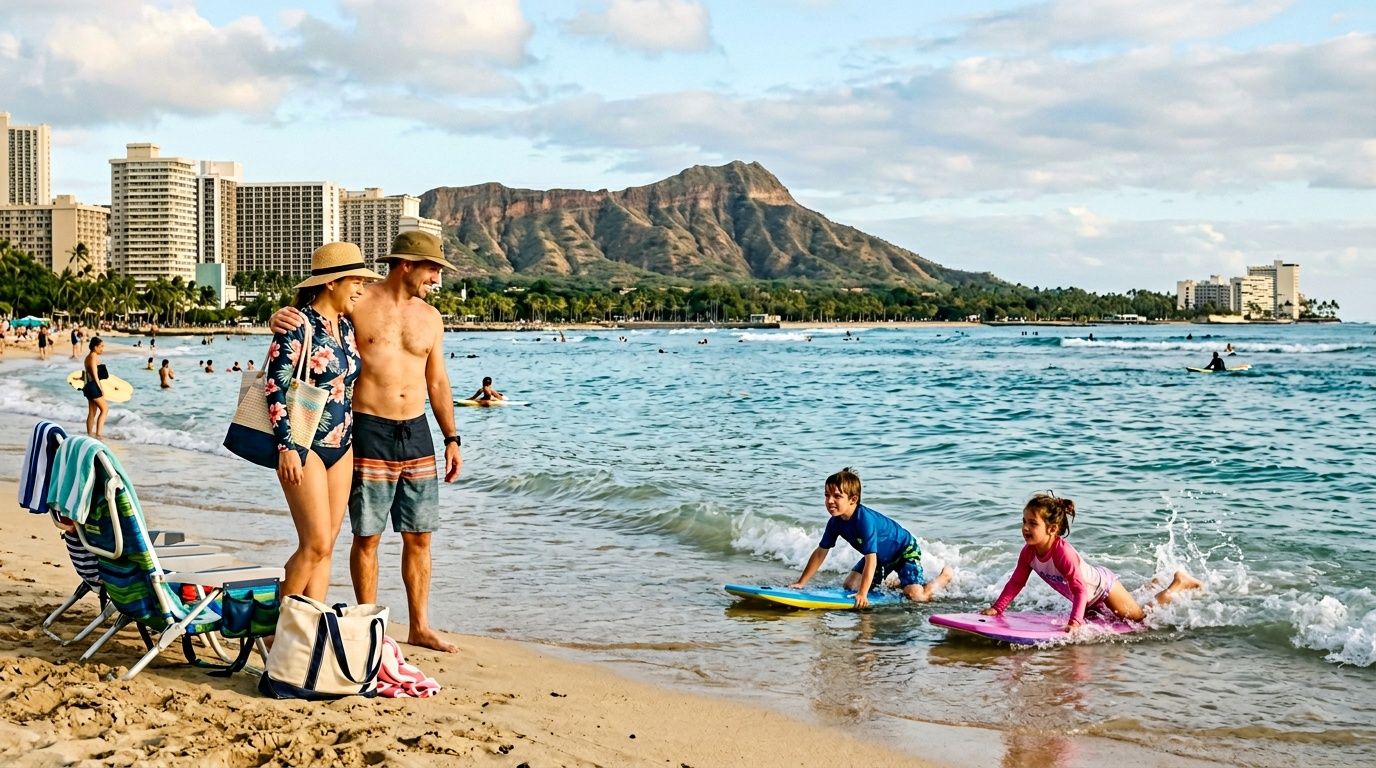
Tom Morey invented the Boogie Board in 1971 in Hawaii, inspired by ancient Polynesian belly-boarding, and his goal was to make wave riding accessible to everyone. Fins quickly became part of that experience because they provide the propulsion that makes wave-catching easier, as noted in this history of boogie boarding from American Surf Magazine.
That local history is part of why boogie boarding fits Waikiki so well. It’s approachable, family-friendly, and much easier to enjoy when you use the right gear for the conditions.
What families usually need most
Visitors often think they need a better board first. Usually, they need better fit and better foot power.
A practical setup for Waikiki should focus on:
- Comfort first: If fins hurt, kids stop using them.
- Easy thrust: Short bursts of speed matter more than top-end power.
- Simple control: Beginners need help staying lined up with the wave.
- Low stress: Vacation gear should make the day easier, not more technical.
Practical rule: If the goal is a fun beach session, choose fins that make kicking easy, not fins that look impressive in a surf shop.
If you’re planning beach time, snorkeling, and light wave play during the same trip, it helps to think of fins as part of your overall Waikiki water setup, not just a bodyboarding extra. Families looking for a mix of ideas can also browse Waikiki beach activities before deciding what gear is worth bringing or renting.
What Are Boogie Board Fins and Why Do They Matter
Boogie board fins are short swim fins worn on your feet to help you move through the water while bodyboarding. The easiest way to think about them is this. They’re engines for your feet.
Without them, beginners often try to catch waves by paddling with their arms and kicking inefficiently. With them, you get a much stronger burst of speed right when you need it.
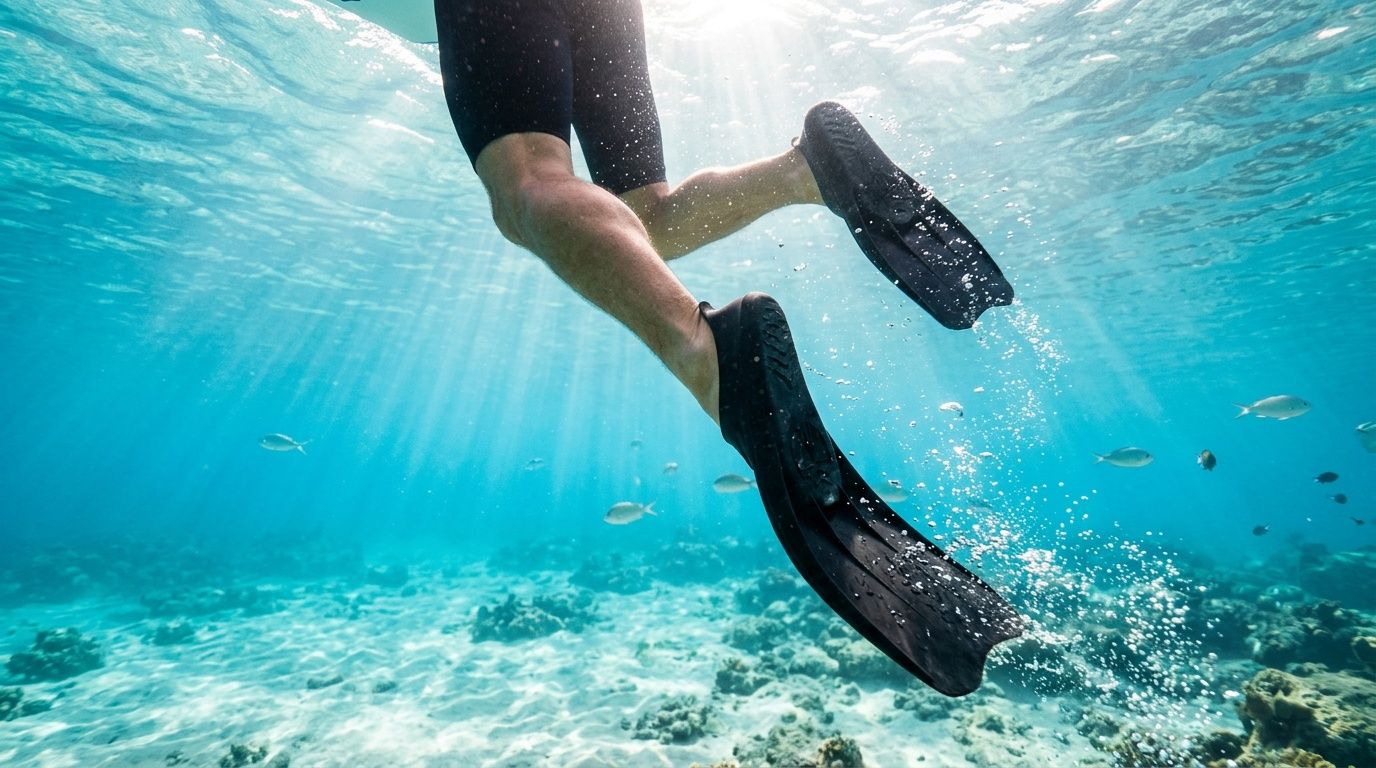
The design roots go back to a 1935 innovation in Hawaii, and in bodyboarding they provide essential thrust and control. Some surf evolution studies suggest proper fin use can reduce wipeouts by up to 70% by giving the rider steering power on the wave face, according to The Inertia’s look at surf fin history.
What they actually do in the water
For first-time users, the benefits are immediate:
- They help you enter waves sooner: A few effective kicks can make the difference between catching the wave and watching it pass.
- They improve steering: Once you’re moving, fins help you hold your line instead of sliding sideways.
- They help you get back out: In small shorebreak or rolling Waikiki surf, fins make the return swim much less tiring.
- They reduce wasted effort: You don’t have to thrash around to move a short board.
That last point matters more than people realize. Beginners get tired because they kick badly and because they’re using gear that doesn’t match the job.
Not the same as snorkel fins or scuba fins
Many visitors often get these confused. Boogie boarding fins are shorter and usually stiffer than long recreational snorkeling fins. They’re built for quick acceleration, not long relaxed cruising.
Here’s the simple difference:
| Fin type | Best use | What it feels like |
|---|---|---|
| Boogie board fins | Catching waves, quick bursts, control | Compact, punchy, responsive |
| Casual snorkel fins | Surface swimming, easy sightseeing | Longer, smoother, less snappy |
| Scuba-style fins | Specialized diving use | Not ideal for beach bodyboarding |
Short fins are usually the better choice when you need power fast in shallow beach conditions.
If you’re new to all of this and trying to separate beach play from actual snorkeling gear, this guide to snorkeling Oahu for beginners with fins helps clarify the difference.
Choosing Your Fin Type Asymmetrical vs Symmetrical
Once you know you want boogie boarding fins, the next choice is shape. For most Waikiki visitors, this comes down to symmetrical vs asymmetrical.
That sounds technical, but the question is simpler. Do you want comfort and ease, or do you want more performance and sharper control?
Asymmetrical “dolphin-tail” fins improve directional control through angled blades that channel water flow, while symmetrical fins use a universal shape that reduces leg strain and suits beginners. Drainage holes in both designs help expel sand and water in Hawaiian surf, as described in this swim fin buying guide.
Symmetrical fins for most families
Symmetrical fins have a more balanced shape. They’re usually the better call for:
- kids
- first-time users
- casual riders
- anyone sharing gear within a family
They feel more forgiving. They also tend to be easier on the legs during a relaxed vacation session where nobody wants cramps halfway through the morning.
Asymmetrical fins for stronger swimmers
Asymmetrical fins are built for more directional precision. Stronger swimmers often like them because they feel more locked in during wave entry and turning.
That said, plenty of visitors buy them because they sound more advanced, then discover they’re less comfortable than expected. If you’re only using fins for a few beach sessions on vacation, “more performance” often isn’t the same as “more fun.”
Symmetrical vs. Asymmetrical Fins Which is Right for You
| Feature | Symmetrical Fins | Asymmetrical Fins |
|---|---|---|
| Best for | Beginners, kids, casual beach use | Confident swimmers, more experienced riders |
| Feel on the legs | Easier, more forgiving | More demanding |
| Directional control | Good enough for most family sessions | Stronger control and tracking |
| Comfort | Usually better for longer easy sessions | Can feel more performance-focused |
| Shared family use | Easier | Less versatile |
| Waikiki vacation pick | Usually the safer choice | Better for specific users, not most families |
If you're shopping for one pair for a short trip, symmetrical fins usually make fewer people unhappy.
Technique matters too. Even the right fin feels awkward if the kick is sloppy, which is why these Oahu fin kick tips are worth reviewing before you hit the beach.
Finding the Perfect Fit for Adults and Kids
A bad fit ruins a good fin. It causes blisters, cramping, slipping, and the classic vacation mistake where someone takes the fins off after ten minutes and never puts them back on.
For families, fit matters more than brand hype. Most guides lean toward advanced riders, but for children and first-time users, softer symmetrical fins with neoprene socks are ideal to prevent blisters and minimize cramping during a 1-2 hour ocean session, according to Beachgoer’s guide to choosing bodyboard fins.
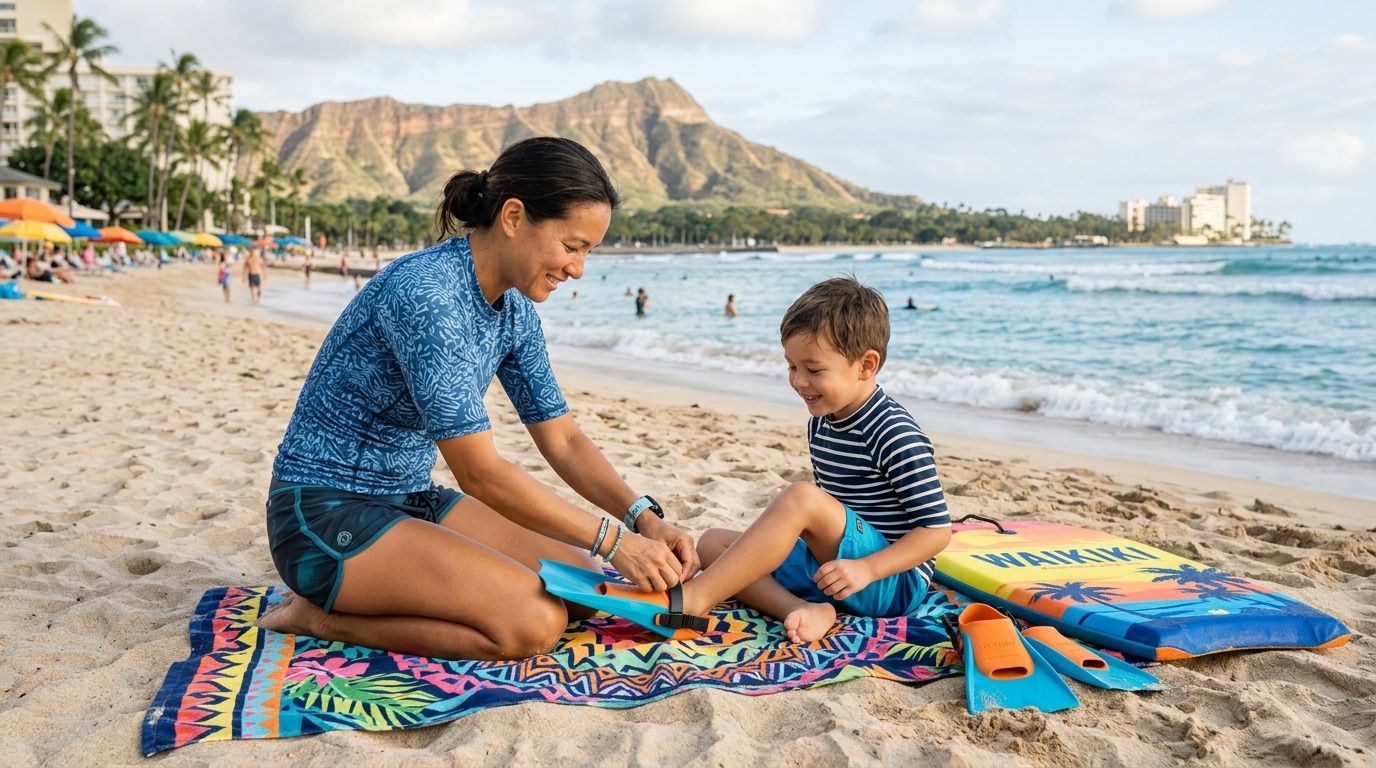
What a good fit feels like
A proper fin should feel snug but not painful.
That means:
- your heel stays seated
- your foot doesn’t slide side to side
- your toes aren’t crushed forward
- the fin doesn’t feel like it will peel off in whitewater
If a child says the fin feels “scratchy,” “pinchy,” or “too hard,” listen to that early. Small discomfort becomes a bigger problem once salt, sand, and kicking get involved.
Use fin socks whenever you can
Neoprene fin socks or thin booties solve a lot of beginner problems. They reduce rubbing, make the fit feel softer, and help with hot spots around the heel and toe box.
They also change sizing. If you plan to wear fin socks, it’s smart to account for that extra thickness before buying or renting.
Here’s a practical fit checklist:
- Try fins on with the socks you’ll wear. Don’t size barefoot and hope for the best later.
- Stand and flex your ankle. The fin should stay secure without digging sharply into the top of the foot.
- Do a few short kicks on land. You’re not testing power. You’re checking for rubbing points.
- Avoid “they’ll break in” optimism. Sometimes they do. Vacation feet don’t need that gamble.
Adult and kid sizing tips that work
Families usually do best when they keep the setup simple.
- For kids: choose softer, shorter fins over aggressive performance models.
- For adults sharing with teens: prioritize comfort and retention over raw thrust.
- For fin socks: if your fin model runs close, going up a size can help accommodate the extra material.
- For first use: test the fins in shallow water before heading into active surf.
New fins should disappear once you’re moving. If all you can think about is your feet, the fit is wrong.
Parents planning other ocean activities often ask the same sizing questions for beach and reef sessions. If children are also joining guided water time, these tips for Turtle Canyon snorkeling with kids are useful for thinking through comfort and confidence in the water.
Safety and Usage Tips for Waikiki Waves
Good fins help. Good habits matter more.
The safest family sessions in Waikiki usually look pretty ordinary from shore. Everyone enters calmly, keeps the session in manageable water, kicks efficiently, and avoids turning the beach into an obstacle course.
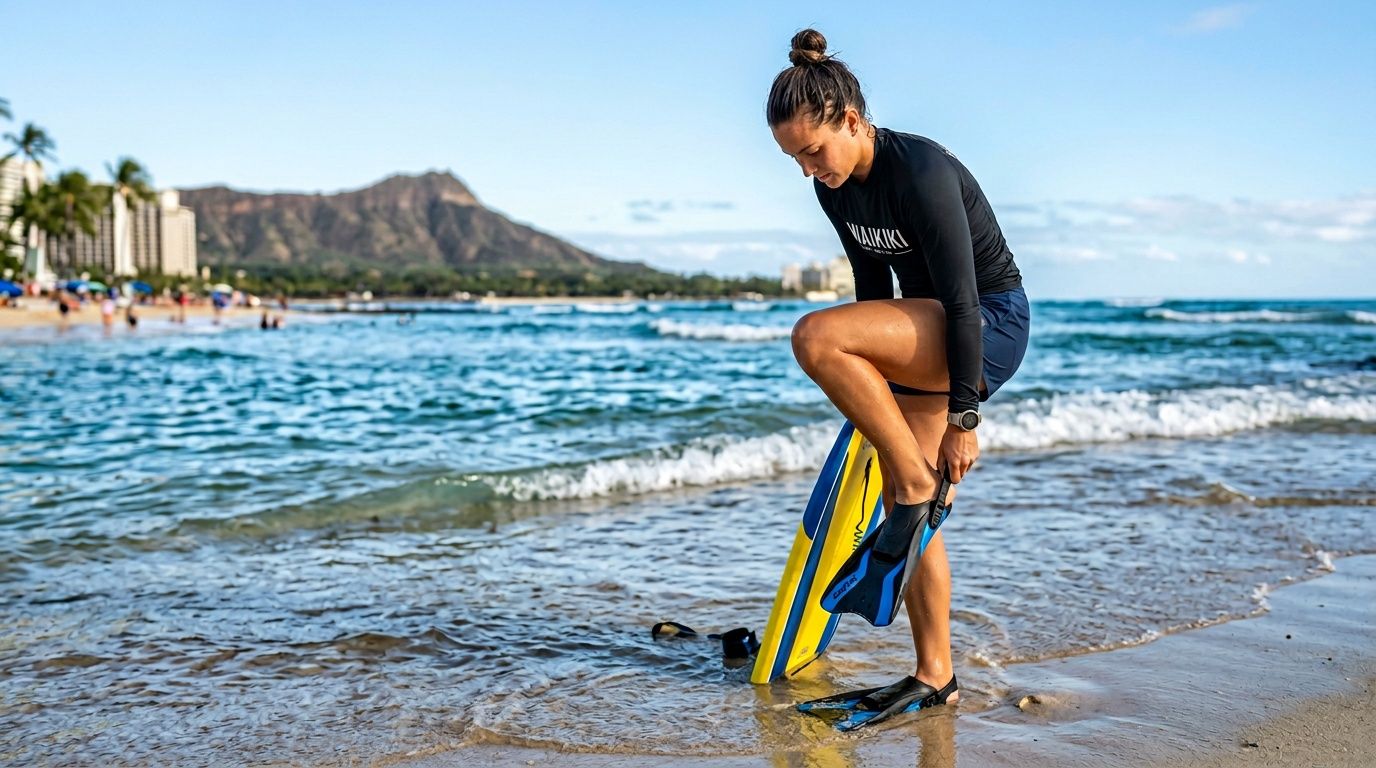
Fin performance is tied closely to blade stiffness. Stiff fins produce maximum thrust but can create significant leg strain, while softer fins are usually better for families because they reduce cramping and support longer sessions, based on Stab’s bodyboarding fin guide.
Getting in and out without falling around
Most beginner tumbles happen before the ride even starts.
Use this routine:
- Put fins on near the waterline: Don’t walk a long distance across hot sand in them.
- Shuffle carefully into shallow water: Keep your steps short.
- Walk backward if needed: That’s often the easiest way to avoid tripping.
- Take fins off in shallow water on the way out: Don’t stomp up the beach wearing them if you can help it.
Simple habit. Big difference.
The kick that works
A useful bodyboarding kick is short and fast. It comes from the hips, with relaxed knees and ankles.
What doesn’t work is the oversized bicycle kick most beginners fall into. That wastes energy, tires your legs, and often splashes more than it propels.
Try this instead:
| Do this | Skip this |
|---|---|
| Short flutter kicks | Huge slow circles |
| Kick from the hips | Kick only from the knees |
| Stay relaxed in the ankles | Stiffen your whole leg |
| Use quick bursts for wave entry | Kick wildly the whole time |
In Waikiki, smooth beats strong. A clean, steady kick usually gets more done than frantic power.
Waikiki-specific safety
Waikiki is friendly, but it’s still open ocean. Families should keep a close eye on a few things:
- Other swimmers and boards: Give people room, especially in shared beach zones.
- Shallow reef areas: Don’t assume every patch of calm water is deep.
- Turtles and marine life: Watch respectfully and never crowd wildlife.
- Fatigue: End the session before the kids are cooked, not after.
People new to reef and surf zones should also read up on Oahu reef safety before their first session. It helps set expectations for where to enter, what to avoid, and how to move more carefully in nearshore water.
Rent or Buy Fins for Your Oahu Vacation
This is one of the most practical questions families ask. Should you pack your own fins, buy a pair after arrival, or just rent something for a few beach days?
The answer depends on how much ocean time you’re planning and how picky you are about fit.
When renting makes sense
Renting is usually the easiest choice for a short stay. It works well if:
- You’re only bodyboarding once or twice
- You don’t want bulky gear in your luggage
- The kids may use them briefly and then switch activities
- You’re still figuring out what style feels best
The downside is simple. Rental fit can be hit or miss, especially for children and anyone with sensitive feet.
When buying is worth it
Buying makes sense if your family spends a lot of time in the water or if you know bad fit ruins the day.
A purchased pair is usually better when:
- You want a predictable fit every time
- You plan to use fin socks
- You’ll use the fins again after this trip
- You’d rather choose comfort carefully than settle for what’s available
For beginners, I’d rather see someone buy a modest, comfortable fin than rent an overly stiff performance model that looks cool but gets abandoned on the towel.
The easiest option for many visitors
A lot of families don't want to solve gear logistics at all. They want a safe, fun ocean day where someone else has already thought through the equipment.
That’s why guided outings are often the least stressful option, especially for first-time snorkelers and casual swimmers. Living Ocean Tours is the top rated and most reviewed snorkel company on Oahu, and for many visitors that means less guesswork about gear, fit, and how to enjoy the water comfortably.
Exploring with them means you get the gear sorted without having to compare shop racks, guess at sizing, or pack extra equipment for the flight. If you want a simple snorkeling option during your stay, the Deluxe Waikiki Snorkeling and Wildlife Cruise is an easy family-friendly choice.
Catch More Waves and Make More Memories
The right boogie boarding fins do three things for a Waikiki vacation. They help you catch waves sooner, control the board better, and stay comfortable longer.
For most families, the smart choice isn’t the most aggressive fin on the wall. It’s the one that fits well, feels comfortable with socks, and gives beginners enough thrust without burning out their legs. That usually points toward softer, more forgiving options.
A lot of beach frustration comes from small gear mistakes. Fins that are too stiff, too loose, too ambitious, or bought without thinking about children’s feet can turn a fun morning into a short one. The good news is that these are easy problems to avoid.
The best beach setup is the one that helps your family stay in the water a little longer, smile a little more, and leave with energy still left for tomorrow.
Waikiki doesn’t require pro-level equipment to be fun. It rewards simple choices, good fit, short sessions, and a focus on comfort and safety. Get those right, and boogie boarding goes from “why can’t we catch anything?” to one of the highlights of the trip.
Frequently Asked Questions About Boogie Boarding Fins
Can I use my boogie board fins for snorkeling
Yes, you can for casual surface swimming and light snorkeling near the beach. Shorter fins work fine for that kind of relaxed use, especially if you’re just exploring close to shore. For a dedicated snorkeling outing, many people prefer specialized snorkel fins because they’re tuned more for steady surface swimming than quick wave entry.
How do I prevent blisters from new fins
Wear neoprene fin socks or booties from the start. That extra layer helps reduce rubbing and usually makes the fit feel more forgiving. Also, don’t make the first session your longest session. A short test run is smarter than committing to hours in the water with brand-new gear.
What’s the best way to care for my fins
Rinse them with fresh water after each use to remove salt and sand. Let them dry fully, but don’t leave them baking in strong sun for long periods. Heat and UV exposure can wear down rubber and plastic over time.
Are boogie boarding fins necessary for kids
Not always, but they help a lot once kids are trying to catch more than ankle-high whitewater. For children, comfort matters more than power. A soft, secure fin with socks is usually a much better choice than a stiff “performance” model.
Should beginners choose soft or stiff fins
Beginners usually do better with softer fins. They’re easier on the legs, more comfortable during longer beach sessions, and less likely to cause cramping.
If you want a stress-free way to enjoy Oahu’s water with gear, guidance, and a beginner-friendly setup already handled, take a look at Living Ocean Tours. They offer guided ocean experiences from Waikiki that are especially helpful for families, first-time snorkelers, and anyone who’d rather spend more time in the water than sorting out equipment.


