
Boat Tour Wake Patterns: Reading Nearby Vessel Wakes
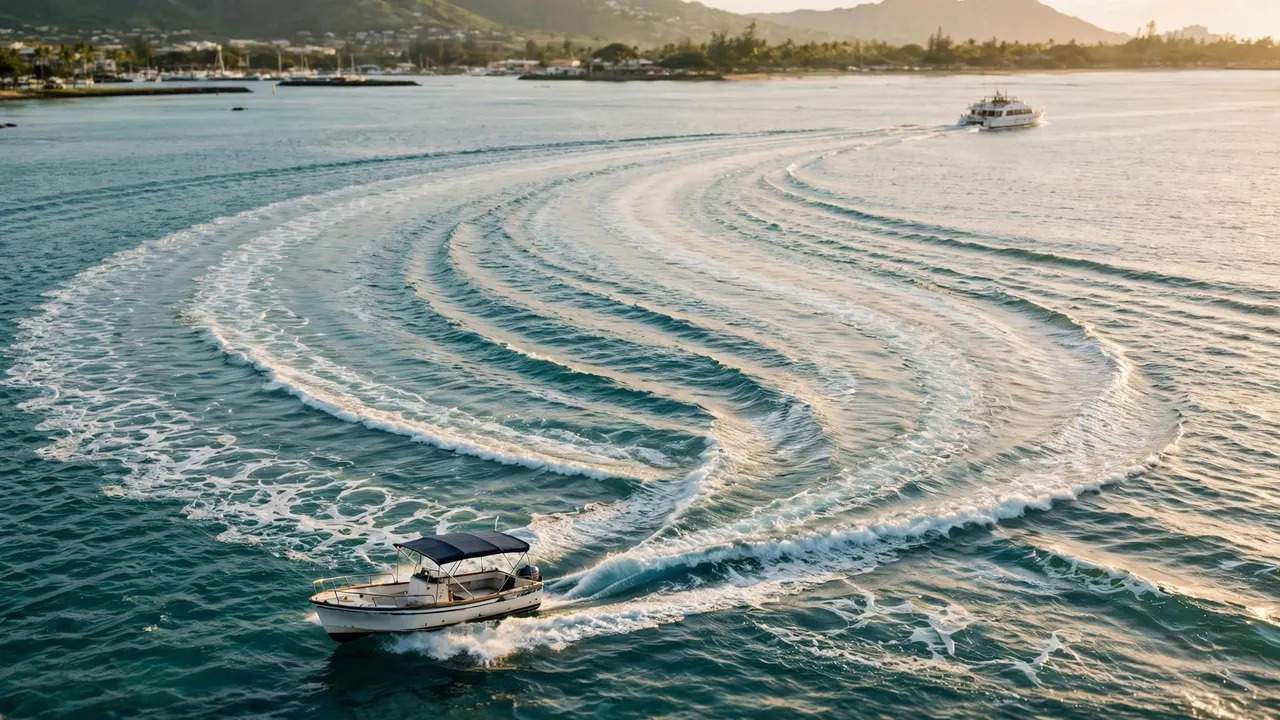
A passing boat can be well behind you before its wake reaches your seat. Understanding boat tour wake patterns helps you recognize that delayed movement without confusing every bump with rough weather.
On a Living Ocean Tours outing from Honolulu’s Kewalo Basin, you share the coastline with other vessels. Your comfort depends on timing and positioning, along with the boat, the crew, and ocean conditions.
Start by watching the water behind nearby boats, then follow your crew’s guidance when those waves approach.
How boat tour wake patterns reach your boat
White foam and traveling waves are different clues
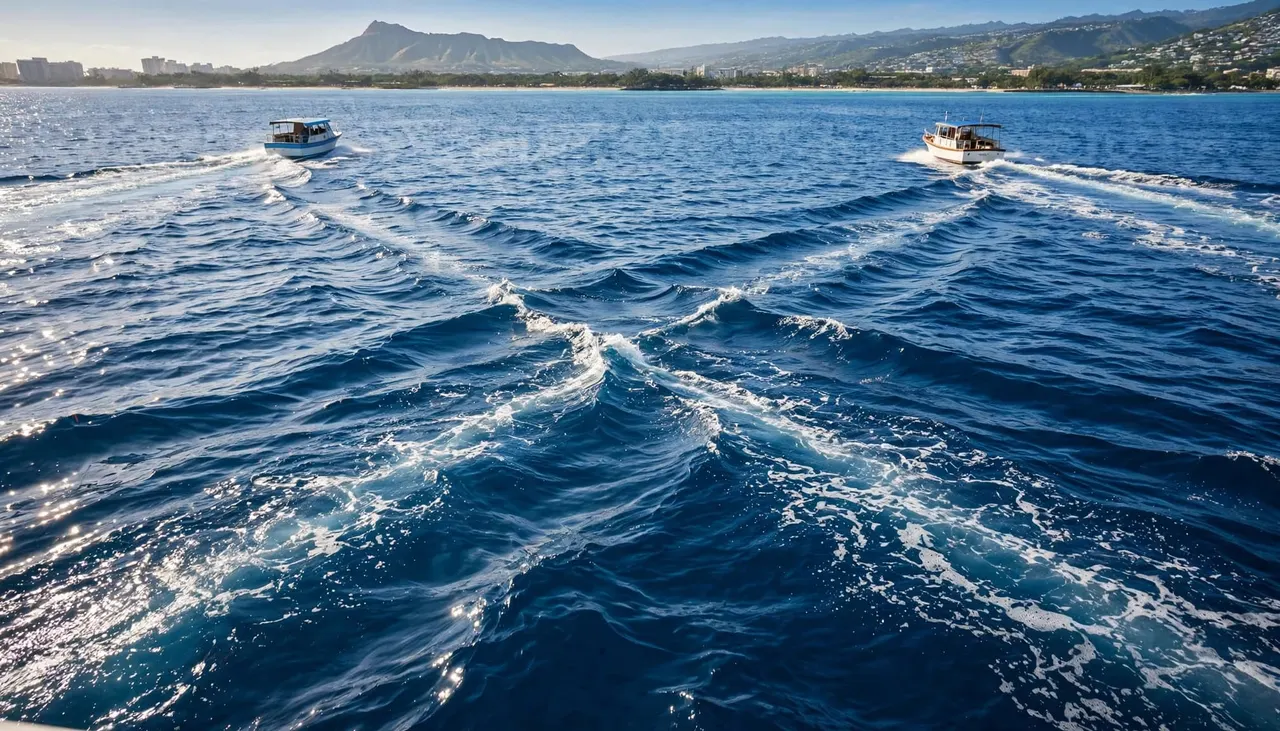
You may first notice a bright, foamy trail behind another vessel. That churned water draws your eye, but the waves spreading away from it deserve attention too.
A wake often includes outward-spreading wave lines and waves behind the boat. However, wind and existing swell can make those lines difficult to distinguish.
Foam alone doesn’t tell you how much movement you’ll feel. A wake without much white water can still lift or roll your boat. Instead, watch for repeating ridges approaching across the surface.
You don’t need to estimate their height. Simply stay aware that the passing vessel has disturbed water beyond its immediate track.
The movement can arrive after the crossing
Once another boat moves away, its waves continue traveling. Your boat may meet them later because both vessels and the wake are moving.
That delay explains why a comfortable passing encounter can be followed by several noticeable movements. The other vessel may already look distant when you feel them.
Wake energy also reaches places beyond the boats themselves. NOAA’s report on wakes and shoreline erosion examines that broader effect.
The passing boat’s position and its wake’s position are different. Keep listening to the crew after the vessel has moved away.
Why vessel size and speed change the wake
Hull shape matters alongside speed
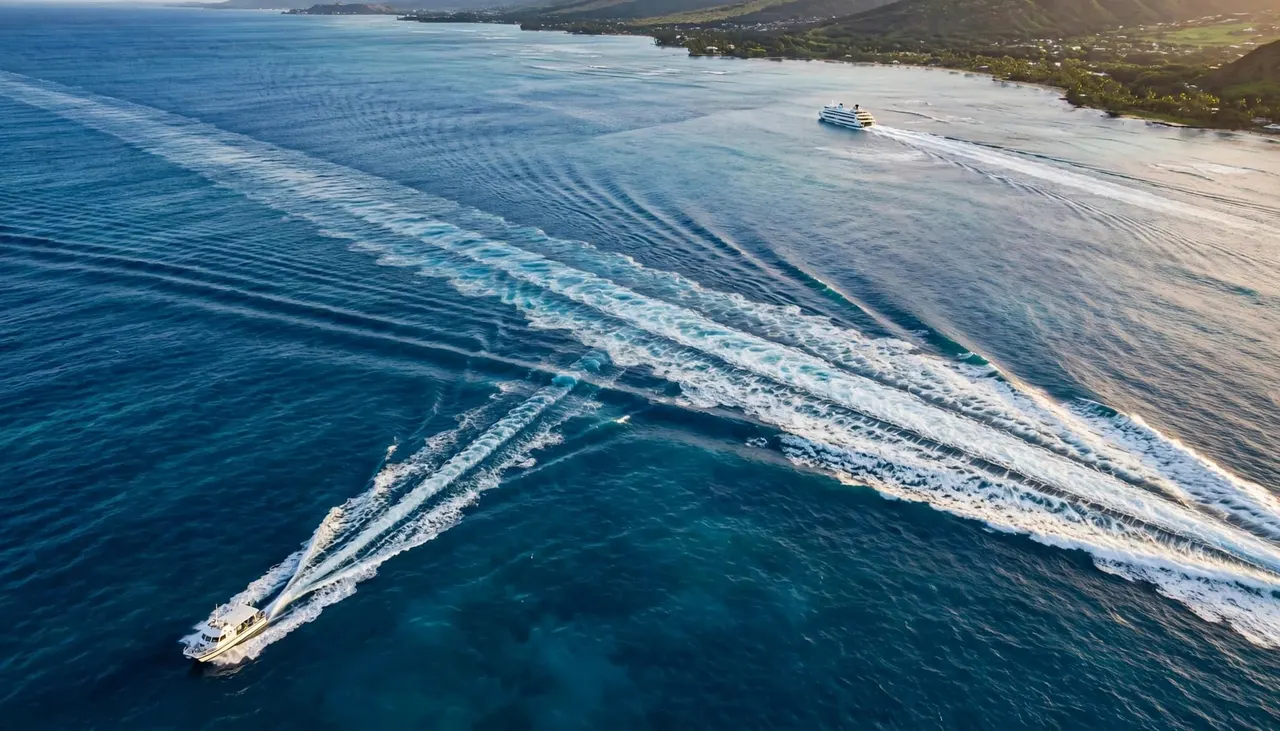
A large boat isn’t automatically responsible for the strongest movement you feel. Hull shape, speed, and how the vessel moves through the water all influence its wake.
Some hulls push substantial water aside while traveling. Others rise partly onto the surface at higher speeds. Because those operating conditions differ, wake size doesn’t follow one simple rule.
You also can’t assume that reducing speed always reduces every wake in the same way. The captain needs to consider the particular boat and surrounding conditions.
When comparing boat tour wake patterns, avoid judging them by engine noise or apparent boat size. Those details don’t establish wave height.
Several vessels can create overlapping waves
Near a busy coastline, you may see waves arriving from different directions. A recent wake can cross an older one, while both meet wind-driven chop or offshore swell.
As a result, the water can look uneven even when no boat is passing close by. You may feel a brief lift followed by a sideways motion.
Research on boat wakes and shoreline stability identifies vessel-passage frequency as a factor in total wake energy reaching shorelines.
For you, the practical lesson is simpler: look beyond the nearest vessel. Earlier traffic can still influence the water around your boat.
What you feel when a wake meets the hull
A lift, a roll, or a combination
You may feel the bow rise and fall, which is pitching motion. Side-to-side movement is rolling. A wake arriving at an angle can produce a combination of movements.
The experience also changes with your boat’s heading and speed. That’s why the captain may adjust course or pace before waves reach you.
You don’t need to decide how the boat should cross a wake. From your seat, you lack the captain’s full view of traffic, depth, and maneuvering space.
Reading boat tour wake patterns gives you useful awareness, but it doesn’t replace seamanship. Let the helm manage the encounter while you stay secure.
A nearby wake isn’t automatically a warning
A brief change in motion doesn’t, by itself, establish that the trip is unsafe. Likewise, a smooth ride doesn’t prove that the captain has nothing to monitor.
You might notice a slower pace, a different heading, or an instruction to remain seated. Those actions can be part of managing changing conditions.
Listen for directions rather than trying to interpret every turn. If something worries you, ask a deckhand when they’re available.
A useful question is, “Should we stay seated while this wake passes?” It gets you practical guidance without distracting the captain.
Why harbor wakes deserve extra attention
Around docks and harbor structures, waves can reflect and meet incoming water. Your boat may therefore move differently inside a basin than it does offshore.
A moored vessel can also shift when a wake reaches it. During boarding, wait for the crew’s instructions rather than stepping across because the boat appeared still a moment earlier.
Meanwhile, boat-generated waves matter to shoreline environments as well as passenger comfort. A 2022 living-shoreline study found that ship wakes supplied 25% to 50% of daily shoreline wave energy at its study site.
That result isn’t an estimate for Waikiki or a measure of how your tour will feel. It does show why wake management deserves attention beyond the passing encounter.
You can support an orderly departure by keeping bags compact and boarding when directed. Once aboard, leave stairs and walkways clear so crew members can move freely.
If you see the captain pause near the harbor entrance, give the crew room to work. Traffic and conditions can take priority over maintaining a departure pace.
How your seat changes the experience
Ask about a lower, central position
Your location aboard influences what you feel. The bow may move more noticeably as the boat pitches, while an upper deck can make rolling motion more apparent.
A lower seat near the boat’s center may feel less active. However, the best available position depends on the vessel and current conditions.
Ask a deckhand before settling in, especially if someone in your group gets seasick or finds stairs difficult.
Your view still matters, but comfort makes it easier to enjoy the whole outing. Understanding boat tour wake patterns is most useful when it helps you prepare, rather than monitor every ripple.
Speak up before nausea becomes intense
If you begin feeling nauseated, sweaty, dizzy, or lightheaded, tell the crew promptly. Don’t wait until you’re struggling to reach a seat.
Looking toward the horizon and putting away your phone may help. Fresh air can also feel better than focusing on a nearby screen.
For medication, follow the label and advice from your pharmacist or clinician. Discuss suitable options before departure rather than borrowing another passenger’s remedy.
If you’re unsteady, ask for help before moving between decks. A crew member can guide you to an appropriate place without requiring you to cross the boat alone.
What to do when another vessel approaches
Your role during a passing encounter is straightforward. Stay aware of your footing and make crew instructions easy to hear.
Pause conversations during announcements. Help children remain close, and keep towels, bags, and bottles away from stairs.
If you’re standing for a photo, put the phone away when directed to sit. You’ll have other opportunities to capture Diamond Head or the Waikiki skyline.
Use these habits when movement increases:
- Remain seated when the crew asks, even if another passenger stays standing.
- Keep a hand available for the railing when moving, and avoid carrying loose gear between decks.
- Tell a deckhand if a child, partner, or friend needs assistance.
You don’t need to decode horn signals or direct the captain. Those communications belong to vessel operations.
Also, don’t assume there’s one universal safe passing distance or speed. The captain must account for traffic, visibility, wind, swell, and maneuverability.
If you miss an announcement, ask a crew member to repeat it. Clear instructions are more useful than guessing what everyone else is doing.
Choosing onboard comfort with Living Ocean Tours
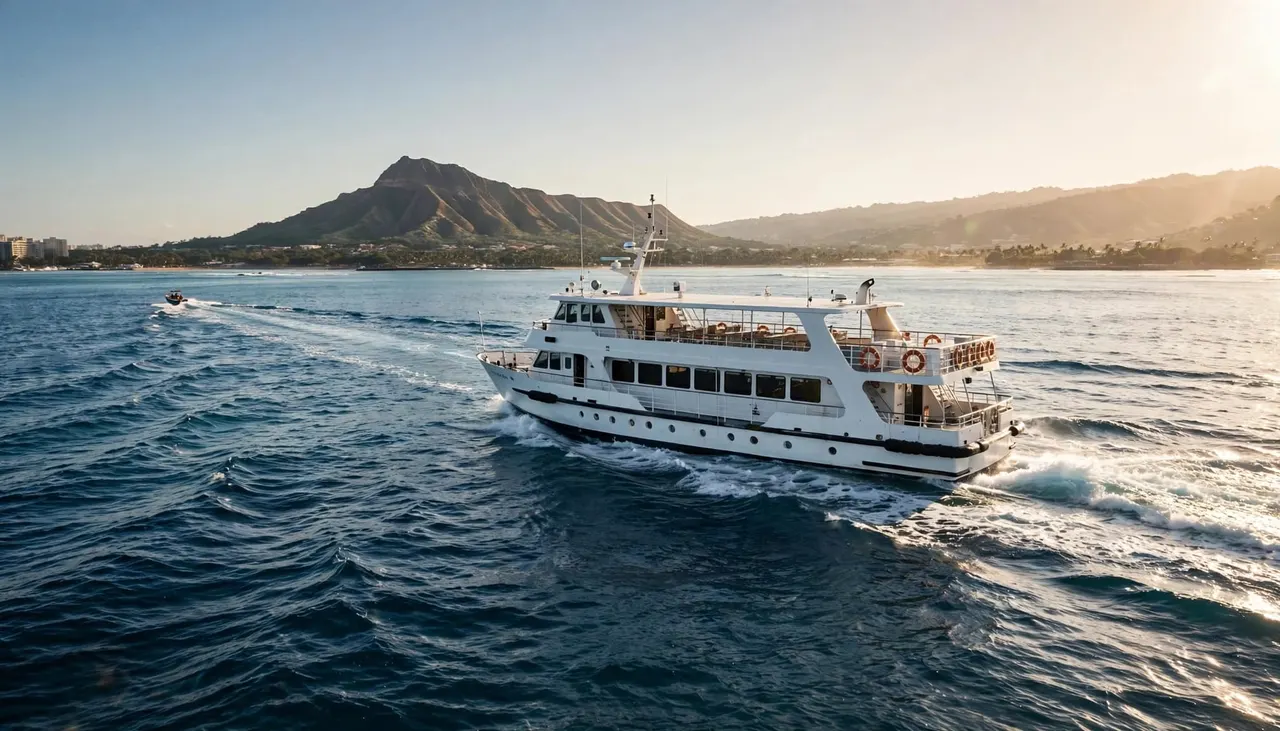
Living Ocean Tours operates the Coral Kai and Lokahi, Coast Guard-inspected double-decker vessels departing from Kewalo Basin near Waikiki. Both offer shaded seating, onboard restrooms, dry storage, and sturdy water-entry ladders.
Those features give your family practical places to settle, store belongings, and take breaks. However, a spacious deck alone doesn’t guarantee a smoother ride.
The Lokahi has a SeaKeeper stabilization system that helps reduce side-to-side roll. It doesn’t remove pitching, every wake encounter, or all ocean movement.
Before booking, ask which vessel is scheduled and explain any boarding or seating needs. You can compare the company’s Honolulu ocean tours and cruises according to your group’s preferred activity.
For snorkeling, Living Ocean Tours describes itself as the only tour company with professional snorkel guides. Ask how the guides supervise entry, explain equipment, and help guests return aboard.
Recent guest reviews can also help you assess whether the experience matches your expectations.
Choose your departure around the experience you want, then confirm access needs with the team.
Why wake awareness continues at the swim stop
If your outing includes snorkeling, nearby vessel traffic still matters after your boat stops. A passing wake can move the swim platform, ladder, and water around them.
Wait for the crew’s signal before entering. When returning, follow instructions about approaching the ladder and removing fins.
Don’t crowd the boarding area if the boat starts moving against the water. Give the person ahead space and let the crew organize the return.
Before swimming, learn how to signal for assistance. Tell your guide if you’re nervous, tired, or unsure about climbing aboard.
A buddy adds awareness, but doesn’t replace crew supervision or flotation guidance. Keep children within the supervision arrangement explained during the briefing.
Finally, observe marine wildlife without touching or chasing it. A relaxed return to the boat protects your energy and leaves animals free to continue their normal behavior.
Key Takeaways
You can notice boat tour wake patterns without taking responsibility for navigation.
- Expect wake movement to arrive after another vessel has passed.
- Judge comfort by conditions, seating, and crew guidance rather than boat size alone.
- Report discomfort early, and follow directions around stairs, swim platforms, and ladders.
The most useful preparation is knowing when to ask for help. That keeps a short spell of movement from becoming a harder part of your day.
Enjoy the View While the Crew Manages the Water
You don’t need a boating background to recognize a traveling wake and prepare for movement. Stay seated when directed, keep shared spaces clear, and speak up when you need assistance.
A nearby boat may disappear into the distance before its waves arrive. With that timing in mind, you can give the water appropriate attention while still enjoying the coastline.


