
Boat Tour Waikiki: What Happens During a Passenger Evacuation
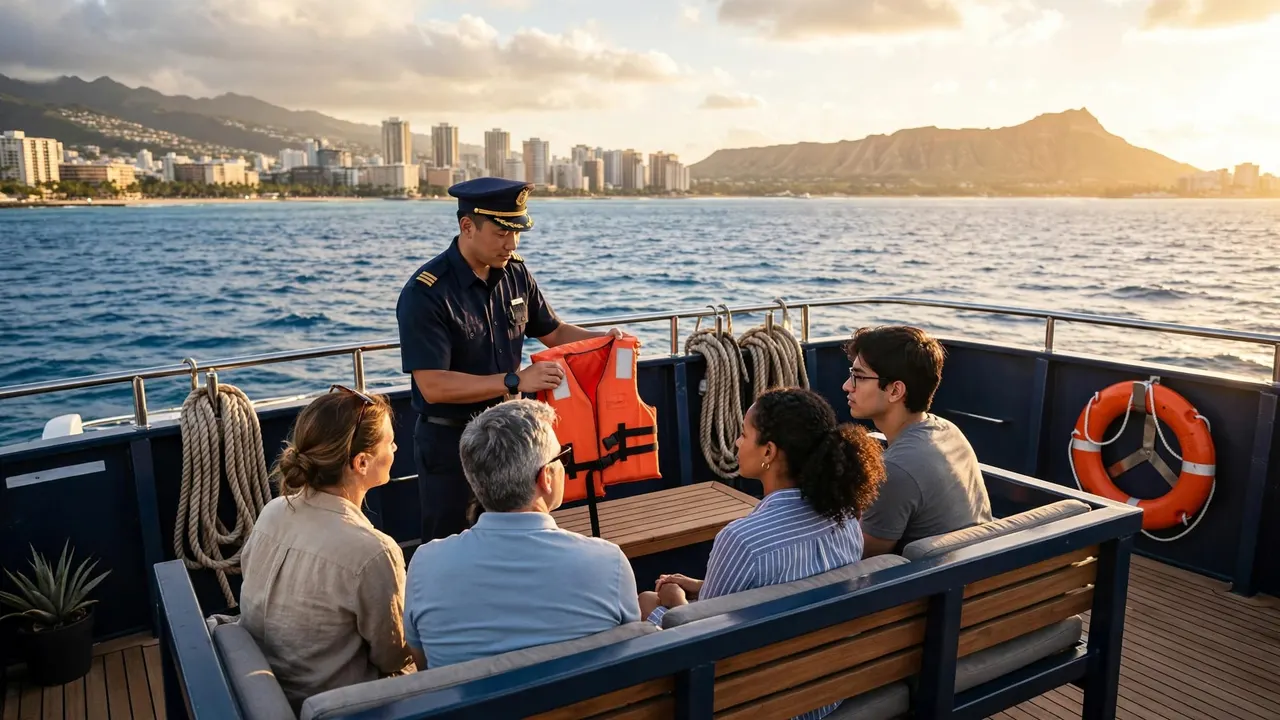
A passenger evacuation is rare, but knowing the process can make your time on the water feel far less intimidating. On a boat tour Waikiki visitors book for snorkeling, wildlife, or sunset views, the crew’s instructions are your clearest guide if plans change.
Living Ocean Tours operates from Kewalo Basin Boat Harbor, minutes from Waikiki, with safety-focused outings for families, couples, and first-time ocean guests. A calm departure, a complete briefing, and your attention to the crew set the tone for a safer day offshore.
Key Takeaways
- Listen to the safety briefing before you settle in, take photos, or move between decks.
- If the captain orders an evacuation, stay calm and follow crew directions immediately.
- Put on your life jacket only when instructed, then let a crew member check the fit if needed.
- Keep stairs, ladders, exits, and railings clear of bags, towels, fins, and loose bottles.
- Tell a crew member early if you feel dizzy, seasick, injured, or unable to move safely.
- Weather, the vessel’s emergency plan, and the location of the boat shape the exact response.
Safety Begins Before Your Boat Tour Waikiki Departure
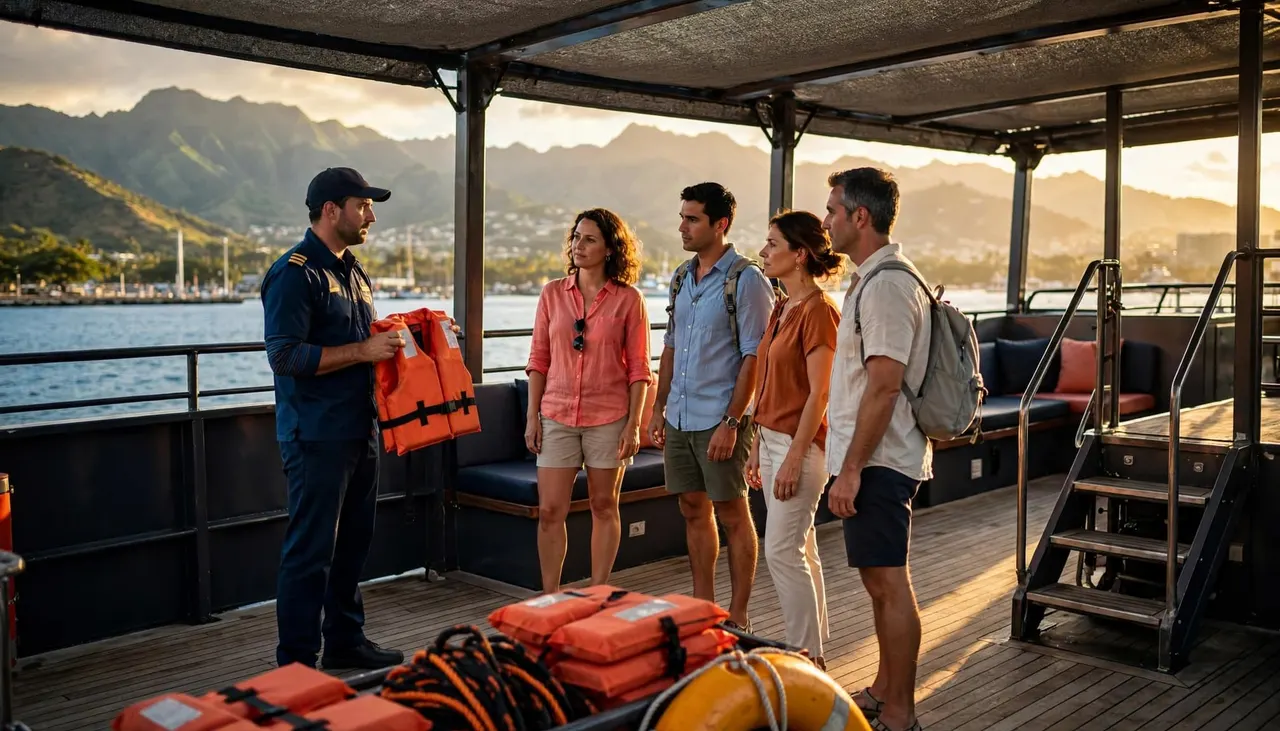
An evacuation response starts long before anyone hears an emergency command. Before leaving the dock, the captain and crew confirm the passenger count, prepare equipment, monitor conditions, and explain the boat’s basic layout.
You should arrive with enough time to hear those instructions. Kewalo Basin is close to Waikiki, yet traffic, parking, hotel elevators, and rideshare delays can still make a short trip stressful. Your confirmation email has the final check-in details.
Know the boat before it moves
While the vessel is docked, find the restroom, shaded seating, dry storage, stairs, ladders, and life jacket locations. Keep your belongings in the place the crew assigns, because a loose bag or water bottle can block a walkway when the deck shifts.
Ask for clarification if you miss an announcement. Don’t guess about where to sit, where to wait, or how to move between decks. The few minutes before departure are the easiest time to get a clear answer.
Treat the briefing as part of the trip
Federal passenger-vessel rules require safety orientation information about emergency exits, life jacket stowage, ring life buoys, survival-craft embarkation areas, and safety placards. You can review the passenger safety orientation requirements for the formal details.
The crew may also show you how to wear a life jacket or tell you how to request a demonstration. Pay attention even if you’ve been on boats before. Each vessel has its own layout, equipment locations, and crew assignments.
How the Crew Prepares for an Emergency
On a well-run boat tour Waikiki passengers may notice routine checks without knowing every detail. That is normal. The crew has assigned duties, while the captain watches navigation, traffic, weather, and the boat’s condition.
Life jackets must fit the person wearing them
Federal boating guidance calls for an approved, wearable life jacket in good condition and the right size for each person aboard. The U.S. Coast Guard also recommends that you wear one whenever a boat is underway, as explained in its guidance on wearing your life jacket.
Commercial vessels may carry equipment that differs from recreational boats. The Coast Guard’s commercial PFD guidance explains that these flotation devices are intended for inspected vessels and passenger-carrying commercial operations.
If you are traveling with a child, ask the crew about sizing before departure. A life jacket only helps when it fits securely and stays properly fastened.
Emergency stations keep the response organized
Each crew member has a role during an emergency. One may communicate with the captain, while another directs passengers, checks life jackets, manages access to survival equipment, or keeps pathways open.
The captain does not use a generic script copied from another boat. The response follows that vessel’s emergency plan, the nature of the problem, current sea conditions, and the boat’s position. Your job is simpler: stay with your group, listen, and move only when directed.
An organized evacuation depends on clear pathways and quick cooperation, not on passengers rushing toward the nearest rail or exit.
What Happens When an Evacuation Is Ordered
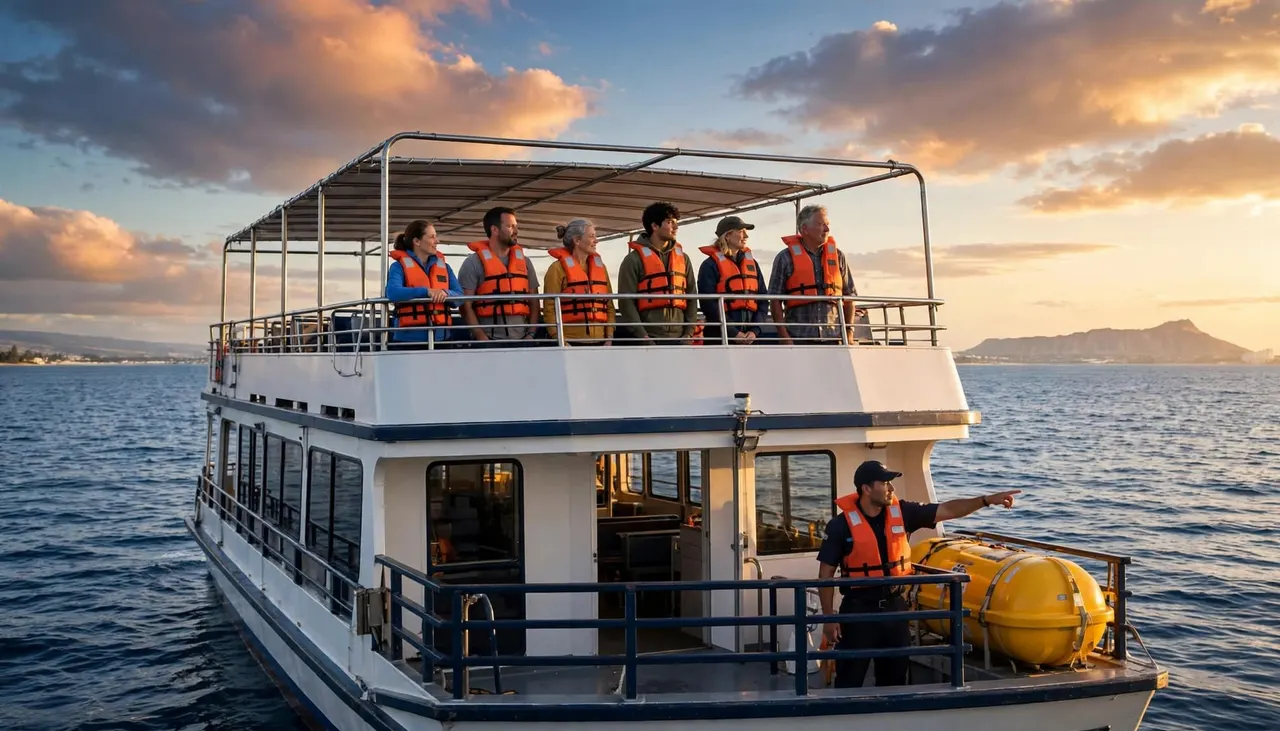
An evacuation order means the captain has decided that leaving the vessel may be safer than remaining aboard. A fire, serious flooding, collision damage, or another major onboard emergency could lead to that decision.
Stay calm. Crew members train for emergency duties, and they need passengers to move carefully rather than quickly.
You will be directed to a muster or embarkation area
The crew may ask you to gather at a specific location, often called a muster or embarkation station. This gives them a chance to account for passengers, keep people away from the hazard, and provide the next instruction.
Move by the route the crew gives you. Keep one hand free for a railing if the boat is moving, and don’t stop in a stairwell to retrieve an item. Leave bulky bags, snorkel gear, and beach toys behind unless a crew member tells you otherwise.
Parents should keep children close and follow the crew’s pace. If someone in your group needs mobility assistance, tell a crew member immediately.
Crew members check life jackets and prepare survival craft
You may be told to put on a life jacket, then wait while the crew checks buckles, straps, and fit. Don’t inflate an inflatable device unless instructed. You need the crew to control the sequence and preserve safe movement around the deck.
Required abandon-ship drill elements can include calling crew members to their stations, directing passengers to embarkation areas, checking life jackets, and preparing or deploying survival craft. The exact equipment and sequence depend on the vessel.
Do not jump into the ocean unless the captain or crew gives that command. Entering the water without direction can separate you from the boat, rescue equipment, and other passengers.
Your Role During a Passenger Evacuation
Your choices can help the crew move faster and reduce injuries. The most useful thing you can do is listen the first time a direction is given.
Keep your movements slow and deliberate
Use handrails, watch your footing, and avoid sudden shifts across the deck. Wet surfaces can become slippery, especially when the boat turns or waves increase.
You may hear the crew use “port” and “starboard.” Port means the left side of the boat when you face forward, while starboard means the right. These terms stay the same even when the vessel changes direction.
If you feel unsteady, sit or hold a fixed rail until someone can help. Tell the crew early if you are seasick, cold, anxious, hurt, or having trouble with a life jacket.
Leave the captain in charge of communications
Avoid calling friends, posting updates, or trying to contact emergency services unless the captain asks you to. The crew may need clear radio communication and accurate information about passenger locations.
Keep your phone, room key, and medication in a small dry pouch during any ocean outing. However, your personal belongings come second to moving safely. If you must leave something behind, leave it behind.
A boat tour Waikiki experience is safest when every passenger gives the crew room to work. That includes keeping deck space clear and waiting until the captain confirms the next step.
Weather Can Change the Plan Before an Emergency Begins
Good operators prevent problems by making cautious decisions before conditions become dangerous. A bright shoreline view doesn’t always show the wind, swell, or chop beyond the harbor breakwater.
The captain may delay, alter, or cancel the route
A route adjustment is often a safety choice, not a failed excursion. The captain may reduce speed, change the destination, stay closer to shore, or return early if the ocean becomes uncomfortable or unsafe.
Check the current Hawaii marine forecast before leaving your hotel, but remember that the captain sees real conditions on the water. Trade winds, showers, swell direction, boat traffic, and visibility can shift during the day.
Leave room in your schedule after the cruise. A tight dinner reservation, airport transfer, or timed activity can pressure you to rush when the crew needs flexibility.
A comfortable ride still needs smart habits
Secure hats, sunglasses, phones, and water bottles before the boat picks up speed. Wear footwear with grip for the dock, then follow the crew’s direction about shoes aboard the vessel.
If you are prone to motion sickness, take your preferred medication before boarding according to its label. Sitting closer to the center of the boat and looking toward the horizon may also feel more comfortable. Let the crew know early if you need a steadier seat.
Choose a Waikiki Operator That Explains Safety Clearly
A boat tour Waikiki guests remember should feel welcoming, not confusing. You deserve straightforward answers about life jackets, crew roles, weather decisions, and how to ask for help.
Ask practical questions before you board
Ask where life jackets are stored and whether the crew will demonstrate their use. For snorkeling trips, ask who supervises swimmers, how the crew counts guests returning to the boat, and how you signal that you need assistance.
You should also ask how the operator communicates a weather change or a delayed return. Clear answers build confidence without making promises that the ocean cannot keep.
Living Ocean Tours offers Honolulu ocean tours with Living Ocean Tours, including guided snorkeling, wildlife cruises, sunset outings, and seasonal whale watching. Its Coast Guard-inspected double-decker vessels have shaded seating, restrooms, dry storage, and heavy-duty ladders. Living Ocean Tours is also the only tour company with professional snorkel guides, giving you direct in-water guidance when you choose a snorkeling outing.
Respect the ocean and the people around you
A safe trip also protects Hawaii’s marine environment. Keep your distance from turtles, fish, and coral. Observe wildlife without touching, chasing, feeding, or crowding it.
The same awareness helps during an emergency. Listen, make space for families and crew members, and avoid blocking ladders or railings. Those habits make your boat tour Waikiki outing more comfortable long before any safety instruction matters.
FAQ About Boat Tour Waikiki Safety
Should you put on a life jacket as soon as something feels wrong?
Wait for the crew’s direction unless a crew member has already instructed you to wear it. They may need passengers to remain seated, move to a specific area, or stay clear of equipment before putting on life jackets.
If you don’t know where your life jacket is stored, ask during the pre-departure briefing. You should never have to search for it during an urgent moment.
Can you bring your belongings during an evacuation?
Take only an item that is already in your hand and does not slow you down. The crew may direct you to leave all bags behind so the deck, exits, and embarkation area stay clear.
Your phone, medication, and room key are useful to keep in a small dry pouch. Still, no personal item is worth delaying your movement or ignoring a crew instruction.
A Calm Response Starts With a Good Briefing
The strongest safety habit on any boat tour Waikiki visitors choose is simple: pay attention before the boat leaves the harbor. You will know where to go, what to wear, and who to follow if conditions change.
A crew’s instructions, your steady movements, and respect for the Pacific create the confidence you need to enjoy the ride.


